UK Sub-250g Drone Laws: What The Weight Threshold Really Unlocks

Peter Leslie
9 Sept 2025
Key Takeaways
- Sub-250g is the single biggest shortcut in UK drone law — it unlocks the A1 Over People sub-category and drops the 50 metre people-buffer
- From 1 January 2026 the Flyer ID threshold dropped from 250g to 100g, so a featherweight hobby drone still needs a Flyer ID once it crosses 100g
- Any drone with a camera at 100g or above requires an Operator ID regardless of how light it is — the camera triggers the registration, not the weight
- The UK0 class mark is the sub-250g designation that manufacturers like DJI and Autel now design around, and it is the gateway to A1 flying
- The 120 metre altitude ceiling, Visual Line of Sight, the crowd ban, UK GDPR and the Air Navigation Order 2016 still apply to every sub-250g drone flight
Sub-250g is the single biggest shortcut in UK drone law.
Cross that weight threshold downwards and you drop the fifty-metre people-buffer, you drop the one-hundred-and-fifty-metre buffer around residential and commercial areas, and you unlock the Open Category A1 sub-category that lets you fly close to, and even over, uninvolved people.
That is why every consumer manufacturer now designs a flagship drone to sit just under that line. It is also why more drone operators misread what sub-250g actually unlocks — because January 2026 moved the goalposts, and a lot of advice written before that date is now wrong.
The 250 gram weight threshold is the single biggest shortcut in UK drone law
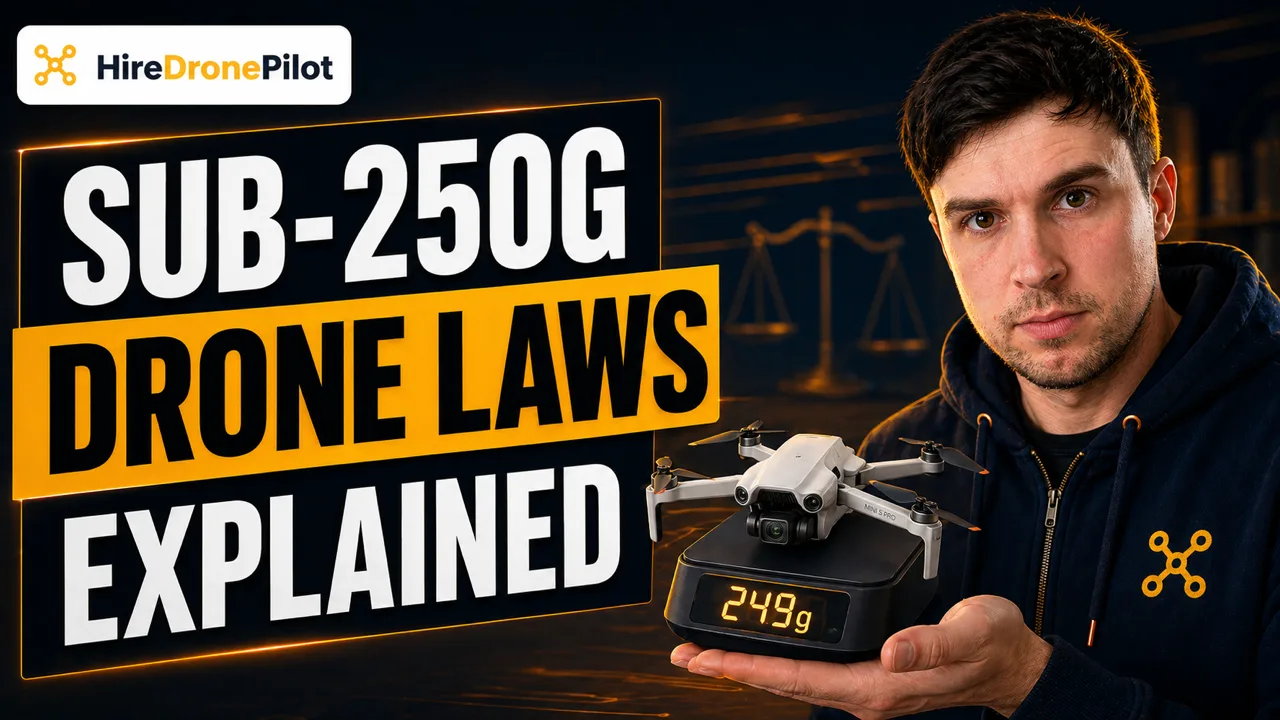
The reason 250 grams matters is that it is the upper limit of the UK0 class mark and the legacy A1 weight band in the Drone and Model Aircraft Code.
A drone below that weight sits in the lightest category the CAA recognises, and the distance rules change shape completely.
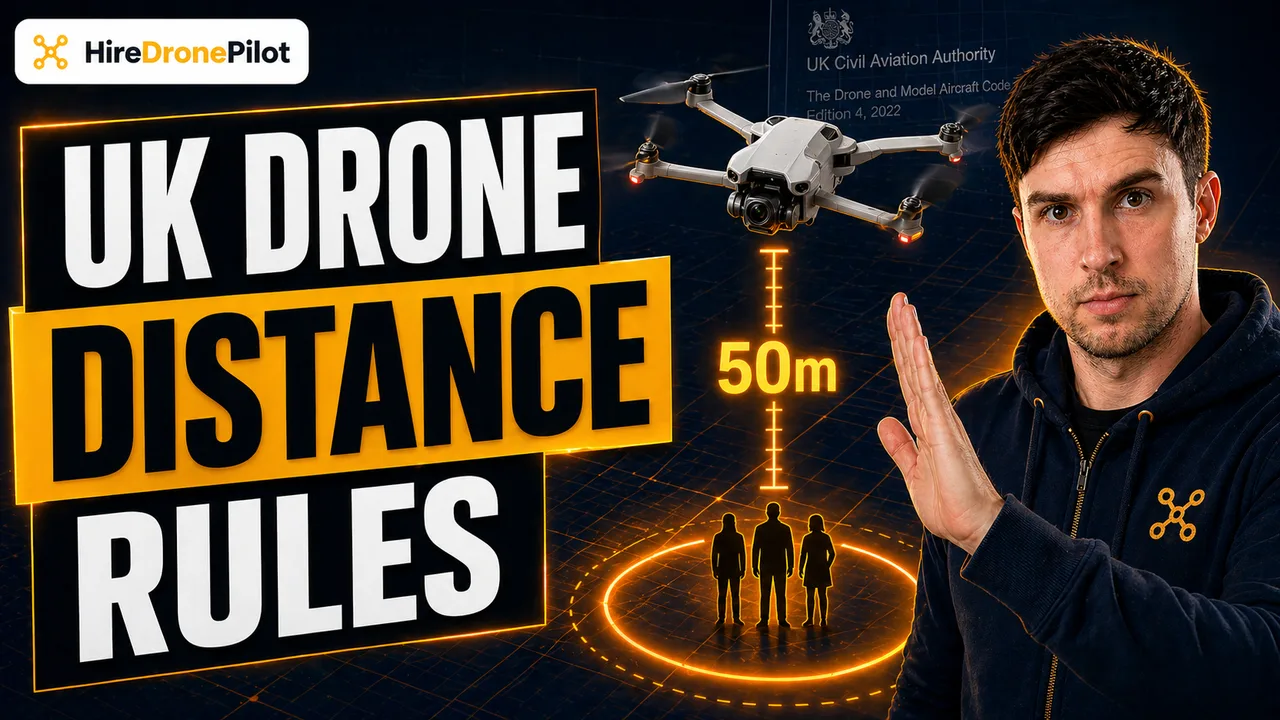
For a drone at 250 grams or above, the default rule is a fifty-metre horizontal buffer from any uninvolved person, and a one-hundred-and-fifty-metre buffer from residential, recreational, commercial and industrial areas.
Drop below 250 grams and both buffers fall away. You can fly closer than fifty metres to uninvolved people, fly over them, and fly inside built-up areas.
That single concession is why the sub-250g class exists as a product category in the first place.
It is the reason manufacturers put so much engineering into shaving weight rather than chasing headline specifications — the moment a drone tips over 250 grams it loses the A1 access that makes it usable for most hobby and content work.
For the ranked list of options in this weight band, see my best drones under 250g UK 2026 buying guide.
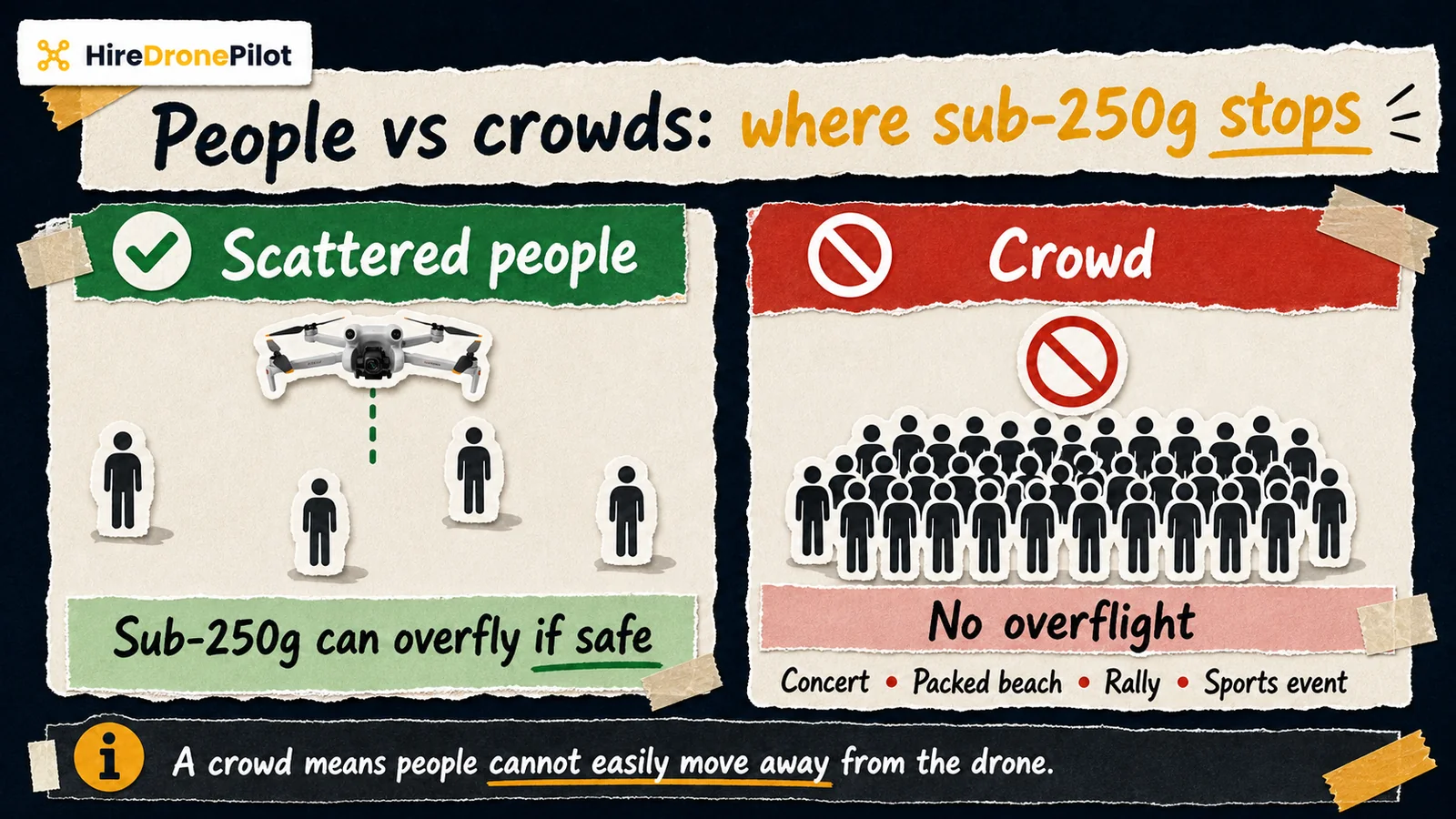
One rule that does not move: you still cannot fly over crowds.
The crowd ban in the Drone Code applies to every drone regardless of weight, and a sub-250g drone does not change that. If the question you are asking is specifically about flying a sub-250g drone over crowds or groups of people, the answer is still no.
From January 2026 the Flyer ID threshold dropped from 250 grams to 100 grams
This is the update almost every pre-2026 guide misses. Before January 2026, a drone below 250 grams did not need a Flyer ID at all unless it carried a camera.
The threshold has now dropped. From 1 January 2026, a Flyer ID is required for any drone weighing 100 grams or more.
That single change narrows the sub-250g shortcut considerably. A sub-100g toy drone with or without a camera still needs no ID at all.
A drone between 100 and 250 grams, with or without a camera, now needs a Flyer ID on the person flying it. The Flyer ID itself is still free, valid for five years, and earned by passing the CAA's online theory test.
The Flyer ID is the regulator's way of making sure even light drone pilots have actually read the rules. It is the threshold I would expect to see fall further over the next few years as smaller camera drones keep hitting the market.
For now, treat 100 grams as the line where registration starts and 250 grams as the line where the A1 privileges end.
Any drone with a camera at 100 grams or above requires an Operator ID regardless of weight
Running alongside the Flyer ID is a separate piece of paperwork that catches most new drone pilots off guard.
An Operator ID is required for anyone who owns or is responsible for a drone that weighs 250 grams or more, or weighs 100 grams or more and carries a camera.
Read that carefully. The camera is what triggers the registration in the sub-250g bracket, not the weight.
A 180 gram drone with a camera needs an Operator ID. A 180 gram toy drone with no camera does not.
Almost every consumer sub-250g drone on the market today ships with a camera, which means almost every sub-250g drone flown in the UK now needs both a Flyer ID and an Operator ID.
The Operator ID costs £12.34 per year, renews annually, and must be labelled on the drone in block capitals taller than three millimetres.
You must be eighteen or over to register. For a child who owns a drone, a parent or guardian registers as the operator instead.
The two IDs do different jobs. The Flyer ID sits with the person flying. The Operator ID sits with the person responsible for the drone. Most drone pilots hold both, and the labels I check for on any flight are usually mine as the same person.
Sub-250g ID requirements at a glance
| Weight and camera | Flyer ID | Operator ID |
|---|---|---|
| Less than 100g (any, camera or not) | Recommended | Optional |
| 100g to less than 250g, no camera (UK0 without camera) | Required | Optional |
| 100g to less than 250g, with camera (UK0 with camera) | Required | Required |
The UK0 class mark is the sub-250g designation manufacturers now design around
January 2026 also brought in the class-mark framework. Any new drone placed on the UK market from 1 January 2026 must carry a UK class mark, from UK0 up to UK6.
The transitional concessions that applied to pre-class-marked drones during the 2024–2025 period have now closed — the transition ended in January 2026 and drones already in circulation are flown under the weight-based legacy rules.
The UK0 class is the sub-250g designation. A drone marked UK0 has been declared by its manufacturer to weigh less than 250 grams including payload, and it grants its operator access to the A1 Over People sub-category without needing a separate certificate of competence.
The European equivalent is the C0 class mark, and until 31 December 2027 a C0 drone can be flown as if it is UK0.
This is the framework that shapes the sub-250g drone market. Manufacturers engineer to the UK0 or C0 spec because it is the only class that clears you to fly in residential and commercial areas inside the Open Category.
Crossing the 250 gram line pushes the drone into UK1, and UK1 requires the fifty-metre buffer from uninvolved people and the one-hundred-and-fifty-metre buffer from built-up areas.
For a legacy drone with no class mark, the weight table still works. Less than 250 grams gives you A1 access, the same as a UK0 class drone would.
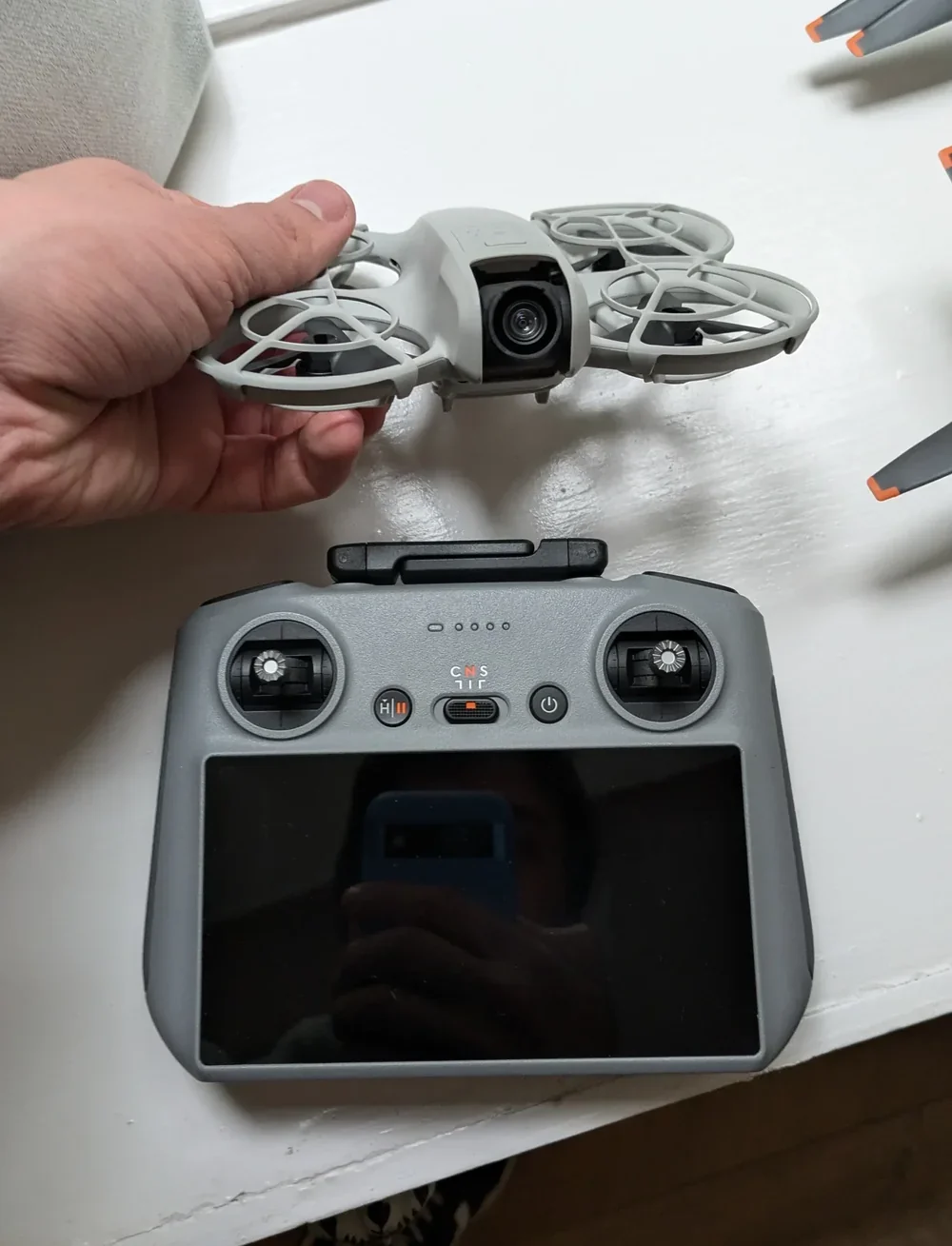
The 120 metre altitude ceiling and Visual Line of Sight still apply to every sub-250g drone flight
Sub-250g is a shortcut on distance and registration — it is not a shortcut on altitude, airspace, or airmanship.
The 120 metre altitude ceiling, roughly four hundred feet, applies to every drone in the Open Category regardless of weight. Fly a twenty-four gram toy or a two-hundred-and-forty-nine gram camera drone and the ceiling is the same.
The Visual Line of Sight requirement also stays put. You must be able to see the drone directly, with your own eyes, clearly enough to read its orientation and scan the sky around it for other aircraft.
No binoculars, no telephoto lenses, no phone screens, no goggles — unless you have a co-located observer next to you holding the direct view for you. Sub-250g drones get no special exemption here.
Restricted airspace is the other universal. Flight Restriction Zones around airports and airfields bind a sub-250g drone exactly the same way they bind a Matrice.
So do the restrictions around prisons, military ranges, royal palaces and emergency scenes. The endangering-an-aircraft offence under the Air Navigation Order 2016 carries a maximum of five years in prison, and the law makes no allowance for drone weight.
From a practical standpoint, the sub-250g class is actually where I see the most airspace breaches — because the drone pilots flying them are often newer, assume the rules are relaxed everywhere, and never open a NATS drone-assist map before the flight.
Lightness does not buy you an exemption from the airspace.
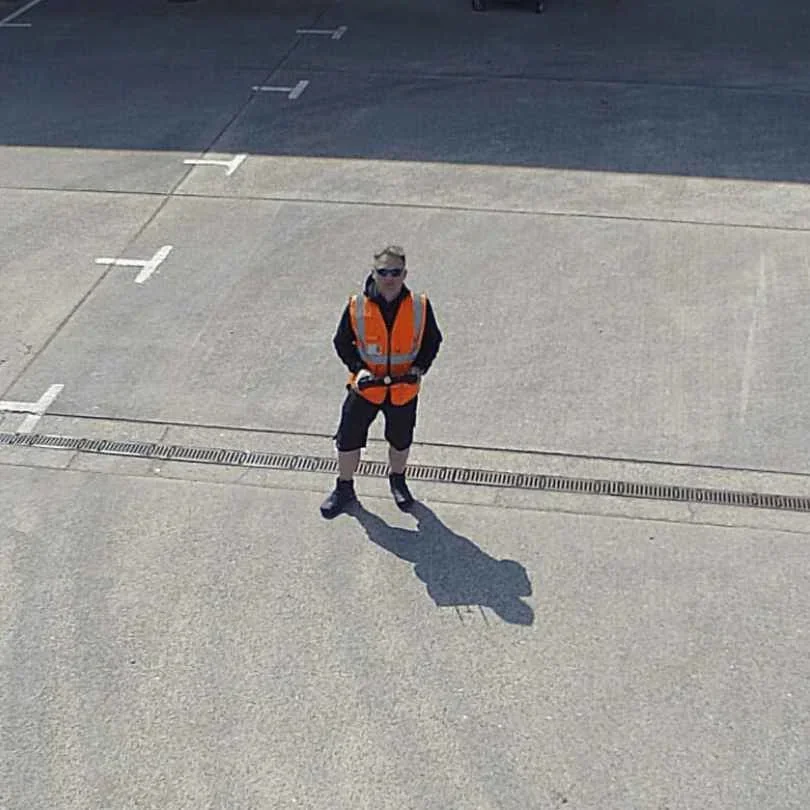
UK GDPR and the Data Protection Act apply to any sub-250g drone carrying a camera
The moment a sub-250g drone carries a camera, the framework widens beyond aviation law. UK GDPR and the Data Protection Act 2018 treat identifiable footage of people the same way they treat any other personal data, and that is what catches most hobby drone pilots out.
If you record footage you can identify an individual in — a face, a number plate, a garden behind a fence — you have collected personal data.
The Information Commissioner's Office can investigate and fine for harassment or privacy breaches regardless of how light the drone was. Repeatedly flying over a neighbour's garden could also fall under the Protection from Harassment Act 1997.
The Drone Code covers this in its privacy chapter. Tell people before you record. Do not record where people expect privacy, such as inside a home or a private garden.
Store footage securely and delete what you do not need. If you fly commercially, you carry data-controller obligations on top of that.
The rule I give drone pilots starting out: if the camera is on, treat the flight as if you were filming with a phone in the same place. If that would be unreasonable, so is the drone footage.
Remote ID, night flying and insurance — the rules that still bite a sub-250g drone
A few more pieces complete the sub-250g picture.
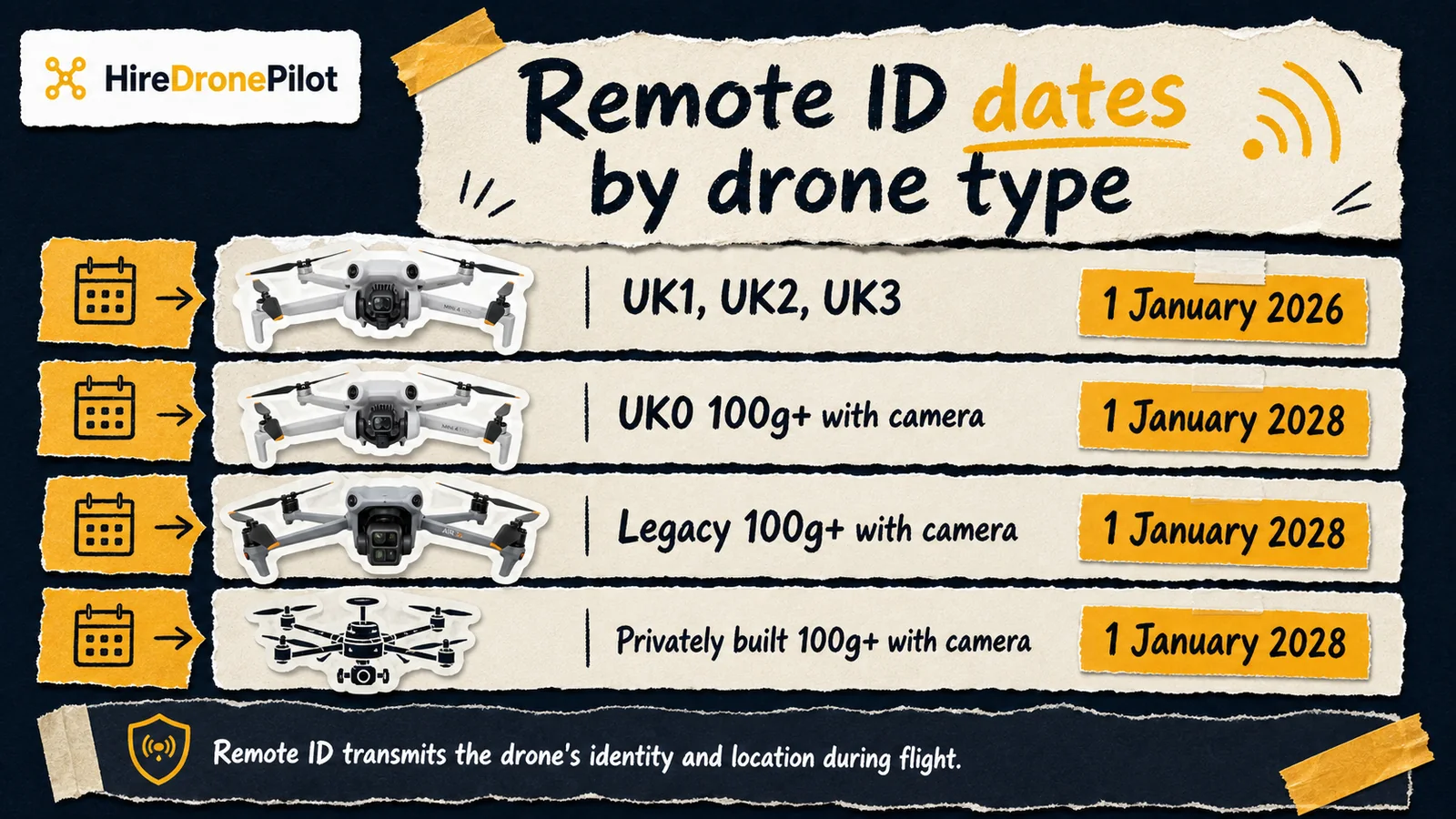
Remote ID became mandatory for UK1, UK2 and UK3 class drones from 1 January 2026, transmitting the drone's identity and location during flight.
UK0 drones at 100 grams or more with a camera, legacy drones at 100 grams or more with a camera, and privately built drones at 100 grams or more with a camera move into the Remote ID requirement from 1 January 2028.
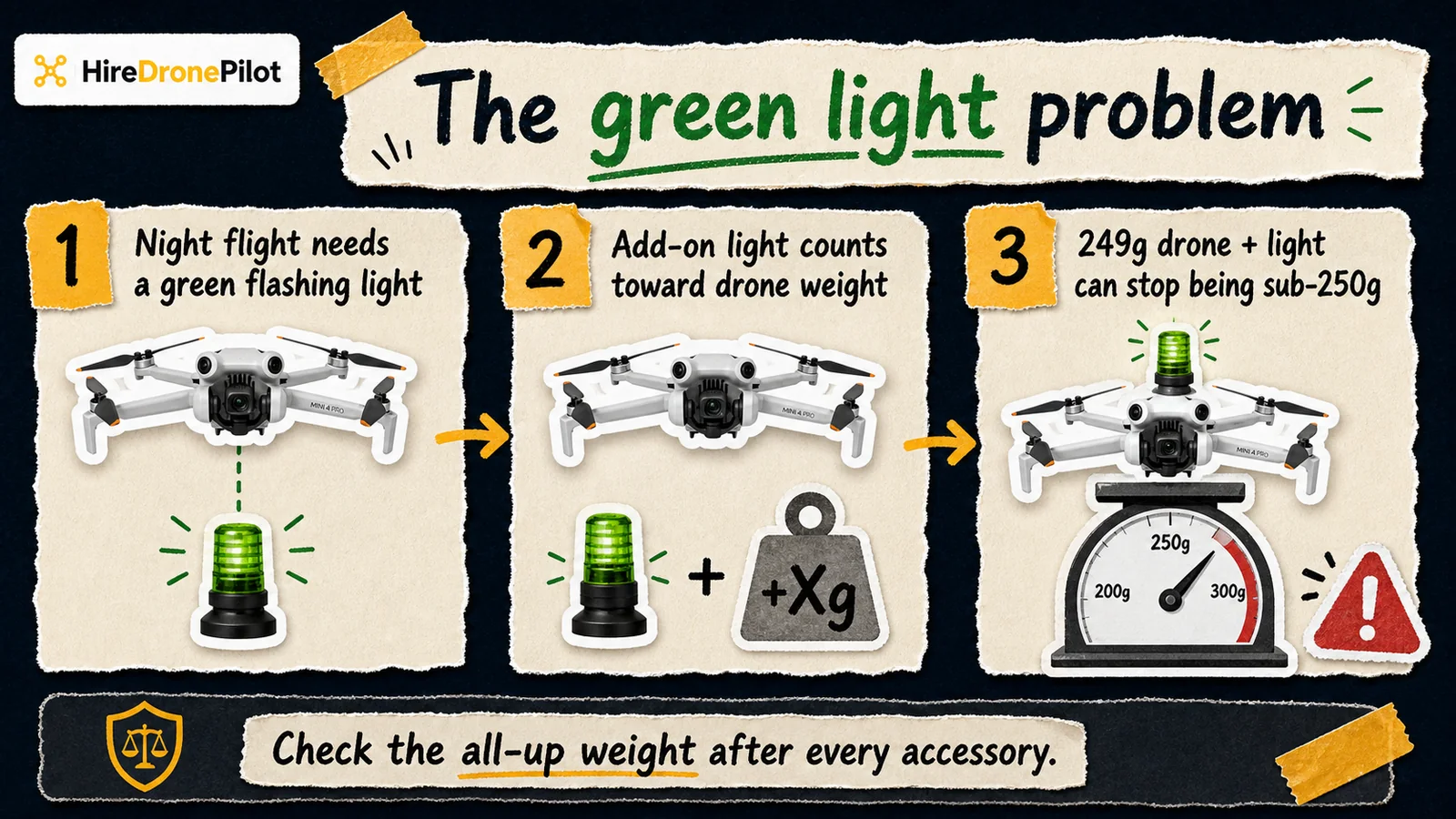
For night flying, every drone flown after dark must have a green flashing light turned on.
If your sub-250g drone does not have one built in, you must fit a specialist add-on — and the add-on's weight counts towards the overall drone mass, which can tip a borderline drone over the 250 gram line and out of A1.
Insurance is the final piece. For recreational, sport or hobby flying on a drone under twenty kilograms, third-party liability insurance is optional but sensible.
The moment the flight becomes commercial — paid photos, paid video, a paid drone photography job, a survey, estate work — third-party insurance is required, and the sub-250g weight does not change that.
So the sub-250g story in 2026 is more nuanced than the old "under 250g means no paperwork" shortcut made it sound. The A1 access is still the single biggest privilege in the Open Category, and the weight-based buffers still fall away below that line. The paperwork has simply caught up with the camera.
If you want the broader legal map that all of this sits inside, the UK drone laws explainer stitches the class-mark framework, the categories and the ID regime together in one place.
Got a specific sub-250g scenario you want covered — a particular model, a borderline flight, a class-mark question? Drop a note to peter@hiredronepilot.uk and I will come back to you directly. If you prefer the video version of this explainer, the comments are open on YouTube.
References
Primary source material for this article is the UK Civil Aviation Authority. External links open in a new tab.
- UK CAA — The Drone and Model Aircraft Code (CAP2320) · 100g Flyer ID threshold, Operator ID triggers, A1 people-buffer rules, 120m ceiling, night-light rule, insurance tiers
- UK CAA — Class Marks · UK0 sub-250g class definition, C-class transition through to 31 December 2027
- UK CAA — Flyer IDs and Operator IDs · Flyer ID free and valid five years; Operator ID £12.34 per year and annual renewal
- UK CAA — Where You Can Fly (A1, A2, A3 sub-categories) · A1 Over People privileges for UK0 sub-250g drones
- UK CAA — Remote ID · Remote ID applies to UK1, UK2 and UK3 from 1 January 2026; UK0, legacy and privately built 100g+ camera drones from 1 January 2028
- UK CAA — UK Regulatory Framework for Drones · Air Navigation Order 2016, UK Regulations (EU) 2019/945 and 2019/947, Data Protection Act 2018
Peter Leslie
Founder & GVC Drone Pilot
Peter is the founder of HireDronePilot. With thousands of logged commercial flight hours, he writes about drone technology, commercial surveying tactics, and UK aviation compliance.
Connect on LinkedIn