RPC-L2 Explained: The First UK Drone Licence That Unlocks BVLOS

Peter Leslie
16 Apr 2026
Key Takeaways
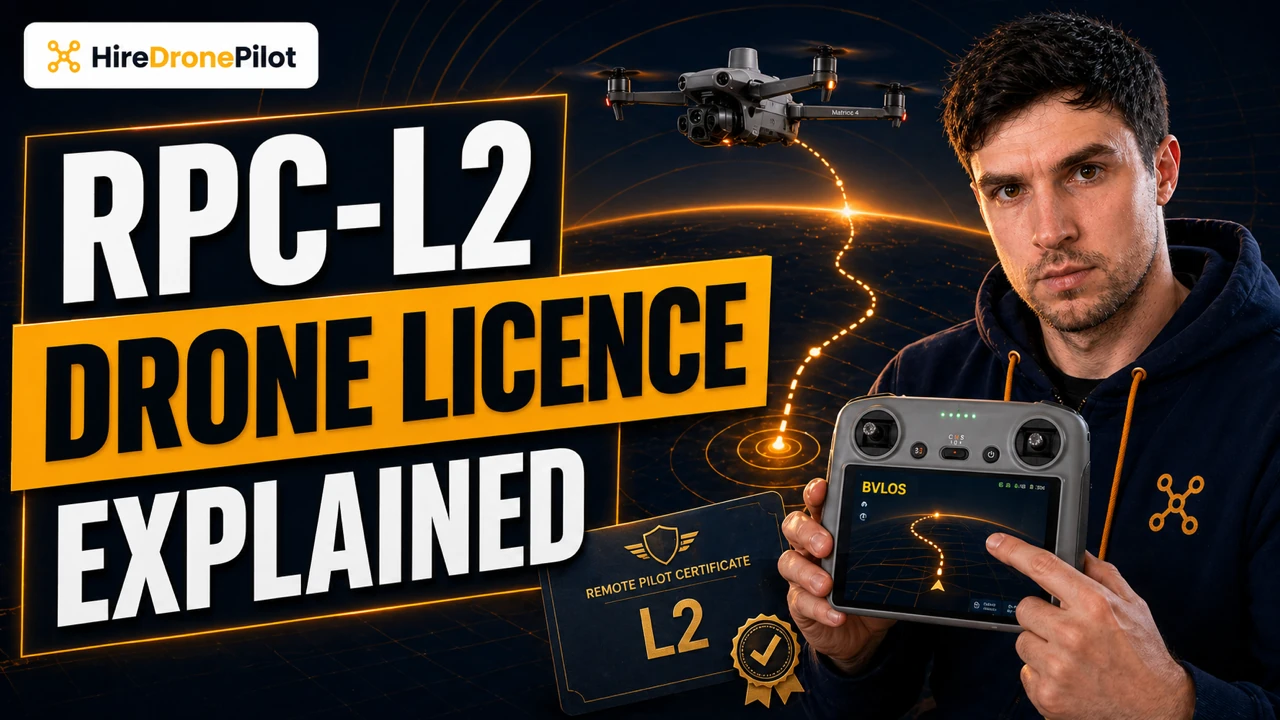
- The RPC-L2 is the UK’s intermediate Remote Pilot Certificate, and the first qualification that authorises Beyond Visual Line of Sight operations
- The GVC is VLOS only, so drone pilots who need to fly beyond direct sight must step up to the RPC-L2 as the minimum entry point
- RPC-L2 privileges are limited to ARC-a airspace, which the CAA defines as environments where no other air traffic is operating
- Entry conditions are a minimum age of 18, a valid Flyer ID, a same-category RPC-L1, and at least 50 logged flight hours
- The certificate is valid for three years and still requires a Specific Category Operational Authorisation to cover each BVLOS job
- RPC-L3 is the next step up, adds a LAPL medical and 50 BVLOS hours, and extends privileges to more complex ARC-c airspace
The RPC-L2 is the qualification that comes up the moment a UK drone operator starts asking whether a job can be flown without keeping the drone in direct sight. Named in full the Level 2 Remote Pilot Certificate, it sits inside the UK’s wider Remote Pilot Certificate framework and is the first rung where Beyond Visual Line of Sight flight becomes legal at all.
It is not a general-purpose upgrade. The privileges are tightly bounded, the entry conditions are demanding, and the certificate only becomes useful once paired with a Specific Category Operational Authorisation. This guide walks through exactly what the RPC-L2 covers, where it sits against the GVC, and when drone pilots actually need to reach for it.
The RPC-L2 is the first UK qualification that permits BVLOS flight, and that single fact explains its entire role
Every qualification below the RPC-L2 is restricted to keeping the drone in direct sight. The GVC and the RPC-L1 both authorise Visual Line of Sight operations in the Specific Category, and a commercial drone pilot holding either of those is still legally required to keep eyes on the drone at all times.
The RPC-L2 is where that restriction finally lifts. The CAA describes the Level 2 Remote Pilot Certificate as designed for Remote Pilots operating BVLOS in environments with no other air traffic, and that framing matters. It is not a general BVLOS ticket. It is a qualification that unlocks one specific class of airspace and leaves everything else to the RPC-L3 above it.
This is the practical divide drone operators run into when a job brief says the words beyond visual line of sight. Underneath the RPC-L2, the answer is always no. Above it, the answer depends entirely on which airspace class the job sits in.
The RPC-L2 unlocks BVLOS only inside ARC-a airspace, which is a narrow slice of the UK sky
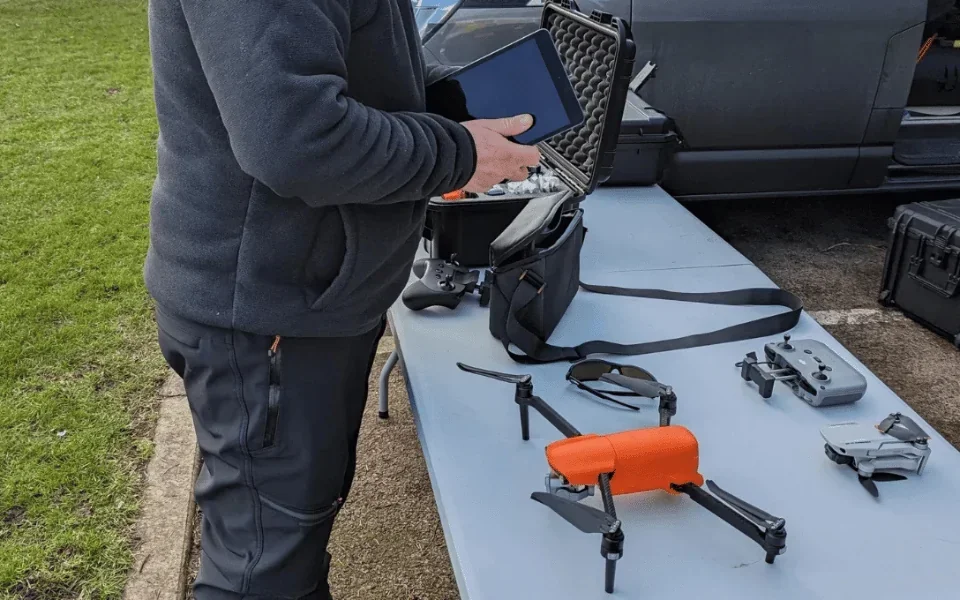
The operational privilege attached to the RPC-L2 is VLOS and BVLOS operations in ARC-a. ARC stands for Air Risk Class, and ARC-a is the lowest risk tier on the CAA’s scale. It describes environments with no other air traffic operating.
In practice that means an Atypical Air Environment, or AAE. The CAA defines an AAE as a volume of airspace that is very rarely, or never, used by other aviation users. It is not a separate class of airspace in its own right; it can sit inside any class, provided the drone operator demonstrates in the application that the volume qualifies.
The shapes that typically qualify are narrow and physical. An AAE can exist within 30 metres of any building or structure, within 15 metres of a permanent linear structure such as a railway, road, or power line, or at up to 15 metres of height inside the boundary of a private industrial site. Those envelopes are what make close-in BVLOS work practical while keeping the collision risk acceptably low.
Operating in an AAE is not automatic. It is proposed by the drone operator as part of a Specific Category application, and the resulting Operational Authorisation carries conditions such as submitting a NOTAM before each flight, using high-intensity anti-collision lighting, coordinating with local airspace users, and running a robust containment solution.
The entry requirements for the RPC-L2 are steeper than any VLOS qualification below it
The RPC-L2 sits above the RPC-L1 in the UK drone pilot qualification ladder, and the entry conditions reflect that. A candidate must be at least 18 years old, and must already hold a valid RPC-L1 in the same drone category as the RPC-L2 being applied for.
A Flyer ID is also required. Since January 2026 the Flyer ID has been mandatory for anyone flying a drone weighing 100g or more, and it is the prerequisite qualification for every certificate in the Specific Category framework.
The final entry condition is the one that filters out most early-career drone pilots. The CAA requires a minimum of 50 logged flight hours before an RPC-L2 application is accepted. Fifty hours is a real operational baseline. It is the point at which a drone operator has enough recovered emergencies, enough weather decisions, and enough pre-flight muscle memory to be trusted with flight beyond line of sight.
The RPC-L2 shows competence, but a Specific Category Operational Authorisation still gates every flight
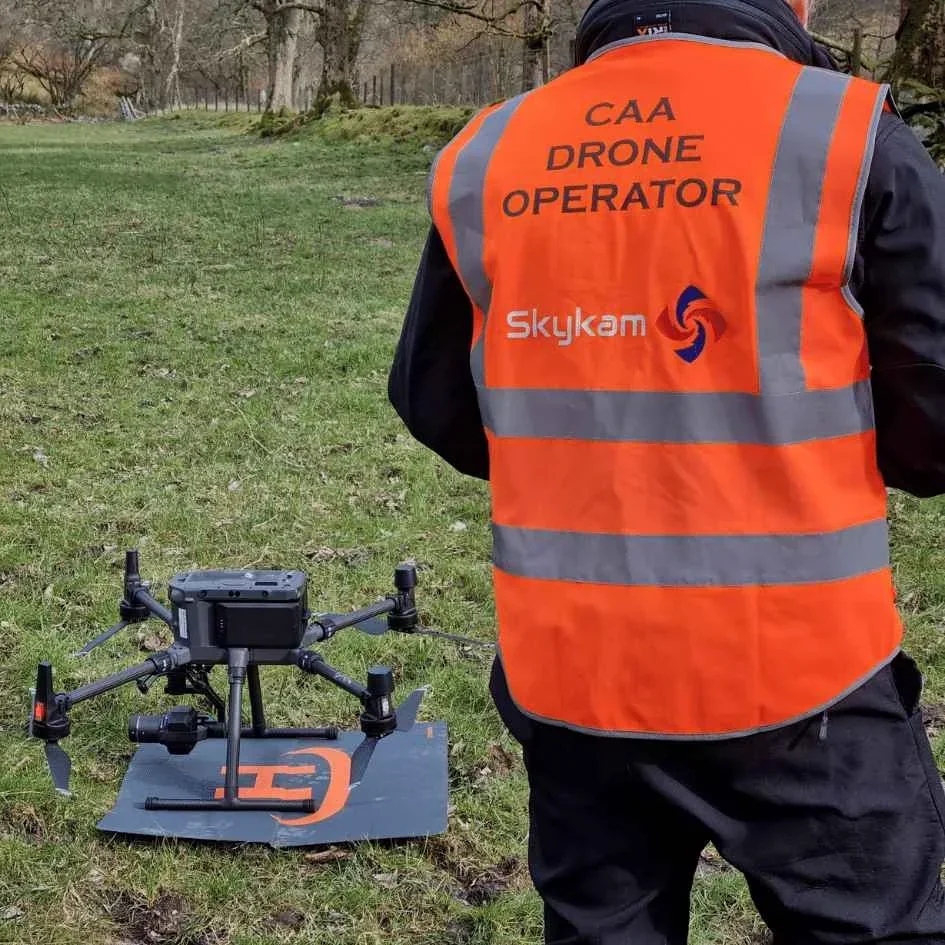
One of the most common points of confusion around the RPC-L2 is the assumption that the certificate alone authorises BVLOS flight. It does not. The RPC-L2 proves a drone pilot is competent to operate BVLOS. The legal authority to actually fly comes from a Specific Category Operational Authorisation issued by the CAA.
Every Specific Category operation must be covered by an Operational Authorisation that sets out its scope, conditions and limits. For BVLOS work the authorisation is normally granted through UK SORA, the Specific Operations Risk Assessment process that replaced the older Operating Safety Case route in April 2025.
The RPC-L2 is the pilot-competency input into that risk assessment. Without it, the CAA will not grant BVLOS privileges for ARC-a airspace. With it, the drone operator still has to build the operations manual, document the mitigations, and have the authorisation issued before a single BVLOS flight is legal.
This split between certificate and authorisation is what CAP 722 and the wider Air Navigation Order 2016 regime treats as normal. Qualifications prove the person can fly. Authorisations describe where, when, and under what conditions they are allowed to.
The RPC-L2 has a three-year validity, and the RPC-L3 is the route to anything more complex than ARC-a
The RPC-L2 is valid for three years from the date of issue. That is shorter than the five-year validity attached to the RPC-L1 and the GVC, and it reflects how quickly airspace integration policy is moving for BVLOS operations. Three years keeps the holder inside the current rules, not the ones that applied when they sat the test.
The qualification above the RPC-L2 is the RPC-L3. It is also valid for three years, and it covers VLOS and BVLOS operations up to ARC-c. ARC-c is a more complex air risk class that includes environments with other traffic, so the RPC-L3 is the step that matters for any work outside tightly segregated airspace.
The entry conditions for the RPC-L3 are correspondingly heavier. A candidate must hold a current RPC-L2, a Flyer ID, a LAPL medical certificate, and 50 logged BVLOS hours as pilot in command. That last figure is the one that separates the RPC-L2 from the RPC-L3 in practice — the Level 2 holder needs to actually fly BVLOS for a year or two before the Level 3 becomes reachable.
Beyond the RPC-L3 sits the RPC-L4, the expert-competence certificate intended for the most demanding operations. For most commercial BVLOS work in the UK today, the RPC-L2 and RPC-L3 carry the load.
Commercial RPC-L2 work is dominated by linear infrastructure, fixed-site inspection, and closed-site trials
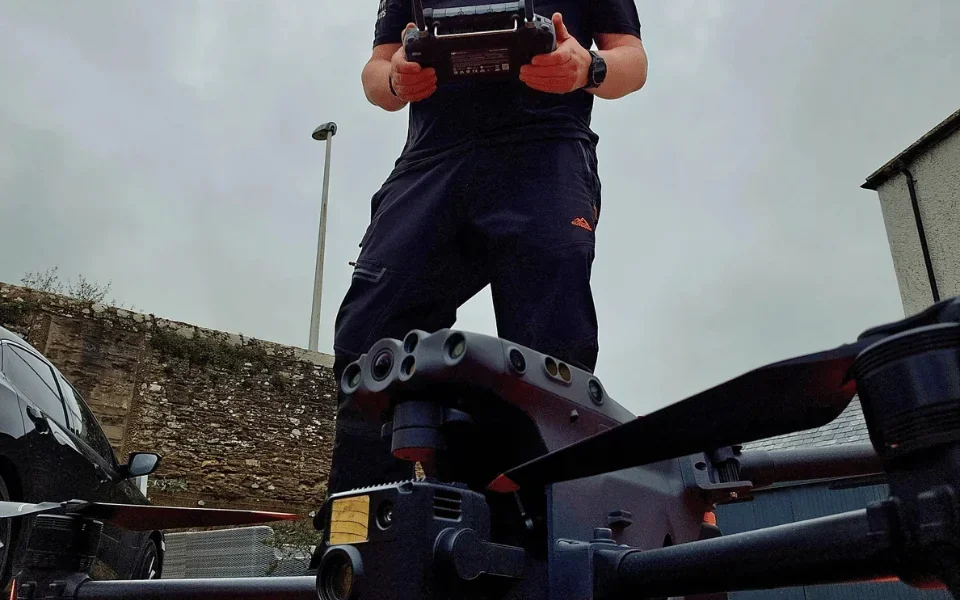
The commercial envelope the RPC-L2 opens up is narrower than the phrase BVLOS drone pilot makes it sound, but for the right job it is transformative. The AAE definitions in the CAA policy are a tell. The 15-metre linear-structure envelope exists to make power line surveys, railway inspections, and pipeline patrols practical. The 30-metre building envelope exists to support close-in structural survey and security.
Property security inspections are another recognised AAE use case. A drone operating along the perimeter of a fenced industrial site at fifteen metres of height, where no other aviation is realistically operating, is exactly the shape of operation the RPC-L2 was written for.
Delivery trials, large-site logistics, and segregated research operations also tend to sit in ARC-a when they are first stood up. The airspace is closed through NOTAM, the operator declares the volume as an AAE, and the Operational Authorisation is built on RPC-L2 competence. Wider public BVLOS delivery over unsegregated airspace still sits above the RPC-L3, not below it.
For general commercial drone work — roof surveys, construction progress capture, aerial photography — none of this applies. Those jobs are VLOS, and the Visual Line of Sight requirement is satisfied at GVC or RPC-L1 level. The RPC-L2 only earns its keep when Beyond Visual Line of Sight is the point of the operation, not an edge case.
So the honest way to think about the RPC-L2 is as a specialist qualification, not a career stepping-stone. It is the right certificate when a job genuinely cannot be flown in direct sight, when the airspace can be engineered down to ARC-a, and when an Operational Authorisation is going to wrap the whole operation. For anything else, the GVC or RPC-L1 is doing the real work and the RPC-L2 is an expensive way to hold an unused privilege.
For the wider legal picture that all of this sits inside, our UK drone laws explainer is the place to start. Got a specific ARC-a scenario you want covered — a linear-infrastructure brief, a closed-site trial, a tricky AAE boundary? Drop a note to peter@hiredronepilot.uk and I will come back to you directly. If you prefer the video version of this explainer, the comments are open on YouTube.
References
Primary source material for this article is the UK Civil Aviation Authority. External links open in a new tab.
- UK CAA — Level 1, 2 and 3 Remote Pilot Certificates and GVC · RPC-L2 entry conditions, privileges, and validity
- UK CAA — Remote Pilot Qualifications Overview · Flyer ID prerequisite, Specific Category qualification list
- UK CAA — Specific Category Overview · Operational Authorisation routes (PDRA, UK SORA) and BVLOS requirement
- UK CAA — Atypical Air Environment (AAE) · ARC-a airspace definitions, 30m/15m envelopes, AAE operating conditions
- UK CAA — Beyond Visual Line of Sight (BVLOS) · BVLOS is Specific Category only and requires an Operational Authorisation
- UK CAA — UK Regulatory Framework for Drones · Air Navigation Order 2016 and the UAS Regulations underpinning the RPC framework
Peter Leslie
Founder & GVC Drone Pilot
Peter is the founder of HireDronePilot. With thousands of logged commercial flight hours, he writes about drone technology, commercial surveying tactics, and UK aviation compliance.
Connect on LinkedIn