UK Drone Pilot Demand: Why Specialists Win and Generalists Struggle

Peter Leslie
12 Sept 2025
Key Takeaways
- UK drone pilot demand has not fallen — the market has split into a crowded low end and a specialist high end that clients still pay a premium for
- Sub-250g consumer drones put an enormous supply of hobbyists into the property and marketing-video space, which is where rates have compressed hardest
- The work that now commands premium rates is defined by the data the drone pilot delivers, not the drone itself — thermal, multispectral, LiDAR, RTK, photogrammetry
- Large infrastructure, energy, and survey firms are increasingly building in-house drone teams, so the freelance market tilts toward short specialist contracts
- Holding a GVC is now the floor for commercial drone work in the UK, not a differentiator — the differentiator is the sensor and the downstream processing stack
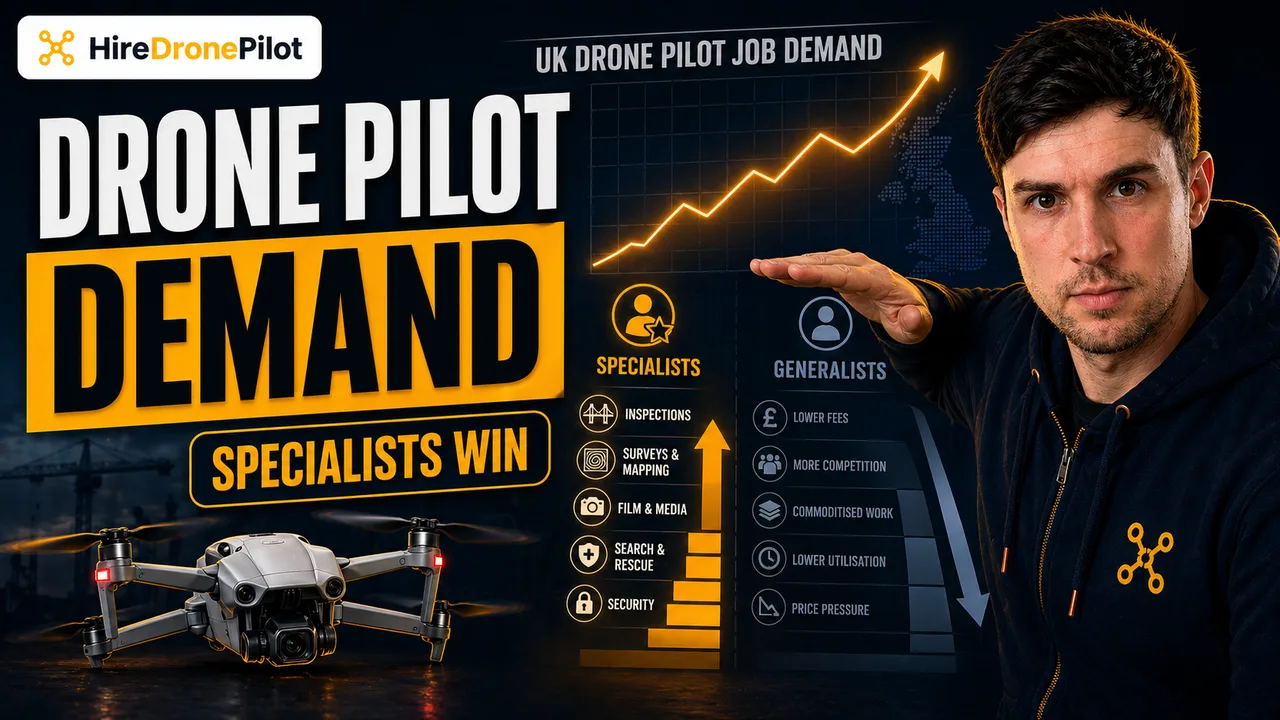
UK drone pilot demand did not collapse. It split. The market for a generic aerial photograph of a terraced house is saturated, and drone pilots competing there are being out-priced by hobbyists with sub-250g drones who will do it for a hundred pounds. The market for a dataset nobody else can deliver — an accurate LiDAR point cloud, a thermal fault report, a multispectral NDVI survey — is still paying drone operators comfortably into five figures on the day.
Anyone asking is there still work? is really asking which side of that split they are sitting on. This piece walks through what the two sides look like right now, and what actually separates them.
The drone pilot market has split into a saturated low end and a specialist high end
The easiest way to describe the current UK picture is to think of two separate markets that happen to share the word drone pilot.
The low end covers basic aerial photography for estate agents, short marketing clips for independent businesses, and simple event flyovers. Consumer drones that sit under 250 grams have pushed enormous supply into this tier, because you do not need a GVC to fly one recreationally and a hobbyist's clip is often visually indistinguishable from a commercial drone pilot's for the first two seconds of a listing video.
The high end is almost a different industry. It covers survey-grade mapping, technical inspections of assets where the output has to drive a maintenance decision, agricultural multispectral work, thermal imaging for building envelopes and solar arrays, and cinematic drone work that demands Specific Category permission and a heavy-lift platform. Those jobs do not collapse on price because the client cannot replace a licensed thermographer with a DJI Mini.
The difference in rate between the two markets is not subtle — it is usually an order of magnitude. A drone operator trying to run a business across both markets simultaneously is usually just running the low-end one and taking the occasional specialist booking.
Where the market still pays premium rates is sector by sector, and every one is defined by the sensor
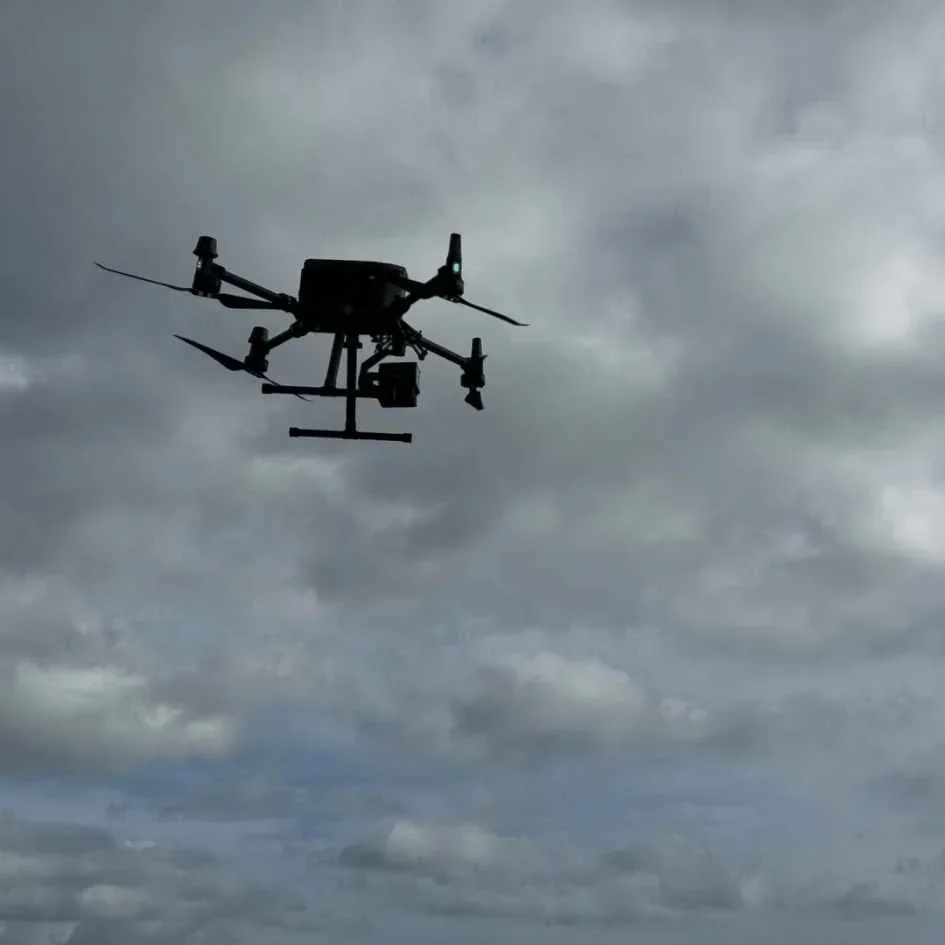
When I look at where specialist drone pilot quotes still hold their price, the sectors line up cleanly. What they share is that the drone is the delivery system and the real product is a dataset or a report.
| Sector | What the drone pilot actually delivers | Competency baseline |
|---|---|---|
| Construction & surveying | Volumetric calculations, orthomosaics, RTK-grade point clouds | GVC plus photogrammetry / surveying training |
| Energy & utilities | Thermal fault detection on PV arrays, OGI gas survey, tower inspection | GVC plus thermography certification |
| Agriculture | Multispectral crop health, yield mapping, irrigation planning | GVC plus GIS / NDVI processing |
| Broadcast & film | Heavy-lift cinema cameras, FPV sequences, integrated production workflow | GVC plus Operational Authorisation covering the specific shoot |
The common thread is that the client is buying output. Nobody in these sectors is paying a premium for the drone pilot in the abstract — they are paying for a pixel-accurate orthomosaic, a certified thermal report, a point cloud that drops into their existing CAD stack without rework.
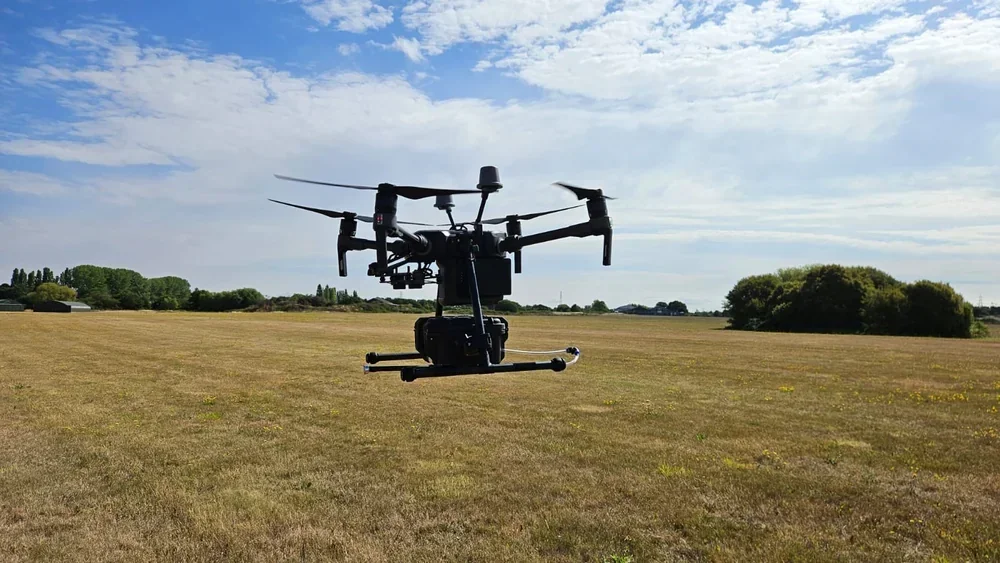
Holding a GVC is now the floor for commercial UK drone work, not a differentiator
The old argument that just holding a commercial drone qualification opens the door to premium work has not been true for a while. The GVC — and the newer RPC-L1 equivalent — is best understood as the entry ticket. It demonstrates that the drone pilot can hold an Operational Authorisation, fly to VLOS rules, and pass a basic flight test.
Holding one does not tell a client anything about whether the drone operator can stitch a twenty-hectare orthomosaic with centimetre-grade control, whether they can run a Level 1 thermographic survey, or whether they can deliver a roof inspection with a defect-marked PDF that an insurer will accept. Those are separate skills, acquired separately, and each one materially raises the drone pilot's effective day rate.
For newer drone pilots, the temptation is to stop once the GVC is issued and immediately start advertising commercially. It is understandable — the course cost money. But advertising a GVC in 2026 is roughly equivalent to a photographer advertising owns a camera. It is assumed, not impressive.
Large infrastructure and energy firms are pulling drone work in-house, which reshapes the freelance market
The structural story underneath the supply-and-demand numbers is that the biggest buyers of repeat drone work are training their own staff to fly. A national grid operator or a multi-site construction firm does not want to keep dispatching a different drone pilot every week; they want a small internal team who understand the asset, hold the right qualifications, and work inside the corporate safety-management system.
That means the big-volume freelance contracts of five years ago are being absorbed. The freelance market is tilting towards shorter specialist bookings — a drone pilot with a LiDAR payload on a weekend site, a thermographer on a PV farm, a heavy-lift drone operator for one night of broadcast.
The implication for a drone operator building a freelance book is that every contract has to earn its keep on a one-off basis. A freelancer can no longer assume a framework agreement with a single large client will sustain an entire year's revenue.
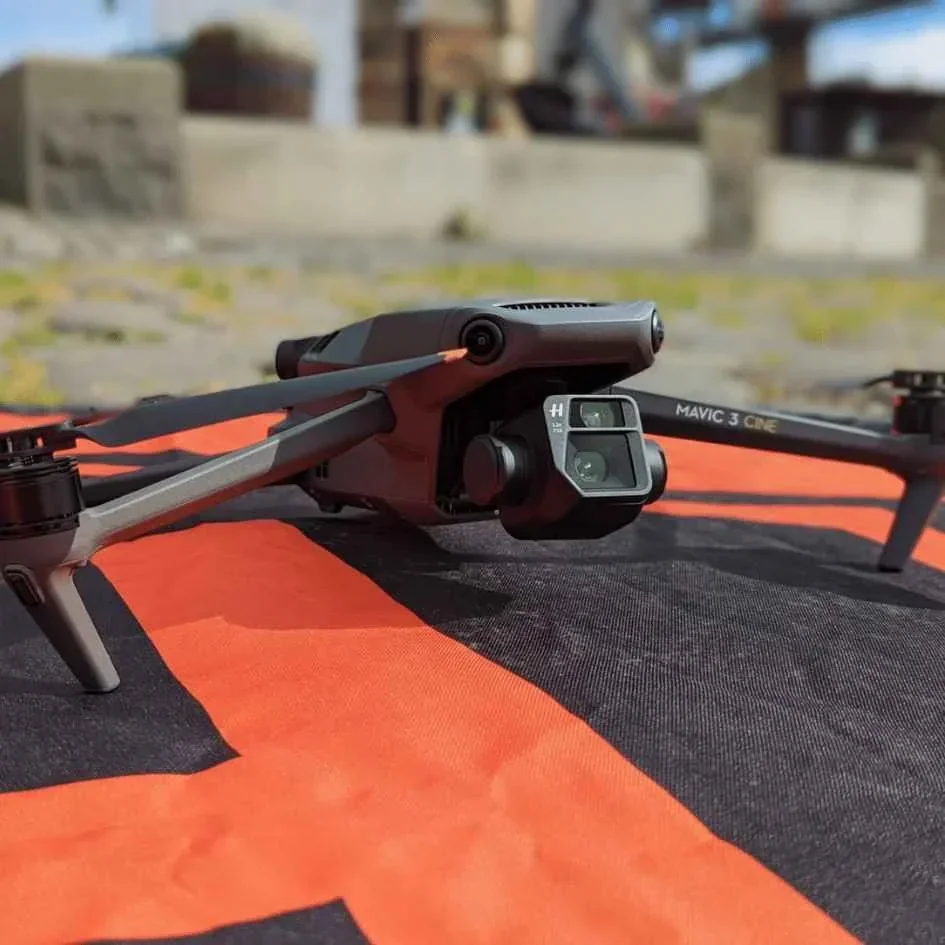
The drone operators surviving the split are the ones positioning themselves as data specialists first, drone pilots second
If you strip out the sector-specific language, the drone pilots who are doing well in the 2026 UK market have a couple of things in common. First, they describe themselves to clients by the data they deliver — thermographer, surveyor, mapping specialist — before they describe themselves as a drone pilot. Second, they own the downstream processing, not just the airtime. Third, they pick one or two sectors rather than chasing every lead.
That position also happens to be the one the biggest clients are actively looking for. A construction firm searching for a drone operator does not want a polymath; it wants someone who already understands RTK workflows and produces deliverables that land cleanly in the existing site-engineer software stack.
The drone pilots stuck in the generic-photography tier spend a lot of time complaining that the market has gone soft. It has not gone soft. It has moved upstairs, and the stairs are made of certifications, sensors, and delivery quality.
For clients, the right takeaway is to hire for the deliverable, not for the drone
If you are on the buying side — an estate agent, a facilities manager, a survey firm — the implication of the split is simple. Do not price the job against the lowest bid you can find on a social-media thread. Price it against the deliverable you actually need.
For a basic property listing, a generalist drone pilot with a GVC is fine and a hobbyist may even be adequate. For anything that has to stand up to a surveyor, an insurer, a regulator, or a broadcaster, the cost of hiring a drone pilot is effectively the cost of the specialist workflow that sits behind them — and cutting that budget is where clients lose the most money.
If you want a steer on what kind of drone operator your brief actually needs, drop a note to peter@hiredronepilot.uk and I will point you at the right category before you start comparing quotes. If you prefer the video version of this analysis, the comments are open on YouTube.
References
Primary source material for this article is the UK Civil Aviation Authority. External links open in a new tab.
- UK CAA — Flying drones for work · What counts as commercial use, competency matrix, PfCO history
- UK CAA — GVC, RPC-L1, L2 and L3 · Qualification hierarchy and what each one permits
- UK CAA — Remote Pilot qualifications overview · Flyer ID, A2 CofC and Specific Category competencies
- UK CAA — Beyond Visual Line of Sight (BVLOS) · Advanced specialist-only market context
Peter Leslie
Founder & GVC Drone Pilot
Peter is the founder of HireDronePilot. With thousands of logged commercial flight hours, he writes about drone technology, commercial surveying tactics, and UK aviation compliance.
Connect on LinkedIn