The UK RPC Framework Explained: The Four Drone Licence Levels

Peter Leslie
16 Apr 2026
Key Takeaways
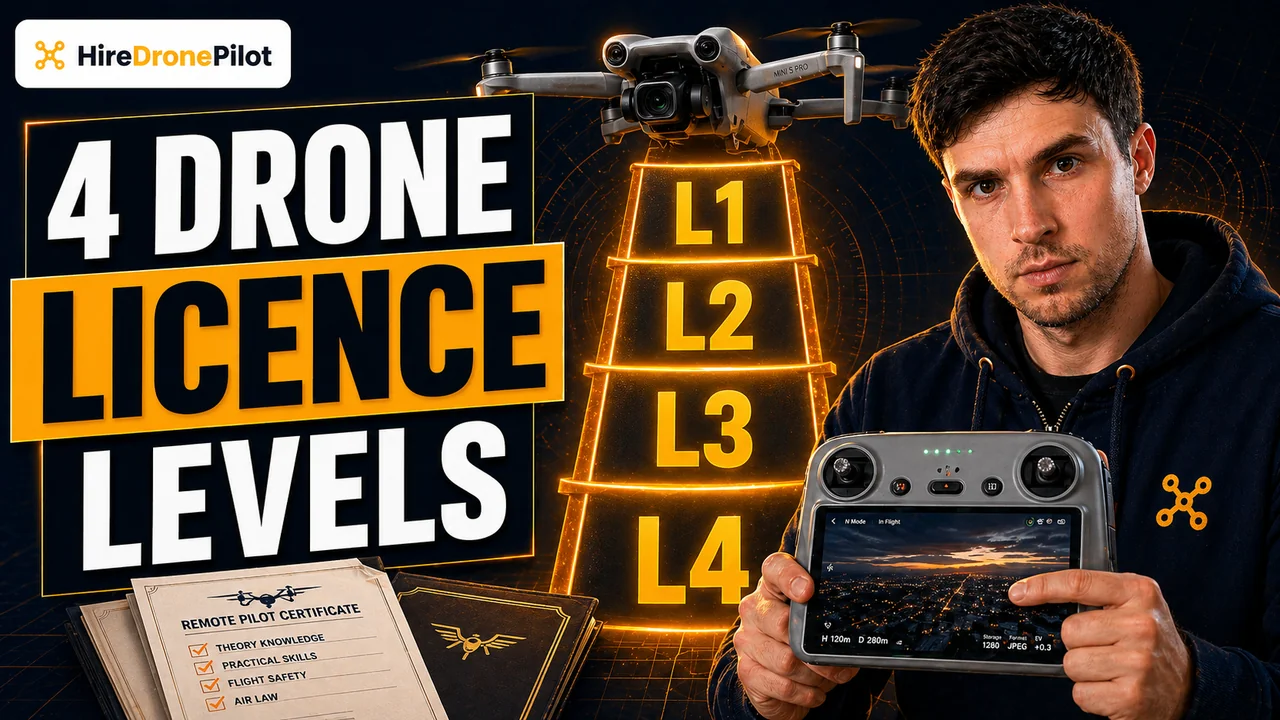
- The RPC framework is the CAA tiered qualification ladder for Specific Category drone operations, made up of four progressive levels from RPC-L1 to RPC-L4
- RPC-L1 is the entry qualification for Visual Line of Sight operations under a Specific Category authorisation, valid for five years
- RPC-L2 is the first Beyond Visual Line of Sight qualification, covering ARC-a airspace with no other traffic, and requires 50 logged flight hours plus a minimum age of 18
- RPC-L3 extends Beyond Visual Line of Sight operations up to ARC-c, demands a LAPL medical certificate, and is intended for complex environments with integrated traffic
- The A2 Certificate of Competency sits outside the RPC ladder entirely — it lives in the Open Category alongside the Flyer ID, and does not convert into an RPC
- The framework replaced the older PfCO route, which was withdrawn at the end of 2020 when the Open, Specific and Certified category structure came into force
The Remote Pilot Certificate framework is the UK Civil Aviation Authority qualification ladder that sits inside the Specific Category. It is not a single licence. It is four progressive levels — RPC-L1, RPC-L2, RPC-L3 and RPC-L4 — each designed to match a more complex slice of drone work, from everyday Visual Line of Sight flights through to expert-level Beyond Visual Line of Sight operations alongside manned aircraft.
If you are trying to work out which rung you need, the honest answer is that most commercial drone pilots in the UK only ever need the bottom one. The upper levels exist for BVLOS, complex airspace, and the operations that cannot be delivered under a PDRA.
The RPC framework is the CAA tiered qualification ladder for Specific Category drone operations
The Specific Category is the middle tier of the UK drone regime, sitting between the Open Category for low-risk flying and the Certified Category for passenger-carrying and high-risk operations. Anything more complex than Open needs an Operational Authorisation from the CAA — and that authorisation names the Remote Pilot qualification you need to hold.
The Specific Category lists five Remote Pilot qualifications: the GVC, the RPC-L1, the RPC-L2, the RPC-L3 and the RPC-L4. Four of those five — every RPC — form a single structured ladder. You start at L1, clear operating hours and examinations at each stage, and work up through L2, L3 and L4 as your operations get more complex.
The GVC is the odd one out. It is a standalone Specific Category qualification with no progression route. It unlocks the same PDRA01 work as the RPC-L1, but it does not open the door to BVLOS through L2 or L3. That is why the CAA built the RPC ladder separately — to give drone pilots a clean, structured path into more advanced work.
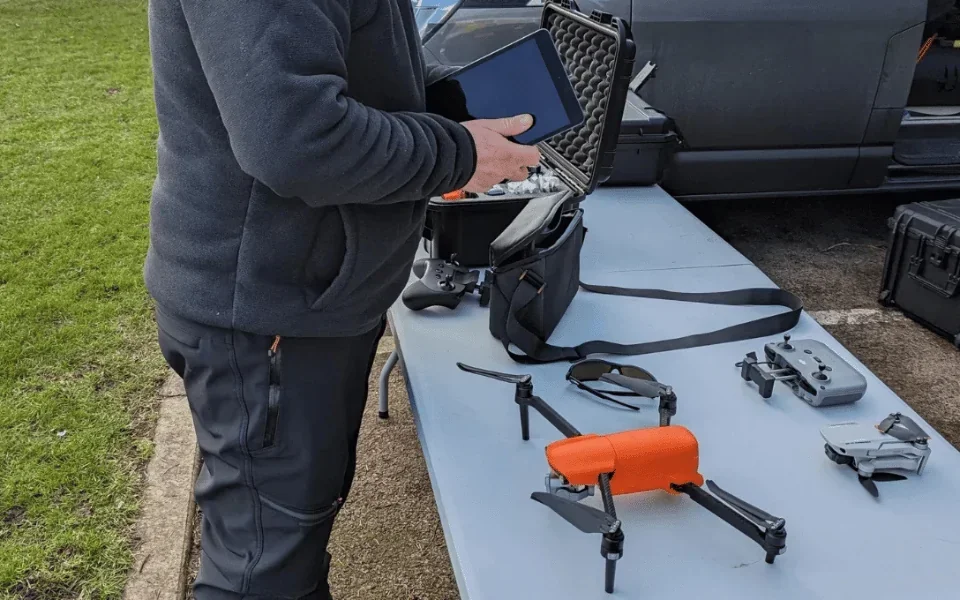
The framework replaced the older PfCO route when the Open, Specific and Certified structure came into force at the end of 2020
Before the current framework, UK commercial drone work ran on the Permission for Commercial Operations — the PfCO. It was a single piece of paper that let you fly for money, regardless of whether you were inspecting a roof or surveying a quarry. The PfCO was withdrawn at the end of 2020 and replaced by the three-category regime the CAA uses today.
The new regime splits the work up by risk rather than by whether you are paid for it. Hobby, paid and commercial flying all live on the same risk-graded map, and what governs you is the complexity of the operation, not the commercial model. That move created the gap the RPC framework was designed to fill.
The GVC arrived as the direct successor to the PfCO for standard VLOS work. The RPC ladder arrived as the structured progression for anyone wanting to climb toward BVLOS. They are complementary, not competing. For a side-by-side comparison of where they overlap and where they diverge, our RPC-L1 versus GVC comparison covers it in full.
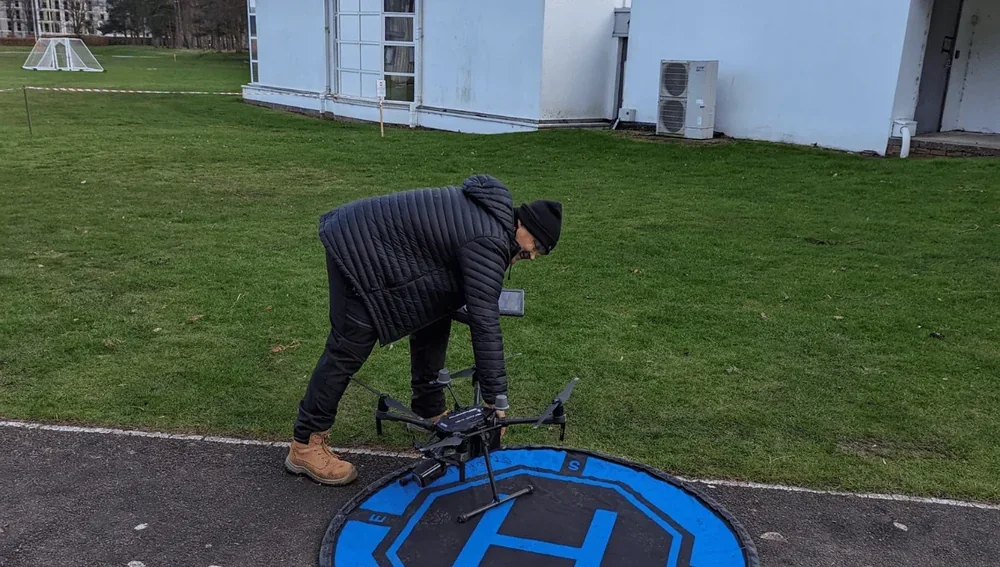
RPC-L1 is the entry rung, unlocking Visual Line of Sight operations under a Specific Category authorisation
The RPC-L1 is where every drone operator joins the ladder. It is a Visual Line of Sight qualification, valid for five years, with no minimum age. The only entry condition is a valid Flyer ID, although holders of a valid GVC are exempt from the RPC-L1 theory examination.
RPC-L1 comes in two variants: RPC-L1(R) for rotorcraft (multirotor drones) and a separate RPC-L1 for fixed-wing drones. If you fly both types, you need both certificates — this is a meaningful difference from the GVC, which covers both on a single piece of paper. For more detail on what the qualification covers and how to earn it, see the RPC-L1 explainer.
Operationally, RPC-L1 and GVC sit at the same altitude on the PDRA01 map. Both unlock flying inside residential, commercial, industrial and recreational areas with a 50-metre buffer from uninvolved people, a 500-metre range cap, and the same 120-metre altitude ceiling as the Open Category. The difference only appears when you want to take the next step.
RPC-L2 is the first Beyond Visual Line of Sight qualification, covering ARC-a airspace with no other traffic
The RPC-L2 is the first BVLOS rung. It qualifies you for VLOS flying and for BVLOS flying in ARC-a environments — segregated airspace like atypical air environments where no other traffic is operating. It is not a general BVLOS licence. It is a BVLOS licence in the single lowest-risk air-risk class.
Entry conditions step up sharply from L1. You must be at least 18 years old, hold a valid Flyer ID, hold a same-category RPC-L1, and have logged a minimum of 50 flight hours in the Specific Category on that same drone type. The certificate itself is valid for three years, not the five of the entry level — a shorter window that reflects the higher operational risk.
This is also the first point where the ladder forces you to commit to a specific drone type. Because the RPC-L2 is awarded in the same category as your RPC-L1 — rotorcraft or fixed-wing — a drone operator working across both types needs to run the whole progression twice.
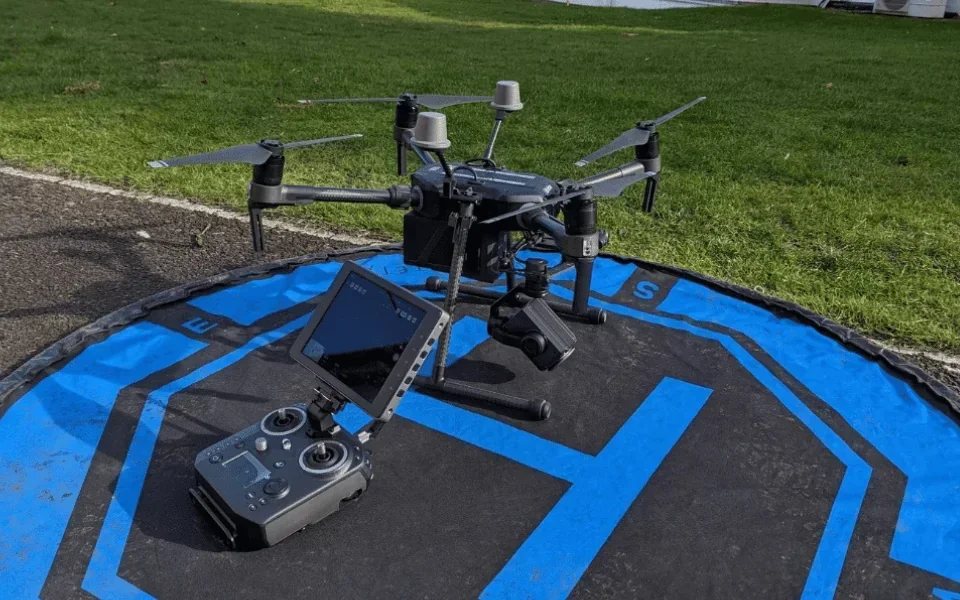
RPC-L3 is the advanced Beyond Visual Line of Sight qualification for complex airspace up to ARC-c
The RPC-L3 is the advanced rung. It authorises VLOS and BVLOS operations up to ARC-c — the air-risk class that covers more complex environments including airspace integrated with other traffic. It is the qualification you need to fly BVLOS anywhere that is not a segregated volume.
Entry conditions are the steepest so far. You need a Flyer ID, a valid RPC-L2, a minimum of 50 logged BVLOS flight hours, and a Light Aircraft Pilot Licence (LAPL) medical certificate. The LAPL medical is the same medical standard used in recreational crewed aviation, and introducing it at L3 reflects the fact that an L3 drone operator is flying in airspace shared with other aircraft, not in a cleared volume. The RPC-L3 is valid for three years.
If you are starting from scratch today, the L3 represents the top of the realistic progression ladder. It is the highest qualification with published, stable entry conditions across the CAA's Remote Pilot qualifications hub.
RPC-L4 is the expert rung aimed at Certified-adjacent operations, but its entry conditions are still evolving
The RPC-L4 sits at the top of the ladder. It is the expert rung, intended for operations that push into the space adjacent to the Certified Category — flying alongside crewed aircraft in fully integrated airspace, the kind of work that is closer to conventional aviation than to a typical Specific Category survey.
The RPC-L4 entry conditions are not fully documented across the CAA's public Remote Pilot qualifications references. The framework itself is still evolving alongside wider national and international policy on drone integration with manned aviation, so the specific hours, medical standards and prerequisites are being finalised rather than locked in. Treat any figure you see for L4 as provisional until the CAA publishes stable guidance.
For most drone pilots reading this, the practical takeaway is that the L4 is not something you plan around in 2026. It is the horizon the framework is pointing toward, not a qualification you book next month.
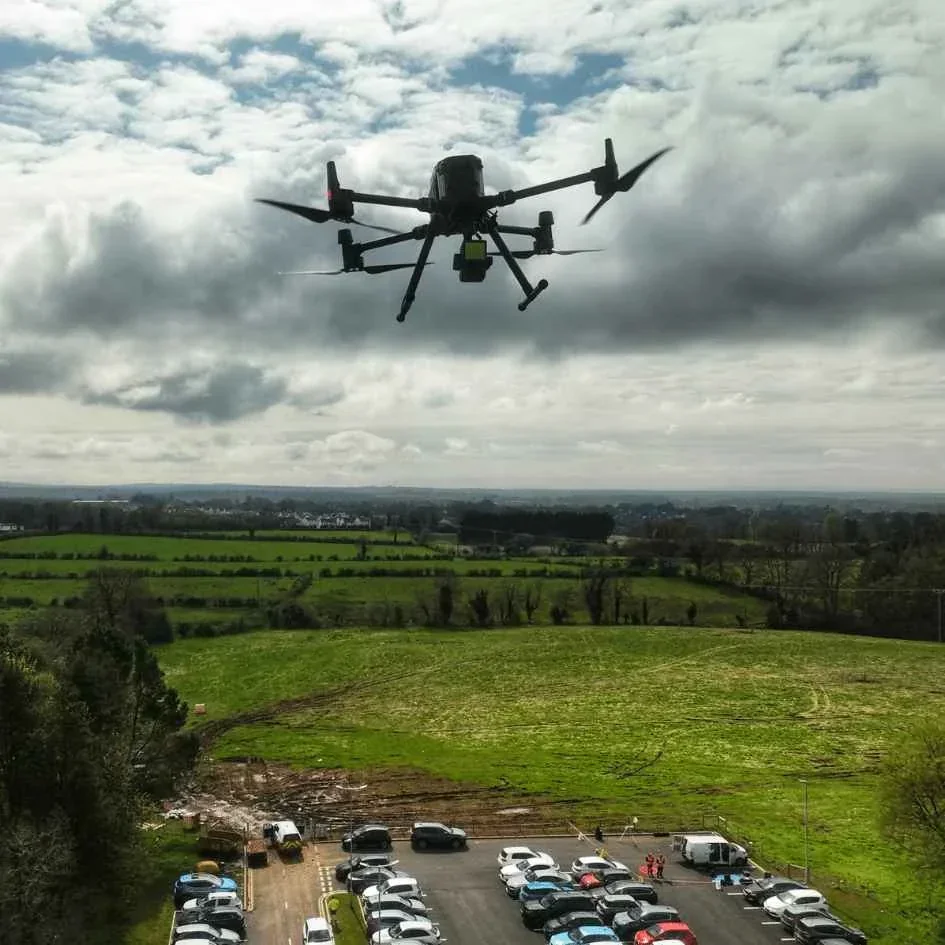
The A2 CofC sits outside the RPC ladder — it lives in the Open Category, not the Specific Category
A common source of confusion is the A2 Certificate of Competency. The A2 CofC is not part of the RPC ladder. It sits inside the Open Category alongside the Flyer ID, and it authorises flying in the Near People (A2) sub-category — no Specific Category authorisation required.
The A2 CofC covers a real slice of useful flying — it lets you operate a C2-class drone closer to uninvolved people than the default Open A3 rules permit — but it does not feed into an RPC. You cannot convert an A2 CofC into an RPC-L1, and an A2 CofC holder who wants to move into PDRA01 commercial work has to start from scratch on either the GVC or the RPC-L1 route. The A2 CofC is a VLOS-only Open Category qualification, valid for five years.
The cleanest way to think about it: Open Category qualifications (Flyer ID, A2 CofC) sit above one boundary; Specific Category qualifications (GVC, RPC-L1 through L4) sit above another. The line between them is whether you need an Operational Authorisation from the CAA. If you do, you are in RPC/GVC territory. If you do not, you are in A2 CofC or Flyer ID territory.
Which rung you need depends on whether your operations ever go beyond PDRA01
The hard question for any commercial drone operator is: which qualification does any given job actually demand? The honest answer for most UK work is that an RPC-L1 or a GVC is enough. PDRA01 covers roof inspections, building surveys, drone photography in residential and commercial areas, and most of the VLOS work that fills a commercial calendar.
You only need to climb the ladder when the job cannot be done under PDRA01. That means BVLOS, flying close to crowds, flying close to people with a drone over 500 grams, swarm operations, dropping items, or flying above the 120-metre altitude ceiling — all operations that need a UK SORA-based Operational Authorisation rather than a PDRA.
The general rule is that your authorisation sets the rung, not the other way round. The CAA issues the authorisation first, and the authorisation names the minimum RPC or GVC level the Remote Pilot must hold. If you are planning the progression without a specific job in mind, our overview of drone pilot qualifications lays out the typical routes.
How the four RPC levels compare at a glance
| Level | Operations | Entry conditions | Validity |
|---|---|---|---|
| RPC-L1 | VLOS only | Flyer ID (valid GVC exempts from theory test) | 5 years |
| RPC-L2 | VLOS, BVLOS in ARC-a | Flyer ID, RPC-L1 (same category), 50 logged flight hours, age 18+ | 3 years |
| RPC-L3 | VLOS, BVLOS up to ARC-c | Flyer ID, RPC-L2, 50 logged BVLOS hours, LAPL medical, age 18+ | 3 years |
| RPC-L4 | Expert-level, Certified-adjacent | Not fully documented in CAA references — framework still evolving | Under development |
So the RPC framework is the CAA's answer to the post-PfCO question of how drone pilots progress from simple VLOS work into BVLOS and, eventually, operations adjacent to crewed aviation. Four rungs, each with its own air-risk class and its own entry conditions. The bottom rung unlocks everyday commercial flying. The top rung is still being shaped.
For most drone operators the honest answer is still an RPC-L1 or a GVC. For anything above that, the ladder exists — and it is worth climbing with a specific authorisation in mind rather than collecting qualifications for their own sake. Our UK drone laws hub stitches the framework into the wider legal picture, including the Air Navigation Order 2016 and the UAS Regulations that give the whole structure its legal force.
Got a specific scenario you want covered — an unusual operation, a borderline authorisation question, or a qualification decision you are stuck on? Drop a note to peter@hiredronepilot.uk and I will come back to you directly. If you prefer the video version of this explainer, the comments are open on YouTube.
References
Primary source material for this article is the UK Civil Aviation Authority. External links open in a new tab.
- UK CAA — Remote Pilot Qualifications Overview · the five Specific Category qualifications and their split from Open Category certificates
- UK CAA — Level 1, 2 and 3 Remote Pilot Certificates and GVC · entry conditions, validity, operations scope for each RPC level
- UK CAA — A2 Certificate of Competency (A2 CofC) · Open Category qualification that sits outside the RPC ladder
- UK CAA — Specific Category Overview · PDRA01, UK SORA, and when each route applies
- UK CAA — PDRA01 Operational Authorisation · the standard Specific Category authorisation most RPC-L1 and GVC holders fly under
- UK CAA — UK Regulatory Framework for Drones · Air Navigation Order 2016 and UAS Regulations — legal basis for the whole framework
Peter Leslie
Founder & GVC Drone Pilot
Peter is the founder of HireDronePilot. With thousands of logged commercial flight hours, he writes about drone technology, commercial surveying tactics, and UK aviation compliance.
Connect on LinkedIn