What Is UK SORA? Specific Operations Risk Assessment Explained

Peter Leslie
27 Apr 2026
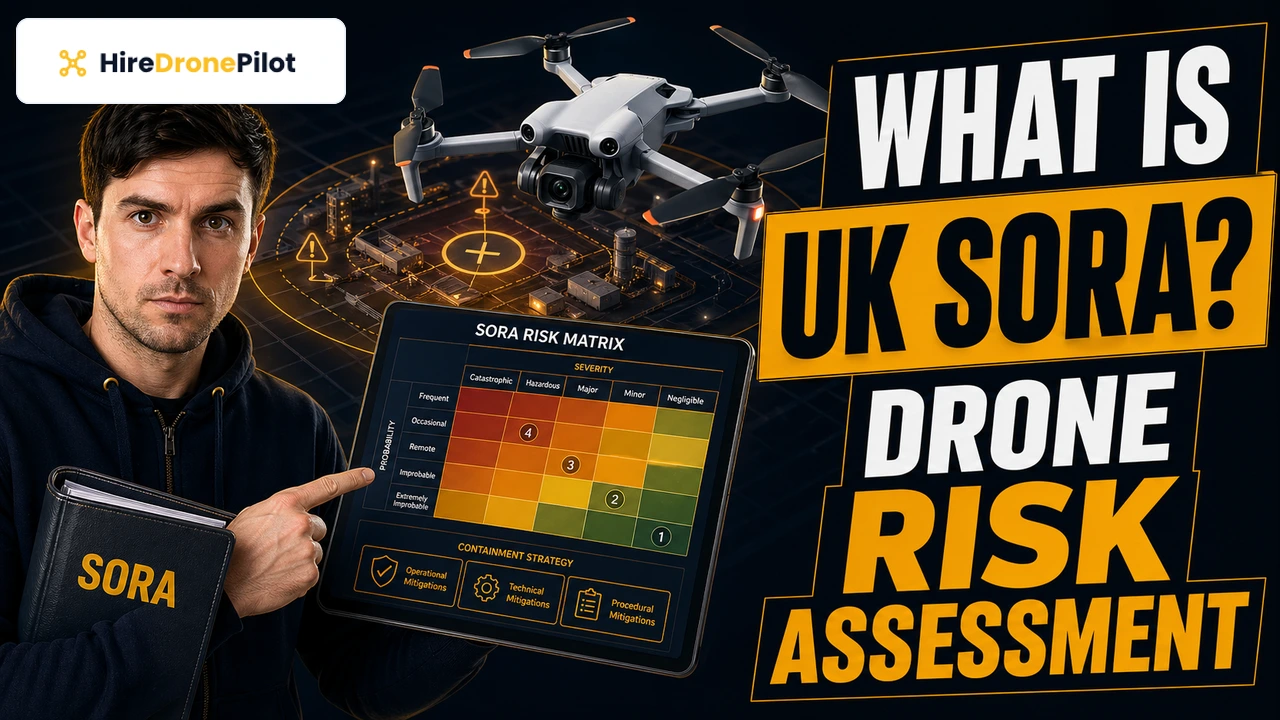
Key Takeaways
- UK SORA is the Specific Operations Risk Assessment, the application route for any Specific Category drone operation that PDRA01 does not cover
- UK SORA replaced the older OSC (Operating Safety Case) method on 23 April 2025, after which the OSC service closed to new applications
- Typical SORA-only operations include BVLOS flying, dropping items from a drone, flying above 120 metres, flying close to crowds, and swarm operations
- The application turns on calculating a SAIL (Specific Assurance and Integrity Level) rating and the containment levels needed to mitigate the risk
- One UK SORA authorisation can cover multiple locations and multiple drone models, where the older OSC was usually written around a single operation
UK SORA stands for Specific Operations Risk Assessment, and it is the authorisation route the UK Civil Aviation Authority writes for drone operations that sit beyond the Open Category and beyond what PDRA01 already covers. If your operation involves Beyond Visual Line of Sight, drops items, flies above 120 metres, or works close to crowds, the route to legal flight is UK SORA.
UK SORA replaced the older Operating Safety Case method on 23 April 2025. The CAA closed the OSC application service the previous day, and from that point onwards every new Specific Category authorisation outside PDRA01 has been written under the SORA framework. The acronym is new to many drone operators, and the application looks intimidating from the outside, but the structure is more navigable than it first appears.
UK SORA is the Specific Category authorisation route for any operation that PDRA01 does not cover
The Specific Category sits between the Open Category (basic flying that needs no authorisation) and the Certified Category (the manned-aviation-equivalent end of the spectrum used by the largest delivery and passenger drones). The Specific Category is where most commercial drone operators live, and the CAA gives you two ways to get an Operational Authorisation to fly inside it.
The first is PDRA01 (Pre-Defined Risk Assessment 01). It is the simpler route — the CAA has done the risk assessment for you, the limits are pre-baked, and you accept those limits in exchange for a fast 24-hour turnaround. PDRA01 covers VLOS flying with drones between 250g and 25kg in any UK location, subject to airspace, and is the route most commercial drone operators take for inspection, photography, and survey work.
The second is UK SORA. It is the route you use when PDRA01 does not cover the operation. SORA is a full bespoke risk assessment — the CAA has not pre-decided the limits, so you write them yourself, justify them with evidence, and the CAA sets the scope of the authorisation around what you have proven safe. It is more work to apply for, and it is the only route to operations like Beyond Visual Line of Sight, item drops, and high-altitude flying.
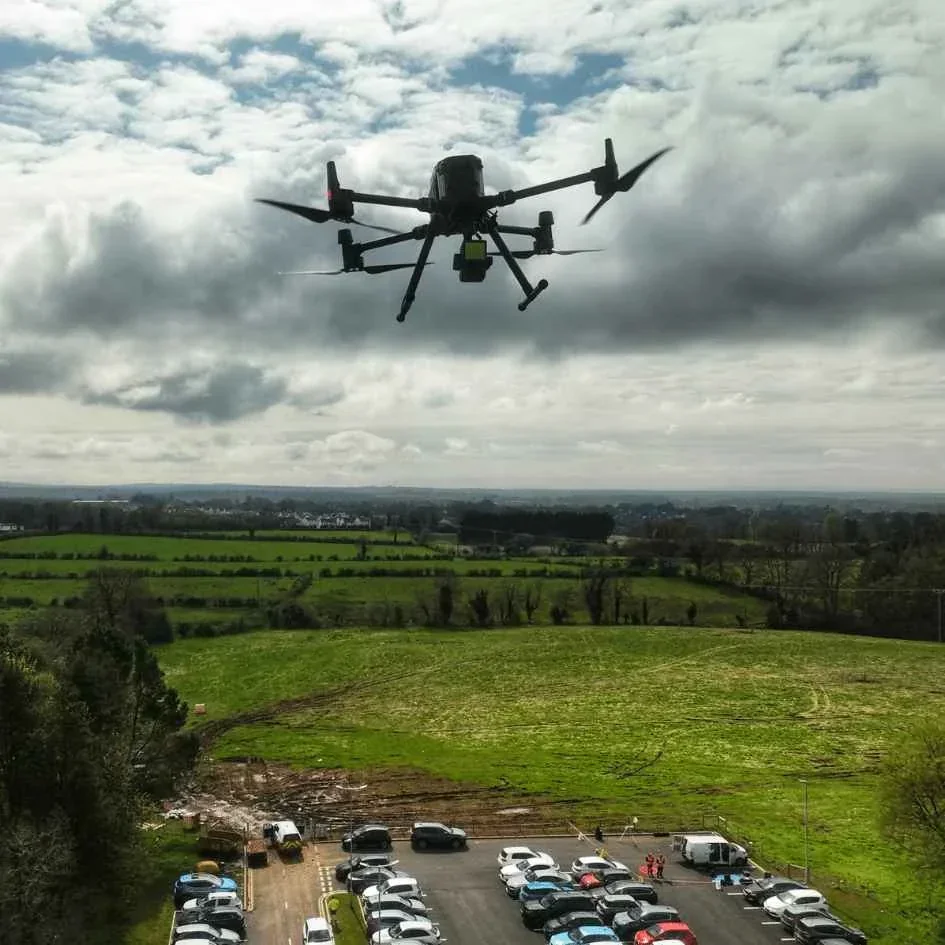
UK SORA replaced the OSC application method on 23 April 2025, and that switch closed the door on the older route
Before SORA arrived, the Specific Category authorisation route outside PDRA01 was the Operating Safety Case, governed by CAP 722A. OSC was the legacy framework — the OSC application service ran for years and most experienced commercial drone operators built their first non-PDRA01 authorisation against it.
From 23 April 2025 the CAA closed the OSC application service to new submissions. Every new Specific Category application outside PDRA01 from that date forward is built under UK SORA. The old framework is no longer accepted for fresh authorisations, even where a similar operation was previously approved.
Existing OSC-based Operational Authorisations remain valid until their listed expiry date — the change did not invalidate live authorisations. Variations to current OSC authorisations can still be submitted in the normal way until expiry. But when an OSC authorisation runs out, the reapplication has to go through UK SORA. The full timeline of the transition, including the exact reapplication windows the CAA worked through, sits in our UK SORA release date and timeline guide.
Typical SORA-only operations include BVLOS, item drops, flights above 120 metres, and flights close to crowds
The fastest way to know whether you need UK SORA is to read the list of operations the CAA flags as outside PDRA01. The categories below are the ones that send drone operators to the SORA application:
- Flying Beyond Visual Line of Sight
- Dropping items from a drone (lift-and-deliver designs, agricultural payloads)
- Flying close to crowds, or close to people with a drone weighing 500g or more
- Flights above the 120-metre altitude ceiling the rest of UK drone law uses as its hard cap
- Swarm operations — multiple drones flown simultaneously by one or coordinated drone operators
Not every operation needs SORA the moment it touches one of the items above. The detail matters: a drop of less than 30 grams of light, low-energy material onto a sterile surface looks different in risk terms from a delivery drop of a kilogram payload over a built-up area. The full breakdown of what tips an operation from PDRA01 into SORA territory sits in our PDRA01 vs UK SORA comparison.
One increasingly common SORA application is for drone-in-a-box operations — the autonomous fixed-base systems used for security patrols, infrastructure monitoring, and remote inspection. These are almost always BVLOS, often involve repeat sorties from a single base, and need a SORA authorisation rather than PDRA01. The dedicated drone-in-a-box UK regulations guide walks through how these systems land inside the SORA framework.
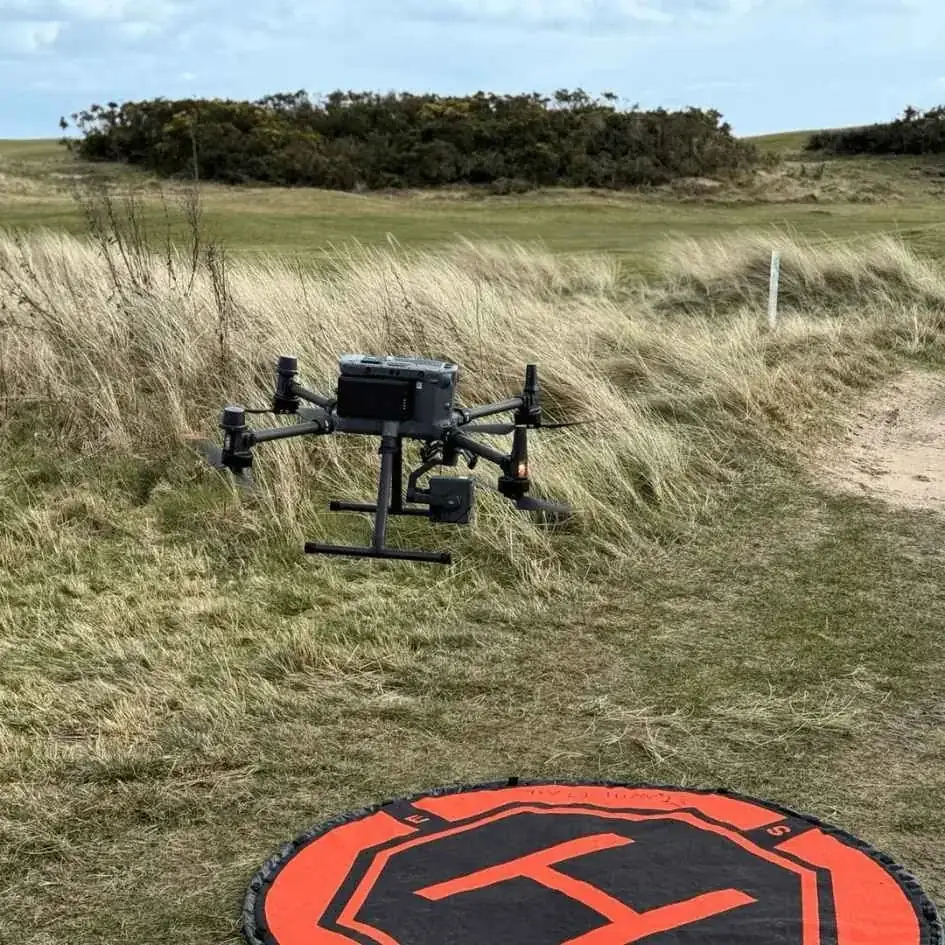
The application process turns on calculating a SAIL rating and the containment levels needed to mitigate the risk
UK SORA is structured around two ideas the CAA borrowed from the European SORA standard. The first is the SAIL rating — Specific Assurance and Integrity Level. SAIL describes how much assurance and rigour the operation needs, and it scales with the risk to people on the ground and to other airspace users. A low-risk SAIL operation needs less evidence; a high-risk SAIL operation needs deep evidence and stricter mitigations.
The second is the containment level. Containment is the discipline of guaranteeing the drone stays inside the volume of airspace you have planned for it. The CAA wants to see how the drone, the radio link, the geo-fence, and the procedures combine to keep the operation inside the operational volume, the ground risk buffer, and the adjacent area you defined in your application.
Calculating the SAIL and the containment level is the bulk of the application work. The CAA's online portal walks you through it, but the inputs come from your operations manual, your drone's reliability data, your drone pilots' qualifications, and the geographic specifics of where you intend to fly. Most SORA applicants pair the application with an RPC-L2 or RPC-L3 qualification, depending on how complex the operation is — the licensing is part of the SAIL story.
UK SORA supports multiple operating locations and multiple drone models under a single authorisation
One of the practical wins of UK SORA over the older OSC is flexibility. The CAA designed UK SORA to support multiple locations under a single authorisation. Where OSC authorisations were typically written around a specific site or a narrow set of sites, a UK SORA authorisation can cover a portfolio of operating locations at once, provided each is accounted for in the risk assessment.
UK SORA also explicitly supports using different drone models under one authorisation. Drone operators who fly a fleet — a small inspection drone for confined work, a larger survey drone for open sites, a heavy-lift drone for occasional payload work — can write one SORA authorisation that covers all three, rather than holding three parallel authorisations.
Both flexibilities are conditional. The application has to evidence each location and each drone model you want covered. But the framework is built to consolidate, where the OSC framework forced fragmentation. For a drone operator running multiple sites or a varied fleet, that consolidation is the headline reason to welcome the SORA switch.
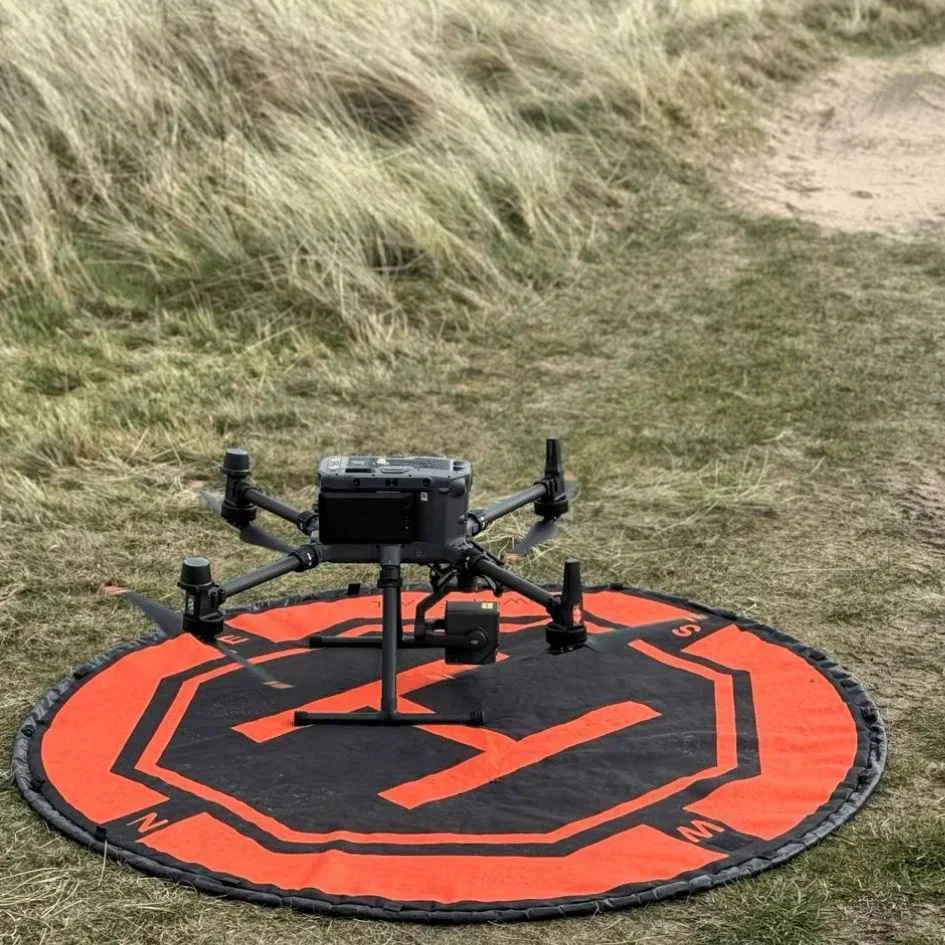
Existing OSC holders can keep their authorisation until expiry, but reapplications go through UK SORA
If you held an OSC-based Operational Authorisation when SORA arrived in April 2025, the change did not pull the rug from under you. The transition rule is simple: existing OSC authorisations remain valid until their stated expiry date. You can keep flying under the conditions the OSC set, and you can submit variations to the OSC authorisation in the normal way as long as it is live.
The change shows up at renewal. When the OSC authorisation expires, the reapplication is a fresh UK SORA application — not a tweaked OSC. Most operators reapply 28 days to 3 months before expiry, exactly as they would for a PDRA01 renewal, but the substance of the application is rebuilt for the SORA framework. The operations manual you wrote for OSC is a useful starting point, but it has to be reworked against the SAIL and containment language SORA expects.
For drone operators new to the Specific Category — that is, anyone whose first authorisation outside PDRA01 was issued from 23 April 2025 onwards — the OSC route does not exist as a fallback. UK SORA is the entry door. The good news is the CAA's published guidance for SORA is more comprehensive than OSC ever was, and the multi-location and multi-drone flexibility means a single application can cover a wider operation than the OSC equivalent would have done.
UK SORA looks daunting from outside, and the application is genuinely a piece of work, but it is the framework UK drone law has settled on for the next decade of Specific Category operations. The right time to engage with it is the moment your planned operation drifts past PDRA01's pre-defined limits — not the day you submit the application. For the wider regulatory picture, our UK drone laws hub stitches everything together.
If your planned operation is close to the PDRA01 boundary and you want to know which side of the line it sits on, the how to obtain Operational Authorisation guide is the place to start before you commit to the SORA route.
Got a borderline scenario you want covered — an operation you are not sure needs SORA, an OSC renewal you are about to reapply on, or a new SORA application you are scoping? Drop a note to peter@hiredronepilot.uk and I will come back to you directly. If you prefer the video version of this explainer, the comments are open on YouTube.
References
Primary source material for this article is the UK Civil Aviation Authority. External links open in a new tab.
- UK CAA — Specific Category Overview · PDRA vs UK SORA application routes, what the Specific Category covers
- UK CAA — UK SORA-based Operational Authorisations · SAIL rating, containment levels, multiple locations, multiple drone models
- UK CAA — Moving from OSC to UK SORA · 23 April 2025 transition date, OSC closure, reapplication windows
- UK CAA — PDRA01 Operational Authorisation Overview · PDRA01 limits and conditions, used to define what UK SORA covers instead
- UK CAA — Beyond Visual Line of Sight (BVLOS) · BVLOS as a typical UK SORA trigger
Peter Leslie
Founder & GVC Drone Pilot
Peter is the founder of HireDronePilot. With thousands of logged commercial flight hours, he writes about drone technology, commercial surveying tactics, and UK aviation compliance.
Connect on LinkedIn