How To Obtain Operational Authorisation In The UK Specific Category

Peter Leslie
26 Apr 2026
Key Takeaways
- The two routes to a UK Operational Authorisation are PDRA01 (off the shelf) and UK SORA (bespoke), and almost every commercial drone operator starts with PDRA01
- Before you can apply you need a Flyer ID, the right Operator ID, a current GVC or RPC-L1 Remote Pilot Certificate, and insurance that complies with Regulation (EU) 785/2004
- The Operations Manual that sits behind the authorisation should be built from the CAA's CAP 2606 template, and you must produce it on request even though you no longer upload it
- The PDRA01 application takes about fifteen minutes on the CAA Portal, costs 524 pounds with no VAT, and the CAA aims to issue the authorisation within twenty four hours
- Currency, record-keeping and the annual renewal are what keep the authorisation alive — let it lapse and your insurance compliance falls with it
There are two routes to an Operational Authorisation in the UK Specific Category: PDRA01, the off-the-shelf route most commercial drone pilots use, and UK SORA, the bespoke route for anything that falls outside it.
The PDRA01 process is mostly a checklist. You confirm you meet a defined set of requirements, declare a valid Operations Manual, pay the fee, and the CAA aims to email you the authorisation within twenty four hours. UK SORA is a different sort of project, with a written risk assessment behind it, and most drone operators never need to touch it. Here is exactly what each route looks like.
Most drone operators obtain their Operational Authorisation through PDRA01, the fastest and cheapest of the two routes the CAA offers
UK drone law sorts every flight into one of three categories. The Open Category is the low-risk lane and needs no authorisation. The Specific Category sits in the middle and is where every commercial drone job that involves residential, commercial, industrial or recreational areas legally lives. The Certified Category is reserved for operations that look more like manned aviation than drone work.
An Operational Authorisation is the document that turns a Specific Category flight plan into a legal flight, and the CAA writes it through one of two paths. PDRA01 is the Pre-Defined Risk Assessment route — the CAA has done the risk work for you, and the application is essentially a declaration that your operation will sit inside the pre-agreed limits. It costs 524 pounds a year, with no VAT, runs for twelve months, takes about fifteen minutes to complete, and the CAA aims to issue the authorisation within twenty four hours.
UK SORA is the bespoke route. It is the path you take when your operation is outside the PDRA01 envelope and you have to build the risk case yourself. Most drone operators never apply for one. The PDRA01 covers drones between 250 grams and 25 kilograms, flown within Visual Line of Sight, in residential, commercial, industrial and recreational areas — that is the work that makes up the bulk of UK roof inspections, surveys, and close-to-buildings shoots.
Before you apply you need a Flyer ID, the right Operator ID, a current Remote Pilot qualification, and compliant insurance already in place
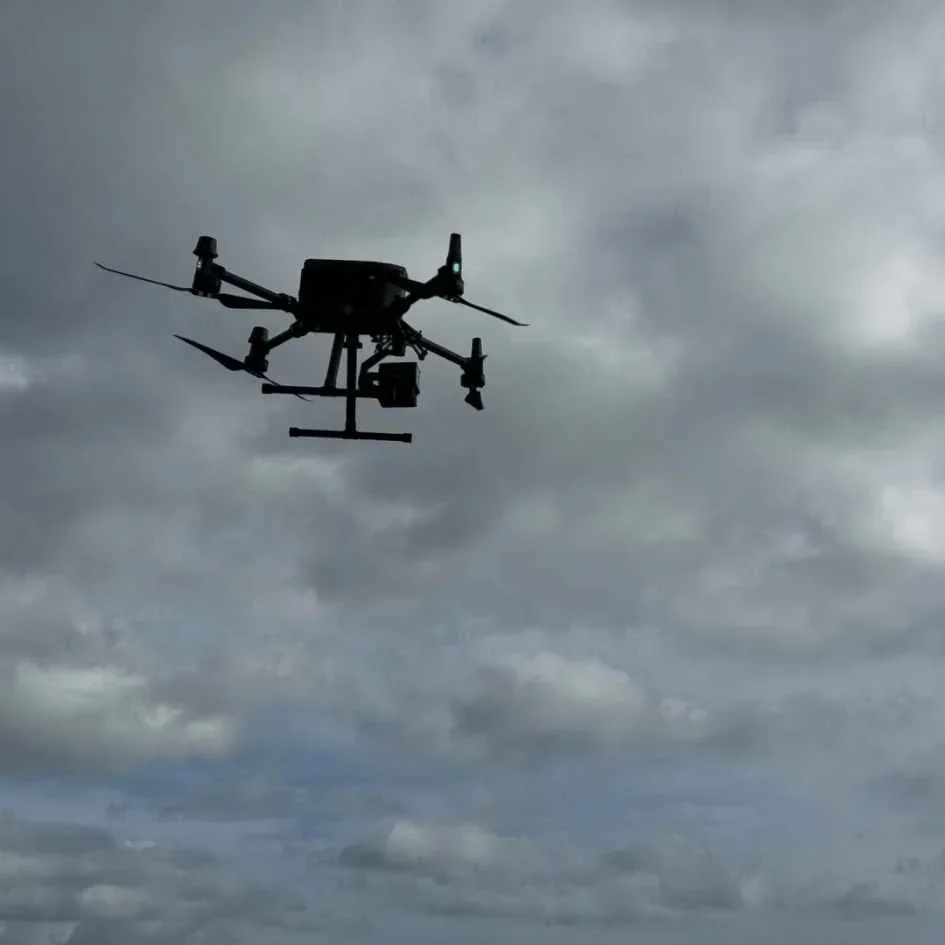
PDRA01 is a declaration. The CAA takes you at your word that the prerequisites are in place when you apply, and they audit later. The four things you must actually have ready are a Flyer ID, an Operator ID, a current Specific Category Remote Pilot qualification, and an insurance policy that meets Regulation (EU) 785/2004.
The Operator ID is where most first-time applicants trip up. There are two kinds — individual and organisation — and a PDRA01 cannot be transferred between them. If you apply against your individual ID and then realise you needed the authorisation in your trading name, you are filling in a fresh application from scratch. Sole traders who want the authorisation issued in a trading name need an organisation Operator ID from the start.
For the qualification, the PDRA01 conditions name two acceptable certificates: a valid General Visual Line of Sight Certificate, fixed wing or multirotor, or a Level 1 Remote Pilot Certificate from the broader RPC framework. Both are VLOS-only and both are valid for five years. The drone pilot qualifications overview covers how each one is assessed.
There is a currency rule that catches drone operators returning from a quiet winter. The Remote Pilot must have logged at least two hours of flying experience in the previous three months before any PDRA01 flight, on similar or equivalent drones to those listed on the authorisation. Open Category flying counts toward that two hours, so a quick weekend of practice can put you back inside the rule before your next job.
Your Operations Manual is the document the CAA audits against and following the CAP 2606 template gives you the shortest path to approval
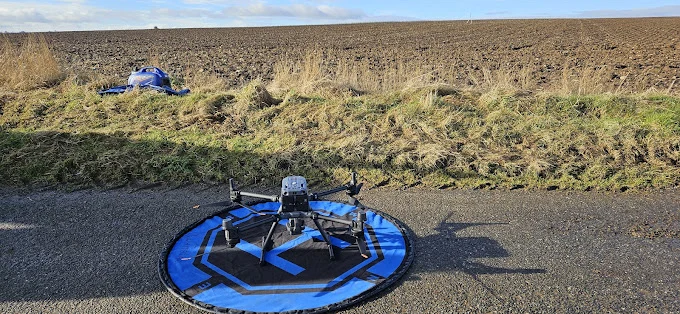
A PDRA01 on its own is a short document. The weight it carries comes from the Operations Manual sitting behind it. The CAA's recommended template is CAP 2606, and following it is the shortest path through the application because every section the CAA expects to read is already laid out for you.
CAP 2606 organises the manual into four blocks. The organisational and personnel block covers the safety statement, safety policy, insurance details, nominated personnel, the duties of the UAS Operator and Remote Pilot, qualification and currency rules, crew health, and security and privacy. The flight operations block covers feasibility methods, pre-notification to third parties, communications, environmental conditions, site procedures, cordon procedure, pre-flight and in-flight checks, post-flight checks, the Flight Safety Programme, emergency procedures, the Emergency Response Plan, airprox reporting, maintenance, and logs and records. The drone description block covers performance, environmental limits, batteries, navigation, the C2 link, geo-awareness and any modifications. The forms block covers the feasibility study, site survey, pre-flight briefing, debriefing, and occurrence and airprox reporting forms.
A streamlined PDRA01 application no longer asks you to upload the manual. Instead, you self-declare that a valid manual exists and will be maintained. That declaration is binding. If the CAA selects you for an audit and asks to see the manual, or asks for the procedures it references, you must produce it within the period they specify. A missing or out-of-date manual is one of the cleanest routes to a suspended or revoked authorisation, and many of the procedures in it — occurrence reporting, accident reporting, maintenance — point straight back to CAP 722, which the manual references rather than reproduces.
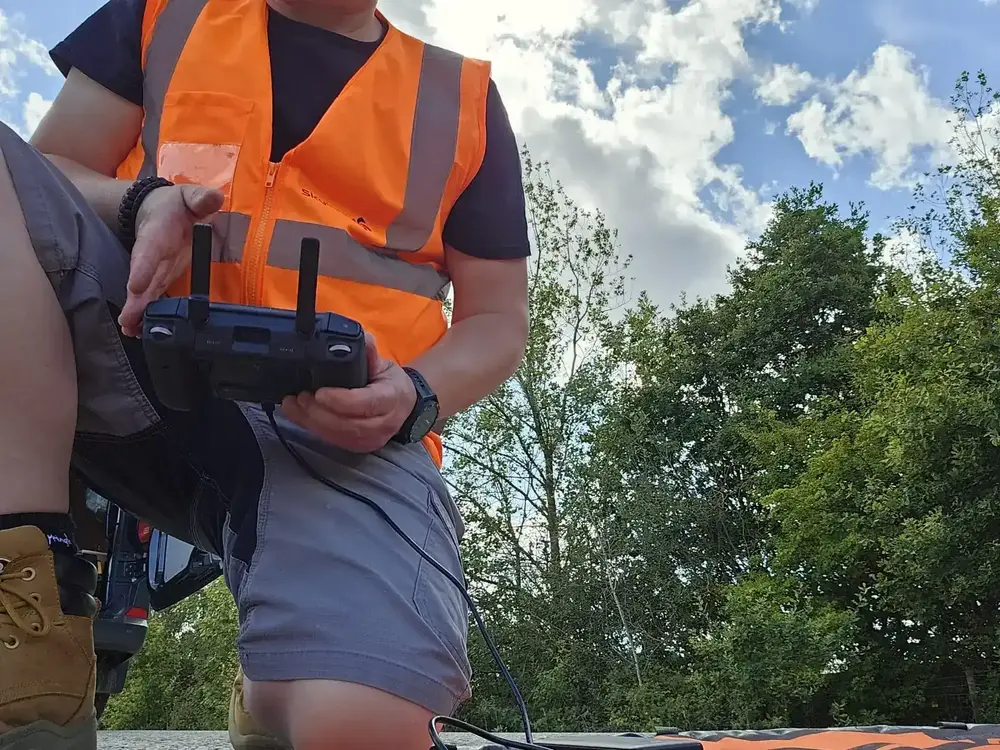
The PDRA01 application itself takes about fifteen minutes on the CAA Portal and the authorisation usually comes back within twenty four hours
With the prerequisites in place, the application is a short online form. You log into the CAA Portal under the same email you used to register your Operator ID, choose to apply for a PDRA01, and confirm in turn that you will meet the UAS Operator responsibilities, the Remote Pilot competency rules, the insurance requirement, and that a compliant Operations Manual exists.
You then list every drone you intend to fly under the authorisation by make and model. If you are reapplying, you also list the hours each one has flown in the previous twelve months. First-time applicants can skip the flight-hour history. You attach a debit or credit card, pay the 524 pounds, and submit. The system saves your progress as you go and you can return to a part-finished application within fourteen days through My registration.
Once you submit, the CAA aims to email the authorisation within twenty four hours. That is a service target, not a guarantee. Around bank holidays or busy periods it can run longer, and any application that triggers a query (mismatched Operator ID, an unusual drone model, an incomplete answer) will sit in the queue until a CAA officer comes back to you. Build a buffer into the start of your first paid Specific Category job rather than book a shoot for the day after you apply.
From the moment the authorisation lands, the operator becomes responsible for keeping records of every flight under it for a minimum of three years. That is the audit window the CAA can reach back through, and the records they will ask for include the aircraft technical logbook, every Remote Pilot's flight log, maintenance records, site risk assessments, and any radio frequency surveys.
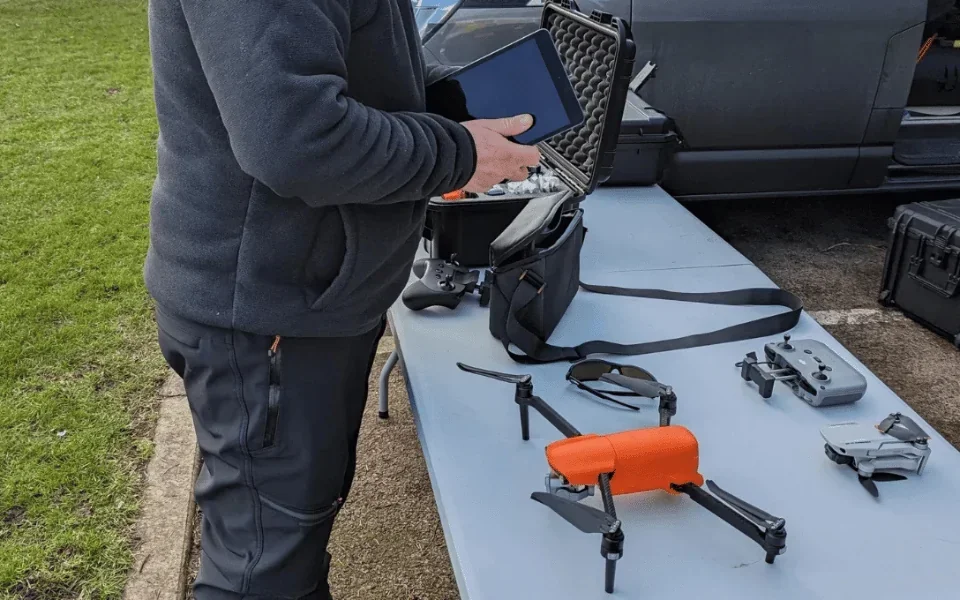
You move off PDRA01 and onto UK SORA the moment your intended flight leaves the PDRA01 envelope
PDRA01 is generous, but it is not unlimited. The authorisation explicitly does not cover dropping articles, carrying dangerous goods, overflying assemblies of people, flying above the 120-metre altitude ceiling, flying further than 500 metres from the Remote Pilot, flying inside 50 metres of uninvolved people (other than the 30-metre take-off and landing carve-out), or flying drones over 25 kilograms. It also does not cover any form of BVLOS flight, swarm operations, or operations close to crowds with drones of 500 grams or more.
Any of those triggers pushes the application onto the UK SORA route. UK SORA stands for Specific Operations Risk Assessment, and it replaced the older CAP 722A Operating Safety Case method on 23 April 2025 — the OSC application service closed the day before, and any new operation outside PDRA01 has gone through UK SORA since then. Existing OSC-based authorisations remained valid through to their expiry but had to be renewed under UK SORA.
A UK SORA application is a different exercise from a PDRA01 declaration. You define the operational volume, the ground risk buffer and the adjacent area. You calculate the SAIL — the Specific Assurance and Integrity Level — for the operation, set the containment level, and prove that the mitigations match the risk. The Remote Pilot may also need an RPC-L2 or higher, depending on the SAIL and on whether the operation is BVLOS in airspace shared with other traffic. Fees are set by the scope of the application and the CAA does not publish a single headline figure.
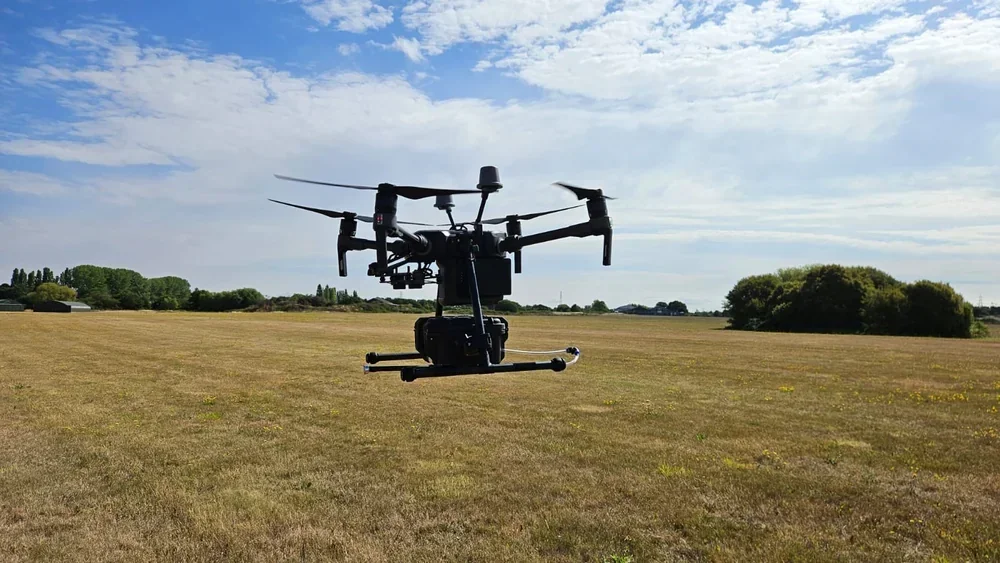
Once your Operational Authorisation is live, the currency, record-keeping, and renewal rules are what keep it valid
An issued authorisation is not a finish line. The conditions inside it are continuous, and three of them carry the most weight. The Remote Pilot must keep the two-hours-in-three-months currency rule live. The operator must keep records — flight logs, technical logs, maintenance records, qualifications and training details — for a minimum of three years. And the authorisation itself must be renewed before its anniversary.
Renewal is a deliberate step, not an automatic one. PDRA01 runs for twelve months, and you reapply through the same CAA Portal route, paying the same 524-pound fee. The system pre-fills last year's answers, but you are responsible for updating anything that has changed — the drones in your fleet, the accountable manager, the named personnel in your manual, the insurance policy details. If the authorisation lapses, you cannot fly under it for a single day. A lapsed PDRA01 is the same as no PDRA01, and any Specific Category work you do in the gap falls outside the legal framework — and outside your insurance, because the insurance policy is written against an active authorisation.
A few practical notes that catch operators at renewal time. The PDRA01 cannot be transferred between Operator IDs at any point in its life — if your business structure changes from sole trader to limited company, that is a fresh application against a fresh organisation Operator ID. Audits can land at any time, and the records you must produce are the operator's, not the CAA's, so a quiet folder of monthly logs is worth more than a frantic afternoon of catching up.
So that is the full shape of obtaining and holding a UK Operational Authorisation. PDRA01 if your operation fits the pre-agreed envelope, UK SORA if it does not. The prerequisites are owned by you, the application is short, the authorisation is narrow, and the work that keeps it valid is continuous.
If you are weighing up whether your planned flight needs PDRA01, UK SORA, or no authorisation at all, the UK drone laws explainer is the place to start. Got a specific scenario you want covered — a borderline PDRA01 question, a UK SORA application you are not sure how to scope, a commercial shoot you cannot work out how to legalise? Drop a note to peter@hiredronepilot.uk and I will come back to you directly. If you prefer the video version of this explainer, the comments are open on YouTube.
References
Primary source material for this article is the UK Civil Aviation Authority. External links open in a new tab.
- UK CAA — PDRA01 Operational Authorisation Overview · scope, weight range, altitude ceiling, distances, conditions and limits
- UK CAA — Apply for a PDRA01 Operational Authorisation · 524 pounds fee, 15-minute application, 24-hour service target, 14-day save
- UK CAA — PDRA01 Operations Manual · CAP 2606 template and the four blocks the manual must cover
- UK CAA — Remote Pilot Competencies and Responsibilities · GVC and RPC-L1 requirement, the two-hour currency rule, flight log requirements
- UK CAA — UAS Operator Responsibilities · three-year record retention and aircraft technical logbook requirements
- UK CAA — UK SORA-based Operational Authorisations · UK SORA framework, SAIL calculation, the operations PDRA01 does not cover
- UK CAA — Insurance Requirements · Regulation (EU) 785/2004 compliance and operator-side responsibility
Peter Leslie
Founder & GVC Drone Pilot
Peter is the founder of HireDronePilot. With thousands of logged commercial flight hours, he writes about drone technology, commercial surveying tactics, and UK aviation compliance.
Connect on LinkedIn