Best Drone for Camping: The One I’d Keep Charged Off Grid

Peter Leslie
31 July 2026 · 19 min read
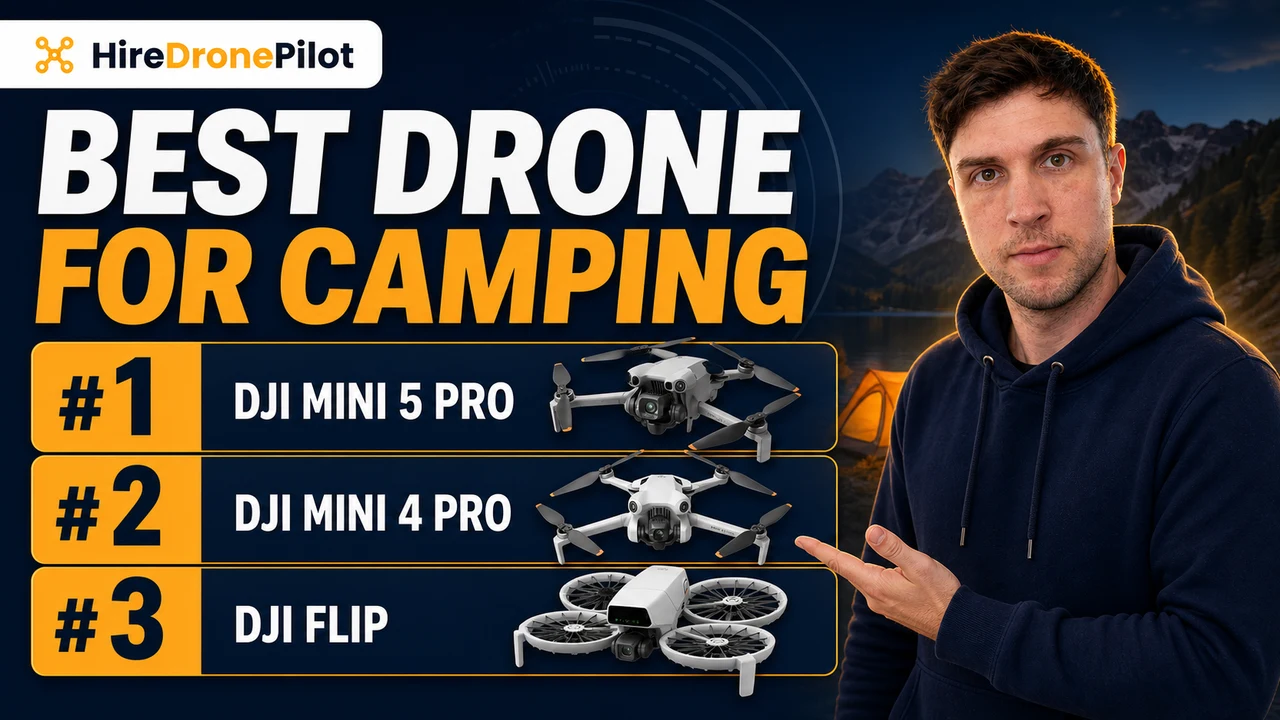
Four nights into a trip, parked somewhere with no hook-up, the question stops being which drone takes the nicest picture. It becomes whether you can put the thing back in the air tomorrow without flattening the battery that runs your fridge.
Almost nobody writes about drones that way. Reviews compare sensors. Nothing compares the only number that decides whether a drone is useful to you on night five — how many watt-hours it takes out of your van to put it back in the air.
So that is what this guide does. Twelve drones, every battery costed in watt-hours against a 12 V leisure battery, with the arithmetic on the page rather than in my head. Decided that way, the best drone for camping in 2026 is not the one with the biggest sensor. It is the one that gives you the most minutes in the air per watt-hour you can actually spare.
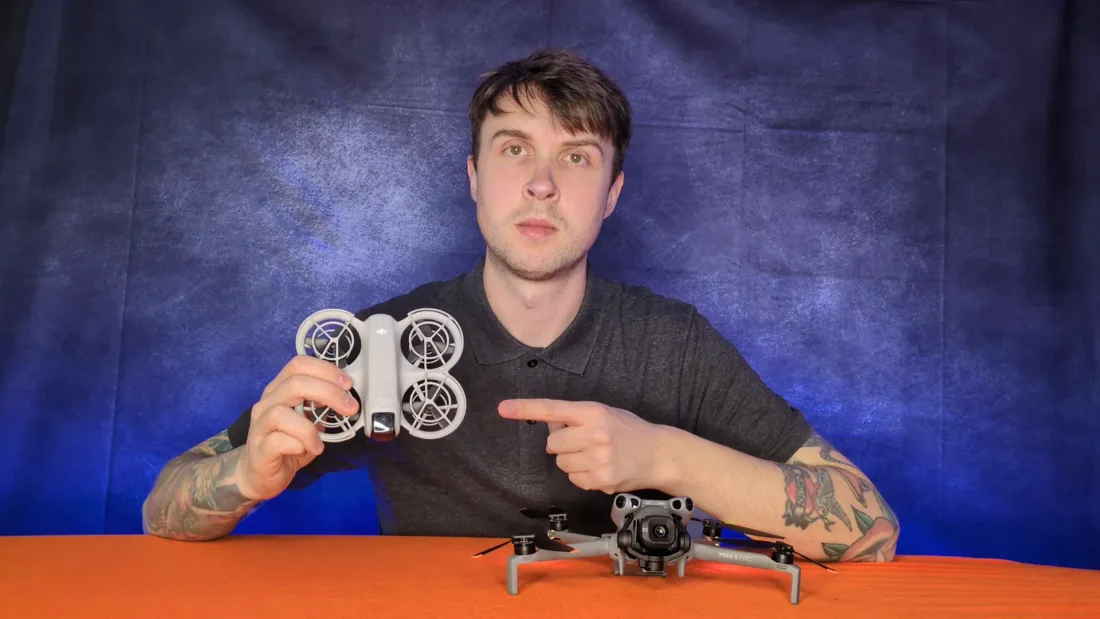
There is a second number, and it catches people out much harder than the first. Every drone battery in this guide has a minimum charging temperature, and it is 5 °C. Your van in March, at seven in the morning, is not 5 °C. That single line in the specification sheet decides when in the day you can charge, which decides how you plan the whole trip.
Four questions below narrow twelve drones to the one that suits how you actually camp. Then the maths, in full, so you can redo it with your own battery and your own panel. By the end you will know which drone to buy, what it draws, and how much more than the drone itself a first year of owning it really costs.
How I get paid: the Amazon links below are affiliate links, so if you buy through one I earn a small commission at no extra cost to you. It does not change what I recommend — the most expensive drone here is the one I spend the most words arguing against, and one of the twelve has no affiliate link at all.
The Best Drone for Camping in 2026 Is the DJI Mini 5 Pro
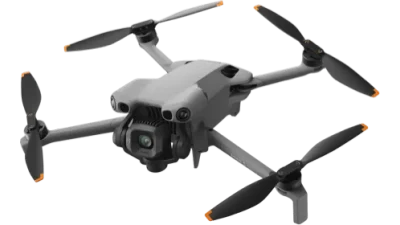
The only one-inch camera here that runs on a small-drone power budget. Off grid that is the whole argument.
- Its battery holds 19.52 watt-hours — roughly 41 Wh out of a leisure battery per hour you spend flying, the second-lowest figure of the twelve.
- Charges over USB-C at 65 W, which is exactly what a 12 V car charger gives you. No inverter needed.
- Three batteries fill in 115 minutes on the hub — DJI’s fastest published figure, and it works off a 12 V socket.
- No test and no licence — just a £12.34 registration you do online.
- The honest flaw: DJI’s own “typical” flight time is 21 minutes, not 36, once you are actually recording.
Affiliate link · costs you nothing extra · full disclosure
PART ONE
Here are the five that win their categories outright — and what is wrong with each of them, because every one of them is a compromise somewhere.
Best Drone for a Tent and a Power Bank: DJI Neo
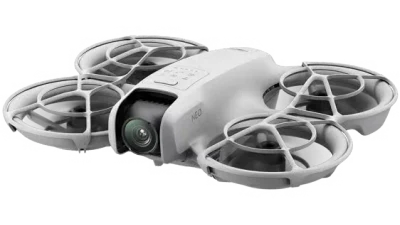
No van, no leisure battery, no hub — 10.5 watt-hours a pack is the smallest energy bill on this page.
- 10.5 watt-hours a battery, about 13 Wh out of whatever you are carrying. An airline-legal 100 Wh power bank puts seven full charges into it.
- Charges through the drone body at 15 W, so the charger already in your rucksack does the job. No hub and no 65 W car charger to carry.
- 135 g with the propeller guards built in, and it launches off your palm — the one I would fly out of a tent porch with other people about.
- The honest flaw: 18 minutes a battery, 12 megapixels on a 1/2-inch sensor, no obstacle sensing, and the linked bundle is the drone on its own.
Best Budget Drone for Camping: DJI Neo 2
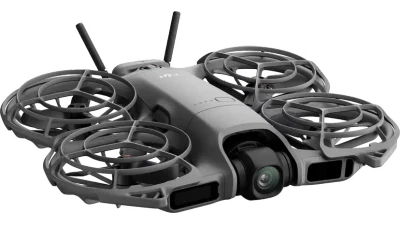
Three batteries and a hub in the box, and all three together hold 34.5 Wh — barely half of one Air 3S pack.
- About 43 Wh out of a leisure battery to fill all three from empty.
- The hub does all three at once above 45 W, two between 30 and 45 W, one at a time below that.
- The honest flaw: 12 megapixels on a 1/2-inch sensor. It is a camp camera, not a landscape one.
Best Drone for Pure Efficiency: DJI Mini 3
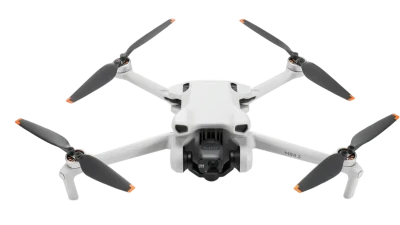
36 Wh of leisure battery per hour in the air. Nothing else on this page comes close.
- 18.1 watt-hours for a claimed 38 minutes — the best ratio of the twelve.
- Under 250 g, so no test and no certificate however long you stay out.
- The honest flaw: a 2022 design with no obstacle sensing, an older camera, and the only UK bundle is the pricier screen-controller one.
Best Drone for a Pitch With Hook-Up: DJI Air 3S
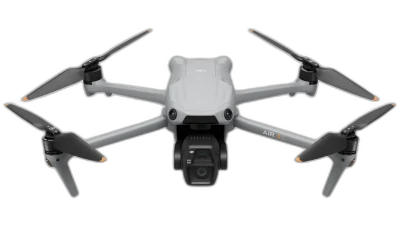
With a mains socket on the pitch, watt-hours stop being the argument and two focal lengths start being one.
- A one-inch 50-megapixel main camera plus a 70 mm tele, and 45 claimed minutes a battery.
- DJI sells a 65 W car charger for it, so it is workable on 12 V even if it is not frugal.
- The honest flaw: 104 Wh an hour off your battery, and from January 2028 it needs the A2 test to fly near people.
Best FPV Drone for Camping: DJI Avata 2
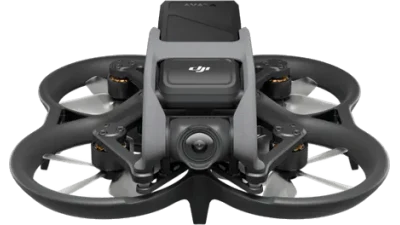
The only drone here that makes you laugh out loud, and the only one where you are charging two batteries for one flight.
- 31.7 Wh a pack, plus another 21.6 Wh in the DJI Goggles 3.
- The law requires a second person watching the drone whenever you fly it through goggles.
- The honest flaw: from January 2028 it needs the A2 test to fly near people, and per minute in the air it costs about two and a half times what a Mini 5 Pro does.
Affiliate links · costs you nothing extra · full disclosure
Take the quiz: find the best drone for how you camp
Matched to the power you actually have — not to a spec sheet written for people with a wall socket.
- Starts with your power source, because off grid that is the real constraint.
- Every drone costed in watt-hours from a manufacturer specification page.
- Twelve drones, and it will tell you why the other eleven did not fit.
- About 20 seconds, and no email needed.
STEP 1 OF 4
12 of 12 still fit
All twelve, with what each one costs your battery
-
DJI Neo
10.5 Wh battery · 18 min · 44 Wh per flying hour · 135 g · C0
The cheapest way to put something in the air off a power bank. It draws almost nothing because it does almost nothing.
- The smallest energy bill here: 10.5 watt-hours a battery, about 13 Wh out of your leisure battery.
- Charges through the drone body at 15 W, so almost any USB-C socket will do it.
- No test and no licence — just a £12.34 registration you do online.
-
DJI Neo 2
11.5 Wh battery · 19 min · 45 Wh per flying hour · 151 g · C0
Three batteries and a charging hub in the box, and the whole set costs your van less than one Air 3S battery. The sensible cheap answer.
- Three batteries is 34.5 watt-hours — about 43 Wh out of a leisure battery for roughly an hour in the air.
- Its hub fills all three at once from a 65 W charger in 68 minutes. Below 30 W it does them one at a time.
- Throw it off your palm, and it lands back on it. No controller to charge if you do not want one.
-
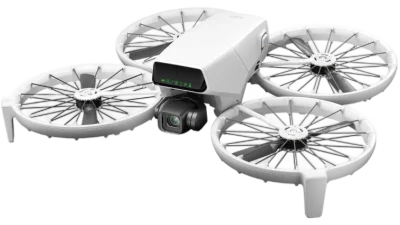
DJI Flip
22.3 Wh battery · 31 min · 54 Wh per flying hour · <249 g · C0
Propeller cages built in, which round a campsite with other people’s children in it is worth more than a spec. It is the thirstiest of the small ones, though.
- The biggest battery of the sub-250 gram group at 22.3 Wh, and also the least efficient of them.
- Its hub charges two in parallel — but only with a 65 W charger that does 4.3 A at 15 V. Anything less and they queue.
- Propeller cages built in, so it is the one I would hand a nervous beginner across a picnic table.
-
DJI Mini 3 most efficient here
18.1 Wh battery · 38 min · 36 Wh per flying hour · 248 g · C0
The most air per watt-hour of anything on this page, by a clear margin. A 2022 design that still wins the one contest this article is about — though the only UK listing is the version with DJI’s own screen controller, which is why it is not cheap.
- 18.1 watt-hours for a claimed 38 minutes — about 36 Wh of leisure battery per hour flown, the lowest here.
- Charges at only 30 W, so a battery takes 56 minutes on the hub. Cheap to charge, slow to charge.
- Launched in 2022 and still sold by DJI UK. An older camera and no obstacle sensing — you are buying efficiency, not features.
- The linked bundle is the DJI RC controller with its own screen, so your phone stays in your pocket — and there is one more battery to charge.
-
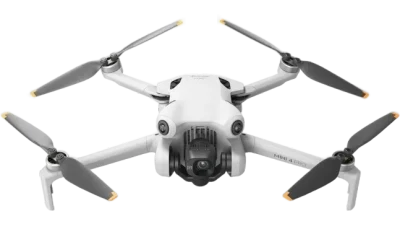
DJI Mini 4 Pro
18.96 Wh battery · 34 min · 42 Wh per flying hour · <249 g · C0
Nearly as frugal as the Mini 3 with a far better camera and all-round obstacle sensing. The Mini 5 Pro has made it about a hundred pounds too expensive.
- 18.96 watt-hours a battery and 34 claimed minutes — about 42 Wh of leisure battery an hour.
- Charges at 30 W only, so 58 minutes a battery on the hub and three of them in sequence, not together.
- DJI states the bigger Plus battery is not sold in Europe, so this is the pack you get.
-
DJI Mini 5 Pro
19.52 Wh battery · 36 min · 41 Wh per flying hour · 249.9 g · C0
A one-inch camera that draws less from your van than a Neo 2 does per minute in the air. Nothing else here manages that combination.
- 19.52 watt-hours a battery — roughly 41 Wh out of a leisure battery for every hour in the air.
- Takes a full 65 W over USB-C, which is exactly what a 12 V car charger delivers. Three batteries in 115 minutes.
- No test and no licence — just a £12.34 registration you do online.
-
DJI Avata 2 loses privileges in 2028
31.7 Wh battery · 23 min · 103 Wh per flying hour · 377 g · C1
The most fun you can have from a campsite, and the goggles are a second 21.6 Wh battery you also have to keep alive.
- 31.7 watt-hours for 23 minutes — about 103 Wh an hour, two and a half times a Mini 5 Pro.
- The DJI Goggles 3 carry their own 21.6 Wh battery, so every flying session is two chargers, not one.
- From January 2028 it needs the A2 test to fly near people — one of only two here that lose that freedom.
-
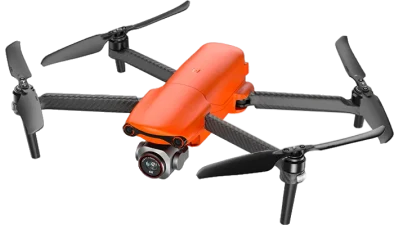
Autel EVO Lite+ no affiliate link — and no published watt-hours
battery energy not published · 835 g · legacy, no class mark · 1″ 20MP
Here so nobody can call this a DJI catalogue. For a guide about watt-hours, a manufacturer that will not tell you the watt-hours has answered the question itself.
no link- Autel does not publish the energy content of the battery anywhere I could reach, so it cannot be costed.
- Needs the A2 test to fly near people, which is a strange thing to want on a campsite.
- I could not find UK stock, so there is no buy link for it.
-
DJI Air 3S loses privileges in 2028
62.5 Wh battery · 45 min · 104 Wh per flying hour · 724 g · C1
Two usable focal lengths and 45 claimed minutes. If you have a hook-up or a big lithium bank, it is the most camera you can sensibly run.
- 62.5 watt-hours a battery — about 78 Wh out of your leisure battery each time you fill one.
- DJI puts a battery at 80 minutes on a 65 W charger, and sells a 65 W car charger that delivers it.
- No test needed today, but from January 2028 it needs the A2 to fly near people. You are buying about eighteen months of that freedom.
-
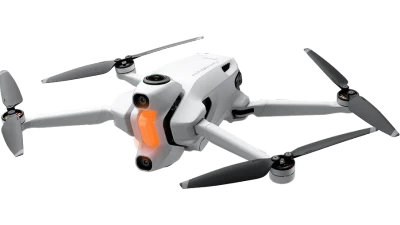
Antigravity A1
16.9 Wh battery · 24 min · 53 Wh per flying hour · 249 g · C0
An 8K 360 camera that flies, on a small battery. The only UK listing is the Infinity Bundle with its own goggles — the most interesting object here and the hardest to justify at the price.
- 16.9 watt-hours for 24 claimed minutes — about 53 Wh of leisure battery an hour.
- The only drone here rated to charge up to 45 °C rather than 40. The 5 °C floor is the same.
- The 39-minute figure belongs to a high-capacity battery Antigravity’s own page says is not sold in European regions.
-
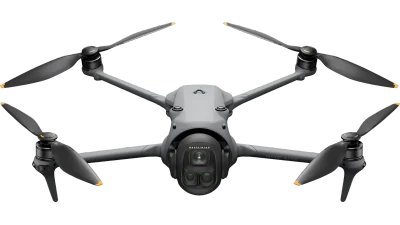
DJI Mavic 4 Pro
95.3 Wh battery · 51 min · 140 Wh per flying hour · 1,063 g · C2
The best flying camera in a bag this size, and the worst possible thing to own off grid. One battery holds more energy than an airline will let you carry in a power bank.
- 95.3 watt-hours a battery — roughly 119 Wh out of a leisure battery, five times a Mini 5 Pro pack.
- Needs the A2 test to fly near people, which on a campsite is a real constraint rather than a formality.
- Out of stock in every configuration at DJI UK, whose own price for this combo is higher still. You are buying old stock.
-
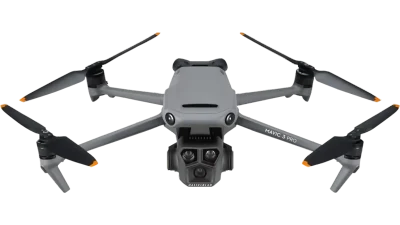
DJI Mavic 3 Pro out of stock in every configuration at DJI UK
77 Wh battery · 43 min · 134 Wh per flying hour · 958 g · C2
A superb three-camera drone that DJI has effectively stopped selling here. The only listing left is the Fly More Combo with the screen controller and three batteries, and each of those eats a sixth of your usable leisure battery.
- 77 watt-hours a battery, so about 96 Wh out of a leisure battery each fill.
- Its 90-minute three-battery charge needs DJI’s 240 W mains adapter. On 12 V you are down to USB-C and about four hours.
- Needs the A2 test to fly near people.
Battery energy, flight time, weight and class mark from manufacturer specification pages, checked 31 July 2026. “Wh per flying hour” is my own arithmetic: pack energy divided by the maker’s own maximum flight time, then divided by 0.8 for conversion loss. The method is set out in Part Two. Listed cheapest first. Each link goes to the exact configuration described in the row — check it before you buy, because bundles change. The DJI Neo link is the drone on its own; the Fly More Combo with three batteries costs more and is the one worth having. Comparison specifications from DroneCompare, CC BY 4.0.
PART TWO
Charging off grid: the real power draw on 12 V
This is the section the rest of the internet does not write, so I am going to show every step of the arithmetic rather than hand you conclusions. If you disagree with one of my assumptions, you will be able to see exactly which number to change.
First, one unit for everything
Drone batteries are sold in milliamp-hours. Leisure batteries are sold in amp-hours. Power banks are sold in both, usually the flattering one. None of those numbers can be compared with each other, because they all leave out the voltage.
Watt-hours can. Volts × amp-hours = watt-hours, and a watt-hour is a watt-hour whether it is sitting in a drone pack at 7 V or under your bed at 12 V. Convert everything to watt-hours and the whole problem becomes one sum.
THE ONLY CONVERSION YOU NEED
volts × amp-hours = watt-hours
A 100 Ah leisure battery at 12 V holds 100 × 12 = 1,200 watt-hours. A DJI Mini 5 Pro pack is 2,788 mAh at 7 V, which is 2.788 × 7 = 19.52 watt-hours — and that is the figure DJI prints on its own specification page, so you do not have to trust my multiplication.
Second, what you can actually take out
A 100 Ah battery does not give you 1,200 Wh. What you get depends on the chemistry, and the difference is enormous:
- Lead-acid or AGM. The long-standing convention is that you use half and leave the rest, because taking a lead battery much below half shortens its life. Call it 600 Wh usable out of 1,200.
- Lithium iron phosphate (LiFePO4). Nominally 12.8 V rather than 12, so 100 Ah is 1,280 Wh, and you can use nearly all of it. Call it 1,150 Wh usable.
That is the first thing worth knowing: swapping a lead battery for a lithium one of the same printed rating roughly doubles what you can actually spend. Every sum below uses the lead-acid figure, because it is the harder case and most vans still have one.
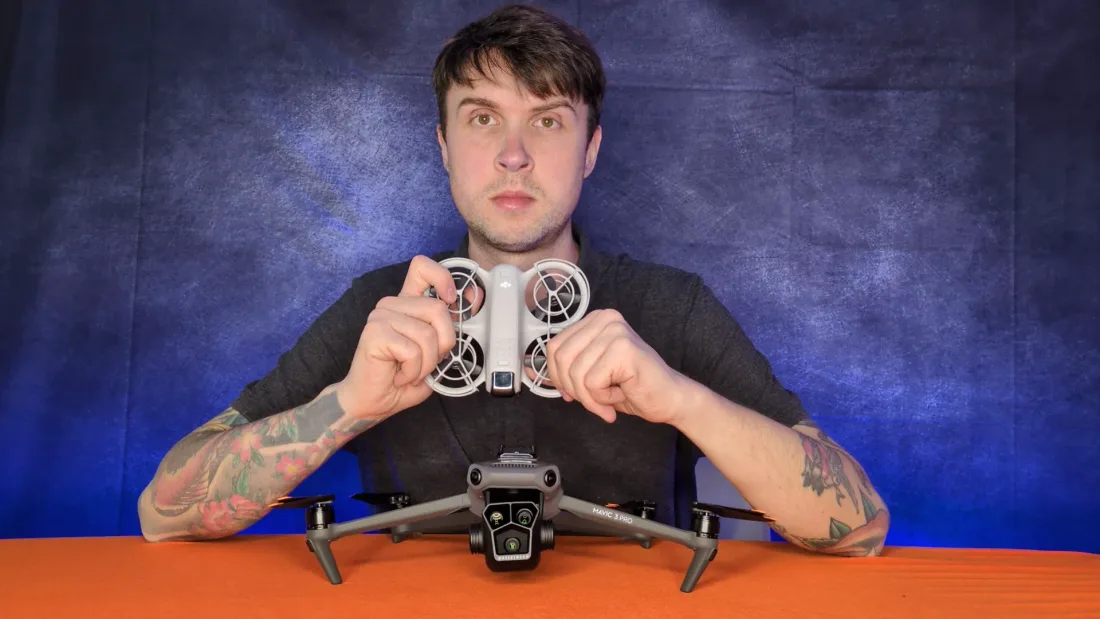
Third, the conversion tax, from DJI’s own numbers
Nothing moves energy for free. Getting 12 V out of a leisure battery and into a drone pack means a converter, and converters lose some of it as heat. The usual advice is to guess ninety per cent. DJI publishes enough to do better than guess.
DJI’s 65 W car charger, which appears on the Air 3S, Flip, Avata 2 and Mavic 4 Pro accessory listings, is specified with a car power input of 12.7–16 V at 6.5 A and a rated power of 65 W. Those two numbers are all you need, and they are on the box rather than in a review. Take the bottom of that input range:
WHERE 80 PER CENT COMES FROM
12.7 V × 6.5 A = 82.55 W drawn from the socket
65 W ÷ 82.55 W = 0.787
Call it 80 per cent. That is the single efficiency figure I use for every sum on this page, so the numbers stay comparable. Your real figure will be a little better at part load and a little worse in a hot van, but it will not be ninety-five per cent and it will not be sixty.
So the rule of thumb: whatever a drone battery holds, add a quarter and that is what leaves your leisure battery. A 19.52 Wh Mini 5 Pro pack costs you 19.52 ÷ 0.8 = 24.4 Wh.
The table this whole article exists for
Now divide each pack’s energy by the flight time its maker claims, and scale it up to an hour. That gives one comparable number for every drone here: watt-hours out of your leisure battery for every hour you spend in the air.
| DRONE | PACK | CLAIMED | WH / MIN | WH PER FLYING HOUR |
|---|---|---|---|---|
| DJI Mini 3 | 18.1 | 38 min | 0.48 | 36 |
| DJI Mini 5 Pro | 19.52 | 36 min | 0.54 | 41 |
| DJI Mini 4 Pro | 18.96 | 34 min | 0.56 | 42 |
| DJI Neo | 10.5 | 18 min | 0.58 | 44 |
| DJI Neo 2 | 11.5 | 19 min | 0.61 | 45 |
| Antigravity A1 | 16.9 | 24 min | 0.70 | 53 |
| DJI Flip | 22.3 | 31 min | 0.72 | 54 |
| DJI Avata 2 | 31.7 | 23 min | 1.38 | 103 |
| DJI Air 3S | 62.5 | 45 min | 1.39 | 104 |
| DJI Mavic 3 Pro | 77 | 43 min | 1.79 | 134 |
| DJI Mavic 4 Pro | 95.3 | 51 min | 1.87 | 140 |
| Autel EVO Lite+ | — | — | — | — |
Pack energy in watt-hours and claimed flight time from manufacturer specification pages, checked 31 July 2026. Wh per minute is pack energy divided by claimed flight time. Wh per flying hour is that figure × 60 ÷ 0.8. A dash means the manufacturer publishes no battery energy figure I could find — Autel’s EVO Lite+ product page no longer resolves and its series page carries no specification table.
A factor of nearly four, from top to bottom. A Mini 3 costs 36 Wh an hour. A Mavic 4 Pro costs 140. Against 600 Wh of usable lead-acid, and pretending for a moment that the drone is your only load, that is sixteen hours of Mini 3 flying or four hours of Mavic 4 Pro flying from the same battery.
Two honest caveats before anyone builds a trip around that table. The first is that every flight time in it is a manufacturer’s best case, measured in still air flying gently forward. DJI is unusually candid about this on the Mini 5 Pro page, where it publishes a “typical flight time” of 21 minutes alongside the 36 — the difference being that the typical figure has you recording 4K in a breeze. That is what your battery actually buys. It flatters every drone in the table roughly equally, so the ranking holds even though the absolute numbers do not.
The second is that the Mini 3 winning is not a recommendation to buy a Mini 3. It is four years old, it has no obstacle sensing, and its camera is a generation behind. The point of it topping the table is that the frugal end of this list is not the cheap end — it is the small end, and the small end has been getting better cameras every year without getting thirstier.
Two ways to get 12 V into a drone, and one of them wastes more of it
Every drone in this guide charges over USB-C Power Delivery — the same standard as a modern laptop. That gives you a choice, and most people take the wrong one out of habit.
The direct route is a 12 V USB-C car charger: one conversion, from 12 V DC to whatever the drone asks for. DJI sells its own, and its published USB-C output includes 15 V at 4.3 A. The Mini 5 Pro charging hub’s published input is 5–15 V at up to 4.3 A. The two numbers meet, which is why the hub’s fastest published charge is available from a cigarette-lighter socket.
The habitual route is a 230 V inverter with the drone’s mains charger plugged into it. That is two conversions instead of one, and the inverter also draws current whenever it is switched on, whether or not anything is charging. I cannot give you a verified efficiency figure for your inverter because the cheap ones do not publish one. What I can tell you is that it is strictly more losses than the direct route, for no benefit, and that leaving one on all afternoon to charge one drone battery is how people end up with a flat leisure battery and no idea why.
Check your socket before you buy the charger. 65 W out means roughly six and a half amps in, which is DJI’s own published input figure. A cigarette-lighter socket is commonly fused at 10 or 15 A — look at yours rather than assuming — so one 65 W charger is comfortable, two is marginal, and two plus a laptop is a blown fuse in a lay-by.
Multi-battery hubs save time, not energy
A charging hub does not reduce the watt-hours. It reduces the hours, and off grid that is the scarcer resource, because your engine is only running or your panel only producing for part of the day.
On DJI’s figures, a Mini 5 Pro battery charged through the drone body takes 69 minutes. On the Two-Way Charging Hub it takes 46, and three of them take 115 minutes together instead of 207 one after another. The hub is the cheapest thing in this whole guide and it buys you an hour and a half of not having the engine running — which off grid is a better return than anything else you can bolt on.
But hubs behave very differently, and the charger you pair one with decides whether it works at all:
WHAT THE HUB ACTUALLY DOES
| DJI Neo 2 | Three at once above 45 W. Only two between 30 and 45 W. Below 30 W it does them one at a time, highest charge first. |
|---|---|
| DJI Flip | Two in parallel — but only with a charger giving at least 65 W and 4.3 A at 15 V, and a cable rated for 5 A. Otherwise they queue. |
| DJI Mini 5 Pro | Two standard packs in parallel; three of the bigger Plus packs in sequence. Three standard batteries in 115 minutes on a 65 W charger. |
| DJI Mini 4 Pro, Air 3S, Avata 2 | Three batteries in sequence — one after another, never together. |
| DJI Mavic 4 Pro | Three in parallel only with DJI’s 240 W mains adapter. On a 100 W USB-C adapter it falls back to one after another. |
All figures from the manufacturer specification pages, checked 31 July 2026.
Look at that last row again, because it is the sharpest illustration of the whole problem. The Mavic 4 Pro’s advertised ninety-minute three-battery charge requires a 240 W mains adapter. There is no 12 V version of it. Off grid you are limited to USB-C, which DJI puts at 80 minutes a battery in sequence — so a set of three goes from ninety minutes on a hook-up to roughly four hours on a leisure battery, while drawing 357 Wh to do it. The drone did not change. The socket did.
What a power bank actually gets you
100 watt-hours is the largest power bank you may carry in an aeroplane cabin without asking the airline first, which is why so many are built to sit just underneath it. At 80 per cent it delivers about 80 Wh into drone batteries. So:
- 80 ÷ 19.52 = four full DJI Mini 5 Pro batteries, or a bit under two and a half hours of flying.
- 80 ÷ 11.5 = nearly seven full DJI Neo 2 batteries, which is more than twice what the combo contains.
- 80 ÷ 62.5 = one DJI Air 3S battery and a quarter of a second one.
- 80 ÷ 95.3 = 0.84 of one DJI Mavic 4 Pro battery.
That last line deserves saying in plain English. A power bank you are allowed to take on a plane cannot fill a single Mavic 4 Pro battery. The pack holds 95.3 Wh; the bank holds 100; and there is no conversion on earth that moves 95.3 out of 100 without losing more than the 4.7 you have spare. If you are flying somewhere with a drone in your bag and then camping when you land, that arithmetic decides the purchase on its own.
And what a solar panel gets you
A 100 W panel, at its rated output, produces 100 Wh in an hour. One Mini 5 Pro battery costs 24.4 Wh from the panel’s side of the equation, so that is about a quarter of an hour of a 100 W panel at full rate. Three batteries is about three quarters of an hour.
“At its rated output” is doing a great deal of work in that sentence — in British weather, in anything but June sunshine at midday, you should expect a fraction of it. But even at a quarter of the rated figure, three drone batteries is under three hours of a panel that has the whole day to work. That is the useful conclusion here: a sub-250 gram drone is a rounding error on a van’s power budget. A Mavic is a second fridge.
The 5 °C rule, which is the one that will actually catch you
Everything above is planning. This one is the thing that stops you flying on a specific morning, and almost nobody selling drones mentions it.
Every DJI Intelligent Flight Battery in this guide publishes a charging temperature range of 5 °C to 40 °C. I checked all of them separately, expecting at least one exception; there is not one. The Antigravity A1 gives itself a little more room at the top — 5 °C to 45 °C — and exactly the same floor.
Now compare that with the operating temperature, which on every one of these drones is −10 °C to 40 °C. There is a fifteen-degree band, from −10 up to +5, in which the manufacturer is happy for you to fly and is not happy for you to charge.
FLY VERSUS CHARGE
| ITEM | CAN FLY | CAN CHARGE |
|---|---|---|
| Every DJI drone here | −10 to 40 °C | 5 to 40 °C |
| Antigravity A1 | −10 to 40 °C | 5 to 45 °C |
| DJI Goggles 3 battery | — | 0 to 50 °C |
From the manufacturers’ own specification pages, checked 31 July 2026. The goggles battery is a different cell with a different window, which is worth knowing if you assume one rule covers your whole bag — it does not.
A van that is not being heated sits at roughly the outside air temperature by dawn. In Britain that means a battery left in a door pocket or a rear locker is below 5 °C on a great many mornings between October and May, and outside the window its maker rates it for. DJI also states that its published charging times are measured at 25 °C, so even at the warm end of the range a cold morning is not going to hit the numbers in the table above.
What I actually do about it, which is practice rather than specification:
- The batteries sleep where I sleep. Not the door pocket, not the garage, not the footwell — inside, with me.
- Charge in the afternoon. The van is warmest, the panel is producing, and the packs are already at cabin temperature.
- If a pack has been cold, let it warm up before it goes on the charger. Twenty minutes indoors costs nothing.
- Never leave a pack charging unattended overnight in the cold and assume you will wake up to three full batteries. You will not.
There is more on the overnight question — and on what a lithium pack is doing while it sits at a hundred per cent for a fortnight — in my separate piece on whether you can charge a drone battery overnight, and on how flight time degrades over a battery’s life in how long drone batteries last.
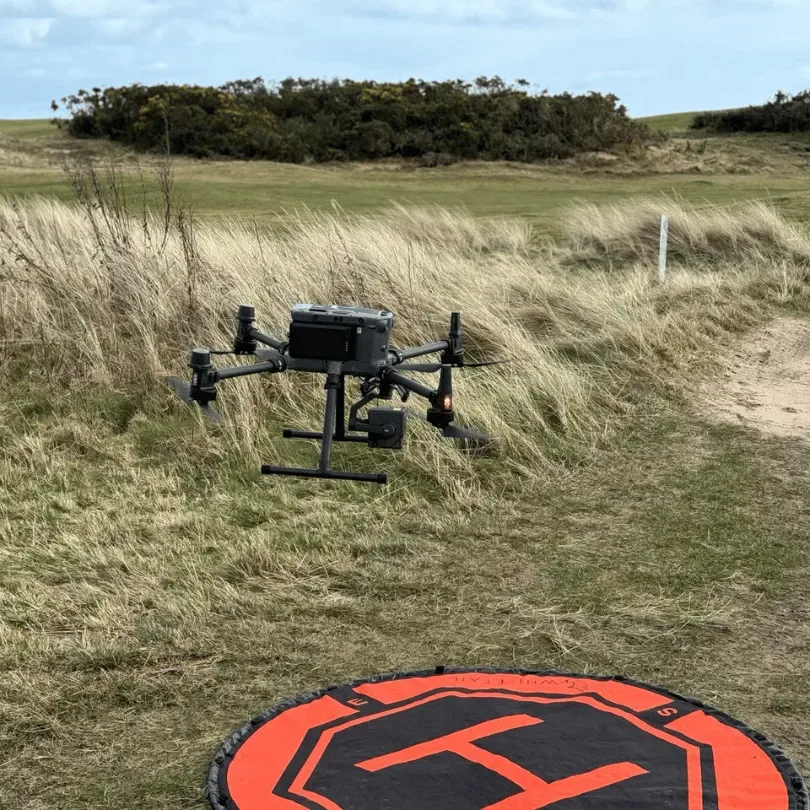
The two batteries people forget
Your controller has one, and if you fly through goggles those have one too. Neither is large, and both are USB-C, but they are extra items competing for the same socket at the same time of day.
A DJI RC-N3 controller carries 9.36 Wh and DJI quotes 3.5 hours of use. The DJI Goggles 3 carry 21.6 Wh — more than a whole Neo 2 flight battery. So an Avata 2 session is not a 31.7 Wh event; it is 31.7 for the drone plus 21.6 for the goggles plus the controller, which is why FPV feels so much more demanding off grid than the drone’s specification suggests.
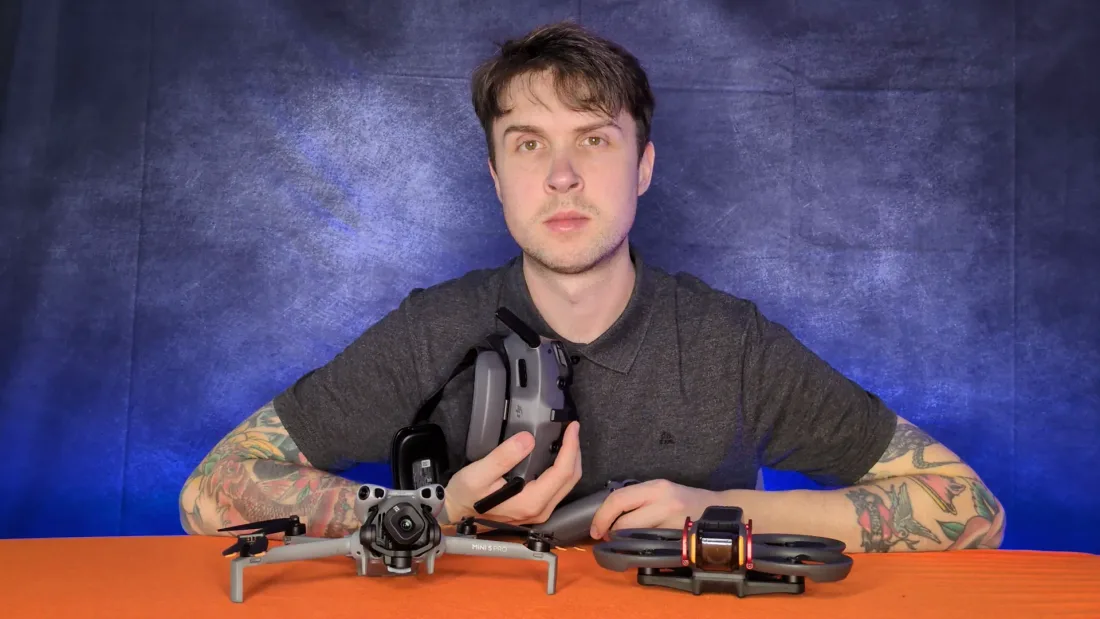
The paperwork, and the bit about whose field you are in
If you have never owned a drone, this is the part that will surprise you, and it is short.
Every drone in the UK needs two registrations. A Flyer ID is a free online theory test, valid five years, which you renew by taking it again. An Operator ID costs £12.34 a year, you must be 18 or over to hold one, and it goes on a label stuck to the drone. One Operator ID covers every drone you own. That is it — there is no licence in the ordinary sense, and nothing to sit in a classroom for.
After that, weight decides everything. Under 250 grams you fly in Over People (A1) with nothing further required. Seven of the twelve drones above are under that line, including all three I would recommend for a van with no hook-up. Over it you are into class marks, and for a C2-marked drone like either Mavic you need an A2 Certificate of Competence — a theory test of at least thirty questions with a CAA-approved assessment provider — before you may fly it near people at all. Without it those drones drop to Far from People (A3): 150 metres from anything residential, commercial, industrial or recreational. A campsite is all four of those things at once.
There is one more date. Until 31 December 2027 a European C class mark can be flown as its UK equivalent. From 1 January 2028 that stops, and the drone becomes a legacy drone governed by weight alone. For most of this list nothing changes. Two drones lose real privileges — the Air 3S and the Avata 2, both C1 and both over 250 grams, which from that date need the A2 test to fly near people. Everything under 250 grams stays exactly where it is, permanently.
And the one that matters most where you are parked: the CAA requires you to have the permission of whoever owns the land you take off from and land on. On a campsite that means asking the site, not assuming. On a wild pitch it means somebody owns that ground even if nobody is standing on it. I have never had a site say no when asked first thing in the morning; I have seen people asked to stop after launching from a pitch at eight in the evening over other people’s tents.
The broader picture — height limits, distances from people, where you may and may not go — is in the full guide to UK drone laws. If you are heading for the hills on foot rather than in a van, the lightest drone worth carrying up a hill is a different calculation again, and if you camp mostly on the coast then wind resistance ratings will decide more of your flying than watt-hours will.
PART THREE
The charging chain: what it costs to keep one drone alive off grid
A drone on its own is not a camping drone. It is a drone with one battery, a mains-only charging habit and no way to fill anything while you are parked in a forest. What turns it into something you can use for a fortnight is a short chain of unglamorous objects.
Here is that chain for the Mini 5 Pro, with what each link actually buys you. I have costed it in the currency the rest of this article uses — watt-hours you can store, and minutes you do not have to spend sitting with the engine running — because those are the figures that will still be true in a year. What each item costs in money you can read off the links. What it costs you in power, and what it saves you in time, is the part nobody prints.
KEEPING A DJI MINI 5 PRO FLYING FOR A FORTNIGHT
| ITEM | WHAT IT BUYS YOU |
|---|---|
| THE DRONE AND THE PAPERWORK | |
| DJI Mini 5 Pro (RC-N3) | One 19.52 Wh battery in the box — 36 claimed minutes, and a controller with a 9.36 Wh battery of its own to keep fed. |
| Flyer ID | The online theory test. Free, and valid for five years. |
| Operator ID | The label that goes on the drone. A CAA fee of £12.34 a year, and one covers every drone you own. |
| A2 CofC | Nothing — you do not need one under 250 g, now or after 2028. |
| THE CHARGING CHAIN | |
| Two more Intelligent Flight Batteries | A further 39 Wh you can store and 72 more claimed flying minutes. Standard packs, not Plus — the Plus takes you over 250 g. |
| Two-Way Charging Hub | Three batteries in 115 minutes instead of 207. Not a watt-hour saved — an hour and a half of engine or daylight. |
| DJI 65W Car Charger | The whole 12 V leisure battery, through one conversion instead of two. The single item that makes the rest of this article work. |
| 100 Wh USB-C PD power bank | 100 Wh you can carry away from the van, and the largest an airline will take in the cabin without asking. About four full packs. |
| 256 GB V30 microSD | Somewhere to put a fortnight of 4K. V30 is the write-speed rating that keeps up without dropping frames. |
Two more things belong in the first year and neither of them is charging: hobby third-party insurance, which is an annual subscription rather than a purchase, and an allowance for the crash you have not had yet. Put those beside the chain above and the shape of the first year is this: owning the drone properly costs about three-quarters as much again as the drone itself. That is the number worth carrying away, because it does not go stale.
And the reason is not the drone. The CAA registration is a rounding error and the insurance is small. Almost the whole of that extra is the charging chain — the two spare batteries, the hub and the car charger — which is to say it is the difference between a drone you fly on day one and a drone you are still flying on day fourteen. Nobody puts that in the review, because on a bench with a wall socket behind it none of it matters.
If you cannot buy it all at once, the order is not obvious and it is worth getting right. The second battery first: it doubles your flying and it is the smallest outlay of the four. Then the car charger, because without it you are running an inverter and paying a second conversion on every watt-hour. Then the hub, which buys hours rather than energy. The power bank last, and only if you walk away from the van — on a pitch it duplicates a leisure battery you already have.
I have deliberately left ND filters out. They matter enormously for video and not at all for watt-hours, and this is not a video article.
THE THREE THINGS THAT ACTUALLY KEEP IT FLYING
- Check price
A second and third standard battery
Not the Plus — that one costs you the sub-250 g status.
- Check price
A 256GB V30 card
V30 is the rating that keeps up with 4K without dropping frames.
- Check price
The drone itself
The standard bundle with the RC-N3 controller and one battery. Everything above hangs off it.
Affiliate links · costs you nothing extra · full disclosure
THE UPSELL THAT COSTS MORE THAN MONEY
The bigger battery is worse off grid, twice over
DJI offers the Mini 5 Pro with an Intelligent Flight Battery Plus: 33.51 Wh instead of 19.52, and 52 advertised minutes instead of 36. Every shop will offer it to you. For camping it is the wrong answer for two separate reasons.
The first is legal. DJI’s own specification page states that the drone in the Fly More Combo is C0-certified, the one in the Combo Plus is C1, and that fitting the Plus battery to the C0 drone means it “can no longer be operated as a C0/UK0 UAS.” You lose the sub-250 gram status, and with it the freedom that made the drone easy to own in the first place.
The second is charging. On DJI’s figures the standard pack takes 46 minutes on the hub and three of them 115 minutes. The Plus pack takes 56 minutes, and three of them 193 minutes — because the hub charges the standard packs two in parallel and the Plus packs three in sequence. So you pay more per pack for the privilege of spending an extra hour and a quarter with the engine running.
Buy a second and third standard battery. More total airtime, faster to fill, and you stay under the line.
PART FOUR
The best drone for camping in 2026, and what I’d keep charged off grid
The DJI Mini 5 Pro. That is the one I would keep charged off grid, and I would not spend long deciding.
Nothing else on this page puts a one-inch camera on a budget of 41 watt-hours an hour. The Mini 3 is more frugal by five watt-hours and gives up a generation of camera and all its obstacle sensing to get there; the Air 3S has the better lens set and costs two and a half times as much to fly. The Mini 5 Pro sits exactly where the two curves cross, and it is the only drone here whose fastest published charging time — three batteries in 115 minutes — is achievable from a 12 V socket rather than a wall.
Add the two extra batteries and the hub and you have 58.56 watt-hours of stored flying, which costs your leisure battery about 73 Wh to refill and gives you an hour and three quarters in the air. On a 100 Ah lead-acid battery that is roughly an eighth of what you can safely spend, once, per full recharge. On lithium it is about a sixteenth. Either way, the drone is not the thing that flattens your battery.
Spend less if you can. The DJI Neo 2 Fly More Combo arrives with three batteries and a charging hub already in the box, which is the entire charging chain solved in one purchase, for a fraction of what the Mini 5 Pro and its chain come to together. All three packs together hold 34.5 Wh — about 43 Wh out of your battery, or seven per cent of a lead-acid hundred. The camera is a 12-megapixel 1/2-inch sensor and it shows, but for footage of your own camp with your own people in it, at 151 grams, thrown off your palm, it is a great deal more drone than the price suggests. If your budget is the binding constraint rather than your battery, the sub-£500 bracket has more options in it.
Spend more only with a hook-up. The DJI Air 3S is the most camera you can sensibly run from a van, and on a serviced pitch the entire argument of this article evaporates. Go in knowing two things: 104 watt-hours an hour, and an A2 test you will need from January 2028 that you do not need today.
The one I’d actively tell you not to take camping
The DJI Mavic 4 Pro, and it pains me, because it is the best flying camera you can buy in a bag that size and I have flown it enough to be sure of that.
Off grid it is simply the wrong tool, and not by a little. Each battery holds 95.3 Wh and costs about 119 out of your leisure battery. Three of them is 357 Wh, which is around sixty per cent of everything a 100 Ah lead-acid battery will safely give you, spent on 153 minutes of flying. Its quick three-battery charge needs a 240 W mains adapter that has no 12 V equivalent, so on the road you drop to roughly four hours for a set. One airline-legal power bank cannot fill a single pack. And at 1,063 grams with a C2 class mark, you need an A2 certificate before you may fly it anywhere near the pitch next door.
If someone is paying you for the footage, buy it and carry a generator. If you are on holiday, you are spending sixty per cent of your electricity and all of your paperwork allowance on dynamic range you will look at once.
And if what you actually want is one really good set of photographs of one place, rather than a drone to own — that is what the rest of this site is for. You can hire a qualified drone pilot who already has the drone, the certificates and the insurance, and who charges from a wall socket like a civilised person.
Best drone for camping: the questions I get asked most
What is the best drone for camping in 2026?
The DJI Mini 5 Pro. Its battery holds 19.52 watt-hours and flies for a claimed 36 minutes, which works out at about 41 watt-hours of leisure battery per hour in the air — the second-lowest figure of the twelve drones here, behind only the older DJI Mini 3. It charges over USB-C at 65 W, which is exactly what a 12 V car charger delivers, and at 249.9 g it needs no licence or test beyond the two basic registrations. If your budget is tighter, the DJI Neo 2 Fly More Combo arrives with three batteries and a charging hub already in the box.
Can you charge a drone from a 12 V socket in a van?
Yes, and it is the efficient way to do it. Every drone in this guide charges over USB-C Power Delivery, so a 12 V USB-C car charger feeds it directly with one conversion. DJI sells a 65 W car charger whose published input is 12.7–16 V at 6.5 A. Going through a 230 V inverter instead means two conversions rather than one, plus whatever the inverter itself draws while it is switched on. The one thing to check is your socket: 65 W is about six and a half amps at 12 V, which a cigarette-lighter circuit handles on its own but may not handle twice over.
How much of a leisure battery does charging a drone use?
For a DJI Mini 5 Pro, about 24 watt-hours per battery — the 19.52 Wh the pack holds, divided by roughly 80 per cent for the conversion loss. Three batteries is about 73 Wh for 108 minutes of flying. A 100 Ah lead-acid leisure battery holds 1,200 Wh and convention says you use half of it, so that is around an eighth of your usable capacity. A DJI Mavic 4 Pro is a different story: 95.3 Wh a pack, about 119 Wh out of the battery, and three of them takes roughly 60 per cent of the same usable half.
How many drone batteries can you charge from a 100 Wh power bank?
100 watt-hours is the largest power bank you may carry in an aeroplane cabin without airline approval, and at roughly 80 per cent conversion it puts about 80 Wh into drone batteries. That is four full DJI Mini 5 Pro packs at 19.52 Wh each, or a bit under two and a half hours of flying. The same power bank will not fill one DJI Mavic 4 Pro battery, because that pack alone holds 95.3 Wh and you cannot move 95.3 watt-hours through a lossy conversion out of a store of 100.
Can you charge a drone battery when it is cold?
Not below 5 °C, on DJI’s own published figures. Every DJI Intelligent Flight Battery in this guide states a charging temperature range of 5 °C to 40 °C, while the drones themselves are rated to fly from −10 °C. The Antigravity A1 gives 5 °C to 45 °C. That leaves a fifteen-degree band where you can fly but are outside the range the maker rates for charging — which in a van in March is most mornings. Keep the batteries where you sleep rather than in a door pocket, and charge in the warm part of the afternoon.
Do you need a licence to fly a drone while camping in the UK?
You need two registrations, not a licence. A Flyer ID is a free online theory test valid for five years, and an Operator ID costs £12.34 a year and goes on a label stuck to the drone. Under 250 g that is everything — no test, no certificate. Above 250 g you get into class marks and, for some drones, an A2 Certificate of Competence. Separately, the CAA requires you to have the permission of whoever owns the land you take off from and land on, which on a campsite means asking the site, not assuming.
The short version
If you read all of that and still want me to just say it: buy the DJI Mini 5 Pro, two spare batteries and a 12 V car charger. It is the only drone here with a proper one-inch camera that costs your van about 41 watt-hours an hour, and the whole set will fill from a cigarette-lighter socket in under two hours. Keep the batteries where you sleep and charge them in the afternoon.
Affiliate links · costs you nothing extra · full disclosure
Battery energy, charging times, charging temperature ranges and class marks are from the manufacturers’ own specification pages, checked 31 July 2026. This guide does not print prices: they move constantly, and the only current figure is the one on the listing itself — so check the link before you buy. Every watt-hour-per-hour figure on this page is my own arithmetic from those published figures, using a single 80 per cent conversion efficiency derived from DJI’s own car-charger rating. Regulatory detail from the UK Civil Aviation Authority. Comparison specifications from DroneCompare, licensed under CC BY 4.0. Amazon links are affiliate links.