Best Drone for Hiking: The Lightest Thing Worth Carrying Up a Hill

Peter Leslie
31 July 2026 · 20 min read
Every drone listing in the world leads with a weight, and every one of those weights is a lie of omission. Not a made-up number — a real one, measured properly, that describes the drone hovering in the air with one battery in it. It says nothing at all about what you put on your back at six in the morning.
Because you are not carrying a drone. You are carrying a drone, and a controller, and every spare battery, and whatever you put the lot in so it does not get crushed under a flask. That number is roughly three times the one on the box, and nobody prints it anywhere.
Ranked honestly, the best drone for hiking in 2026 is decided by carried weight, not by the number printed on the box.
So this guide does the sum nobody else does. I have taken DJI’s, Antigravity’s and HOVERAir’s own published component weights — drone, controller, battery, down to the 0.3 g memory card — and added them up into the thing that actually goes in the rucksack. Five drones in this guide sit within a gram of the 250-gram line. Four of them I can weigh end to end from published figures, and as kit you walk with they are 712 g, 736 g, 780 g and 1,014 g. That spread is the entire article.
Then it deals with the second thing the hill does to you, which is cold. Lithium batteries lose capacity when they get cold, DJI says so in writing in every manual it publishes, and that turns an advertised thirty-six minutes into something you should not plan around. By the end you will know which is the best drone for hiking for the walking you do, what it weighs in your pack rather than in a press release, and what a year of owning it costs.
How I get paid: the Amazon links below are affiliate links, so if you buy through one I earn a small commission at no extra cost to you. It changes nothing about what I recommend — the most expensive drone here is the one I spend the end of the article telling you to leave at home, and one of the thirteen has no affiliate link at all because I could not find it in stock anywhere in Britain.
The Best Drone for Hiking in 2026 Is the DJI Mini 5 Pro
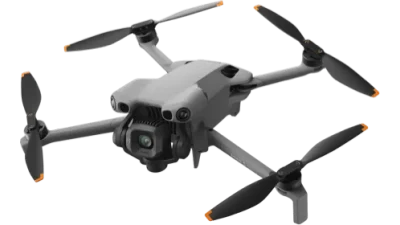
The only drone under 250 grams with a proper one-inch camera — and, at 712 grams of complete kit, the lightest way there is to carry one up a hill.
- 712 grams in the pack — drone, controller and two spare batteries, added up from DJI’s own figures. The lightest kit here with a camera in this class, because its battery is only 71.2 g.
- No test and no licence — just a £12.34 registration you do online.
- 36 minutes on the standard battery. DJI advertises 52, but only with the bigger battery that pushes it over 249 g.
- Rated to 12 m/s of wind and down to −10 °C — the best of any sub-250-gram drone here.
Affiliate link · costs you nothing extra · full disclosure
PART ONE
Here are the five that win their categories outright — and what is wrong with each of them, because not one of them is without a catch.
Best Ultralight Drone for Walking: DJI Neo 2
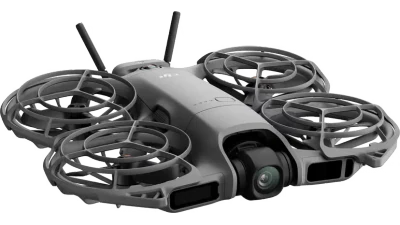
The only kit in this guide that is still under 250 grams once it is packed.
- Flown from your phone with no controller at all, the whole kit is 243 g — but DJI caps you at 60 m of height in that mode.
- No test and no licence — just a £12.34 registration you do online.
- A 12-megapixel camera on a 1/2-inch sensor, JPEG only. It is a record, not a photograph.
Best Budget Drone for Hiking: DJI Flip
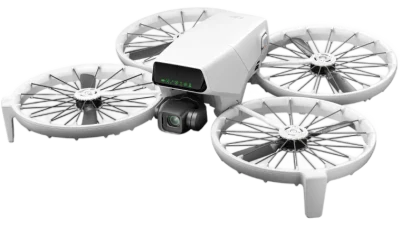
A 48-megapixel camera and folding propeller cages, for a third of the top pick.
- A 1/1.3-inch 48-megapixel camera with raw files, in the cheapest drone here that has one.
- Propeller cages built in, which is why it is the one I would hand a nervous first-timer.
- The heaviest battery of any 249-gram drone here at 83.5 g, so its kit is 736 g.
Best Drone for Long and Multi-Day Walks: DJI Mini 3
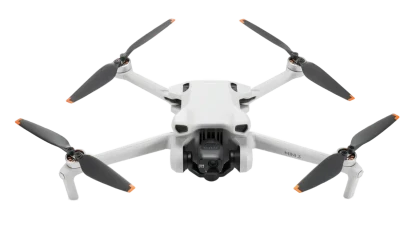
More minutes per gram than anything else in the guide, and it is four years old.
- 38 minutes a battery on DJI’s own figures — the longest of any drone under 250 grams here.
- A 1/1.3-inch 48-megapixel camera with raw files, four years old and still good.
- No obstacle sensing worth the name, so it wants open ground and your full attention.
Best Drone for Mountain Photography, If You Will Carry It: DJI Air 3S
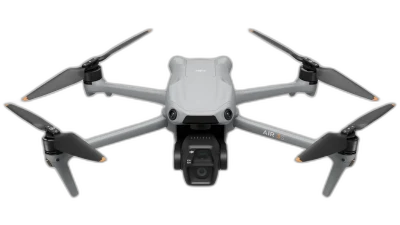
Forty-five minutes and a second focal length, for a kilo and a half of pack weight.
- 45 minutes a battery and a second, 70 mm lens, which changes how you shoot a ridge.
- 1,538 g carried — each spare battery is 247 g, heavier than a whole Mini 5 Pro.
- No test needed today, but from January 2028 it needs the A2 test to fly near people.
Best Drone for Flying Through Goggles on a Short Walk: Antigravity A1
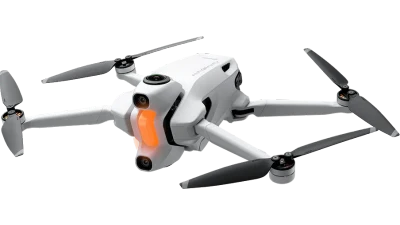
The only one here you fly from inside the goggles rather than watch on a phone screen.
- It shoots 8K in every direction at once, so you fly the line up the ridge and choose the framing when you get home.
- 1,014 g in the pack — the goggles and their battery alone are 515 g, which is why I would keep this to a couple of hours on a marked path.
- 249 g in the air even so — no test and no licence, just a £12.34 registration you do online.
- 24 minutes on the standard battery. The advertised 39 needs the high-capacity one, which takes it to 291 g and out of the no-licence class.
Affiliate links · costs you nothing extra · full disclosure
Take the quiz: find the best hiking drone for your walking
Four questions about how far you walk and how much you will carry.
- Matched to your walking and your pack, not a generic top ten.
- Judged on carried weight, not the number on the box.
- Every DJI drone here is one I have flown myself.
- About 20 seconds, and no email needed.
STEP 1 OF 4
13 of 13 still fit
All thirteen, and what each one weighs in the pack
-
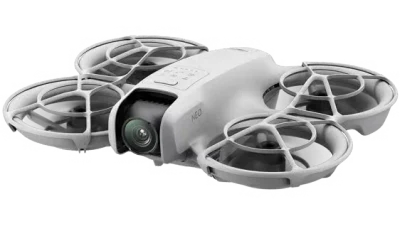
DJI Neo
135 g · C0 · 545 g carried · 18 min · 8 m/s wind
The lightest thing here by a distance, and the first one the wind will beat. Eight metres a second is a stiff breeze on a summit, not a gale.
- No test and no licence — just a £12.34 registration you do online.
- 135 g, and 545 g as a full kit with the controller and two spares.
- Rated to 8 m/s of wind, the weakest here. A summit is often windier than that.
-
DJI Neo 2
151 g · C0 · 563 g carried · 19 min · 10.7 m/s wind
Leave the controller at home and fly it from your phone and the whole kit is 243 g. Nothing else here goes in a jacket pocket.
- No test and no licence — just a £12.34 registration you do online.
- Flown from your phone with no controller at all, the whole kit is 243 g — but DJI caps you at 60 m of height in that mode.
- A 12-megapixel camera on a 1/2-inch sensor, JPEG only. It is a record, not a photograph.
-
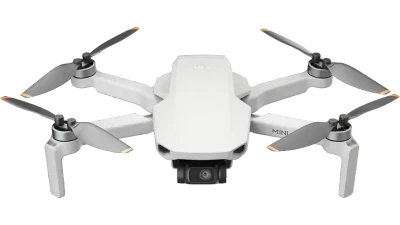
DJI Mini 4K rated to 0 °C only
246 g · no class mark · ~731 g carried · 31 min · 10.7 m/s wind
The cheapest way into a stabilised aerial shot, and the only drone in this guide DJI does not rate below freezing. On a British hill in February that is disqualifying.
- No test and no licence — just a £12.34 registration you do online.
- DJI rates it from 0 °C upwards. Every other DJI drone here is rated to −10 °C.
- DJI UK no longer lists it, so you are buying up remaining stock.
-
DJI Flip
249 g · C0 · 736 g carried · 31 min · 10.7 m/s wind
A 48-megapixel camera and built-in propeller cages, at the cheap end of this list. The cages are dead weight on a hill and worth every gram the first time you launch off a rock.
- No test and no licence — just a £12.34 registration you do online.
- A 1/1.3-inch 48-megapixel camera with raw files, in the cheapest drone here that has one.
- Propeller cages built in, which is why it is the one I would hand a nervous first-timer.
-
DJI Mini 3
248 g · C0 · ~729 g carried · 38 min · 10.7 m/s wind
Thirty-eight minutes a battery, more than anything else under 250 grams, from a drone DJI has quietly left on sale for four years. The most airtime per gram in this guide.
- No test and no licence — just a £12.34 registration you do online.
- 38 minutes a battery on DJI’s own figures — the longest of any drone under 250 grams here.
- A 1/1.3-inch 48-megapixel camera with raw files, four years old and still good.
-
HOVERAir X1 PRO stock battery to −5 °C
191.5 g · C0 (EU) · 322 g carried · 16 min · 10.7 m/s wind
There is no controller, because HOVERAir does not make one for it. That is why the whole kit is 322 grams, and it is also why sixteen minutes a battery is the price you pay.
- No test and no licence — just a £12.34 registration you do online.
- No controller to carry, because HOVERAir does not put one in the box — so the kit is the drone and two spare batteries, 322 g in total.
- 16 minutes a battery, the shortest here. It flies itself and follows you rather than being flown.
- The battery in the box is rated to −5 °C. Below freezing HOVERAir tells you to fit its cold-weather battery instead, which it sells separately.
-
HOVERAir X1 PROMAX stock battery to −5 °C
192.5 g · C0 (EU) · 323 g carried · 16 min · 10.7 m/s wind
A 1/1.3-inch 48-megapixel camera with raw files, in a 323-gram complete kit, because HOVERAir makes no controller for it. It is the lightest thing in this guide that shoots a photograph you could print, and it flies for sixteen minutes.
- No test and no licence — just a £12.34 registration you do online.
- No controller in the box, so the complete kit is 323 g — less than half of anything else here with a camera in this class.
- A 1/1.3-inch 48-megapixel camera with raw files, and 8K video, in a drone that weighs 192.5 g in the air.
- 16 minutes a battery, the shortest flight time in this guide, and its obstacle sensing only looks behind it.
-
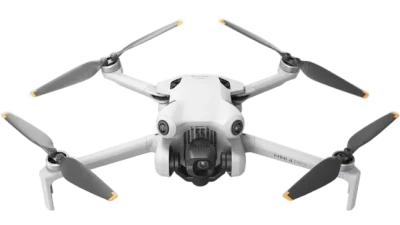
DJI Mini 4 Pro
249 g · C0 · 780 g carried · 34 min · 10.7 m/s wind
Obstacle sensing in every direction, which matters more among trees and crags than it does over a field. It ships with the heaviest of the phone-holder controllers, and you feel it.
- No test and no licence — just a £12.34 registration you do online.
- Obstacle sensing in every direction, which is what you want flying out of a corrie.
- 780 g carried — the heaviest sub-250-gram DJI kit here, because its controller is 375 g.
-
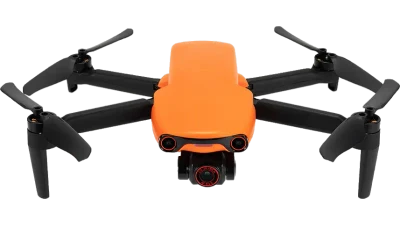
Autel EVO Nano+ no affiliate link — I could not find UK stock
249 g · 1/1.28″ 50MP · 28 min · carried weight not published
Here so nobody can call this list a DJI catalogue. It is a real 249-gram alternative and I could not buy one in Britain this week if I wanted to.
no link- 249 grams with a 1/1.28-inch, 50-megapixel camera — the only credible non-DJI option here.
- Sold out at Autel’s own store; the one UK retailer that lists it is awaiting stock.
- Autel does not publish a battery or controller weight, so I cannot tell you what it weighs in a pack.
-
DJI Mini 5 Pro
249.9 g · C0 · 712 g carried · 36 min · 12 m/s wind
A one-inch sensor under the 250-gram line, on a 71.2-gram battery that nothing else carrying a camera like it comes near. It is the best camera here and the lightest kit that carries one, which almost never happens.
- No test and no licence — just a £12.34 registration you do online.
- 712 g in the pack — the lightest kit here with a camera in this class, because its battery is only 71.2 g.
- 36 minutes on the standard battery. DJI advertises 52, but only with the bigger battery that pushes it over 249 g.
- Rated to 12 m/s of wind and down to −10 °C.
-
DJI Air 3S loses privileges in 2028
724 g · C1 · 1,538 g carried · 45 min · 12 m/s wind
Two focal lengths and forty-five minutes, which is genuinely the mountain photographer’s drone. It is also a kilo and a half of pack weight and a legal position with an expiry date.
- 1,538 g carried — each spare battery is 247 g, heavier than a whole Mini 5 Pro.
- 45 minutes a battery and a second, 70 mm lens, which changes how you shoot a ridge.
- No test needed today, but from January 2028 it needs the A2 test to fly near people. You are buying about eighteen months of that freedom.
-
Antigravity A1
249 g · C0 · 1,014 g carried · 24 min · 10.7 m/s wind
An 8K 360 camera that flies, under 250 grams — and the single clearest proof that headline weight means nothing. The goggles you must wear to fly it weigh twice what the drone does.
- 249 g in the air, 1,014 g in the pack — the goggles and their battery alone are 515 g.
- 24 minutes on the standard battery. The advertised 39 needs the high-capacity battery, which takes it to 291 g and out of the no-licence class.
- It shoots 8K in every direction at once and you choose the framing afterwards.
-
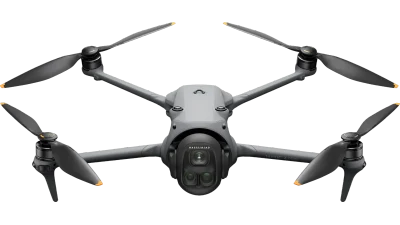
DJI Mavic 4 Pro
1,063 g · C2 · 2,147 g carried · 51 min · 12 m/s wind
The best flying camera you can buy in a bag this size, and two and a bit kilos of pack weight. It is in this guide as the thing you are tempted by and should not carry.
- Needs the A2 test to fly near people, and that is true today, not in 2028.
- 2,147 g carried — more than two litres of water, before you pack any water.
- A 100-megapixel Four Thirds camera and the only adjustable aperture in this guide.
The list is ordered cheapest first, on the cheapest sensible configuration of each drone — the one its link points at. I do not print the figures, because a price on this page would be out of date by the time you read it and it is not the price Amazon is charging; every row has a link that shows you today’s. Carried weight = drone (with its battery) + the controller it ships with + two spare batteries, from manufacturer figures. Two rows are marked “~”: the Mini 3 and Mini 4K ship with the DJI RC-N1, for which DJI publishes no weight, so I have substituted the 320 g RC-N3 as a floor — the real number is not lower. The two HOVERAir figures contain no controller because HOVERAir makes none for them; the optional Beacon is a separate purchase and its weight is not published. Autel publishes no component weights at all. Comparison specifications from DroneCompare, CC BY 4.0.
PART TWO
Grams on a spec sheet versus weight over twelve miles
Here is the thing that took me an embarrassingly long time to work out. The weight printed on a drone box is not a weight you will ever carry. It is a legal figure. It exists so the manufacturer can put a class mark on the label, and it describes exactly one object: the drone, in the air, with one battery in it.
Everything else that has to come with you — the controller you cannot fly without, the spare batteries you brought because one is never enough, the case that stops a propeller snapping in your pack — is somebody else’s problem. Nobody adds it up. So I did.
What is actually in the bag
A hiking kit is four things, and only one of them is the drone:
THE FOUR THINGS YOU CARRY
-
1. The drone, with one battery in it
This is the number on the box. 135 g to 1,063 g across this guide.
-
2. The controller — the surprise
DJI’s RC-N3, the phone-holder controller that comes with most of these, is 320 g. The older RC-N2 that ships with the Mini 4 Pro is 375 g. The DJI RC 2, with its own screen, is 420 g. Read those again next to a 249-gram drone. Two drones here skip this line altogether: HOVERAir builds no controller for the X1 PRO or the X1 PROMAX, and the box contains the drone and a cable.
-
3. Spare batteries, one per flight you actually want
71.2 g each on the Mini 5 Pro. 83.5 g on the Flip. 247 g each on the Air 3S, and 332 g on the Mavic 4 Pro. This is where heavy drones get truly heavy.
-
4. Something to put it in
The one I cannot give you a manufacturer figure for, because nobody publishes one. Call it 150 g for a padded pouch and 400 g upwards for a hard case. It is an estimate and I have kept it out of the table below rather than pretend otherwise.
And the memory card, which DJI lists at 0.3 g. The only component in this entire guide that genuinely does not matter.
So here is the sum, done properly, on every drone whose parts the manufacturer actually publishes: the drone, plus the controller it ships with, plus two spare batteries. Two spares, because one battery on a hill is not a flight, it is a gamble. Where a drone ships with no controller at all, that column is empty rather than estimated.
WHAT IT WEIGHS ON THE BOX vs IN THE PACK
| DRONE | ON THE BOX | CONTROLLER | 2 SPARES | CARRIED |
|---|---|---|---|---|
| HOVERAir X1 PRO no controller is made for it | 191.5 g | none | 130 g | 322 g |
| HOVERAir X1 PROMAX no controller is made for it | 192.5 g | none | 130 g | 323 g |
| DJI Neo | 135 g | 320 g | 90 g | 545 g |
| DJI Neo 2 | 151 g | 320 g | 92 g | 563 g |
| DJI Mini 5 Pro | 249.9 g | 320 g | 142 g | 712 g |
| DJI Flip | 249 g | 320 g | 167 g | 736 g |
| DJI Mini 4 Pro | 249 g | 375 g | 156 g | 780 g |
| Antigravity A1 goggles + grip controller | 249 g | 630 g | 135 g | 1,014 g |
| DJI Air 3S | 724 g | 320 g | 494 g | 1,538 g |
| DJI Mavic 4 Pro | 1,063 g | 420 g | 664 g | 2,147 g |
Every figure here is the manufacturer’s own, from DJI specification pages and user manuals, from Antigravity’s manual and from HOVERAir’s UK store, checked 31 July 2026. The DJI Mini 3, DJI Mini 4K and Autel EVO Nano+ are missing from this table because their makers do not publish a weight for the controller that ships with them, and I would rather leave a gap than invent one. The two HOVERAir rows have no controller figure for the opposite reason: no controller is made for them, so there is nothing to add. HOVERAir gives their spare battery as 65 g on its own product page and 62 g on its comparison table; I have used the heavier of its own two numbers.
Look at the middle of that table. The Mini 5 Pro, the Flip, the Mini 4 Pro and the Antigravity A1 are all within a gram of the 250-gram line. As things you can walk with, they are 712 g, 736 g, 780 g and 1,014 g. That is a 302-gram spread between four drones with effectively the same number printed on them, and if you shop on headline weight you cannot see it.
Then look at the top of it, where the two HOVERAir models sit at 322 and 323 grams. They are not there because they are small drones — at 191.5 and 192.5 g they are heavier than a Neo. They are there because their controller column is empty. HOVERAir does not sell one for either model: you launch it off your palm, it follows you, and your phone is the screen. Strip that 320-gram object out of the sum and a middling drone becomes the lightest kit in the table above. Only the Neo 2 undercuts it, and only in the phone-only mode that is not in that table — by leaving a controller you own at the car and accepting a 60-metre ceiling, which is a decision you have to keep making. Here there is no decision, because there is nothing to leave behind. I have flown neither, so take that as judgement rather than experience — but the arithmetic is HOVERAir’s own numbers and it is not close.
What it costs you is airtime and margin. Sixteen minutes a battery is the shortest flight time on this page, the obstacle sensing only looks backwards, and the battery in the box is rated to −5 °C rather than the −10 °C every other drone in that table manages — HOVERAir sells a separate cold-weather battery and tells you to fit it below freezing. On a summer path that is a trade I would make. On a January ridge it is not.
The A1 is the extreme case, and I have not flown one, so take this as judgement rather than experience: it is a drone you fly through goggles, and the goggles plus their battery are 515 g. The control gear weighs more than twice the drone. That is a fascinating object and it is not a thing I would put in a rucksack for twelve miles.
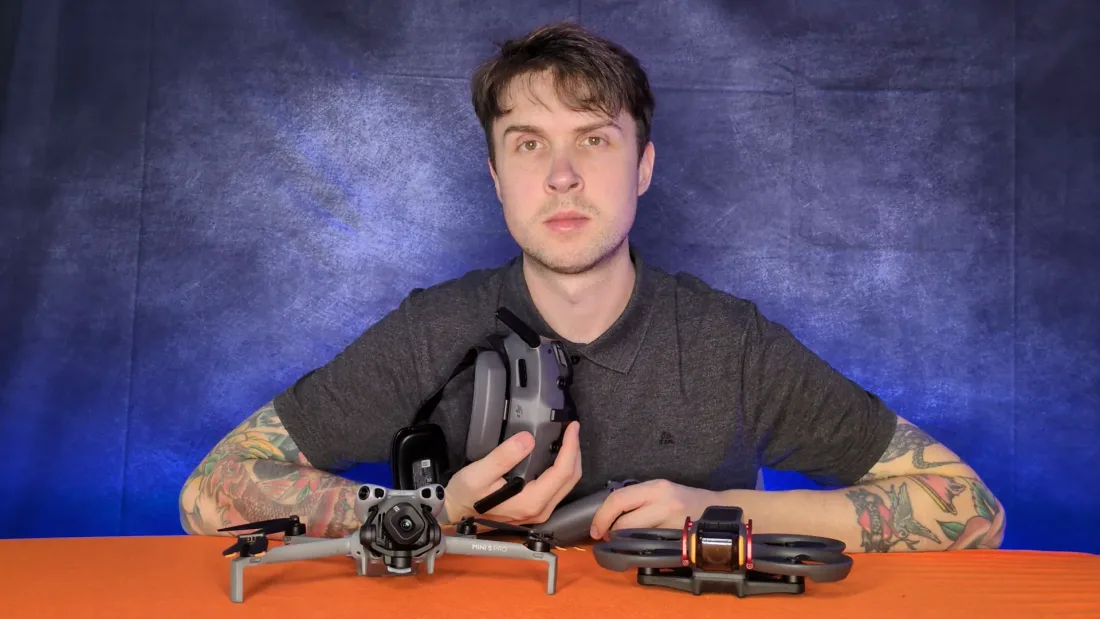
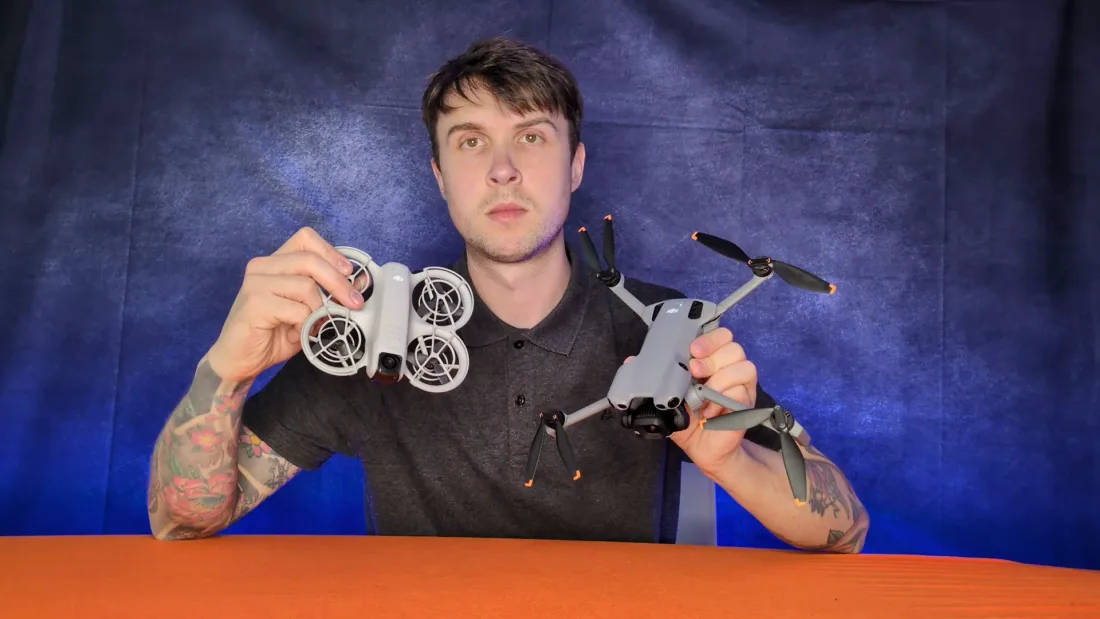
That photograph is the whole argument in one frame. The thing in my hand is the controller. The thing on the table is the drone. The controller is the heavier object, and every buying guide on the internet writes about the one on the table.
Twelve miles, and why the last mile is the one that counts
Seven hundred grams sounds like nothing. It is nothing, in the shop. A litre of water weighs a kilogram, so the Mini 5 Pro kit is about two-thirds of a water bottle, and you would laugh at anyone who agonised over that.
Then you walk for six hours. Weight in a pack is not a fixed cost, it is a rate: you pay it every step, and the bill arrives at the end. The kit that felt trivial at the car park is the reason you do not bother getting it out on the last summit, which is usually the one with the light on it. I have watched people carry a drone all day and fly it once, at the beginning, because by mid-afternoon unpacking it had become a chore.
The test that actually matters. Not “how light is it?” but “will I still take it out at hour six?” Every gram you save is really buying you one more flight late in the day, and late in the day is when hills look their best. That is the only reason any of this arithmetic is worth doing.
Minutes per gram: the number that ranks them properly
If you accept that framing, the interesting figure is not weight and it is not flight time. It is the two divided into each other: how many minutes in the air does each gram on your back buy you?
MINUTES IN THE AIR PER 100 G CARRIED
Manufacturer flight time for one battery, divided by carried kit weight. It is a crude number and it tells you something real: the Mini 5 Pro buys you the same airtime per gram as a four-year-old Mini 3, and twice what a Mavic 4 Pro does.
One correction to that chart before you take it to the bank. Those flight times are all laboratory numbers and the manufacturers say so in the small print. DJI measures the Mini 3’s 38 minutes “with a flight speed of 21.6 kph in windless condition”. The Flip’s 31 minutes is a wind-tunnel figure at a constant 6 m/s; hover it instead and DJI’s own number drops to 28. There is no wind on a spec sheet and there is always wind on a ridge.
Which brings us to the thing that does more damage to those numbers than wind ever will.
The UK rules a walker actually runs into
If you have never owned a drone, this is the part that will blindside you, because none of it is on the box either. It is not complicated, and under 250 grams it is genuinely trivial.
Two registrations, one of which is free
A Flyer ID is a free online theory test from the Civil Aviation Authority. You need one for any drone weighing 100 g or more. It lasts five years and you retake the test to renew it. That is the whole thing — there is no practical test and no instructor.
An Operator ID costs £12.34 a year and identifies the person responsible for the drone. You need one for any drone of 100 g or more that has a camera, which is all thirteen here. It is a code you print on a label and stick to the drone, it covers every drone you own, and you must be 18 or over to register for it. If you want the detail, I have written it up properly in the guide to UK drone laws.
Then the 250-gram line does the rest
Under 250 grams, you fly in the sub-category the CAA calls Over People (A1), and there is nothing further to do. No test, no certificate, no fee beyond the £12.34. Eleven of the thirteen drones in this guide sit under that line, which is not a coincidence — it is the entire reason the sub-250-gram category exists and the reason it is where all the clever engineering has gone. Everything worth carrying up a hill lives there.
Above the line you get into class marks and qualifications. The Mavic 4 Pro carries a C2 mark, which means that to fly it anywhere near people you need an A2 Certificate of Competence — a separate theory test of at least thirty questions, taken with a CAA-approved provider, valid five years, at whatever price that provider sets. Without it that drone is restricted to Far from People (A3): 150 metres from anything residential, commercial, industrial or recreational, and 50 metres from any person.
On open moorland A3 is often survivable. On a popular hill on a Saturday, with a car park, a café and two hundred other walkers, it is not. That is the practical reason weight matters legally as well as physically.
The 120-metre limit moves with the ground
Everyone knows the height limit is 120 metres, or 400 feet. Almost nobody knows what it is measured from, and on a hill that is the entire question.
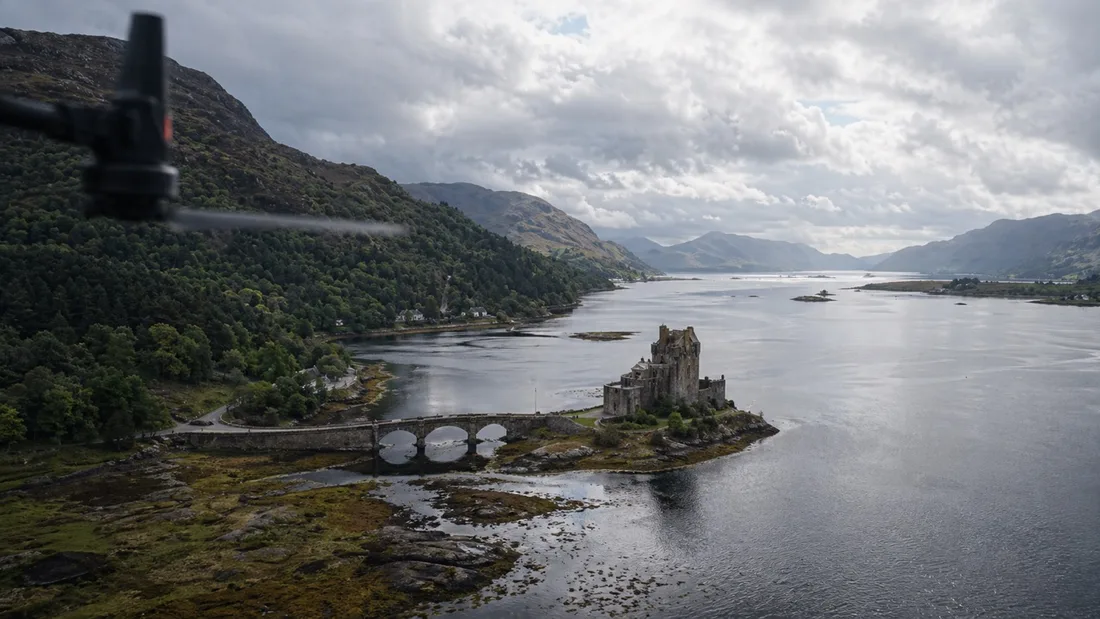
The CAA’s Drone Code deals with this explicitly, under a heading called “Flying where there are hills, mountains or cliffs”. Your drone must never be more than 120 m from the closest point of the earth’s surface. Where the ground falls or rises, the Code says, you may need to adjust your flight path so that it never is.
In plain terms: launch from a summit, fly out over the valley, and your ceiling drops away beneath you. The drone has not climbed, but the ground has gone, and you can be six hundred metres above the valley floor while your app cheerfully reports fifty. The app measures from your take-off point. The law measures from the nearest ground. Those are not the same thing, and only one of them is a defence. There is more on this in the 400ft drone height limit explained.
And then, who owns the hill
The CAA sets one more requirement that catches walkers more than any of the above: you must make sure the person or organisation that owns the land allows you to take off and land there. Flying over land is an airspace question. Taking off from it is a trespass question, and they are governed by different people.
Large parts of upland Britain belong to conservation bodies, national park authorities and private estates, and several of them say no. I have not verified every landowner’s policy and I am not going to pretend otherwise — check the specific one before you walk in. Scotland’s access rights work differently again, which I have covered separately in the Scottish drone rules.
PART THREE
What the cold takes off the number on the box
You carried three batteries up a hill. It is four degrees at the top, there is a wind, and they have been sitting in the outside pocket of your pack for four hours. Every one of them is now worth less than it was in the kitchen, and none of the marketing you read mentioned it.
This is not a fringe concern for extreme conditions. Four degrees is a normal British afternoon on high ground for most of the year.
WHAT DJI PUTS IN EVERY MANUAL IT SHIPS
-
Batteries cannot be used in environments below −10 °C. Not “should not”. Cannot.
-
Battery capacity is “significantly reduced” when flying between −10 °C and 5 °C. DJI puts no percentage on it, and neither will I.
-
Warm the battery to at least 10 °C before take-off, and ideally above 20 °C. Then hover in place for a while after take-off to warm it further before you fly anywhere.
-
The reduced capacity also reduces the drone’s wind resistance. Cold does not just shorten the flight; it makes the drone worse at the one thing a hill guarantees.
-
Batteries only charge between 5 °C and 40 °C. A cold battery and a power bank in a tent porch is not going to work the way you assumed.
Verbatim from the DJI Mini 5 Pro and DJI Neo 2 user manuals, 2025 editions. Word for word identical in both, which tells you it applies to the whole range.
Notice what DJI has just told you, quietly, in a safety notice. The advertised flight time is a room-temperature number. The 36 minutes on the Mini 5 Pro box, the 38 on the Mini 3, the 31 on the Flip — all measured warm, still, and near sea level. On a cold summit you are flying a battery that DJI itself describes as significantly reduced, and the honest planning number is meaningfully less than the box says. I will not give you a percentage, because DJI does not, and anyone who does is guessing.
What you can do is stop the cold happening in the first place, which is entirely a packing problem.
The four things that actually work
Carry spares against your body, not in the pack. An inside jacket pocket keeps a battery near body temperature all day. The lid pocket of a rucksack keeps it at air temperature, which is the problem you are trying to solve. This costs nothing and it is the single most effective thing on this list.
Fit the battery, power up, and wait. DJI’s instruction is to warm the battery before take-off and then hover after it. Ninety seconds of standing still at the launch point is not wasted time, it is the difference between a controlled landing and a low-battery return-to-home you did not choose.
Fly the first battery, not the coldest. Rotate them. The one that has been in your jacket goes in the drone; the one that just came out of the drone, which is warm from use, goes back in the jacket.
Do not plan on charging at camp. Below 5 °C DJI’s batteries will not accept a charge at all. If you are out for three days, you are carrying three days of batteries, and that goes straight back into the weight table in Part Two.
Altitude, and why it is not your problem in Britain
Every drone here has a maximum take-off altitude, and people worry about it far more than they need to. The Mini 5 Pro is rated to 6,000 m on the standard battery, the Mini 3 and Mini 4 Pro to 4,000 m, the Flip to 3,000 m, and the Neo 2 to 2,000 m. Ben Nevis is 1,345 metres. Nothing in Britain gets close to the ceiling of the weakest drone on this page.
The altitude figures matter if you are walking in the Alps or the Andes, and there they matter a lot — thin air means the propellers have less to bite on, and a drone rated to 2,000 m is not a drone for a 3,000-metre col. In Snowdonia it is a non-issue. Spend your worry on cold and wind instead; those are the two that will actually cost you a flight.
Year one, in pounds and in grams
Two currencies, because a hiking budget has two and most guides only count one of them. This is the top pick, bought sensibly, over twelve months — what it does to your bank account, and what it does to your back.
Start with the money, and start with the only sum in this whole exercise that is published, fixed and going nowhere: the Flyer ID is free, and the Operator ID is £12.34 a year. Because the Mini 5 Pro sits under 250 grams there is no A2 Certificate of Competence to take and no provider fee to pay for it. The regulation is the cheapest part of owning this drone, which is not what anybody expects before they buy their first one.
Everything after that is kit, and it is the part left out of every comparison you will read. Two spare standard batteries — not the Plus, for the reason set out below — are far and away the largest of the extras, and on their own a real fraction of what the drone cost you. Then a 256 GB V30 card, which is a rounding error. Then an ND filter set, which is less optional than it sounds: the aperture on this drone does not move, so filters are your only exposure control for video on snow or under a bright sky. Then something padded to carry the lot in, which costs very little and weighs a surprising amount. Then, if you want it, a year of hobby third-party insurance, optional unless somebody is paying you for the pictures. And finally the line everybody leaves out and most people eventually pay: an allowance for the crash you have not had yet — propellers, a gimbal, an excess.
Put all of that on top of the drone and year one lands at roughly half as much again as the drone on its own. Not double, which is the scare figure people repeat, and nothing like the sticker price either. Half again is what to plan around, and it appears on no product page anywhere.
YEAR ONE — DJI MINI 5 PRO
| ITEM | WHAT IT TAKES OUT OF THE BUDGET | IN THE PACK |
|---|---|---|
| DJI Mini 5 Pro with RC-N3 the drone itself | Most of it | 569.9 g |
| Flyer ID CAA, 5 yrs | Free | — |
| Operator ID CAA, annual | £12.34 | — |
| A2 CofC not needed under 250 g | Nothing to pay | — |
| Two spare standard batteries not the Plus | The biggest of the extras | 142.4 g |
| 256 GB V30 microSD buy the big one | Barely registers | 0.3 g |
| ND filter set the aperture is fixed at f/1.8 | Modest, and not optional | 3.4 g |
| Something to carry it in no maker publishes a weight | Small | ~150 g |
| Hobby third-party insurance optional unless paid work | A small annual sum | — |
| The crash you have not had yet props, gimbal, excess | Budget for it anyway | — |
| Realistic year one | About half as much again as the drone | ~866 g |
Half as much again on the money, and 866 grams against the 249.9 the box advertises. Both of those are the honest numbers and neither is on any product page. Notice which lines are heavy and which are expensive: they are not the same lines. The batteries are the largest of the extras and a sixth of the weight. The insurance costs real money and weighs nothing at all. The bag weighs a great deal and costs almost nothing. Budget in both currencies or you will get one of them badly wrong.
THE THREE THINGS THAT GO IN THE PACK
- Check price
Spare standard batteries — 71.2 g each
Not the Plus. That one is 117 g and it costs you the sub-250-gram status.
- Check price
A 256GB V30 card — 0.3 g
V30 is the rating that keeps up with 4K without dropping frames. Weightless. Buy the big one.
- Check price
ND filters — 1.12 g each
The aperture does not move, so on snow or a bright sky these are your only exposure control for video.
Affiliate links · costs you nothing extra · full disclosure
THE UPSELL THAT COSTS MORE THAN MONEY
Two “bigger battery” traps, on two different drones
You will be offered a bigger battery for the Mini 5 Pro, called the Intelligent Flight Battery Plus. More flight time, modest price, obvious upgrade — and it is the only way to reach the 52 minutes DJI puts on the box.
It is also 117 g instead of 71.2 g, and DJI’s own manual states that the C0 version of the drone with the Plus battery fitted can no longer be operated under C0 classification. DJI publishes two model numbers for the same drone: the C0 one has a maximum take-off mass of 249.9 g, and the C1 one has a maximum take-off mass of 355 g. Fitting the upsell battery moves you from the first to the second, and out of the sub-250-gram rules entirely.
The Antigravity A1 does exactly the same thing, and its own manual is just as clear. The advertised 39 minutes is with the High-Capacity Flight Battery, which takes the drone from 249 g to 291 g. On the standard battery it flies for 24 minutes. The Amazon listing headline says 39 minutes. The specification page says the 39-minute configuration is the 291-gram one.
Same trap, two manufacturers, and it is exactly the same answer both times. Buy a second standard battery instead. You get more total airtime for a similar total weight, and you stay on the right side of the only line in this article that has legal consequences.
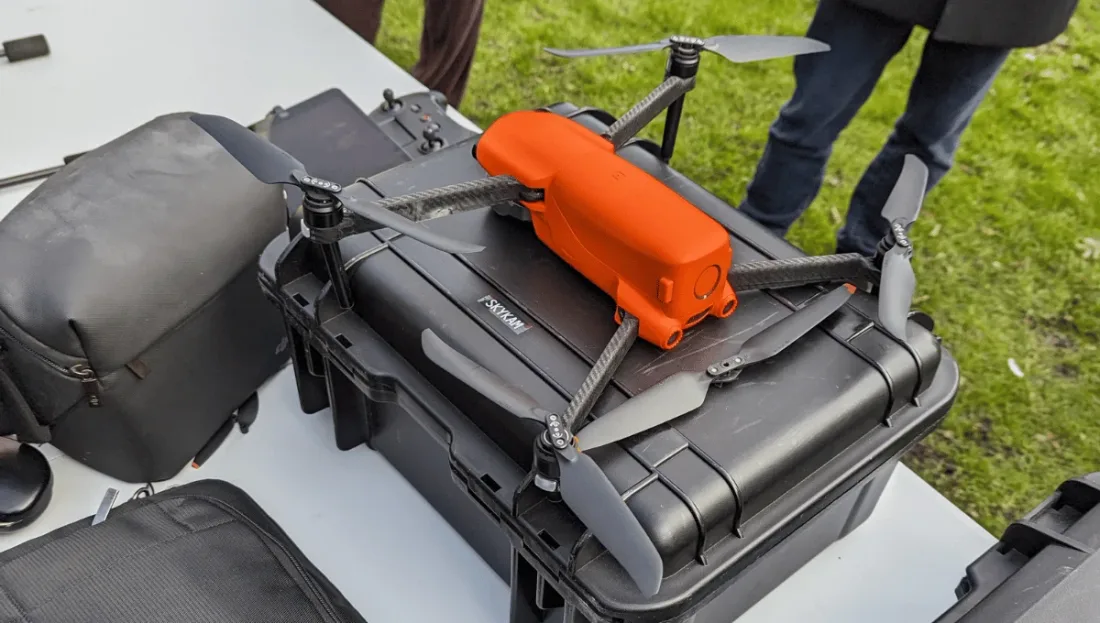
And this is what you should not buy. A hard case is the correct answer for a job where a van takes the kit to the site. On your back it is several hundred grams of protection against a risk a padded pouch already covers, and it is the first thing I would leave in the car.
PART FOUR
The best drone for hiking in 2026
The DJI Mini 5 Pro, — the dearest DJI drone here that still comes in under 250 grams, and the one I would buy anyway. It is the lightest thing worth carrying up a hill, and I would not spend long deciding.
That sentence is doing two jobs, and both halves matter. Lightest, because at 712 g of complete kit it undercuts every other drone here with a camera in its class — and it does that by pairing a one-inch sensor with a 71.2-gram battery, a combination nothing else here comes close to and a design decision nobody advertises and everybody feels. Worth carrying, because it is the only drone under 250 grams with a one-inch sensor, and the gap between a one-inch sensor and everything smaller is exactly the gap between a photograph of a view and a record that you were there. If the pictures matter more to you than the walking does, I have ranked the whole field on stills alone in the guide to the best drone for photography.
It is also the best-behaved of these in the conditions a hill actually produces: 12 m/s of rated wind resistance where most of the sub-250-gram field manages 10.7, and a 6,000-metre ceiling you will never approach in Britain. I have flown it, and the thing I noticed was not the camera. It was that it holds position in wind that makes a Mini 4 Pro look busy.
Spend less if you can. The DJI Flip carries 24 grams heavier as a kit, has a genuinely good 48-megapixel camera and costs well under half as much. If this is your first drone and the honest answer is that you want to find out whether you will actually use it on a walk, buy the Flip. Nobody has ever regretted starting cheap. If you want the whole beginner field rather than the hiking cut of it, I have ranked it in the guide to beginner drones, and the whole bracket, hiking or not, in what £500 actually buys you.
Carry almost nothing. The DJI Neo 2 — a third of the top pick, and flown from your phone with no controller at all — is 243 g of total kit. It is the only thing in this guide that is still under 250 grams once it is packed, and it is the one I would take on a walk where the drone is an afterthought rather than the point. You are giving up a great deal of camera and DJI caps you at 60 metres of height in that mode, so know what you are buying. If you would rather not give the camera up, the HOVERAir X1 PROMAX is 323 g complete with a 48-megapixel sensor and raw files, and it has no controller to leave behind because none is made for it. I have not flown one. What you pay for that is sixteen minutes a battery, obstacle sensing that only looks backwards, and a battery in the box rated to −5 °C rather than −10. Everything else at that weight is in the sub-250g drone roundup.
The one I’d leave at home
The DJI Mavic 4 Pro — and I want to be careful here, because it is the best flying camera on this page and I am not pretending otherwise. If somebody is paying for the pictures, it is the one I would take.
But look at what hiking with it means. 2,147 grams of carried kit: the drone at 1,063 g, a 420 g controller, and spare batteries at 332 g each. That is more than two litres of water, before you have packed any water. It buys you 2.4 minutes of flight per hundred grams carried, which is less than half what the Mini 5 Pro gives you. And its C2 class mark means you need the A2 Certificate of Competence before you can legally fly it near anybody at all — so on a busy hill you are carrying two kilos you are not allowed to use.
Every argument for it is a studio argument. Sensor size, dynamic range, an aperture that actually moves. Every one of them is real and not one of them survives contact with hour six of a twelve-mile day. If you already own one, take it somewhere you can park near.
And if what you actually want is one great aerial photograph of a specific place rather than a new hobby, owning is usually the expensive way round. You can hire a qualified drone pilot who already has the drone, the qualifications and the insurance — and there is a drone photography service for exactly that.
Best drone for hiking: the questions I get asked most
What is the best drone for hiking in the UK?
The DJI Mini 5 Pro. Weighed as a complete kit — drone, the RC-N3 controller and two spare batteries — it comes to 712 grams, which is lighter than every other drone here with a camera in its class, and it is the only one under 250 grams with a one-inch sensor. It needs no test and no licence, only the free Flyer ID and the £12.34-a-year Operator ID. Spend less and the DJI Flip does the same job for a third of the money; carry almost nothing and the DJI Neo 2 goes in a jacket pocket at 243 grams if you fly it from your phone.
How much does a hiking drone really weigh in your pack?
Roughly three times the number on the box. A drone that says 249 grams is 249 grams in the air, with one battery fitted. In your rucksack it is the drone, plus a controller of 320 to 420 grams, plus every spare battery at 65 to 84 grams each. Using DJI’s, Antigravity’s and HOVERAir’s own published component weights, a DJI Mini 5 Pro kit is 712 g, a DJI Flip kit is 736 g and an Antigravity A1 kit is 1,014 g — three drones all sold within a gram of the 250-gram line. The exception is a drone that has no controller at all: the HOVERAir X1 PRO and X1 PROMAX come to 322 g and 323 g complete, because HOVERAir does not make one for them.
Do I need a licence to fly a drone while hiking?
Not a licence, but two registrations. Anything weighing 100 g or more needs a Flyer ID, which is a free online theory test valid for five years. Anything weighing 100 g or more with a camera also needs an Operator ID, which costs £12.34 a year and goes on a label stuck to the drone. Under 250 grams that is everything you need. Over 250 grams you may also need an A2 Certificate of Competence, which is a separate paid theory test.
How much flight time do you lose flying a drone in the cold?
DJI does not publish a figure, and neither will I. What DJI does state is that battery capacity is significantly reduced between −10 °C and 5 °C, that the batteries cannot be used below −10 °C at all, that you should warm the battery to at least 10 °C before take-off, and that the reduced capacity also reduces the drone’s wind resistance. Plan a winter flight around the battery being worth noticeably less than the box says, keep spares against your body, and treat the advertised minutes as a summer number.
Can I fly a drone in a UK national park?
The Civil Aviation Authority’s rules do not ban it. What the CAA does require is that the person or organisation who owns the land where you take off and land allows you to do it. That is where most national park flying actually stops: large parts of upland Britain belong to conservation bodies, estates and authorities that set their own policy, and several of them say no. Check the specific landowner before you walk in, not after.
Does the 120-metre height limit change when you are on a hill?
The number does not change but the reference point moves. The CAA’s Drone Code states that your drone must never be more than 120 m (400 ft) from the closest point of the earth’s surface, and it addresses hills, mountains and cliffs directly: where the ground falls away or rises, you may need to adjust your flight path so the drone is never more than 120 m from the nearest ground. Fly off a summit and out over a valley and your legal ceiling follows the drop with you.
The short version
If you read all of that and still want me to just say it: buy the DJI Mini 5 Pro. It is 712 grams of complete kit, it is the only drone under 250 grams with a one-inch camera, it needs no test and no certificate, and it is the lightest thing here worth carrying up a hill.
Affiliate links · costs you nothing extra · full disclosure
I do not print prices here. Drone prices move constantly, and the only figure worth acting on is the one Amazon is showing you at the moment you look — so every drone in this guide carries a link to its own listing instead. Component weights, flight times, wind ratings and temperature limits are from manufacturer specification pages and user manuals. Regulatory detail from the UK Civil Aviation Authority and its Drone Code (CAP2320, March 2026). Comparison specifications from DroneCompare, licensed under CC BY 4.0. Amazon links are affiliate links.