Best Drone for Wildlife Photography: What I’d Fly, and How Far Back I’d Stand

Peter Leslie
31 July 2026 · 19 min read
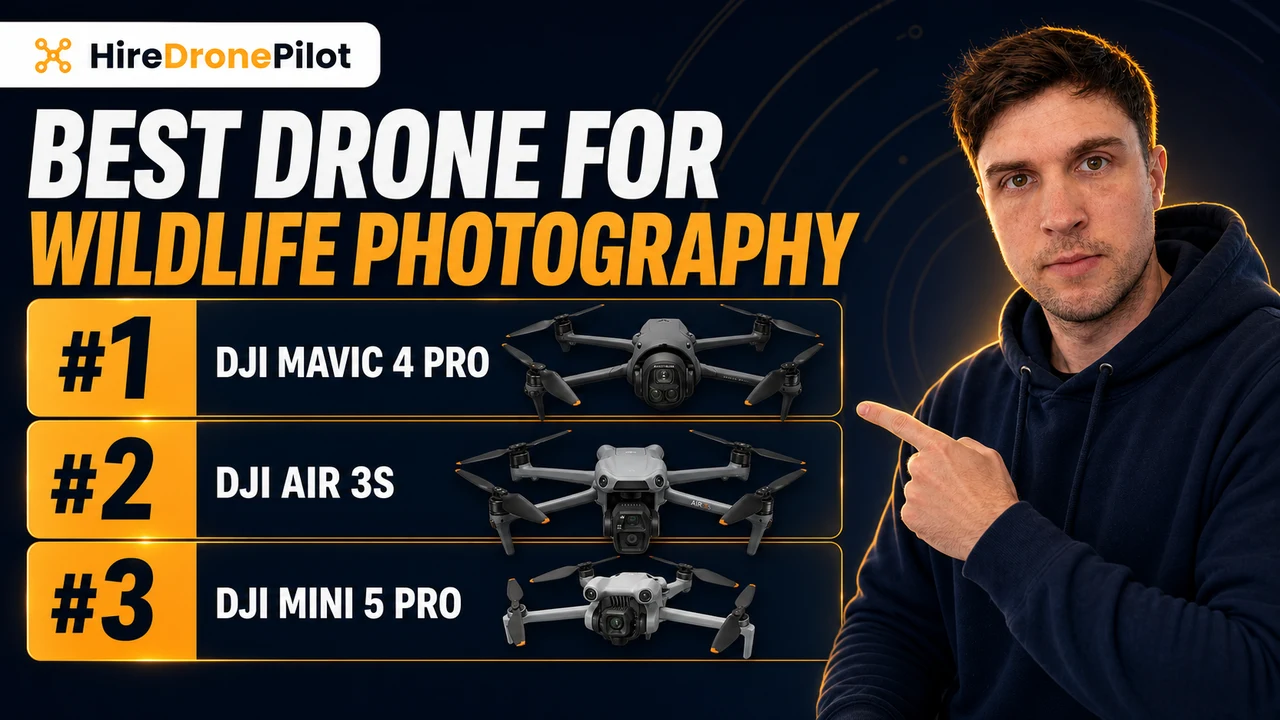
Almost every wildlife drone guide opens with the camera. That is the wrong end of the problem. What decides whether you come home with a usable photograph of an animal is not the sensor. It is how far away you were standing — and in the UK that distance is not entirely your decision to make.
Get it wrong with the wrong species at the wrong moment and you have not been impolite. You have committed a criminal offence. The law does not ask whether the drone was small, or quiet, or whether you meant well. It asks whether you did it intentionally or, in the plain English GOV.UK uses for the same test, “by not taking enough care”.
That collapses the buying question into something unusually simple. If you have to stay a long way back, the only specification that converts distance into a photograph is focal length — how long the lens is. Sensor size, megapixels and flight modes all matter less than that one number, and most of the drones sold as camera drones do not have it.
Judged honestly, then, the best drone for wildlife photography in 2026 is not the one with the largest sensor. It is the one that lets you stand furthest away and still fill the frame.
So this guide does three things a ranking cannot. It asks four questions about what you actually photograph and narrows eleven drones to the one that suits you. It sets out, section by section, exactly which kinds of disturbance are offences under UK law and which are not — because almost everything written about this online overstates it in one direction or waves it away in the other. And it does the reach arithmetic, so you can see what a 70 mm lens buys you in metres rather than in marketing.
How I get paid: the Amazon links below are affiliate links, so if you buy through one I earn a small commission at no extra cost to you. It does not change what I recommend — two of the eleven drones here have no buy link at all, and I spend a good part of this article explaining why the cheapest ones cannot do this job.
The Best Drone for Wildlife Photography in 2026 Is the DJI Air 3S
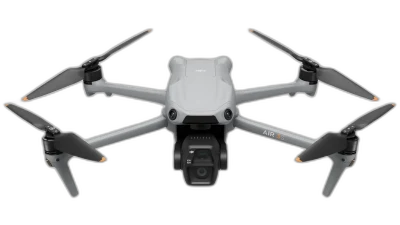
The cheapest drone here with a second, longer lens. A longer lens is how you photograph an animal without going anywhere near it.
- A genuine 70 mm second camera on a 48-megapixel sensor, not a digital crop of the wide one. From the same spot it frames a subject nearly three times larger than a 24 mm drone, and it still holds twelve megapixels cropped to 140 mm framing.
- 45 minutes on a battery — the difference between waiting for an animal and chasing one.
- No test and no certificate to fly it today. Just a £12.34 registration you do online.
- The honest catch: from 1 January 2028 its C1 mark stops counting and it needs the A2 test to fly near people. Out on a marsh you are already far from people, which is why that bites less here than anywhere else.
Affiliate link · costs you nothing extra · full disclosure
PART ONE
The overall winner is the Air 3S, above. Here are the four that take the categories it does not — and what is wrong with each of them, because not one of them is the right answer for everybody.
Best Drone for Wildlife Photography Without a Licence: DJI Mini 5 Pro
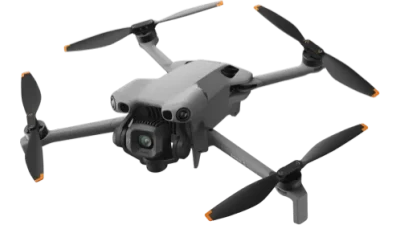
No telephoto, but fifty megapixels of crop room and no paperwork beyond the basics.
- No test and no certificate — just a £12.34 registration you do online.
- A 50-megapixel one-inch sensor. Crop it by half in each direction and you keep 12 megapixels, framed like 48 mm.
- 36 minutes on the standard battery. The 52-minute figure needs the Plus battery, which pushes it over 249 grams.
Best Drone for the Longest Lens: DJI Mavic 4 Pro
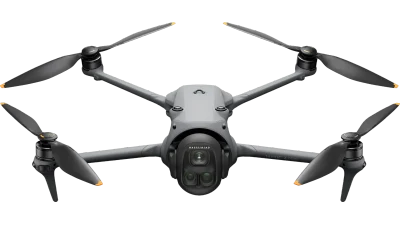
A 168 mm equivalent on a 50-megapixel sensor. Nothing else that folds reaches this far.
- Needs the A2 test to fly near people.
- A 168 mm equivalent telephoto. At the same distance it frames a subject seven times larger than a 24 mm drone.
- 51 minutes a battery, and a Four Thirds main camera that holds a bright sky and a dark wood at once.
Best Budget Drone for Wildlife Photography: DJI Flip
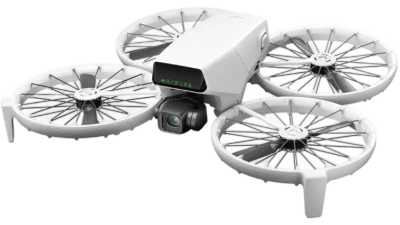
Under three hundred pounds for a file worth editing, in propeller cages.
- No test and no certificate — just a £12.34 registration you do online.
- 48 megapixels on a 1/1.3-inch sensor, with raw files you can actually pull detail out of.
- One 24 mm lens and no telephoto, so this is a habitat camera, not a portrait one.
Best Drone to Learn On Before You Go Near Wildlife: DJI Neo 2
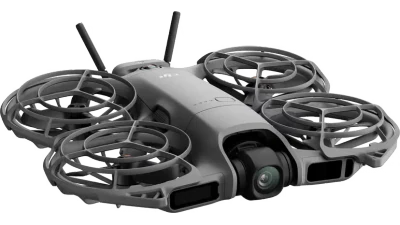
The disturbance you cause is mostly a function of your flying. Get the panic out of the way at home.
- No test and no certificate — just a £12.34 registration you do online.
- 151 grams and caged, so a mistake in a back garden is a mistake and not a repair bill.
- A 16.5 mm lens, so treat it as a trainer. It is not a wildlife camera and I would not pretend otherwise.
Affiliate links · costs you nothing extra · full disclosure
Take the quiz: find the best drone for wildlife photography for you
Ranked on reach first, because distance is the part the law decides for you.
- Matched to what you actually photograph, not a generic top ten.
- Eleven drones, every figure checked against the manufacturer’s own spec sheet.
- Tells you which ones simply cannot reach from a sensible distance.
- About 20 seconds, and no email needed.
STEP 1 OF 4
11 of 11 still fit
All eleven, and how far each one can actually reach
-
DJI Neo 2
151 g · C0 · 1/2″ 12MP · 16.5 mm · 19 min · no test needed
The drone to make your beginner mistakes on, in a garden, a long way from anything that nests. As a wildlife camera it is the wrong instrument at any distance.
- No test and no licence — just a £12.34 registration you do online.
- A 16.5 mm lens, wider than your phone. Everything sits small and far away in the frame.
- About 19 minutes a battery, and 17 with the propeller guards fitted.
-
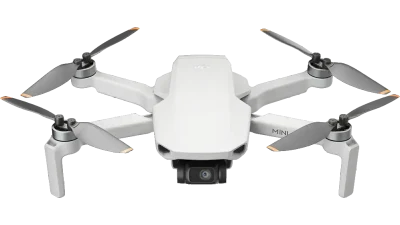
DJI Mini 4K DJI UK no longer sells it
246 g · 1/2.3″ 12MP · wide only · 31 min · no test needed
The cheapest stabilised aerial camera still on sale, and the smallest sensor in this guide. Fine for a wide record shot of a place, nothing more.
- No test and no licence — just a £12.34 registration you do online.
- The smallest sensor here, 12 megapixels on 1/2.3-inch. No crop room at all.
- Every configuration at DJI UK is now listed as not for sale or out of stock, so you are buying remaining retail stock.
-
DJI Flip
<249 g · C0 · 1/1.3″ 48MP · 24 mm · 31 min · no test needed
A 48-megapixel sensor in propeller cages for under three hundred pounds. The cheapest thing here that produces a file worth editing, and the cages mean a nervous first flight does not end in the reeds.
- No test and no licence — just a £12.34 registration you do online.
- 48 megapixels on a 1/1.3-inch sensor, with raw files you can actually pull detail out of.
- One 24 mm lens and no telephoto, so the animal will be small in the frame.
-
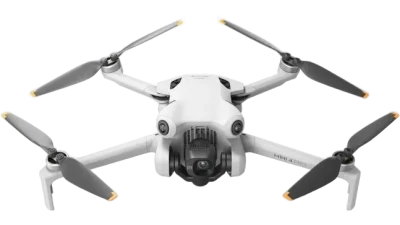
DJI Mini 4 Pro
<249 g · C0 · 1/1.3″ 48MP · 24 mm · 34 min · no test needed
The quiet, careful sub-250-gram workhorse, with obstacle sensing in every direction so a hedge does not end the flight. Its lens is still the short one.
- No test and no licence — just a £12.34 registration you do online.
- 34 minutes a battery. DJI advertises 45, but only on a Plus battery it does not sell in Europe.
- One 24 mm lens, so reach has to come from cropping a 48-megapixel file.
-
DJI Mini 5 Pro
249.9 g · C0 · 1″ 50MP · 24 mm · 36 min · no test needed
Fifty megapixels on a one-inch sensor, under the 250-gram line. It has no telephoto, so its reach is crop room — but there is a great deal of crop room, and no paperwork at all.
- No test and no licence — just a £12.34 registration you do online.
- A 50-megapixel one-inch sensor at 8192×6144. Crop it by half in each direction and you still hold 12 megapixels, framed like a 48 mm lens.
- 36 minutes on the standard battery. DJI advertises 52 on the Plus battery, which pushes it past 249 grams and loses its C0 status.
-
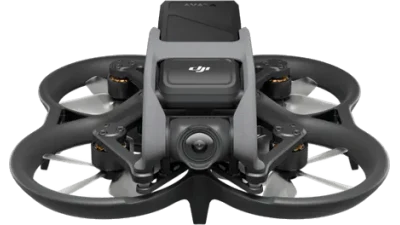
DJI Avata 2 loses privileges in 2028
377 g · C1 · 1/1.3″ 12MP · 12 mm · 23 min · observer required
Enormous fun and completely wrong for this. It flies low and fast on a 12 mm lens, which is a description of the exact flight profile the disturbance research warns about.
- The law requires a second person watching the drone whenever you fly it through goggles.
- A 12 mm lens, the widest here. An animal would be a speck unless you were on top of it.
- From January 2028 it needs the A2 test to fly near people — one of only two here that lose that freedom.
-
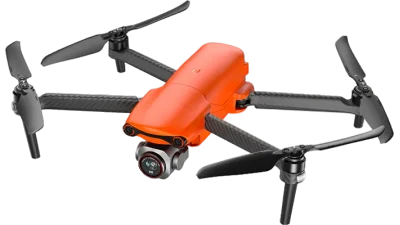
Autel EVO Lite+ no affiliate link — no UK stock I could find
835 g · legacy, no class mark · 1″ 20MP · 29 mm · 40 min
Here so nobody can call this list a DJI catalogue. It has the one adjustable aperture in the guide and no second lens, and I could only find spare parts for it on Amazon UK.
no link- Needs the A2 test to fly near people. Without it you stay 150 m from anything built-up.
- A one-inch 20-megapixel camera with a real adjustable aperture, f/2.8 to f/11.
- I could only find spare parts for it on Amazon UK, never the drone, so there is no buy link.
-
DJI Air 3S loses privileges in 2028
724 g · C1 · 1″ 50MP + 1/1.3″ 48MP 70 mm · 45 min
The cheapest genuine telephoto in the sky. A 70 mm lens on a 48-megapixel sensor is what turns a legal distance into a photograph rather than a dot.
- A real 70 mm second camera on a 48-megapixel sensor, not a digital crop of the wide one.
- 45 minutes a battery, the longest here outside the two Mavics.
- No test needed today, but from January 2028 its C1 mark becomes legacy and it needs the A2 to fly near people. For wildlife work, where you are usually far from people anyway, that costs you less than it would elsewhere.
-
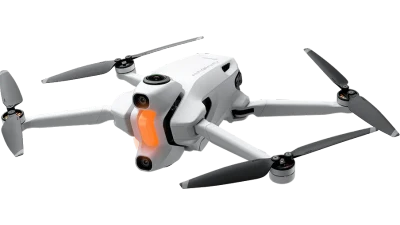
Antigravity A1
249 g · EU C0 · 1/1.28″ 8K 360° · 24 min · no test needed
A flying 360-degree camera, and the most interesting object on this list. It captures everything around it at once, which is the opposite of what a distant animal needs.
- No licence needed — but only on the standard battery. The high-capacity pack advertises 39 minutes and takes it to 291 grams, and Antigravity’s own page says that battery is not sold in European regions.
- It records 8K in every direction at once and you choose the framing afterwards.
- 24 minutes on the battery a UK buyer can actually get, the shortest here apart from the Neo 2 and the Avata 2.
-
DJI Mavic 4 Pro
1,063 g · C2 · Four Thirds 100MP + 70 mm + 168 mm 50MP · 51 min
The longest lens you can fly in a folding drone, on a 50-megapixel sensor rather than the afterthought most third cameras get. It is also a kilogram of drone and a qualification.
- Needs the A2 test to fly near people.
- A 168 mm equivalent telephoto on a 50-megapixel sensor. At the same distance it frames a subject seven times larger than a 24 mm drone.
- 51 minutes a battery, and a Four Thirds main camera that holds a bright sky and a dark wood at once.
-
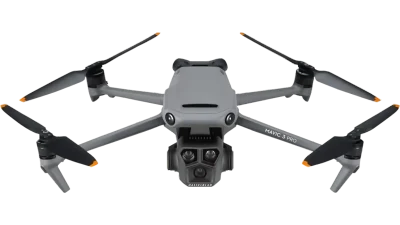
DJI Mavic 3 Pro no affiliate link — out of stock everywhere I checked
958 g · C2 · Four Thirds 20MP + 70 mm + 166 mm · 43 min
Three focal lengths on one airframe and the drone that made long-lens aerial work normal. You cannot currently buy one, which is the whole problem.
no link- Needs the A2 test to fly near people.
- A 166 mm equivalent third camera, but only 12 megapixels behind it on a 1/2-inch sensor.
- Out of stock in every configuration at DJI UK and unavailable on Amazon UK the day I checked, so there is no buy link.
Every buy link points at the exact configuration described in its row — the drone on its own unless the row says otherwise, and never a bundle priced as though it were the bare drone. The rows are ordered cheapest first, which is the only cost signal you will find here: what a drone actually costs today is on Amazon, and it changes faster than an article can. Specifications from the manufacturers’ own spec pages, with the DJI Mini 4K from DroneCompare, CC BY 4.0, because DJI has retired its spec page.
PART TWO
Disturbing certain animals is a criminal offence, and the law never tells you how close is too close
This is the part that catches people, so it is worth being precise about it rather than dramatic. There is no blanket UK law against flying a drone near wild animals. There is also no exemption for drones. What exists is a short list of specific disturbance offences, and a drone is an unusually efficient way of committing several of them without meaning to.
What is actually an offence, and what is not
Start with the thing that is not a disturbance offence. Under section 1(1) of the Wildlife and Countryside Act 1981 it is an offence to intentionally kill, injure or take any wild bird, or to take, damage or destroy the nest of any wild bird while that nest is in use or being built. Every wild bird is covered by that. But it is about physical harm and damage — not about noise, and not about being watched.
Disturbance is narrower, and it is where a drone gets you. These are the provisions that matter:
THE DISTURBANCE OFFENCES, IN THEIR OWN WORDS
Wildlife and Countryside Act 1981, s.1(5)
An offence to intentionally or recklessly disturb any wild bird included in Schedule 1 “while it is building a nest or is in, on or near a nest containing eggs or young”, or to disturb the dependent young of such a bird. Schedule 1 is the short list of the most protected species; GOV.UK gives the barn owl as an example.
Wildlife and Countryside Act 1981, s.9(4)(b) and s.9(4A)
An offence to intentionally or recklessly disturb a Schedule 5 animal “while it is occupying a structure or place which it uses for shelter or protection”. Separately, and with no shelter condition attached, it is an offence to intentionally or recklessly disturb a dolphin or whale, or a basking shark — anywhere, at any time.
Conservation of Habitats and Species Regulations 2017, reg. 43
An offence to deliberately disturb wild animals of a European protected species. The regulation defines what counts: disturbance likely to impair their ability “to survive, to breed or reproduce, or to rear or nurture their young”, or to hibernate or migrate, or “to affect significantly the local distribution or abundance of the species”.
Protection of Badgers Act 1992, s.3
An offence to interfere with a badger sett by, among other things, “disturbing a badger when it is occupying a badger sett”, intending to do so or being reckless as to whether your actions would have that consequence.
Wildlife and Countryside Act 1981, s.28P(6)
On a Site of Special Scientific Interest, an offence to intentionally or recklessly disturb any of the fauna by reason of which the land is of special interest — provided you knew that what you disturbed was inside an SSSI.
Scotland only
Section 1(5A) adds disturbing a Schedule 1 bird at a lek, and s.1(5B) adds harassing a Schedule 1A bird. Under s.117 of the Marine (Scotland) Act 2010, “harassing a seal (intentionally or recklessly) at a haul-out site is an offence” where Scottish Ministers have designated the site.
Sources: legislation.gov.uk, current text as at 31 July 2026. This is a summary written for photographers, not legal advice.
“Recklessly” is the word that should worry you
Every one of those bird and animal provisions says intentionally or recklessly. That is not a technicality. It means you do not have to want to disturb anything. GOV.UK translates the same test into plain English on its wild birds page as doing it “either intentionally or by not taking enough care”, which is a fair description of what happens when somebody launches near a hedgerow in May without knowing what is in it.
The Habitats Regulations use a different and slightly higher threshold — deliberately — but they compensate by defining disturbance broadly enough to include anything likely to impair breeding or to shift the local abundance of a species. Between the two tests there is not much comfortable ground for “I did not realise”.
What it costs if you get it wrong
Section 21(1) of the Act sets the penalty for the offences in sections 1 to 13: on summary conviction, imprisonment for up to six months, or a fine not exceeding level 5 on the standard scale, or both. GOV.UK states the England position for Schedule 1 disturbance more bluntly: “You could get an unlimited fine and up to 6 months in prison for each offence.”
Read each offence literally, because the Act means it. Section 21(5) says that where the offence was committed in respect of more than one bird, nest or egg, the maximum fine is worked out “as if the person convicted had been convicted of a separate offence in respect of each”. A single bad pass over a tern colony is not one offence. And under s.21(6)(b) the court “may order the forfeiture of any vehicle, animal, weapon or other thing which was used to commit the offence”. Draw your own conclusion about which category a drone falls into.
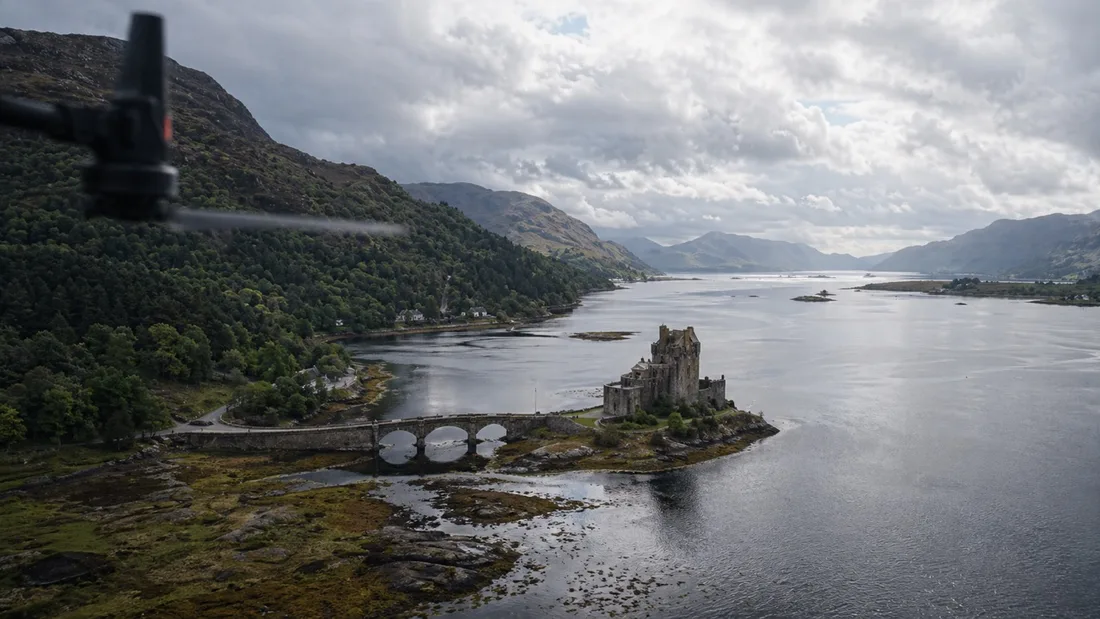
So how close is too close? The law does not say. The research does.
Nowhere in any of those provisions is there a distance. The offence is defined by the effect, not by metres, which sounds lenient and is in fact the opposite: it means the number is yours to justify afterwards, in front of somebody who was not there.
The useful numbers come from the ecology literature instead. The 2017 systematic review of drone disturbance in PLOS ONE — Mulero-Pázmány and colleagues, still the standard reference — found that birds are the most sensitive group, with flightless and large birds reacting more readily than small ones, and that direct “target-oriented” approaches provoked stronger reactions than systematic lawn-mower patterns. Its recommendations are blunt: fly “at the highest altitude possible”, avoid “manoeuvres above the animals”, favour lawn-mower patterns, and avoid “close-distance direct approaches”.
A 2025 PLOS ONE paper by Velilla and colleagues went further and produced actual numbers for colonial breeding birds, derived from the distance at which the birds took flight. They are larger than almost anybody expects.
RECOMMENDED SAFE DISTANCES — COLONIAL BREEDING BIRDS
| Species | Stay beyond |
|---|---|
| Common tern | 170 m |
| Sandwich tern | 160 m |
| Black-headed gull | 110 m |
| Large gulls, Eurasian spoonbill, great cormorant | 50 m |
The same paper recommends taking off more than 200 m away, beginning any approach at a minimum altitude of 50 m, using a gradual horizontal approach rather than a descent, checking first for vigilant species such as oystercatcher, avocet and curlew, and terminating the flight if more than 10 per cent of the colony shows flight behaviour.
Velilla, E. et al. (2025), “Best practice guidance for recreational and professional drones near colonial breeding birds”, PLOS ONE 20(11): e0332619. Recommendations, not law.
Look at those figures next to the drones in Part One and the buying decision makes itself. At 170 m, a 24 mm lens gives you a photograph of a marsh with some white specks on it. That is the entire argument of this guide in one line.
Where you are standing matters as much as where the drone is
Three layers can stop you before the wildlife law does. The CAA’s own Drone Code says that over a Site of Special Scientific Interest “flying may be restricted where it could disturb wildlife”, and tells you to check with Natural England, Natural Resources Wales, NatureScot or the Northern Ireland Environment Agency. The same page carries a rule most people skim past: “Animals and wildlife: Do not fly where you will disturb or endanger them.”
Second, byelaws. The Drone Code warns that these may restrict when and where you can fly, that they are unlikely to show up in any drone app or on any drone website, and that you should look for local signs. Reserves, country parks and coastal sites are exactly where they cluster, and a byelaw that bans launching from the car park is not overridden by the fact that the sky above is legal.
Third, licensing. Some wildlife photography needs a licence in its own right. Natural England lists “take part in photography” among the purposes for which it can license activities affecting protected species, and where a Schedule 1 bird is at the nest that licence is the line between lawful work and an offence. It comes from Natural England, NatureScot, Natural Resources Wales or the Northern Ireland Environment Agency depending on where you are — not from the CAA, which regulates the flying and not the wildlife.
None of this is a reason not to fly. It is a reason to fly high, fly wide, and buy the lens that makes that possible. If you are new to the registration side of it, the UK drone rules in plain English cover the Flyer ID and Operator ID, and there is a separate walkthrough of what changes north of the border, which matters here because Scotland’s disturbance provisions genuinely are wider.
PART THREE
Reach is the only specification that lets you obey the law and still get the picture
Every other buying guide will tell you about sensor size. Sensor size decides how good the picture looks. Focal length decides whether there is a picture, because it is the only thing that converts standing 170 m away into a frame with an animal in it.
What a longer lens actually buys you, in metres
Focal lengths on drone spec sheets are given as 35 mm equivalents, which is convenient, because it means the arithmetic is simple similar triangles. Double the focal length and you can stand twice as far away for the same framing. Here is every lens in this guide, from the manufacturers’ own specification pages.
LONGEST LENS ON EACH DRONE, 35 MM EQUIVALENT
The right-hand column is how much further back you can stand for identical framing, taking a 24 mm drone as 1.0×. It is arithmetic, not a manufacturer claim. The DJI Mini 4K is not listed because DJI has retired its specification page and I could not verify a figure for it.
That column is the whole argument. If the recommended distance for a tern colony is 170 m and you are holding a 24 mm drone, the honest options are to photograph the colony as a landscape or to go home. On a 70 mm lens the same subject is nearly three times larger in frame. On 168 mm it is seven.
Cropping is reach too, if you have the pixels to spend
There is a second way to get reach and it costs nothing: buy resolution and throw most of it away. The maths is exact and comes straight off the spec sheets.
The Mini 5 Pro records 8192×6144, which is 50 megapixels behind a 24 mm lens. Crop to the central half of the frame in each direction and you are left with 4096×3072 — still 12.6 megapixels, framed exactly as a 48 mm lens would have framed it. That is genuine reach from a drone that weighs 249.9 grams and needs no certificate.
The same trick on the Air 3S starts from a much better place. Its medium tele camera records 8064×6048 at 70 mm; the same half-width crop leaves 4032×3024, about 12.2 megapixels, framed like a 140 mm lens. Optics first, then pixels: that is the order that works.
Two caveats, because this is where crop-reach arguments usually go wrong. Cropping does not add detail — it spends resolution you already paid for, and the noise and softness come with it. And you cannot crop your way up from 12 megapixels, which is why the Mavic 3 Pro’s 166 mm camera, sitting on a 1/2-inch 12-megapixel sensor, is a weaker proposition than its headline number suggests.
The one noise figure that exists, and the drones that never have to publish it
Noise is the disturbance factor everyone brings up first, and it is genuinely part of the picture: the 2017 review found that noisier fuel-powered machines provoked more animal reactions than electric ones. But if you go looking for a decibel figure to compare drones with, you will find something odd.
Under Regulation 2019/945, the design rules behind the class marks, a C1 or C2 drone must “have a guaranteed A-weighted sound power level” and must carry “the indication of the guaranteed A-weighted sound power level affixed on the UA and/or its packaging”. The cap for a drone under 900 grams was 85 dB when the rule came in, tightening in two steps to 81 dB.
Class C0 has no sound power requirement at all. There is no limit and no label. Which produces the exact inversion of what most people assume: the Air 3S, the Mavic 3 Pro and the Mavic 4 Pro all carry a published decibel figure you can read off the drone, and the Mini 5 Pro, the Mini 4 Pro, the Flip and the Neo 2 — the small, quiet, conscientious-looking ones — do not have to publish anything.
Two things that figure does not tell you. Sound power is a property of the source, not a measurement at any distance, so 81 dB on a label is not 81 dB at the animal. And it says nothing about frequency, which is a large part of what a bird actually responds to. The same 2017 review noted that the shape of the drone matters too, with predator-like outlines provoking more reaction in birds — so being quiet has never been the same thing as being welcome. If you want the fuller version of this, I have written separately about how loud drones really are and about whether quieter propellers make a measurable difference.
On which: DJI sells Low-Noise Propellers for both the Air 3 series and the Mavic 3 series, listed on the drones’ own product pages, and a set costs a small fraction of what a set of ND filters does. DJI publishes no decibel difference for either, so buy them as a cheap improvement rather than a measured one. They are the least expensive thing on this page and I would fit them before I bought a filter.
PART FOUR
What I’d fly for wildlife, and how far back I’d stand
The DJI Air 3S. I have flown it, and for this job it is not a close decision.
Everything above points the same way. The distances that keep you legal and keep the animal undisturbed are large — a hundred metres and upwards for anything colonial — and there is exactly one specification that survives that distance. The Air 3S is the cheapest drone you can buy with a real second lens: 70 mm equivalent, on a 48-megapixel 1/1.3-inch sensor, which crops down to something framed like 140 mm and still holds twelve megapixels. Its 45-minute battery is the other half of the answer, because the way you photograph wildlife without harassing it is to arrive, get high, and wait.
And how far back would I stand? Behind the numbers in Part Two, not at them. Take off more than 200 m from the subject, climb before you close, approach horizontally rather than descending, fly the pattern rather than the animal, and turn round the moment anything lifts its head. On a 70 mm lens you can afford all of that. On 24 mm you will be tempted to give one of them up, and that is exactly how a reckless disturbance happens to somebody who considers themselves careful.
What it costs in year one. The drone is nearly all of it, and everything else is small change beside it — but the everything else is real, and people forget it. Five lines sit around the drone. The £12.34 Operator ID, which every drone in this guide needs, which is a fixed government fee rather than a product, and which is the only figure on this page that will not move. A second Intelligent Flight Battery, which is the largest of the five by some way, because 45 minutes is one wait and not two. A 256 GB V30 card, which is the cheapest of them. The Low-Noise Propellers, which cost a small fraction of what the filters do. And an ND filter set, which is the only genuinely optional line here and the one I would defer. Together those five add roughly a third again on top of the drone, so budget for the drone and then some — not for the drone alone. The Flyer ID is free. Insurance is only a legal requirement if you are being paid, which for most people reading this they are not.
Spend less, and spend more
Spend less. The DJI Mini 5 Pro costs roughly three quarters of what the Air 3S does. It has no telephoto and I would still happily carry one. Fifty megapixels on a one-inch sensor is enough crop room to reach like a 48 mm lens, it weighs 249.9 grams, and it asks nothing of you beyond the two registrations. If most of your work is habitat, wetland and landscape with animals somewhere in it — which, honestly, is what most people end up photographing with a drone — it is the better buy.
Spend more, for one reason only. The DJI Mavic 4 Pro costs close to twice what the Air 3S does, and for that it gives you a 168 mm equivalent on a 50-megapixel sensor. Nothing else that folds into a bag comes close. Buy it for the reach, not the Hasselblad, and be clear that you are paying roughly double for two and a half times the lens. You are also buying a kilogram of drone and an A2 Certificate of Competence, and at that point you should be honest with yourself about whether you are doing this for money.
The two I would leave at home
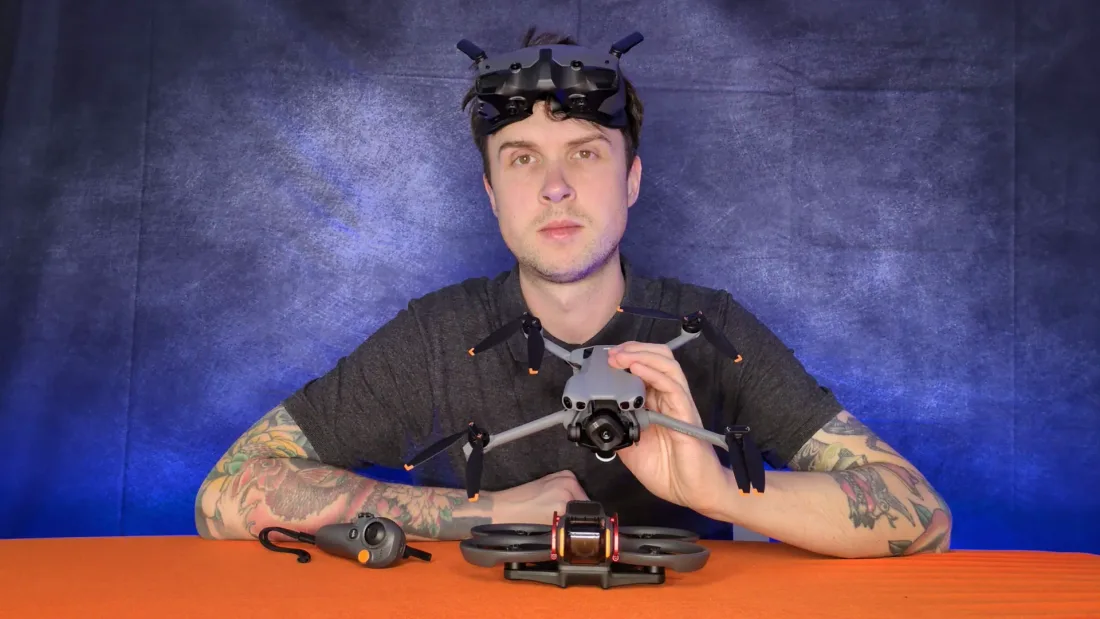
The DJI Avata 2 first, and it pains me, because it is the most fun object in this guide and I fly mine constantly. It is also a 12 mm lens flown low and fast through goggles, which is a near-perfect description of the flight profile the disturbance literature singles out: low altitude, high speed, direct approach. It cannot hold a still frame, it legally requires a second person stood beside you watching it, and it loses its C1 privileges in 2028 like the Air 3S does. It is a brilliant drone for flying FPV in an empty valley. It is the wrong thing entirely to take to a nature reserve.
The DJI Mavic 3 Pro second, and for a duller reason: you cannot buy one. Every configuration at DJI UK is out of stock, and the Amazon UK listing was showing as currently unavailable on the day I checked. Its 166 mm camera would otherwise be a real contender, though even then it sits on a 1/2-inch 12-megapixel sensor, so the Mavic 4 Pro’s 168 mm on 50 megapixels is not a marginal upgrade.
If this is a one-off — a single set of images of a site, a survey, a piece of commissioned aerial photography — owning is rarely the cheaper answer once the licence, the insurance and the wildlife permissions are in the sum. You can hire a qualified drone pilot who already has the drone, the qualifications and the insurance, and our guide prices will tell you what that looks like before you ask.
Elsewhere in this series: if what you actually want is the general stills photography drone rather than a wildlife one, or you are working out how far a drone can legally fly from you — which is a shorter distance than the transmission range implies — or you are heading out to photograph after dark, where a green flashing light is now compulsory, those are the pages to read next.
Drones and wildlife: the questions I get asked most
What is the best drone for wildlife photography in the UK?
The DJI Air 3S. It is the cheapest drone here with a genuine second lens — a 70 mm equivalent medium telephoto on a 48-megapixel sensor — and a longer lens is the only thing that lets you frame an animal properly from a distance that leaves it alone. Spend less and the DJI Mini 5 Pro, at roughly three quarters of the money, gets you a 50-megapixel one-inch sensor under 250 grams, so you crop instead of closing in. Spend more and the DJI Mavic 4 Pro, close to twice the price, carries a 168 mm equivalent, the longest reach you can buy in a folding drone.
Is it illegal to fly a drone near wildlife in the UK?
Not in general, but several specific kinds of disturbance are criminal offences. Under section 1(5) of the Wildlife and Countryside Act 1981 it is an offence to intentionally or recklessly disturb a Schedule 1 bird while it is building a nest, or is in, on or near a nest containing eggs or young, or to disturb its dependent young. Section 9(4) makes it an offence to disturb a Schedule 5 animal while it is occupying a place it uses for shelter or protection, and section 9(4A) covers dolphins, whales and basking sharks wherever they are. There is no blanket law against flying near animals — but there is no exemption for drones either, and the CAA’s own Drone Code says not to fly where you will disturb or endanger wildlife.
How close can I fly a drone to a bird or a nest?
No UK statute gives a distance. The offence is defined by the disturbance, not by metres, which means the number is yours to justify afterwards. Peer-reviewed guidance published in PLOS ONE in 2025 for colonial breeding birds recommends staying beyond 170 m for common terns and 160 m for Sandwich terns, beyond 110 m for black-headed gulls and beyond 50 m for large gulls, spoonbills and cormorants; taking off more than 200 m away; beginning any approach at a minimum altitude of 50 m; and terminating the flight if more than 10 per cent of the colony takes flight. Those are recommendations rather than law, and they are much larger distances than most people assume.
Do I need a licence to photograph wildlife with a drone?
You need the two basic registrations everybody needs — a free Flyer ID and the £12.34-a-year Operator ID. On top of that, some wildlife photography needs a separate wildlife licence. Natural England lists photography among the purposes for which it can license activities affecting protected species, and where a Schedule 1 bird is at the nest that licence is the difference between lawful work and an offence. It is applied for from Natural England, NatureScot, Natural Resources Wales or the Northern Ireland Environment Agency depending on where you are, not from the CAA.
Are quieter drones better for wildlife?
Probably, but you cannot look the figure up on most of them. Under Regulation 2019/945 a C1 or C2 drone must carry a guaranteed A-weighted sound power level and display it on the drone or its packaging, capped at 85 dB when the rule came in and tightening in two steps to 81 dB for drones under 900 grams. Class C0 — everything under 250 grams — has no sound power requirement at all, so the smallest drones are the ones with no published number. Sound power is also a property of the source rather than a measurement at any distance, and the 2017 systematic review in PLOS ONE found that shape matters too, with predator-like outlines provoking more reaction in birds. Quiet helps. It is not permission to be close.
Can I fly a drone over a nature reserve or an SSSI?
Check first, because two separate things can catch you. The CAA’s Drone Code says flying may be restricted over a Site of Special Scientific Interest where it could disturb wildlife, and tells you to check with Natural England, Natural Resources Wales, NatureScot or the Northern Ireland Environment Agency. Separately, section 28P(6) of the Wildlife and Countryside Act makes it an offence to intentionally or recklessly disturb the fauna for which an SSSI was designated, if you knew what you disturbed was inside one. Byelaws are the third layer: the Drone Code notes they may restrict when and where you can fly, that they are unlikely to appear in any drone app, and that you should look for local signs.
The short version
If you read all of that and still want me to just say it: buy the DJI Air 3S. It is the cheapest drone with a real 70 mm second lens, which is the only thing that turns a legal, decent distance into a photograph instead of a grey speck. Fly it high, approach horizontally, and leave when anything looks up.
Affiliate links · costs you nothing extra · full disclosure
This guide quotes no prices. Drone prices move week to week and every buy link here goes straight to the current one on Amazon, which is the only figure worth acting on; where the argument turns on cost, it is put in relative terms instead. Specifications and configurations checked 31 July 2026 against the DJI UK store, the manufacturers’ own spec pages and the Amazon UK listings each link points at. Drone regulation from the UK Civil Aviation Authority; wildlife law quoted from legislation.gov.uk and summarised for photographers rather than lawyers. Disturbance research from Mulero-Pázmány et al. (2017) and Velilla et al. (2025), both in PLOS ONE. DJI Mini 4K specifications from DroneCompare, licensed under CC BY 4.0. Amazon links are affiliate links.