Do You Need to Register a DJI Neo 2 in the UK?

Peter Leslie
22 May 2026
Key Takeaways
- The DJI Neo 2 weighs 99 grams, which sits below the 250 gram threshold but still requires CAA registration because it carries a camera
- You need an Operator ID for the drone itself, currently £12.34 per year, and a free Flyer ID for anyone who actually flies it
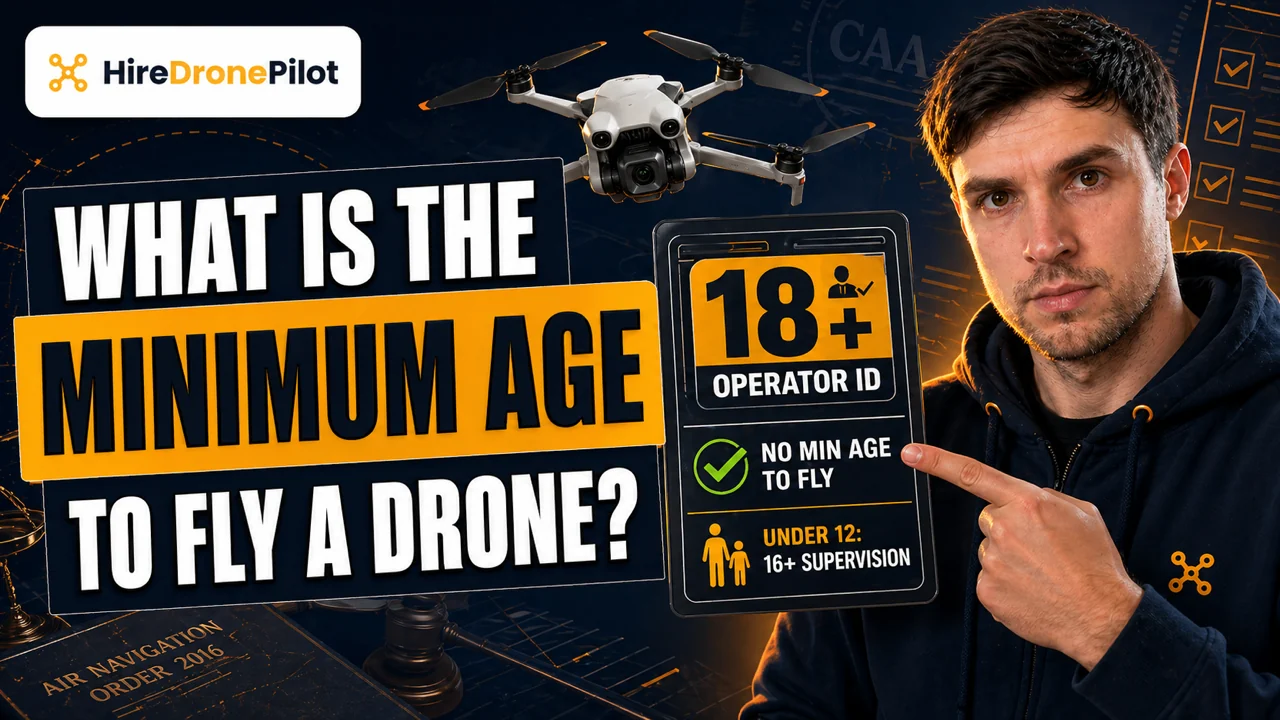
- You must be 18 or over to hold an Operator ID, but the Flyer ID has no minimum age — a parent can register as the operator for a younger flyer
- The Operator ID must be visible on the drone itself, not just stored in an app or on a receipt
- Flying an unregistered camera drone is a criminal offence under the Air Navigation Order 2016, with fines and insurance invalidation following any incident
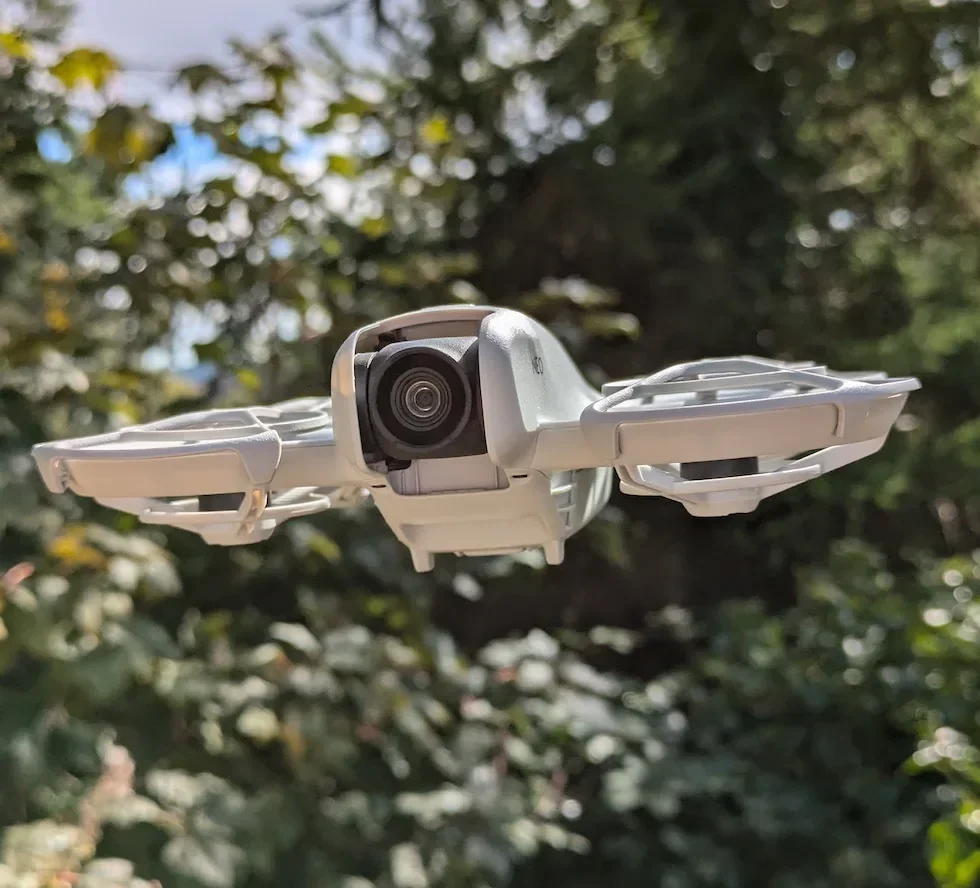
The DJI Neo 2 weighs ninety nine grams, which sounds like the kind of detail that should let you skip the paperwork entirely. It does not. The 250 gram threshold most people have heard about does carve out some restrictions, but registration is not one of them for any drone that carries a camera, and the Neo 2 carries a very capable one.
If you are about to take a DJI Neo 2 out of the box, the answer to "do I need to register it?" is yes — both a Flyer ID and an Operator ID. Here is exactly what each one covers, what it costs, and what happens if you choose to ignore them.
Yes — every DJI Neo 2 needs an Operator ID even though it weighs under 250 grams
The CAA registration rules are written around two thresholds: weight and whether the drone has a camera. The sub-250 gram bracket drops a lot of the harder rules around flying near people, but it does not drop the registration requirement for camera drones.
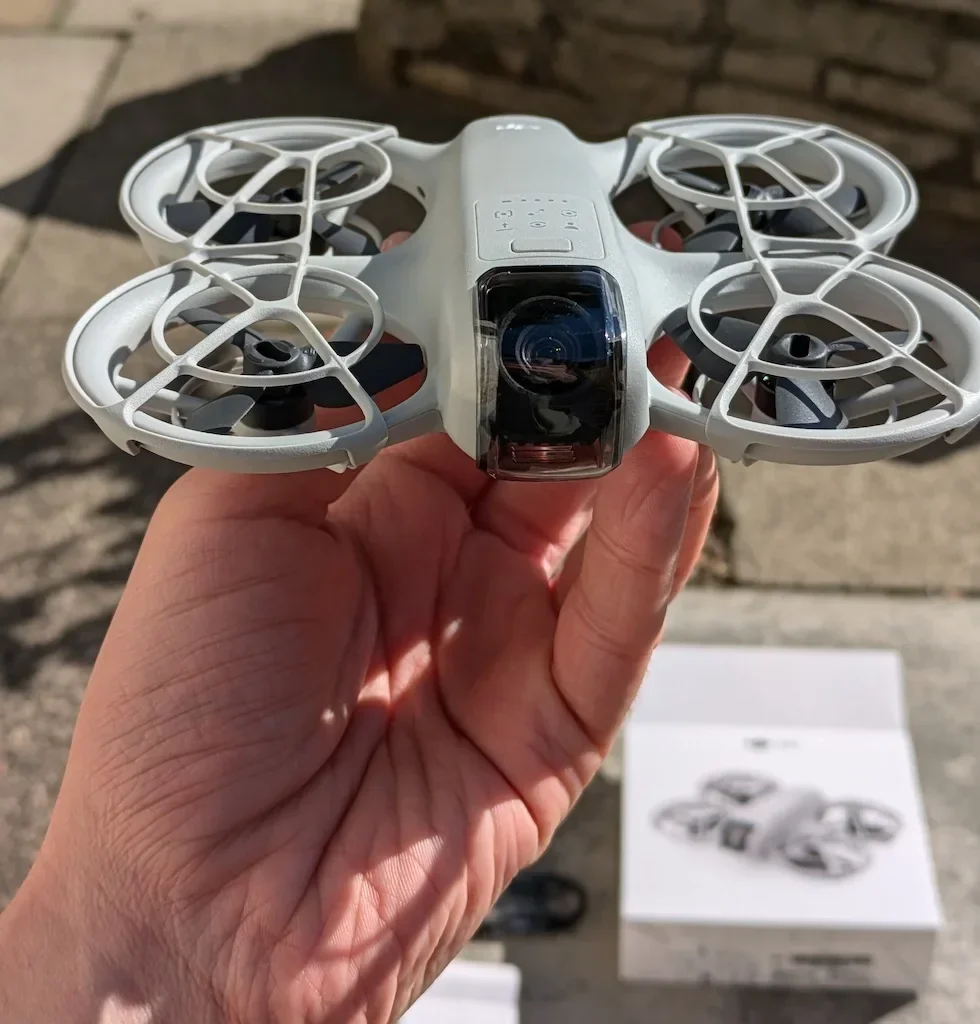
For any drone between one hundred grams and two hundred and fifty grams that has a camera fitted, the rule is the same as a heavier drone: you must hold an Operator ID. The Neo 2 has a fixed camera built into the front, so the camera carve-out does not help.
From a drone pilot's perspective the Neo 2 sits in exactly the same registration bracket as a Mini 4 Pro or a Mini 3. The weight saves you on people-buffer rules. It does not save you on paperwork.
The Flyer ID is separate, free, and applies to whoever actually holds the sticks
The Flyer ID is the second half of the registration picture, and it confuses people because it sits on the person rather than on the drone. Anyone who flies the Neo 2 must have passed the online CAA theory test and hold their own Flyer ID. The test is free, sits at forty questions multiple choice, and is valid for five years.
The Operator ID is fixed to the drone. The Flyer ID is fixed to the human. If you let a friend take the sticks, that friend needs their own Flyer ID, even if your Operator ID is on the drone's label. There is no minimum age for a Flyer ID — children under thirteen can hold one, but they must take the test with a parent or guardian.
The Operator ID is the one with the age restriction: you must be eighteen or over to hold one. If you are buying a Neo 2 for a teenager, you register as the operator and the teenager flies under their own Flyer ID.
How to register and what it costs
Both IDs are issued through the same CAA portal, and most drone pilots get them at the same sitting. You need an email address, a debit or credit card, and roughly thirty minutes to read through the Drone and Model Aircraft Code before you sit the test.
The Operator ID currently costs £12.34 per year and must be renewed annually. The Flyer ID is free. One Operator ID covers every drone you own, so if the Neo 2 is your second drone you do not pay twice.
| ID | Cost | Valid for | Minimum age |
|---|---|---|---|
| Operator ID | £12.34 per year | 1 year | 18 |
| Flyer ID | Free | 5 years | None (under 13s with a parent) |
Once the Operator ID arrives, you must display it on the drone itself. A printed sticker on the battery bay or a small label on the underside of the body is fine — the requirement is that it is visible without dismantling anything. A note in your phone or a screenshot of the email does not satisfy the rule.
What happens if you fly the Neo 2 unregistered
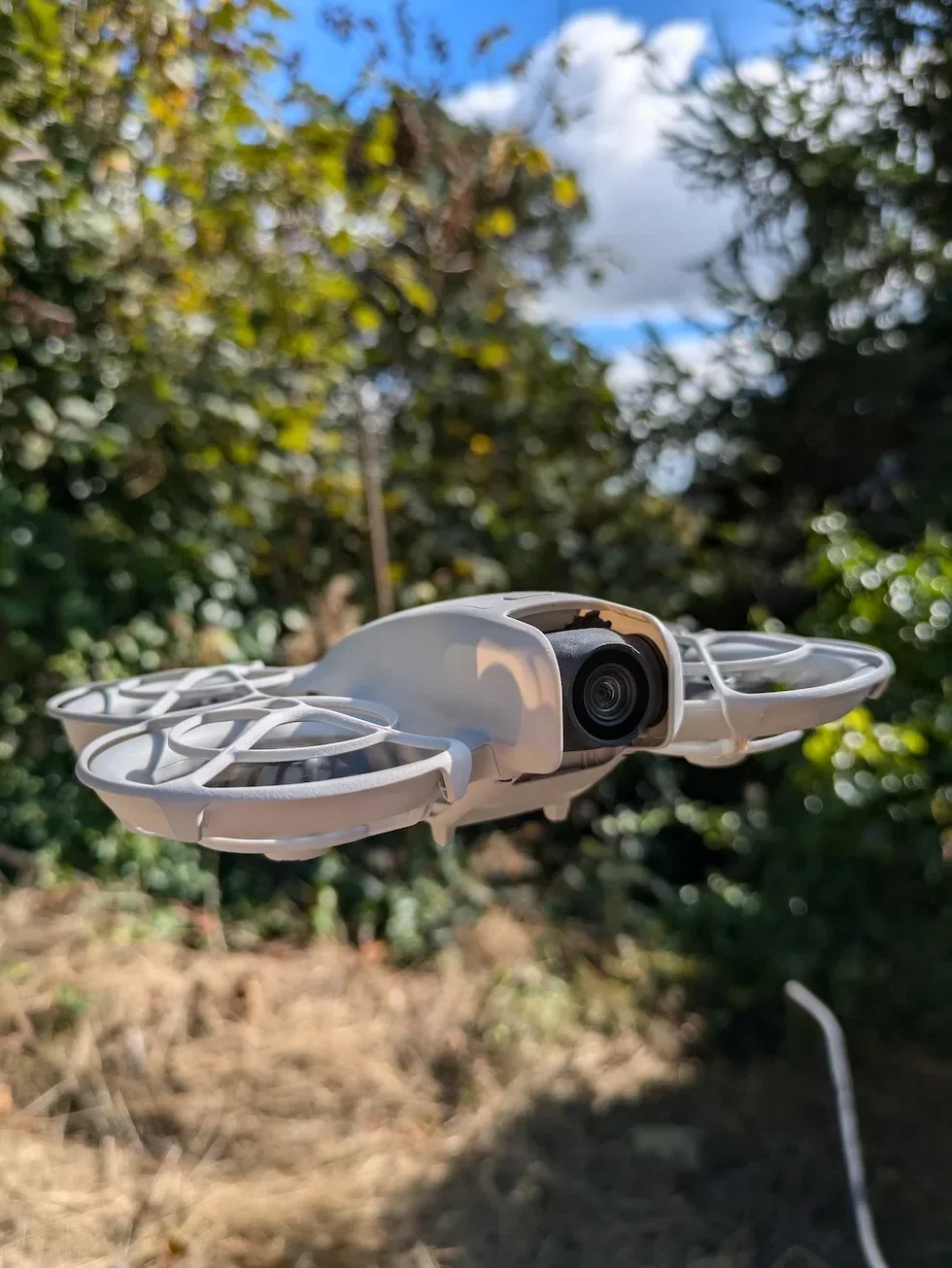
Flying without the required IDs is a criminal offence under the Air Navigation Order 2016. The CAA frames it the same way as flying without insurance: minor breaches typically result in a fine, but serious ones can escalate, and any incident at all becomes much worse the moment it turns out you were unregistered.
There is also a quieter consequence that catches people. Most drone insurance policies require you to be flying legally for the cover to be valid. Fly the Neo 2 unregistered, clip a parked car, and your insurer is within their rights to walk away from the claim. The two hundred and fifty pound repair becomes a personal liability.
Police officers can ask to see your Operator ID at the scene of a flight. They do not always know the rules in detail, but they do know to look at the drone for the label and to ask which Flyer ID applies to the person holding the controller. The cheapest version of this conversation is the one where both answers are ready.
Travelling abroad with the DJI Neo 2 does not transfer your UK registration
A common assumption is that a UK Operator ID covers you everywhere. It does not. The CAA does not recognise overseas registrations, and the same logic runs the other way: your UK numbers will not satisfy the regulator in France, Italy, or anywhere else in the EU. Most European countries operate their own registration scheme under EASA rules, and you typically need to register with whichever EU country you first fly in.
Inside the UK, the Operator ID and Flyer ID are valid across all four nations. Scotland, Wales, and Northern Ireland use the same CAA scheme — Scottish drone law follows the same framework, with one or two local access points adding nuance on where you can fly rather than how you register.
If you are flying the Neo 2 indoors only — inside a netted cage, a closed sports hall, an exhibition hall with no opening for the drone to escape — neither ID is required. The moment the airspace is open to the sky, both are.
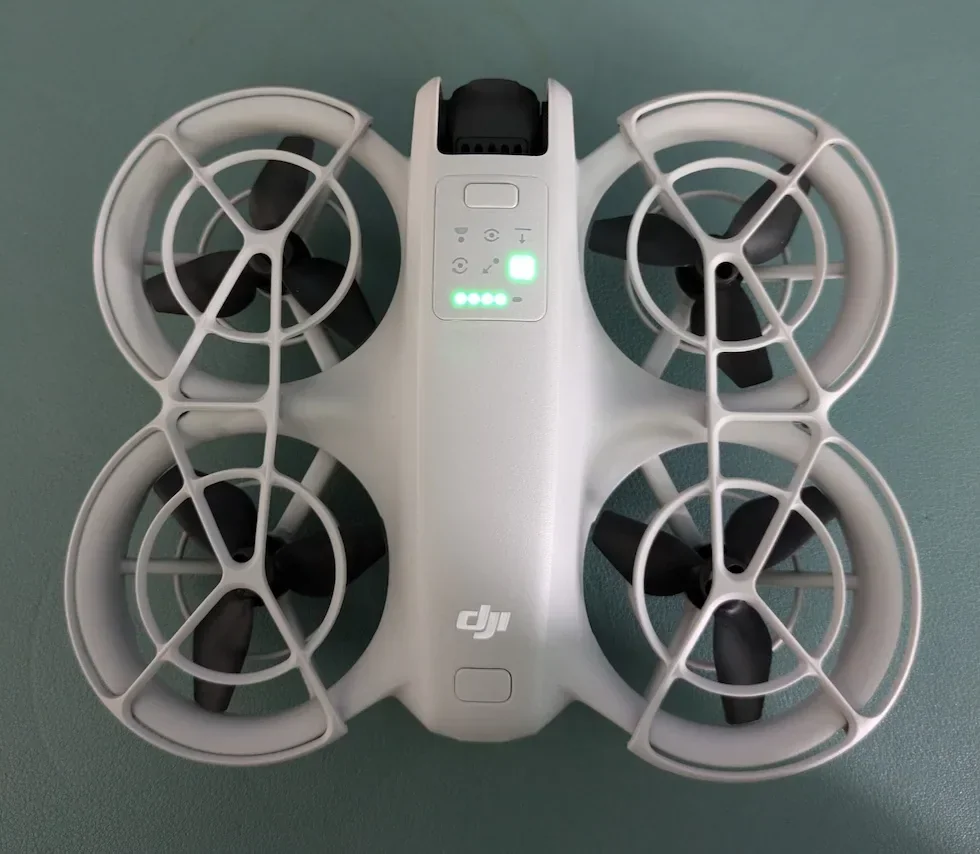
So the short answer is unchanged. The DJI Neo 2 weighs under two hundred and fifty grams, but because it has a camera, you need both an Operator ID for the drone and a Flyer ID for whoever flies it. The cost is twelve pounds and change per year, the test is free, and the alternative is a criminal offence that voids your insurance the moment anything goes wrong.
If you want the bigger picture on what the sub-250 gram bracket does and does not give you, the sub-250 gram laws guide picks up where this article stops. And if you want to know which other Neo 2 articles match the workflow you are setting up, the six-month Neo review is the place I usually point people next.
Got a specific scenario you want covered — a borrowed drone, an under-18 owner, a Care Refresh replacement that needs re-labelling? Drop a note to peter@hiredronepilot.uk and I will come back to you directly. If you prefer the video version of this explainer, the comments are open on YouTube.
References
Primary source material for this article is the UK Civil Aviation Authority. External links open in a new tab.
- UK CAA — Registering to Fly Drones and Model Aircraft · weight bands, camera carve-out, indoor exemption
- UK CAA — Flyer IDs and Operator IDs · cost, validity, age limits, operator duties
- UK CAA — Get an Operator ID · registration portal, what you need to register
- UK CAA — The Drone and Model Aircraft Code (CAP2320) · pre-test reading, ID-display rule, behaviour rules
- UK CAA — UK Regulatory Framework for Drones · Air Navigation Order 2016 and the UAS Regulations
Peter Leslie
Founder & GVC Drone Pilot
Peter is the founder of HireDronePilot. With thousands of logged commercial flight hours, he writes about drone technology, commercial surveying tactics, and UK aviation compliance.
Connect on LinkedIn