UK Drone Pilot Training Cost: What the GVC and A2 CofC Actually Cost in 2026

Peter Leslie
12 Sept 2025
Key Takeaways
- UK drone pilot qualifications are awarded by CAA-approved training providers known as Recognised Assessment Entities, and each RAE sets its own fee
- An A2 Certificate of Competency typically costs between £100 and £250 and covers flight in the Open Near People sub-category
- A GVC typically costs between £500 and £1,200 depending on the provider and format, and it is the qualification most commercial drone pilots need for Operational Authorisation
- Budget separately for the practical flight assessment, the CAA application fee for an Operational Authorisation, and annual drone insurance
- Online self-paced GVC courses are normally cheaper than instructor-led virtual classrooms, but the practical flight test must always be completed in person
UK drone pilot qualifications are issued by a fixed list of CAA-approved training providers — formally called Recognised Assessment Entities, or RAEs. Every RAE sets its own fees, so the price of a GVC course can vary by several hundred pounds between two identically-titled providers. What does not vary is the underlying syllabus, because the CAA specifies it.
The straight advice for anyone training to become a commercial drone pilot in twenty twenty six is to go for the GVC from the start. The A2 CofC sounds cheaper, but its scope is narrow enough that most drone operators end up paying for a GVC within a year anyway. This article walks through what each qualification actually costs, what it permits, and the additional fees that rarely make it into the marketing copy.
CAA-approved training providers set their own fees, so the same qualification ranges by several hundred pounds
The CAA does not price drone qualifications. It approves organisations — RAEs — to deliver them, and the RAEs compete on price, format, and support. There are currently a couple of dozen approved providers for the GVC and A2 CofC, with a much smaller list approved for the newer Level 1 Remote Pilot Certificate.
The practical implication is that a drone operator shopping for a course needs to look at three things. What the provider charges for the theory. What they charge for the practical flight assessment. And what they include around the certificate — Operations Manual templates, resit fees, post-qualification support. Two providers listing the same GVC at different prices are usually not selling the same package.
The CAA publishes the approved-provider list and updates it as new RAEs are added. Any course that is not delivered by an RAE on that list cannot award a valid certificate, so that is the first thing to check before paying anyone.
An A2 CofC costs between £100 and £250 and covers Open Near People work only
The A2 Certificate of Competency is the entry-level commercial qualification in the Open Category. It permits flight in the Open Near People (A2) sub-category and it requires a valid Flyer ID as a prerequisite.
Training costs are modest — the course typically runs £100 to £250 and is delivered online by most RAEs, with a theory test of at least thirty multiple-choice questions covering meteorology, flight performance, and ground-risk mitigation. There is no practical flight assessment built into the A2 CofC itself.
The trade-off is that the scope is narrow. With only an A2 CofC, a drone pilot cannot legally do most urban commercial work, cannot fly close to assemblies of people, and cannot take on the full range of drone photography or videography clients routinely ask about. For most drone operators planning to run a commercial business, the A2 CofC alone is a stepping stone, not a destination — and many combined GVC courses bundle the A2 CofC in for free.
A GVC costs between £500 and £1,200 and is the baseline qualification for most UK commercial drone work
The General Visual Line of Sight Certificate is the qualification that underpins Operational Authorisation for VLOS flight in the Specific Category. It is what most commercial drone pilots in the UK hold, and it is what most clients expect to see on a compliance check.
Pricing varies by format. Online self-paced courses sit at the lower end — roughly £500 to £700 — because the delivery cost is lower. Live virtual classroom courses with instructor-led training over Zoom sit higher, typically £900 to £1,200. The course normally covers theory, an Operations Manual building block, and a practical flight assessment that is always in person regardless of how the theory was delivered.
It is worth comparing what each provider includes. A course that offers an Operations Manual template, free theory resits, and post-qualification support is a genuinely different value proposition to a course that charges separately for each. The GVC certificate itself is valid for five years once issued, so it is not a cost you pay every year — but the Operational Authorisation that sits on top of it does need annual renewal.
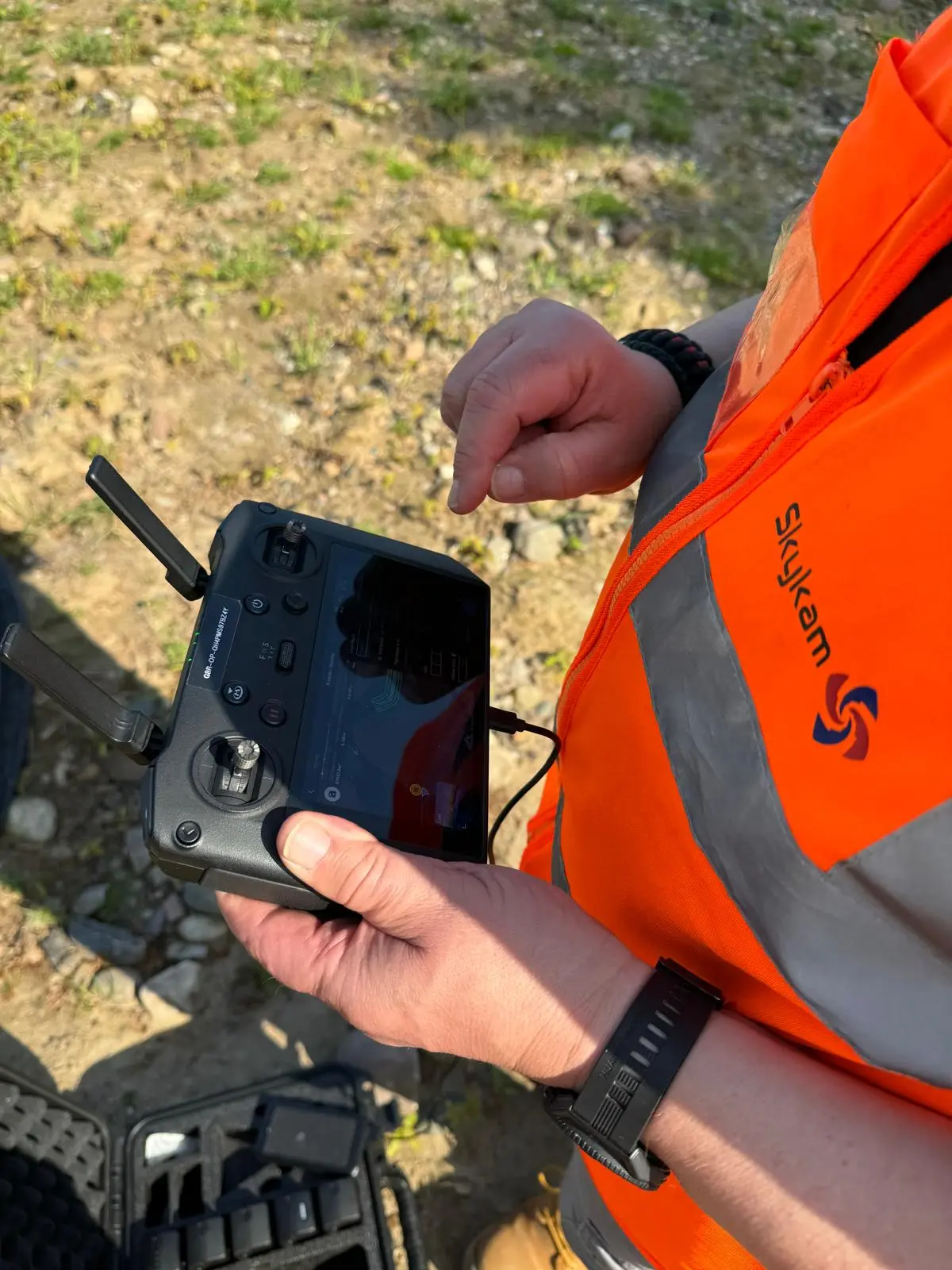
The A2 CofC and the GVC are different qualifications with very different operational scope
The most common mistake I see is drone operators paying for an A2 CofC expecting it to cover the commercial work they actually want to do. It does not — and the difference between the two qualifications shows up the moment you try to fly a real job.
| Feature | A2 CofC | GVC |
|---|---|---|
| Category | Open Near People (A2) | Specific Category (with Operational Authorisation) |
| Flight near people | Subject to sub-category buffer rules; no intentional overflight | Permitted within the terms of the OA's risk assessment |
| Built-up areas | Heavily limited by sub-category buffers | Permitted under PDRA01 or bespoke OA conditions |
| Commercial viability | Limited to simple outdoor jobs away from people | Covers most commercial drone work UK clients ask for |
| Validity | Five years | Five years (certificate); OA renews annually |
The short version — A2 CofC covers a hobbyist who wants commercial permission for specific outdoor work. GVC covers a commercial drone pilot who actually wants a business.
Budget separately for the flight assessment, the CAA Operational Authorisation fee, and insurance
The course fee is not the end of the cost. Three line items routinely show up after the GVC is issued and catch drone operators by surprise.
First, the practical flight assessment. Some providers bundle it in with the course price; others charge £150 to £250 separately. Before booking, confirm which side of that the provider sits on.
Second, the CAA application fee for an Operational Authorisation. This is paid directly to the Civil Aviation Authority, not to the training provider, and it is the step that unlocks commercial flying under the Specific Category. Budget for it as a non-trivial additional cost on top of the course fee. .
Third, third-party drone insurance compliant with the UK Civil Aviation (Insurance) Regulations 2005. Annual commercial cover is typically a few hundred pounds a year at a minimum, more for higher liability limits or specialist operations. It is not optional for commercial work; the CAA requires it and most clients will not onboard a drone operator without the certificate on file.
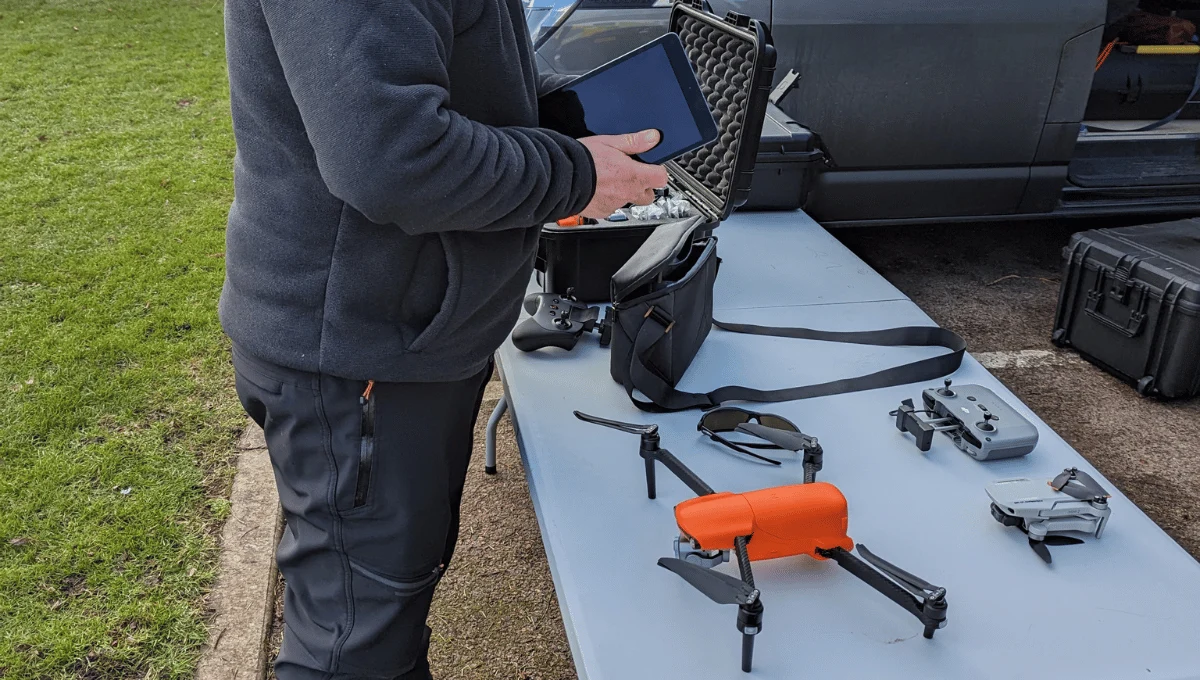
Online self-paced courses are cheaper than instructor-led virtual classrooms, but the practical flight test is always in person
The biggest format decision is self-paced versus live-virtual classroom. Self-paced online courses are cheaper — you work through the theory on your own time, sit a remote invigilated theory exam, and then show up on a fixed date for the practical flight test. Live virtual classroom courses are more expensive but give you a scheduled cohort, a live instructor, and faster feedback on sticky syllabus points.
Both formats end the same way: an in-person practical flight assessment, in open ground, flying manual circuits without GPS assistance in front of an examiner. That is a non-negotiable in-person component of the GVC; no RAE can award a certificate without it.
The practical advice is to put in real airtime before the assessment. Aim for at least twenty-five hours of flying on your own drone in manual mode, flying figure-eights, squares, and circuits without GPS assistance. The drone pilots who fail the practical assessment almost always fail because they relied on GPS hold during their practice and then lose spatial awareness the moment the examiner asks them to fly without it.
How to choose an RAE that actually gives you value for the fee you pay
Picking a training provider is genuinely important and price is not a great first filter. The RAEs with the strongest reputations tend to do three things well.
- CAA approval. Confirm the provider is on the CAA's current approved list. Qualifications from non-RAE courses are not recognised.
- Instructor background. Instructors with manned-aviation experience or heavy commercial drone delivery backgrounds teach the nuances rather than the bullet points.
- Operations Manual support. The Operations Manual is the document the CAA reviews for your Operational Authorisation. A good RAE provides a template and a review pass. A bad RAE leaves you to write it from scratch.
- Post-qualification support. The real questions tend to land once you start flying paid work. Providers that answer them at that stage are worth paying more for.
- Reviews from working drone pilots. Trustpilot is fine, but the honest reviews live on drone-pilot forums where people have less reason to soften their opinions.
The honest answer is to pay for a GVC once, and then invest in specialist certifications beyond it
Adding the numbers up, a UK drone operator setting out to build a commercial business should budget roughly one thousand to fifteen hundred pounds for the GVC and bundled A2 CofC, plus the CAA Operational Authorisation fee, plus annual insurance. That covers the baseline to operate.
Beyond that, the earning potential scales with specialist certifications that sit on top of the GVC — thermography, photogrammetry, LiDAR processing, RPC-L2 for BVLOS. Those are where the day rate jumps from the generalist band into the specialist band.
If you want a view on which specialism to target given your starting point, or a sanity check on a specific RAE you are considering, drop a note to peter@hiredronepilot.uk and I will come back to you directly. If you prefer the video version of this breakdown, the comments are open on YouTube.
References
Primary source material for this article is the UK Civil Aviation Authority. External links open in a new tab.
- UK CAA — Approved training providers · Current list of Recognised Assessment Entities
- UK CAA — GVC, RPC-L1, L2 and L3 · GVC framework, validity, VLOS scope
- UK CAA — A2 Certificate of Competency · A2 CofC syllabus, operational limits, five-year validity
- UK CAA — Remote Pilot qualifications overview · Flyer ID prerequisite and qualification hierarchy
- UK CAA — UK Regulatory Framework for Drones · Insurance requirements under UK Civil Aviation Insurance Regulations
Peter Leslie
Founder & GVC Drone Pilot
Peter is the founder of HireDronePilot. With thousands of logged commercial flight hours, he writes about drone technology, commercial surveying tactics, and UK aviation compliance.
Connect on LinkedIn