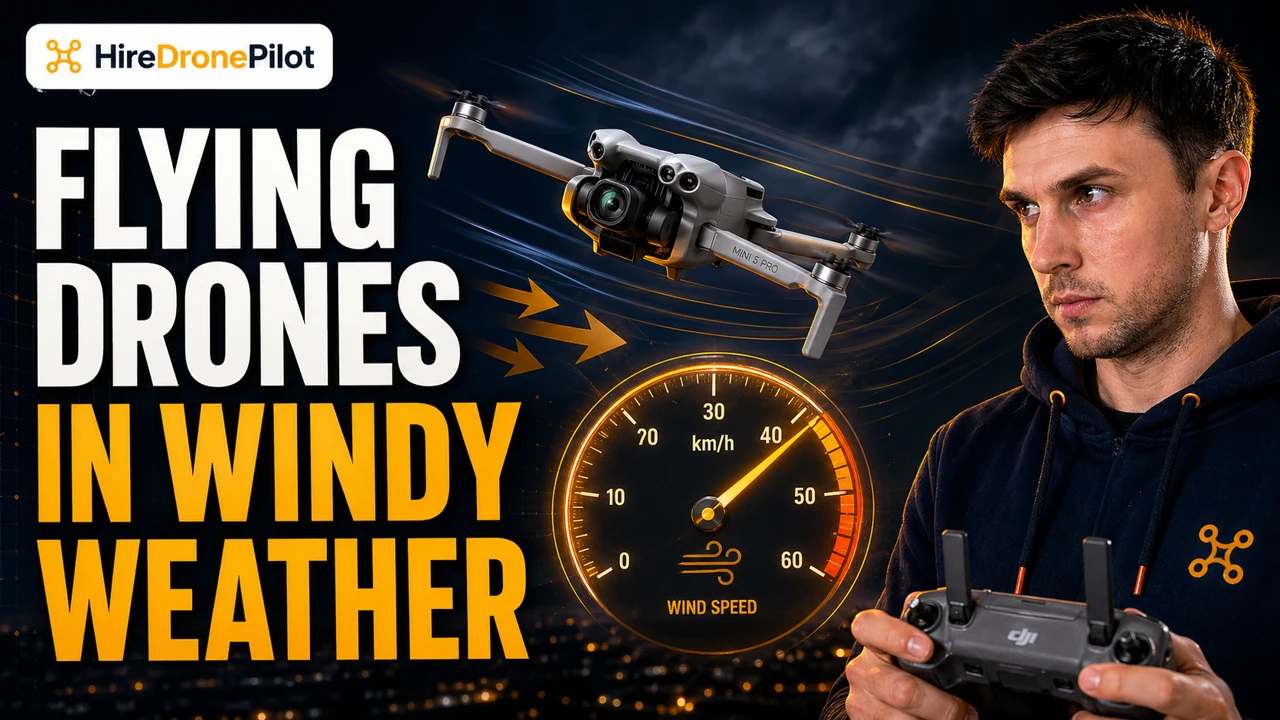
Flying Drones in Windy Weather: What UK Law and Physics Demand

Peter Leslie
16 Apr 2026
Key Takeaways
- UK law does not set a named wind-speed cap, but Rule 15 of the Drone Code makes flying unsafe in strong winds a criminal breach of the Air Navigation Order 2016
- Manufacturer wind-resistance ratings are tested in smooth airflow, so real-world gust speed matters more than the headline figure on the spec sheet
- Sub-250g drones are the most wind-vulnerable category and the first to lose authority in a gust front, despite their generous legal freedoms
- The Drone Code people-buffer scales with altitude above 50 metres, and poor weather legally requires that buffer to grow further still
- Scrub the flight when the forecast gust speed sits inside 80% of your drone’s rated maximum, or when you cannot walk upwind without leaning
Flying in windy weather is the single most common decision drone pilots get wrong, and it is the decision that produces the most fly-aways, the most landings in trees, and the most awkward calls to the insurance broker. The reason is simple. UK law does not hand you a wind-speed number, so the judgement sits entirely with you.
What the law does require, via the Drone and Model Aircraft Code, is that you actively assess the weather before you fly. This article shows you what that assessment actually looks like, how the Drone Code scales the people-buffer in poor weather, and where the Beaufort scale gives you a faster read on the wind than any app can.
UK law does not name a wind-speed limit, but Rule 15 of the Drone Code makes weather awareness a legal duty
Nowhere in the Civil Aviation Authority framework will you find a line that says “do not fly above 25 mph”. There is no numerical wind cap. What there is, however, is Rule 15 of the Drone Code, which tells you in plain English to not fly if the weather could affect your flight. It names strong winds, rain, snow, cold weather, fog and sun glare as the hazards to check before take-off.
That rule is not guidance. The Drone Code sits underneath the Air Navigation Order 2016 and the UK Regulations (EU) 2019/947, which means a breach is a criminal offence. Endangering another aircraft in flight carries a maximum sentence of five years.
In practice, this means the CAA has put the wind decision where it should sit — with the remote pilot on the ground, looking at the actual conditions, holding the actual drone, and aware of the actual people downwind. You do not need a specific wind reading to be prosecuted. You need a flight that went wrong in conditions a reasonable pilot would have scrubbed.
The Drone Code people-buffer legally grows in poor weather, which is the part most pilots miss
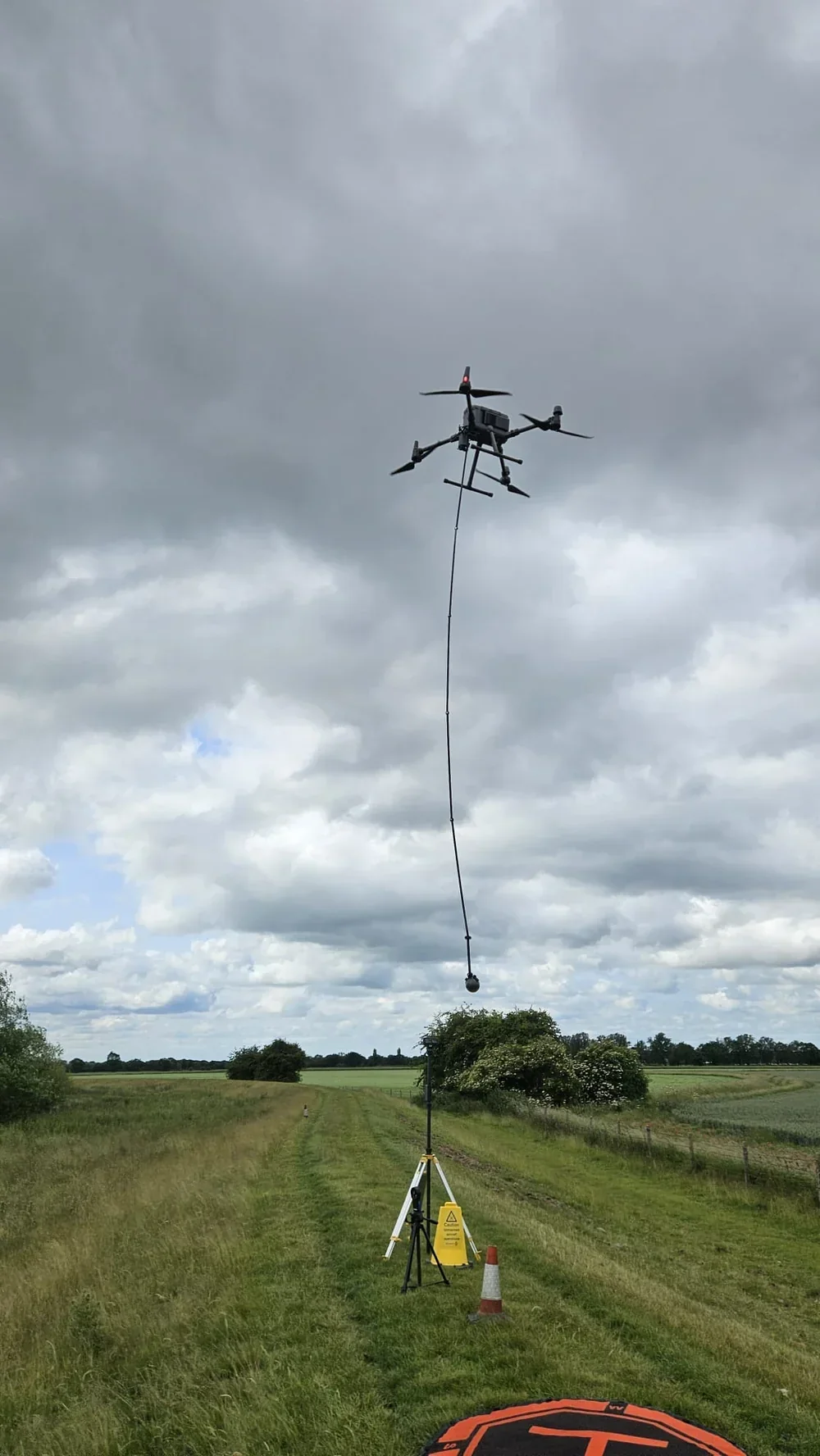
Rule 4 of the Drone Code sets the baseline 50-metre minimum horizontal distance between your drone and any uninvolved person. Climb above 50 metres of altitude and the horizontal distance scales one-for-one with it, which is the rule behind the popular 1-to-1 rule shorthand.
Here is the clause most pilots skim past. The same rule adds that in poor weather you must fly further away, and at high speeds you must fly further away, to give yourself the reaction time a harder day demands. The Code does not quantify it, and it does not have to — the legal burden is on you to pick a buffer that survives the conditions.
The implication is worth saying plainly. If the forecast is showing 20 mph gusts and you pick the legal minimum 50-metre stand-off from a group of walkers, you have not satisfied the Drone Code, because the Code told you to widen that buffer in poor weather. On a breezy beach or an exposed ridge, 80 or 100 metres is the more defensible number, especially if a gust front could push the drone toward the uninvolved side.
Manufacturer wind-resistance ratings are a lab figure, and real gusts behave nothing like a lab
Every modern drone ships with a maximum wind resistance figure in the spec sheet. A DJI Mini rates around 10.7 m/s (Level 5). A Mavic 3 sits closer to 12 m/s. A Matrice industrial platform will claim 15 m/s or more. These numbers are useful as a relative ranking, but they are not a flight limit you can treat as a ceiling.
The ratings are measured in smooth, steady airflow in a controlled environment. Out in the field, the wind is never steady. What you actually experience is a gust spread — the difference between the lull speed and the peak speed — and it is the peak that destabilises the drone, not the average. The two-minute mean on the forecast hides the one-second gust that fills the frame with horizon.
The working rule on my own flights is the 80% rule. If the gust-speed forecast is already inside 80% of the drone’s rated maximum, I do not fly. A drone rated at 24 mph gets scrubbed at 19 mph gusting. That margin exists to absorb the gusts the forecast did not predict, the battery sag toward the end of the flight, and the extra load of fighting home into a headwind.
Sub-250g drones are the most wind-vulnerable category despite carrying the most generous legal freedoms
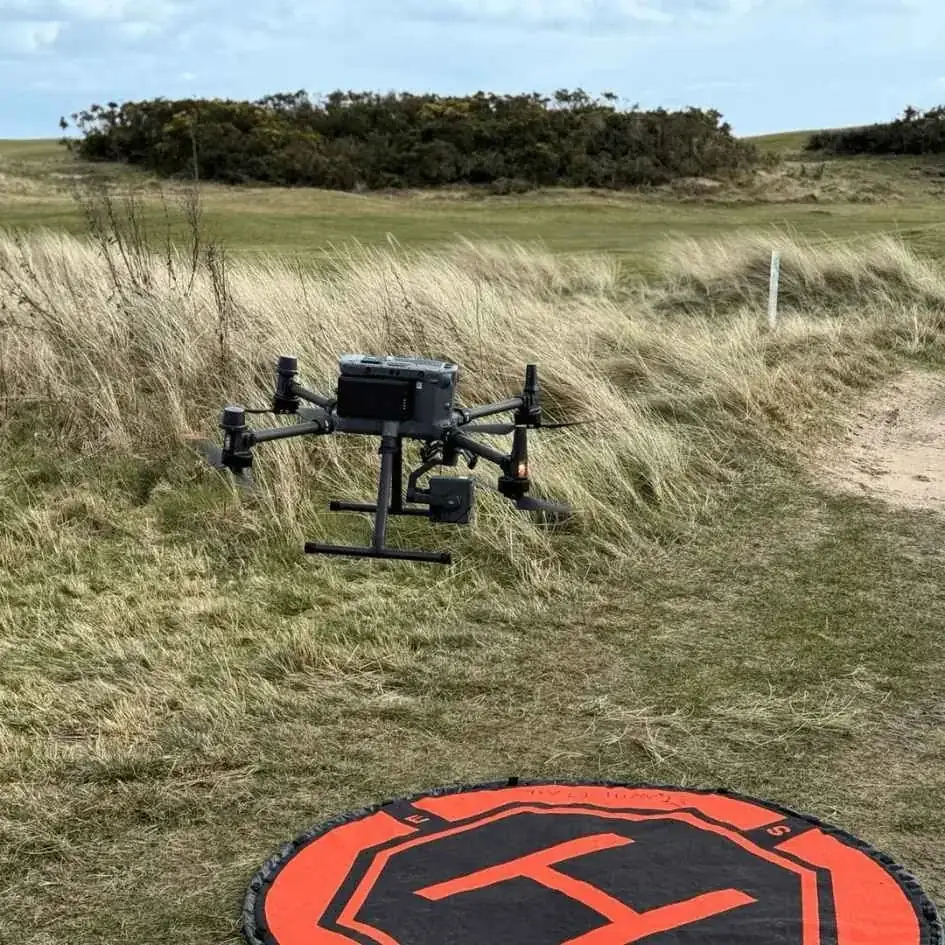
The sub-250g weight class is the easiest legal route into drone flying. It dispenses with the 50-metre people-buffer, allows overflight of uninvolved people, and qualifies for the Open A1 sub-category automatically. What it does not dispense with is physics.
A drone below 250 grams has a very small mass-to-thrust ratio in the horizontal plane. It does not push through wind, it sails through it. The motors have to spend a disproportionate share of their authority fighting drift rather than holding altitude, which is why a sub-250g drone in a 15 mph wind often feels less controllable than a 900g drone in a 20 mph wind.
The consequence for the pilot is that the generous legal freedoms of sub-250g flying do not hold in breezy weather. If you are flying a DJI Mini or a Neo above a back garden, the moment gusts pick up you are in the same risk bracket as anyone else, and Rule 15 applies in identical terms. Weight does not buy you immunity from the weather duty.
The Beaufort scale gives you a faster ground-truth read than any weather app can
Weather apps are indispensable for planning, but they are modelled forecasts pulled from grid squares several kilometres across. They cannot see the hedgerow funnelling wind into your field or the cliff edge accelerating a sea breeze. The Beaufort scale was designed for sailors who had exactly this problem, and it maps what the wind is doing to what you can see around you.
The table below is the version I use on the ground. If I walk out to a site and the trees disagree with the app, the trees win every time.
| Beaufort force | Wind speed | What you see on the ground | Drone-flight read |
|---|---|---|---|
| 0–2 | 0–7 mph | Smoke rises vertically; leaves still. | Ideal for any drone, including sub-250g. |
| 3 | 8–12 mph | Leaves and twigs in constant motion; light flags extend. | Good for most drones; sub-250g models may drift. |
| 4 | 13–18 mph | Dust and loose paper lift; small branches move. | Caution. Sub-250g approaching its limit; footage starts to wobble. |
| 5 | 19–24 mph | Small trees in leaf begin to sway. | Operational ceiling for most consumer drones. Shorten the mission. |
| 6 | 25–31 mph | Large branches move; whistling in overhead wires. | Scrub consumer drones. Only specific-category heavy platforms, and only with reason. |
| 7+ | 32+ mph | Whole trees in motion; hard to walk upwind. | Do not fly. No recreational or commercial justification clears this bar. |
The body-cue at Force 7 is the most reliable of the lot. If you cannot walk directly into the wind without leaning forward, the drone is already outside its safe envelope.
Gust factor is the number that decides whether the flight goes ahead
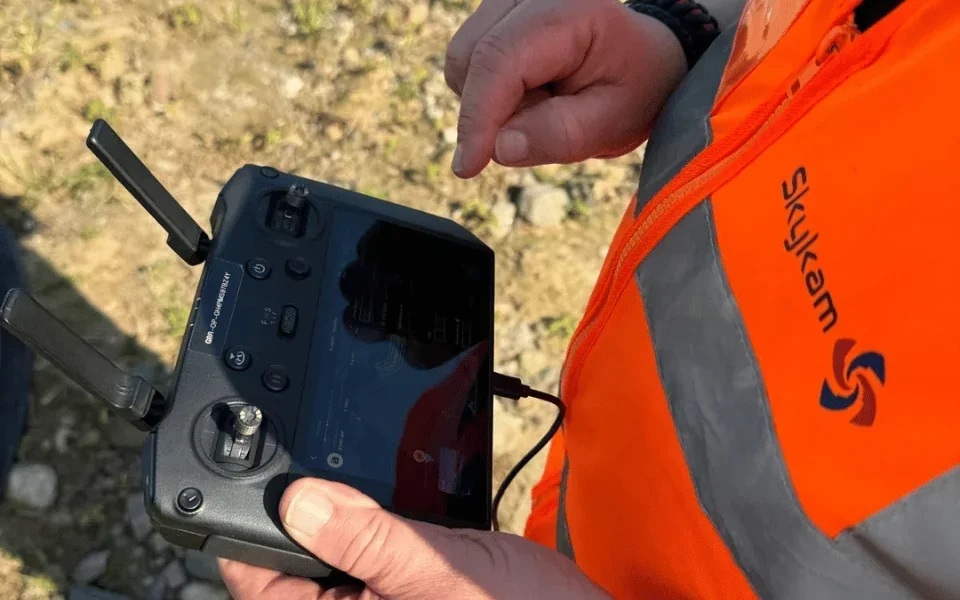
Wind speed on its own is a half-truth. The figure that actually matters is the gust factor, which is the ratio of the peak gust speed to the mean wind speed. A 12 mph mean gusting to 24 mph has a gust factor of 2.0, which is aggressive turbulence. A 20 mph mean gusting to 23 mph has a gust factor of 1.15, which is steady and far more flyable.
The working threshold I carry in my head is 1.5. If the gust factor in the forecast is under 1.5, the wind is steady enough that the mean is the number that matters and the 80% rule applies normally. If the gust factor is above 1.5, the peak is the number that matters, and the drone has to be rated well above the peak rather than the mean.
Most commercial scrubs on my own flights trace back to the gust factor rather than the absolute speed. I will happily fly a 20 mph steady day and scrub a 12 mph day with 26 mph gusts, every time.
When you do fly, fly out into the wind and return-to-home early
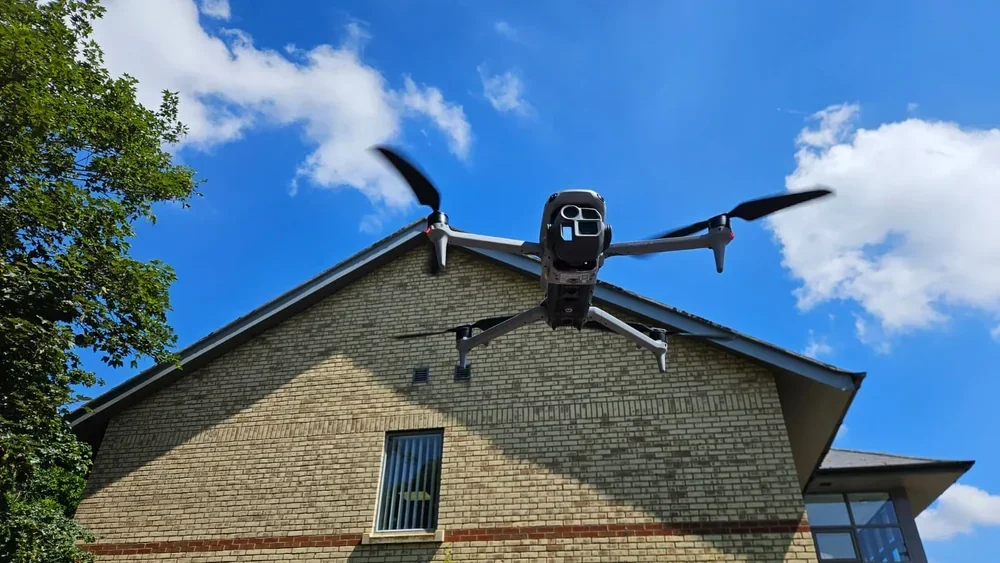
If the numbers are inside your margins and the flight goes ahead, two decisions on the day of the flight do most of the work. The first is to fly the outbound leg of the mission into the wind, so the return trip is tailwind-assisted while the battery is at its lowest. Reversing this order is how fly-aways happen: a drone at 25% battery fighting a headwind will drain faster than the remaining flight time suggests.
The second is to set the return-to-home threshold higher than you normally would. If you usually fly until 25%, set RTH to trigger at 35% or 40% on a windy day. The autopilot will make the call for you before a tired pilot makes the wrong one, and a flight log with an early RTH is a much cheaper story to tell than a flight log with a tree-landing coordinate at the end of it.
Short flights, wide buffers, early return. That is the shape of a breezy-day mission that still gets the shot and still stays inside the UK drone laws.
The wind is not the enemy. The habit of pretending the wind is not there is the enemy. A drone that comes home is worth every flight you ever scrub.
Got a specific weather call you want a second opinion on — a ridge-line survey, a coastal shoot, a borderline forecast on a job-critical date? Drop a note to peter@hiredronepilot.uk and I will come back to you directly. If you prefer the video version of this explainer, the comments are open on YouTube.
References
Primary source material for this article is the UK Civil Aviation Authority. External links open in a new tab.
- UK CAA — The Drone and Model Aircraft Code (CAP2320) · Rule 15 weather duty, Rule 4 people-buffer scaling, Rule 11 battery reserve for wind
- UK CAA — UK Regulatory Framework for Drones · Air Navigation Order 2016 and UK Regulations (EU) 2019/945 and 2019/947
- UK CAA — Where You Can Fly · Open Category sub-category distance rules including A1 sub-250g
- UK CAA — Safety Advice (Safer Winter Flying) · seasonal battery behaviour and the human-factors side of weather decisions
Peter Leslie
Founder & GVC Drone Pilot
Peter is the founder of HireDronePilot. With thousands of logged commercial flight hours, he writes about drone technology, commercial surveying tactics, and UK aviation compliance.
Connect on LinkedIn