UK Drone Flight Logs: What the CAA Actually Requires

Peter Leslie
16 Apr 2026
Key Takeaways
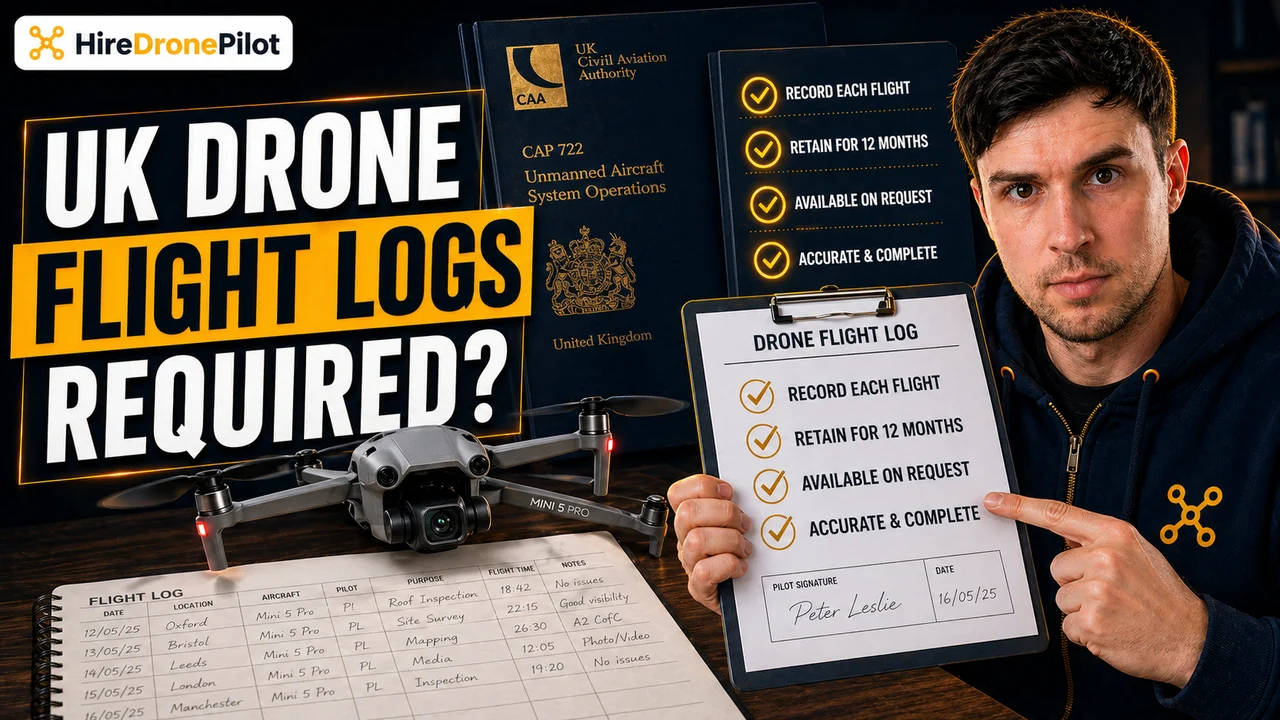
- Drone flight logs are mandatory for anyone operating under an Operational Authorisation such as PDRA01, and are not required by law for recreational Open Category flying
- PDRA01 splits the paperwork into two separate books: a Remote Pilot flight log and a UAS Operator aircraft technical logbook
- Operators must retain records for a minimum of three years, and both books should be kept in a digital format for CAA oversight
- A PDRA01 compliance assessment gives you 28 calendar days to produce logs for the last three flights, the matching site surveys, and the maintenance log
- Missing or incomplete logs can trigger suspension of the Operational Authorisation, and the CAA publishes CAP 2606A and CAP 2606B as ready-made templates
Drone flight logs are one of the most misunderstood corners of UK drone compliance. Half the internet tells you every drone pilot has to keep one, and the other half tells you it is optional. The law is far more specific than either answer. If you fly under an Operational Authorisation, the Civil Aviation Authority can demand your records at any time and suspend you if they are not up to scratch.
This guide walks through who actually has to keep drone flight logs in the UK, what the two separate logbooks must contain, how long they are retained, and what an audit looks like in practice. The same rules apply to every operator on the drone pilots directory who works under a CAA authorisation.
Drone flight logs are a legal requirement for Operational Authorisation holders, not for recreational drone pilots
The first thing to clear up is who the rule actually binds. If you fly recreationally in the Open Category — the A1, A2 and A3 sub-categories that cover the vast majority of hobbyist flying — there is no legal requirement to keep a flight log. You need a Flyer ID and, for most drones, an Operator ID, but a running log of every flight is not part of the Open Category rulebook.
The requirement lives inside the Specific Category. If you hold an Operational Authorisation, whether that is the pre-defined PDRA01 route or a bespoke authorisation under UK SORA, you sit under Article UAS.SPEC.090 of UK Regulation (EU) 2019/947. That article makes record-keeping a condition of your authorisation. The PDRA01 overview is blunt about it: we may ask to see your operations manual and supporting records, such as aircraft technical logs and flight logs, at any time.
That is the line worth memorising. Flight logs are not a nice-to-have for commercial drone operators. They are the evidence the CAA uses to decide whether your authorisation continues.
PDRA01 splits the paperwork into a Remote Pilot flight log and an Operator aircraft technical logbook
This is the bit that trips most new drone operators. Under PDRA01 the CAA does not want one log — it wants two separate books, and they cover different things.
The Remote Pilot flight log is a record of every flight the named Remote Pilot carries out. The Operator aircraft technical logbook is a record of every flight a specific drone carries out, plus its maintenance history. If you are a sole trader flying your own drone, you are authoring both books yourself. If you run a team, every Remote Pilot on the roster keeps a flight log and every drone in the fleet has its own technical logbook.
Remote Pilot flight log — what every entry must contain
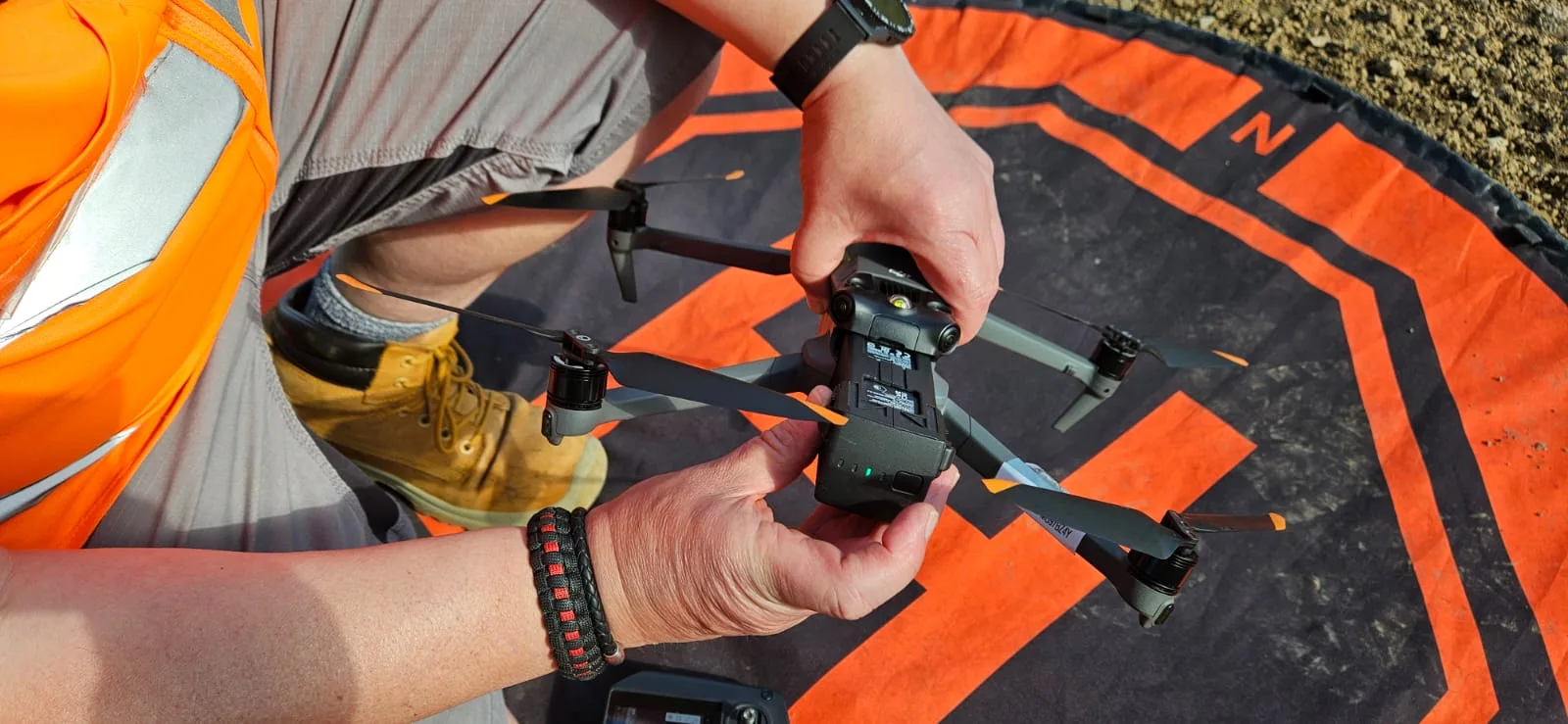
Per the PDRA01 Remote Pilot responsibilities page, every flight entry in the Remote Pilot flight log must record the Remote Pilot's name and Flyer ID, the date, the take-off and landing location, the duration of the flight with a day-or-night indication, a description of the flight including any unusual technical or operational occurrences, the drone make and model, and the drone serial number or registration number if applicable.
Nothing on that list is optional. The day-or-night indicator alone is what lets the CAA check whether a given flight was conducted in line with the night-flying provisions of the Operations Manual.
Operator aircraft technical logbook — what the drone itself is recording
The technical logbook is longer and covers the life of each drone. It must include the make and model, serial or registration number, the date, time, duration, take-off and landing location of each flight, the Remote Pilot on that flight, total flight hours and cycles, a description of each operation, any significant incident or accident, the completed pre-flight inspection, any site risk assessments and radio frequency surveys carried out, and all maintenance records including defects, repairs and configuration changes.
It must also capture whatever is needed to satisfy UAS.SPEC.100 if you are flying certified equipment. Again, the CAA prefers a digital format that can be exported and shared cleanly.
UAS Operators must retain drone flight logs for a minimum of three years in a digital format
Retention is the number most drone operators get wrong. The CAA's PDRA01 Operator responsibilities page is explicit: records must be retained for a minimum of three years. That covers the flight safety documents, Remote Pilot qualifications and training records, and the qualification details for any operations or maintenance personnel on the team.
Both the Remote Pilot flight log and the aircraft technical logbook should be in a digital format that will be easy to provide to the CAA, and for them to use for oversight purposes. A spreadsheet works. A dedicated logging app works. A paper logbook is not explicitly banned, but the CAA has told drone operators for years that a PDF export is what they want to receive during an audit, so paper creates unnecessary friction on the day someone asks for your last three flights.
The CAA also recommends using a flight data recording system — the telemetry file your drone already generates on every flight. Tools such as AirData UAV, DJI FlightHub, and Drone Logbook sync that telemetry automatically, which kills the manual-entry errors that tend to show up when you are reconstructing a week of flying on a Friday afternoon.
CAP 2606A and CAP 2606B — the CAA's own templates
The CAA publishes two templates specifically for PDRA01. CAP 2606A is the UAS Operator Technical Logbook template. CAP 2606B is the PDRA01 Remote Pilot Logbook template. Both sit alongside CAP 2606, which is the PDRA01 Operations Manual template itself.
You do not have to use them. But if you are building your own format, every field in CAP 2606A and CAP 2606B has to appear somewhere in your version, or you will be explaining the gap during a compliance check.
A PDRA01 compliance assessment gives you 28 calendar days to produce the last three flights and the matching evidence pack
This is the moment your drone flight logs earn their keep. PDRA01 compliance assessments can happen at any time during the 12-month validity of your authorisation. The notification lands at the email address tied to your Operator ID, and the clock on your response is 28 calendar days. Miss the window and your authorisation is suspended until you provide the evidence.
The evidence pack is specific. It asks for the Operations Manual, the RPC-L1 or GVC qualification plus currency details for each Remote Pilot on the last three flights, the Operator ID, the Flyer IDs, the site surveys for those three flights, the flight logs for those three flights — either the Remote Pilot or Operator log is accepted — and the maintenance log for each drone involved. The site surveys must be for flights conducted on different dates, not three flights on the same day under a single site survey document.
Minimum fields the CAA expects on every flight log entry during an audit
| Field | What the CAA looks for |
|---|---|
| Date, start time, end time | Matches the telemetry and the site survey |
| Operator name, Operator ID, Remote Pilot name, Flyer ID | All four names match the Operational Authorisation exactly |
| Operating category or authorisation, PDRA01 Authorisation number | Confirms the flight was conducted under PDRA01 |
| Operating location | Paired to the site survey on file |
| UAS type, make, model, serial number, take-off mass | Matches the aircraft technical logbook |
| Flight time for this flight, cumulative flight time | Demonstrates currency and maintenance thresholds |
Currency is the quiet trap here. The CAA also checks that the Remote Pilot on each of the last three flights had at least two hours of flight time in the three months before that flight, and that evidence has to come from the log. Open Category flight time counts toward the two-hour minimum, but only if your log captured it.
Incomplete drone flight logs can produce a Level 1 Finding and instant suspension of the Operational Authorisation
The CAA grades audit outcomes against a two-tier system. Level 2 Findings are issues that are not an immediate safety concern but could become one. They come with a target date for resolution and you have to show corrective action by that date. Level 1 Findings are immediate safety concerns. A Level 1 Finding results in instant suspension of your Operational Authorisation.
If all Level 1 Findings are closed within the target date, PDRA01 may move from suspension back to reactivation. If any remain open, suspension runs until the authorisation's expiry date and you are effectively grounded for the remainder of your 12-month window. Missing logs, logs that do not match the Operator name on the authorisation, or gaps that stop you from proving Remote Pilot currency are all routes into that territory.
There is a second cost worth naming. Drone insurance claims lean heavily on the flight log. If something goes wrong on a job and the insurer asks for the log for that flight and the three before it, a clean digital export is the difference between a paid claim and a denied one. The log is not just regulatory scaffolding — it is the document that protects the commercial work when a flight ends badly.
So the short version. If you fly purely in the Open Category, you do not legally need a drone flight log, although keeping one is still good practice for tracking battery cycles and firmware. If you hold PDRA01 or any other Operational Authorisation, you need two logs — the Remote Pilot flight log and the Operator aircraft technical logbook — kept in digital format, retained for at least three years, and ready to send to the CAA inside 28 days of a compliance notification.
For a fuller picture of where these records sit in the wider rulebook, the UK drone laws explainer stitches the Open, Specific and Certified categories together.
Got a specific scenario you want covered — a PDRA01 audit question, a template field you are not sure how to complete, or a tricky retention call on a job that went wrong? Drop a note to peter@hiredronepilot.uk and I will come back to you directly. If you prefer the video version of this explainer, the comments are open on YouTube.
References
Primary source material for this article is the UK Civil Aviation Authority. External links open in a new tab.
- UK CAA — PDRA01 Remote Pilot competencies and responsibilities · Remote Pilot flight log contents, currency rule, digital format requirement
- UK CAA — PDRA01 UAS Operator responsibilities · Operator aircraft technical logbook contents, three-year retention, digital format
- UK CAA — PDRA01 Oversight and Enforcement · 28-day evidence pack, last-three-flights rule, Level 1 and Level 2 Findings
- UK CAA — PDRA01 Operational Authorisation Overview · UAS.SPEC.090 record-keeping obligation, CAA right to inspect
- UK CAA — UK Regulatory Framework for Drones · UK Regulation (EU) 2019/947 legal basis for Specific Category record-keeping
Peter Leslie
Founder & GVC Drone Pilot
Peter is the founder of HireDronePilot. With thousands of logged commercial flight hours, he writes about drone technology, commercial surveying tactics, and UK aviation compliance.
Connect on LinkedIn