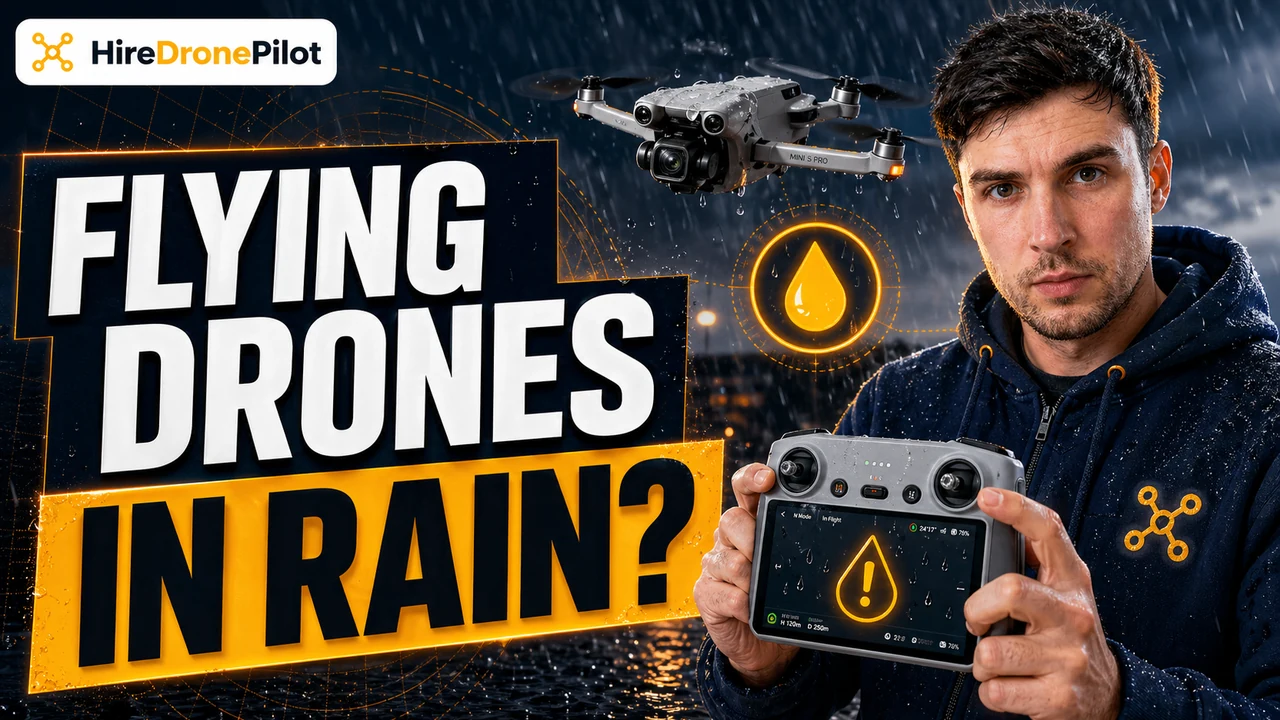
Flying Drones in the Rain: What UK Law Actually Says

Peter Leslie
12 Sept 2025
Key Takeaways
- No UK regulation directly bans flying a drone in the rain, but four separate rules quietly close the door on most wet-weather flights
- Drone Code Rule 15 tells you the weather is a go or no-go decision, and rain is named as a reason not to fly
- Rule 2 requires direct Visual Line of Sight, which heavy rain, mist, and low cloud make physically impossible
- Your drone's Ingress Protection rating — IP43, IP45, IP54, IP55, or IP67 — is the manufacturer declaring what weather it can survive, and most consumer drones carry no IP rating at all
- Third-party drone insurance almost always excludes damage from flying outside the manufacturer's environmental envelope, so a wet flight on an unrated drone leaves you personally liable
- Commercial inspection flights in rain do happen legally, but only under a Specific Category Operational Authorisation with an IP-rated drone and a documented wet-weather procedure
There is no single line in UK aviation law that says you must not fly a drone in the rain. That surprises people, because every training course and every forum thread treats rain flying as taboo. The truth is the taboo comes from somewhere real — it is just spread across four different rules and one clause in your insurance policy, none of which mention rain by name.
This article walks through the four binding rules that actually decide whether a rain flight is legal — the Drone Code weather rule, Visual Line of Sight, your drone's Ingress Protection rating, and your insurance cover — and the one commercial route that lets working drone pilots fly in weather the rest of us cannot.
No UK regulation bans rain flying directly, but four rules quietly close the door
Read the Drone and Model Aircraft Code cover to cover and you will not find a rule titled no flying in rain. You will also not find one in the Air Navigation Order 2016 or in the UK Regulations (EU) 2019/945 and 2019/947 that sit under it. Rain is not a prohibited condition in UK drone law.
What closes the door instead is a stack of four rules that each look small on their own. Drone Code Rule 15 tells you weather is a go-or-no-go decision. Drone Code Rule 2 requires direct Visual Line of Sight. The drone's own Ingress Protection rating sets the physical limit on what moisture it can tolerate. And your third-party insurance policy almost always excludes damage caused by flying outside the manufacturer's stated conditions.
Break any one of these and you are no longer flying legally or flying insured. That is why the working rule across the Open Category is do not fly in the rain, even though the rulebook never says those words.
Drone Code Rule 15 names rain as a reason to cancel the flight
The closest thing to a rain rule in UK drone law is Rule 15 of the Drone Code — do not fly if the weather could affect your flight. The CAA lists the hazards it has in mind, and rain is on that list alongside strong winds, snow, fog, sun glare, and cold that stops parts working.
Rule 15 is not a soft suggestion. Many of the rules inside the Drone Code are legal requirements under the Air Navigation Order, and Rule 15 is one of them. If the weather would affect the flight and you fly anyway, you are operating in breach of the Code. The CAA does not set a millimetre-per-hour rain threshold, and they will not. The decision is yours to make and to defend if something goes wrong.
Rule 4 adds a second layer on top. It tells you that in poor weather you should push your distance from people further out, and at higher flying speeds too, to give yourself more reaction time on a harder day. Rain is explicitly the sort of condition Rule 4 has in mind.
From my perspective, Rule 15 is the one clause I rehearse before every marginal flight. If I could not argue — to the CAA, to an insurer, or to a coroner — that the weather was not going to affect the flight, I do not take off.
Visual Line of Sight is what actually ends most rain flights
The rule that does the most work in wet weather is Visual Line of Sight. Drone Code Rule 2 requires you to keep your drone in direct sight clearly enough to tell which way it is facing and to spot other aircraft entering your airspace. No binoculars. No telephoto lens. No phone screen, tablet, or video goggles, unless an observer is holding the direct view next to you.
Heavy rain destroys that. Visibility collapses, the drone becomes a grey smudge against a grey sky, and the legal horizontal reach of a typical Open Category flight — up to the 120-metre altitude ceiling and a matching horizontal distance above 50 metres — becomes unusable. A VLOS flight in heavy rain is a legal impossibility, regardless of what your drone is rated for.
Light drizzle is the grey zone. I have flown legally in a fine Scottish drizzle where the drone was still crisply visible at 80 metres, and I have aborted flights in rain that looked lighter from the ground but swallowed the drone at 40 metres. The honest test is whether you can still see the airframe orientation with the naked eye. If you cannot, you are already outside Rule 2 and Beyond Visual Line of Sight is not an option in the Open Category.
Your drone's IP rating is the manufacturer declaring what weather it can survive
Every piece of electronics either carries an Ingress Protection rating or it does not. The rating is written IP followed by two digits — the first for solids like dust, the second for liquids. On a drone, the second digit is the one that matters in rain, and the scale runs from zero to eight.
Most mainstream consumer drones carry no IP rating at all. That is not the manufacturer being coy; it is a formal statement that the drone has not been tested or certified for water ingress. Flying such a drone in any rain, however light, is flying outside its declared operating envelope. Damage is common, warranty claims almost never succeed, and the insurance consequences below bite hardest here.
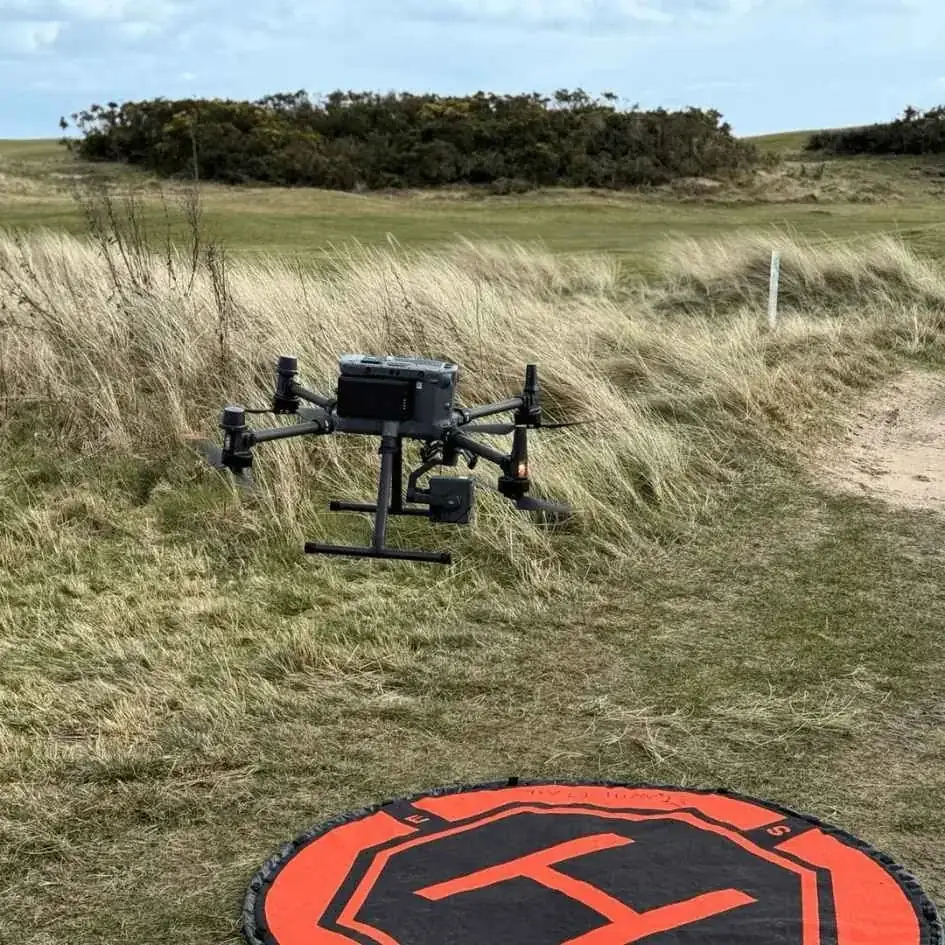
A handful of enterprise and inspection models do carry ratings. The practical tiers a UK drone pilot will meet are IP43, IP45, IP54, IP55, and IP67. The difference between them is not marketing — it is the test the drone has physically passed.
| IP rating | What the drone is certified against | Typical category |
|---|---|---|
| No rating | Nothing. No declared protection against moisture. | Most consumer camera drones and folding travel drones. |
| IP43 | Water spray up to sixty degrees from vertical. Tolerates a light shower. | Some prosumer and early enterprise models. |
| IP45 / IP54 | Water jets and splashes from any direction. | Enterprise inspection and mapping drones. |
| IP55 | Low-pressure water jets from any direction, plus dust protection. | Current-generation industrial drones rated for steady rain. |
| IP67 | Fully dust-tight plus temporary submersion in one metre of water. | Waterproof marine and search-and-rescue drones designed for wet landings. |
Two details matter more than the tier. First, an IP rating is issued against a specific configuration — the gimbal, the payload, the propellers. Fly the drone with an aftermarket payload or a non-standard battery and the rating is no longer technically valid. Second, seals degrade. A two-year-old IP55 drone that has been flown hard is not the same sealed unit it left the factory as. The enterprise drone pilots I know inspect and rebuild seals on a schedule, not on a feeling.
Aftermarket waterproofing sprays and silicone coatings do not create an IP rating. They create an unverified layer over some components and void the manufacturer's warranty. Treat them as a patch for a drone you are willing to lose, not as a substitute for a rated drone.
Commercial rain flying happens, but only under a Specific Category Operational Authorisation
There is a legal lane for deliberate rain flying, and it is not the Open Category. It is the Specific Category, operating under an Operational Authorisation issued by the CAA.
An Operational Authorisation is not a blanket weather waiver. It is a document that names the specific operation, the specific drone, the specific environmental envelope, and the procedures the operator must follow. A drone insurance-backed commercial inspection of a railway viaduct in steady rain will typically sit inside PDRA01 or a bespoke UK SORA authorisation, flown on an IP-rated drone, with a written wet-weather section in the Operations Manual.
That is how certain industrial inspection jobs actually get done in British weather. The drone operator has argued the rain case to the CAA on paper, in advance, and the authorisation reflects what the drone and the procedures can actually handle. VLOS still binds; the operator simply has a drone, a team, and a method statement that lets them hold it in weather where a consumer setup cannot.
If you are flying under a Flyer ID and an A2 Certificate of Competency or a GVC in the Open Category, none of this applies to you. There is no Open Category pathway that authorises rain flying beyond what the drone, Rule 15, and Rule 2 already allow.
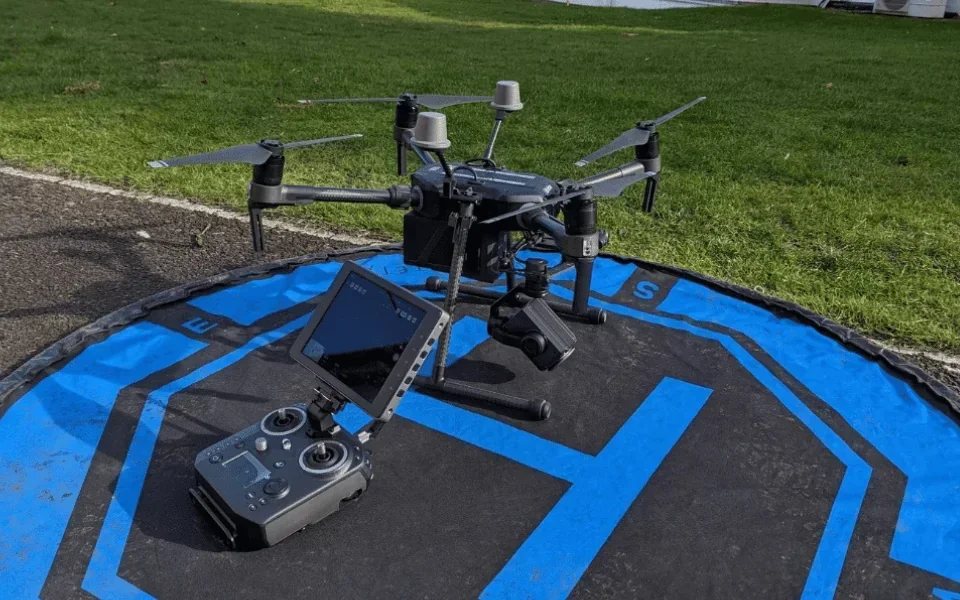
Third-party drone insurance almost always excludes damage from flying in rain
Read any UK drone insurance policy, hobby or commercial, and somewhere in the exclusions you will find a clause about flying outside the manufacturer's published conditions. The exact wording varies, but the intent is the same: if you fly a drone in weather the manufacturer has not rated it for, any damage — and any liability — falls on you personally.
That exclusion does the heavy lifting in the rain question. Commercial flying under drone insurance requirements demands third-party cover compliant with Assimilated Regulation (EU) 785/2004. An unrated drone flown in rain is operating outside its envelope, which means the insurer can — and almost always will — decline the claim. A short-circuited motor that crashes into a parked car becomes your bill, not theirs.
Hobby drone operators without mandatory insurance still carry personal liability. The CAA is clear on that: insurance is optional for recreation, sport, or hobby below 20 kilograms, but the operator remains liable for any damage or injury caused. A sub-250g drone dropped on a pedestrian because of a rain-soaked motor is still a civil claim against you.
The honest answer is that rain flying is legal in theory and almost never legal in practice
Put the four rules together and the picture is consistent. No UK law bans flying a drone in the rain outright. Drone Code Rule 15 tells you to cancel if the weather would affect the flight. Rule 2 says you must keep direct sight of the drone, which heavy rain makes impossible. Your drone's IP rating — or the absence of one — decides whether the drone can physically survive the water. Your insurance excludes damage from flying outside that rated envelope.
A light drizzle over an IP55-rated enterprise drone flown by a Specific Category drone operator under an Operational Authorisation is a legal, insured flight. A five-minute shower hitting an unrated folding drone flown by a hobbyist is not. Everything in between comes down to whether the drone, the visibility, and the policy you are flying under can all stand up to scrutiny at the same time.
For the neighbouring weather question, the wind limits guide covers the other hazard Rule 15 names, and the UK drone laws explainer stitches the full framework together.
Got a specific rain scenario you want covered — an inspection job, a coastal shoot, a borderline drizzle you are not sure about? Drop a note to peter@hiredronepilot.uk and I will come back to you directly. If you prefer the video version of this explainer, the comments are open on YouTube.
References
Primary source material for this article is the UK Civil Aviation Authority. External links open in a new tab.
- UK CAA — The Drone and Model Aircraft Code (CAP2320) · Rule 2 VLOS, Rule 4 people-buffer in poor weather, Rule 15 weather go/no-go
- UK CAA — UK Regulatory Framework for Drones · Air Navigation Order 2016 and the UAS Regulations that enforce the Drone Code
- UK CAA — Insurance Requirements · Assimilated Regulation (EU) 785/2004 standard and commercial cover rules
- UK CAA — Specific Category Operational Authorisation · route used by commercial inspection operators to fly in rated wet weather
- UK CAA — Drone Safety Advice · CAA guidance on technical failure, terrain, and adverse-weather incidents
- UK CAA — Where You Can Fly (A1, A2, A3 sub-categories) · Open Category distances that also bind in wet weather
Peter Leslie
Founder & GVC Drone Pilot
Peter is the founder of HireDronePilot. With thousands of logged commercial flight hours, he writes about drone technology, commercial surveying tactics, and UK aviation compliance.
Connect on LinkedIn