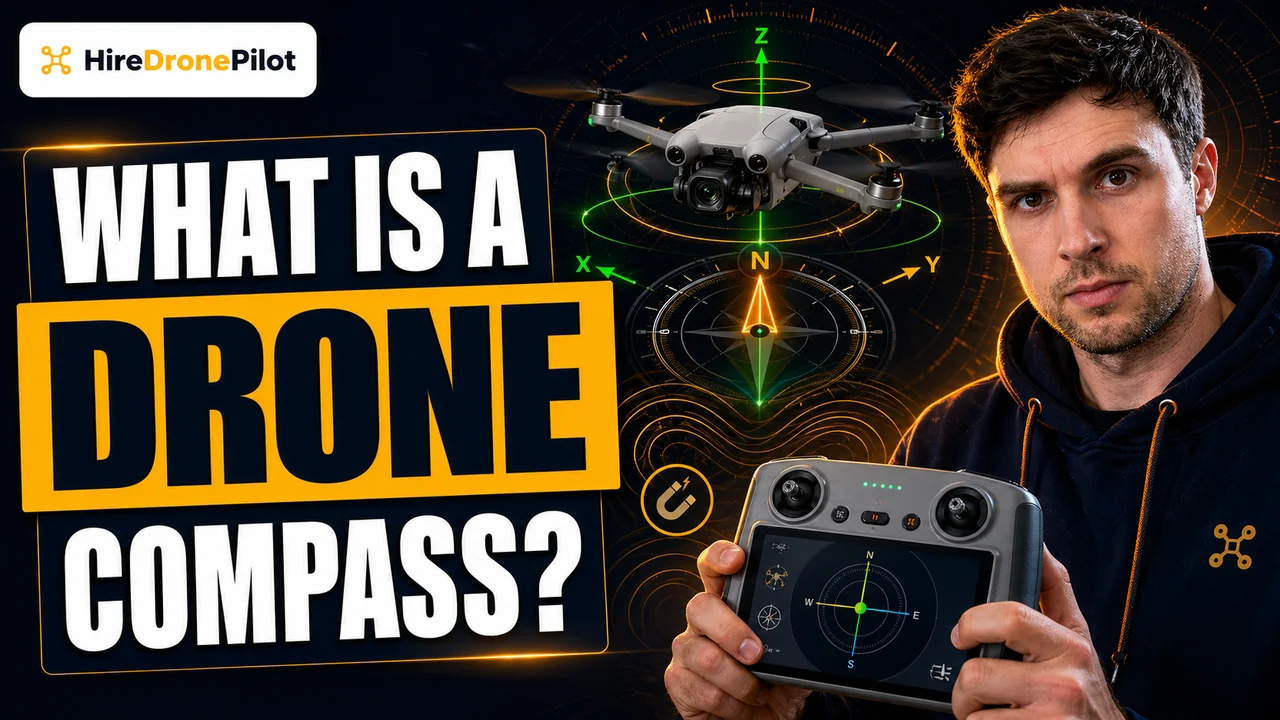
What Is a Drone Compass? The Sensor Behind Stable Flight

Peter Leslie
31 Oct 2025
Key Takeaways
- A drone compass is a three-axis magnetometer that measures the Earth's magnetic field to work out which way the drone is facing
- It is what lets the flight controller hold a straight heading, compensate for wind drift, and keep features like Return to Home pointed at the right place
- The compass works together with the GPS and the IMU — one supplies heading, one supplies position, one supplies motion
- Calibration realigns the sensor to the local magnetic field and should be run after a long journey, a firmware update, or a crash
- Ferrous metal, power lines, and magnetic rebar in concrete are the common interference sources that throw a compass off
If the drone's GPS tells the flight controller where it is, and the IMU tells the flight controller how it is moving, the compass tells the flight controller which way it is facing. That third piece of information is what turns a drone from a hovering platform into something that can hold a straight line across a windy field and come back to the launch point on command.
This piece walks through what the compass actually is, how it fits in with the other sensors, why it needs calibrating, and what can quietly throw it off mid-flight. It is part of a short series of sensor explainers — the companion pieces on drone GPS and the drone IMU are the natural next reads.
The compass is a three-axis magnetometer that measures the Earth's magnetic field
The component we call the compass on a drone is, more precisely, a three-axis magnetometer — a small sensor chip that measures the strength and direction of the Earth's magnetic field along three orthogonal axes. Because the Earth's magnetic field has a known pattern, the readings from those three axes can be combined into a single vector pointing at magnetic north.
This is not a moving-needle compass like the one in a scout's rucksack. It is a solid-state sensor built onto the same circuit board as the rest of the flight-controller electronics. There is nothing mechanical about it — the needle is just the direction of a vector that falls out of the maths.
The flight controller then takes that magnetic-north heading and applies a correction called magnetic declination — the local difference between magnetic north and true geographic north. The declination varies depending on where you are on the planet, which is why your drone needs a GPS lock for full heading accuracy. Once the correction is applied, the drone knows its true heading to within a fraction of a degree.
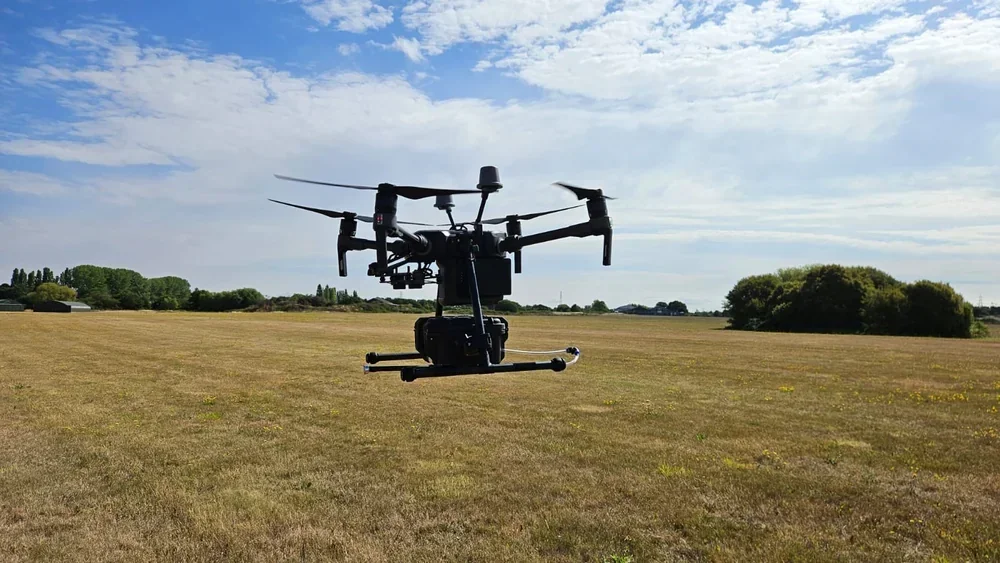
Heading is what lets the drone hold a line in wind and return home correctly
Why does any of this matter? Because almost every intelligent flight feature on a modern drone assumes the flight controller knows which way the drone is pointing.
When you push the right stick forward in standard mode, the drone accelerates in the direction of its nose. The motors do not know anything about forward — they only know how fast to spin. Translating forward on the stick into the right set of motor speeds is the flight controller's job, and the flight controller can only do it if the compass tells it where forward is pointing. This is also why headless mode on beginner drones works — the compass is the sensor that makes the translation possible in the first place.
The same is true of holding a fixed heading while flying in windy weather. The GPS tells the drone it is drifting. The compass tells the drone which way it is drifting relative to itself. The flight controller then knows which motors to spin faster to cancel the drift. Without a working compass, the drone knows it is moving but not in what direction, and the result is the toilet bowl effect where the drone circles the home point instead of holding it.
Return to Home, waypoint missions, ActiveTrack — all depend on reliable heading. The compass is the sensor that provides it.
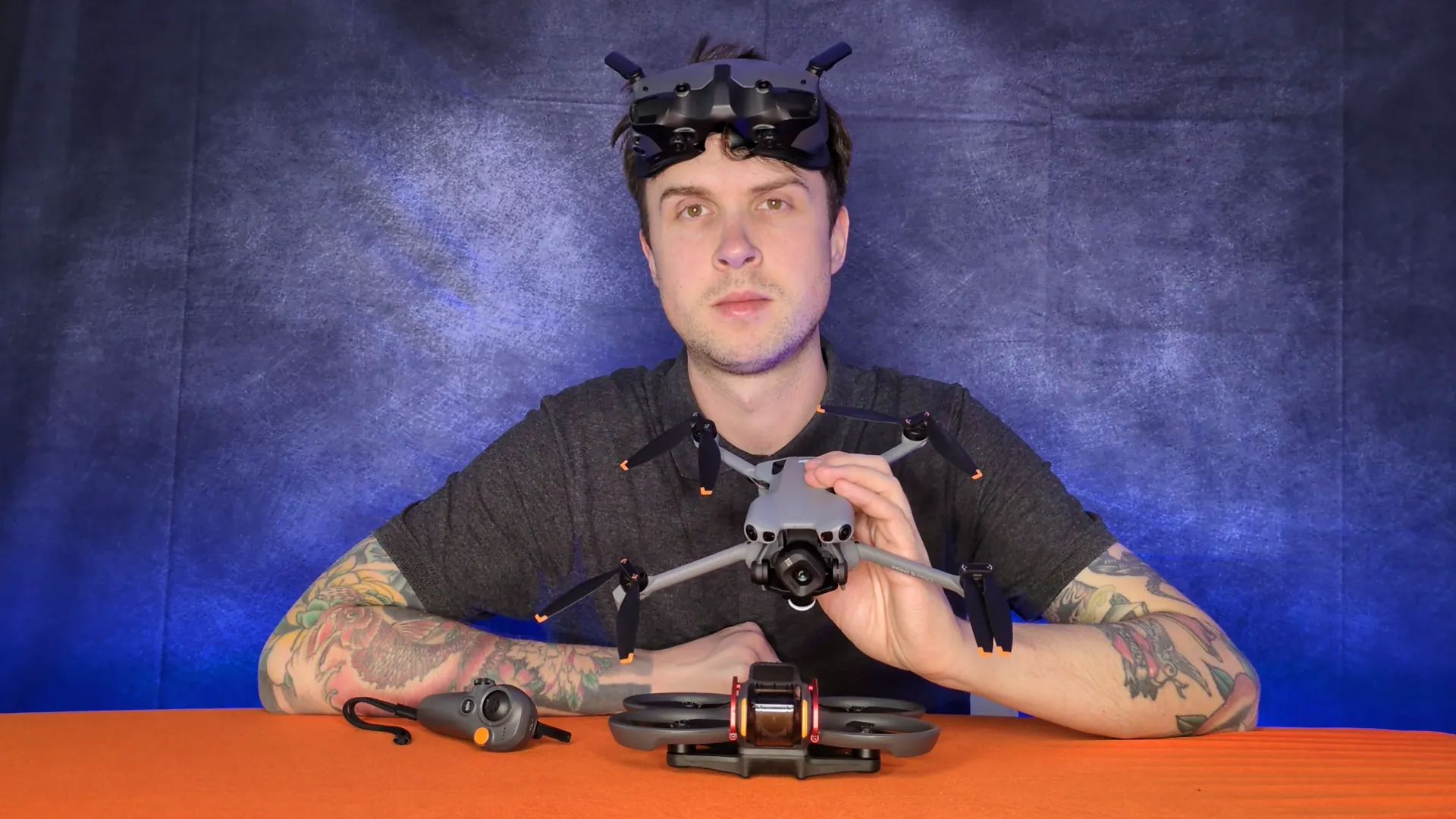
Calibration resets the sensor to the local magnetic field at your flight location
Magnetometers are sensitive little devices, and the readings they produce drift over time. Metal picked up near the drone on a transport day, temperature changes, and the background magnetic environment at a new flight site are enough to nudge the sensor's reference frame just far enough to cause problems.
Calibration is the routine that fixes this. You hold the drone in a specific sequence of orientations — the rotations are sometimes called the compass dance — and the flight controller reads the magnetometer outputs in each position. Those readings give the controller enough information to recalibrate the sensor's zero point and scale, so that true north lines up correctly again.
When you should run a calibration:
- After a long journey to a new flight site, especially if you have flown somewhere in a different country or latitude band.
- After a firmware update on the drone or controller.
- After a crash, hard landing, or any event that might have disturbed the sensor's mounting.
- When the flight app explicitly prompts you to.
The flight controller usually asks for a calibration when it notices readings that do not match what it expects. If your DJI Fly app shows a Compass Error or Compass Interference warning, that is the prompt — do not take off until it is cleared. The DJI UK support portal has the exact procedure for each product line; the steps are broadly the same but the specific button taps differ.
Metal, power lines, and magnetic rebar in concrete are the common interference sources
The other thing worth understanding about the compass is that it can be thrown off mid-flight by external magnetic fields. This is not a hypothetical — it is the most common cause of a spooky hover on a new site.
The usual suspects are:
- High-voltage power lines and substations. These generate strong magnetic fields at close range that can overwhelm the Earth's field at the sensor.
- Ferrous structures. Lamp posts, signposts, metal bridges, car bonnets you parked the drone on to take off — anything with enough iron in it to distort the local field.
- Reinforced concrete. The rebar inside concrete is ferrous, which is why launching off a rooftop slab sometimes gives a compass warning even though nothing is visibly there.
- Personal items. A watch, keys, a phone with a magnetic case — if they are next to the drone during calibration, they get baked into the reference and nothing will be right until you recalibrate without them.
The professional habit is to pick a takeoff spot that is clear of metal in a rough two-metre radius, keep personal magnetic items away during calibration, and climb to altitude quickly so the drone is out of the building's magnetic near-field before you start manoeuvring.
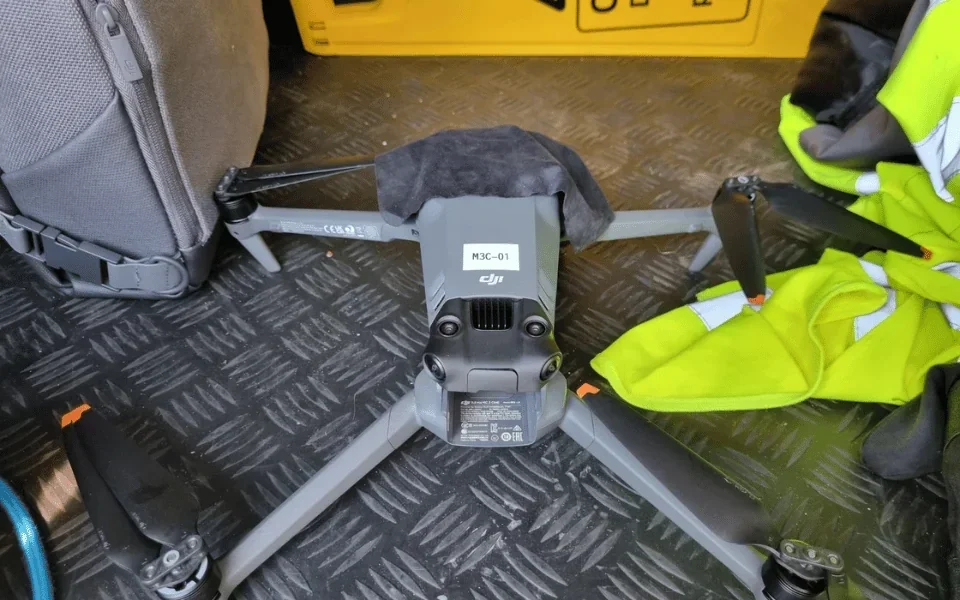
The compass, GPS, and IMU are a triangle — no one sensor works on its own
It is tempting to think of the compass as a self-contained heading sensor. It is not. Modern flight controllers use a technique called sensor fusion, which blends the compass, the GPS, and the IMU into a single unified picture of the drone's state.
The rough division of labour:
- The GPS gives slow but absolute position updates. It tells the drone where.
- The IMU gives fast but drift-prone motion and orientation updates. It tells the drone how it is moving.
- The compass gives a stable heading reference. It tells the drone which way.
Each one compensates for the others' weaknesses. The IMU fills in the gaps between GPS updates. The GPS corrects the IMU's drift. The compass keeps the IMU's heading honest. Take any one of them out and the other two cannot carry the weight on their own.
This is why a Compass Error is often more serious than drone pilots assume. The loss of one sensor immediately stresses the other two, and a flight that looked steady a minute before can suddenly lose its smooth hold. If your app flashes a warning, land and recalibrate — it is the cheapest possible correction. A compass problem mid-flight can also turn into a signal-loss style scenario, because the drone stops trusting its own heading and the flight controller becomes more cautious about using the link.
Worth closing on one practical point. Every piece of this article sits under the wider legal framework of UK drone laws, and sensor reliability is part of the responsibility you carry as a drone pilot. Calibration is not just a technical habit — it is part of the fit to fly test the Drone Code expects you to run before every flight.
Got a specific compass-warning situation you have run into — a site with rebar, a location near a substation, a trip abroad that left the drone confused? Drop a note to peter@hiredronepilot.uk and I will come back to you directly. If you prefer the video version of this explainer, the comments are open on YouTube.
References
Primary source material for this article is the UK Civil Aviation Authority and the drone manufacturer. External links open in a new tab.
- UK CAA — The Drone and Model Aircraft Code (CAP2320) · Rules 10 and 11: know what your drone can do; make sure it is fit to fly
- DJI — UK support portal · compass calibration procedures by product line
Peter Leslie
Founder & GVC Drone Pilot
Peter is the founder of HireDronePilot. With thousands of logged commercial flight hours, he writes about drone technology, commercial surveying tactics, and UK aviation compliance.
Connect on LinkedIn