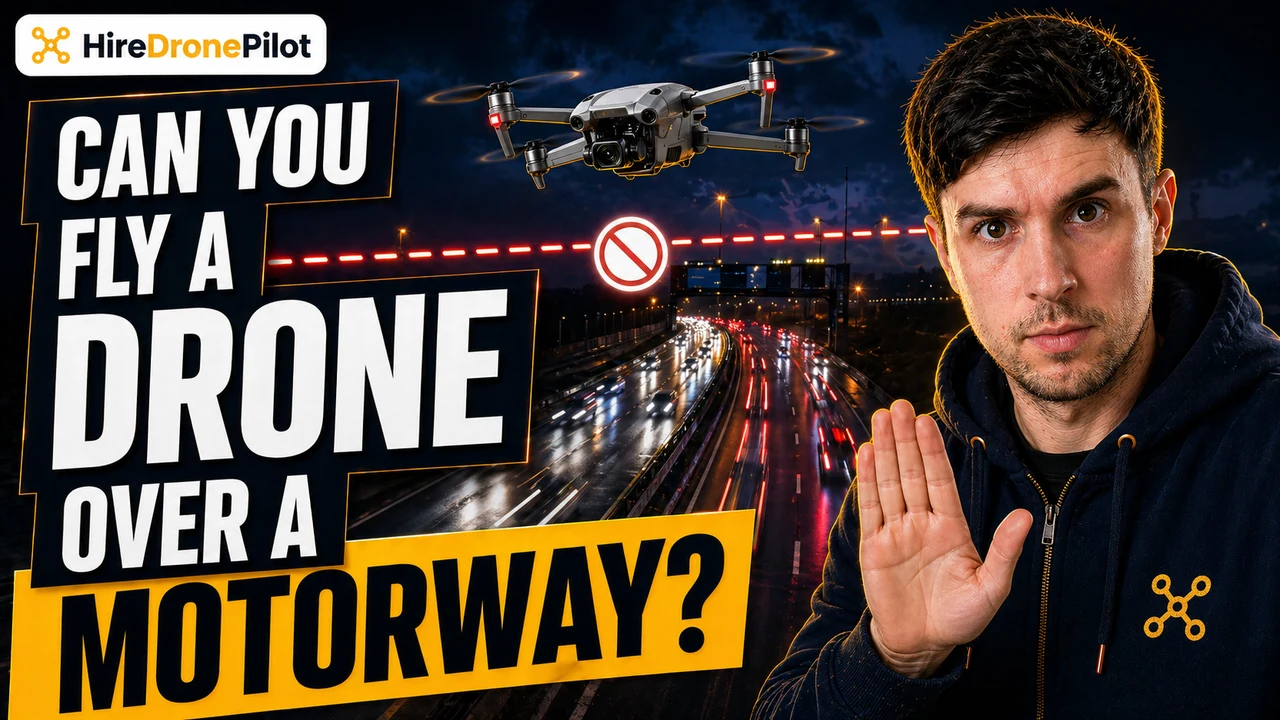
Can You Fly a Drone Over a Motorway in the UK?

Peter Leslie
20 Apr 2026
Key Takeaways
- There is no CAA rule that names the word motorway, but the 50 metre distance-from-people buffer makes Open Category flight over a live carriageway almost impossible
- Drivers and passengers in cars count as uninvolved people under the Drone Code, and the buffer extends all the way up to the legal height limit like a cylinder
- Fly above 50 metres and the buffer scales with altitude — at 120 metres up you need 120 metres of horizontal clearance from the nearest lane
- A sub-250 gram or UK0 or C0 drone removes the 50 metre rule for A1, but does nothing to help with the real risk, which is a collision with an air ambulance or police helicopter — that carries 5 years in prison
- Motorway service stations, depots and control centres are industrial areas, which triggers the 150 metre A3 buffer on any drone that is not A1 class-marked
- The only realistic legal route over a live carriageway is the Specific Category under PDRA01 or a bespoke Operational Authorisation, and even PDRA01 forbids overflight of assemblies
Drivers glance up at motorway drones all the time, and drone operators often assume a motorway is "just a road" to the Civil Aviation Authority. It is not. There is no single line in UK drone law that says "no drones over motorways", but by the time you stack the fifty metre people-buffer, the emergency-aircraft corridor, the industrial-area rules and the driver-distraction risk, the honest answer is almost always no.
The people-buffer is the first wall. The aircraft-endangerment offence is the second. The one hundred and fifty metre industrial-area rule is the third. And the legal routes that do exist — the Specific Category authorisations — carry their own restrictions that close the door again.
Drivers and passengers on a motorway are uninvolved people, which activates the fifty metre buffer around every lane
When the Drone and Model Aircraft Code talks about keeping your distance from people, it does not stop at pedestrians on a pavement. The rule explicitly names people in buildings and in transport — cars, lorries, trains and boats. A driver in the left lane of the M6 and the passenger next to them both count as uninvolved people for the purposes of the Code.
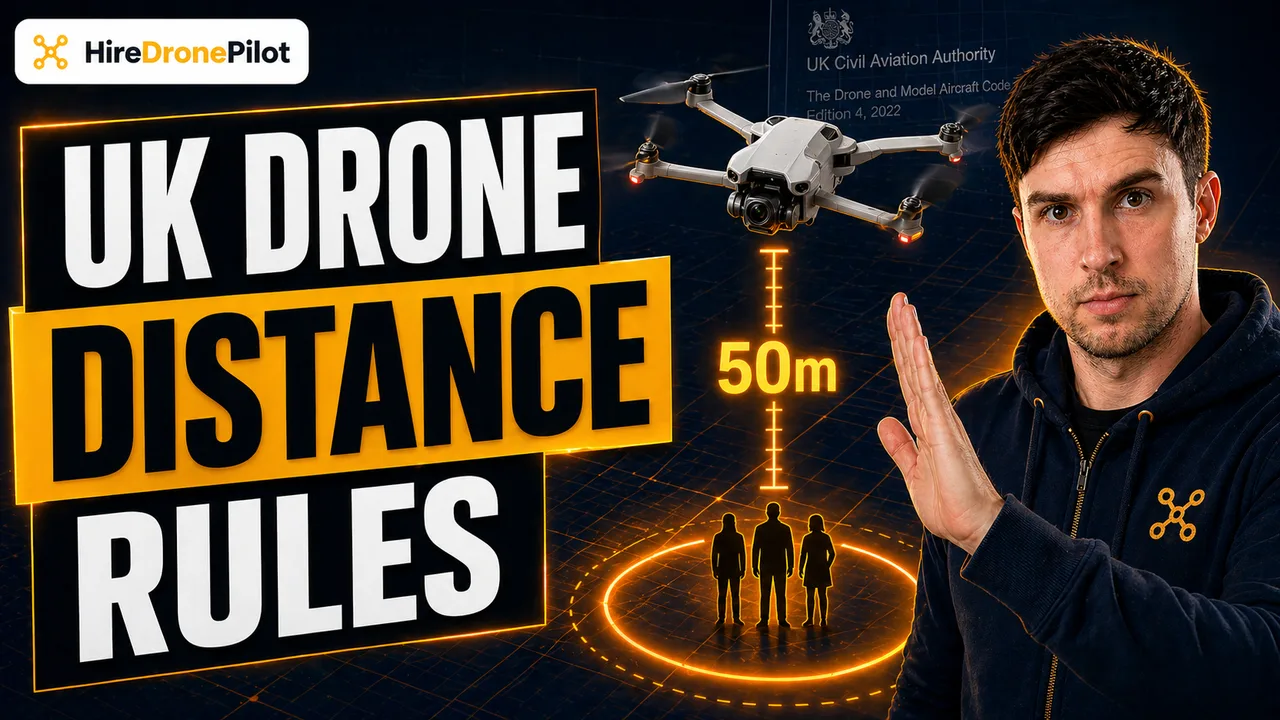
That matters because the minimum distance from people in the Open Category is fifty metres horizontal, and it applies to every drone except the A1 sub-category covered later in this article. Picture that buffer as a cylinder — not a flat circle on the ground, but a no-fly zone that runs all the way up to the legal height limit around every vehicle on the carriageway.
A three-lane motorway is seldom wider than about forty metres including the hard shoulder. Which means the fifty metre buffer around the lanes on one side overlaps the lanes on the other, overlaps the verges, and sits uncomfortably close to any pedestrian walkway over a bridge. There is almost no position above a live motorway where a standard Open Category drone can sit inside the law.
Fly above fifty metres and the people-buffer scales one-for-one with your altitude
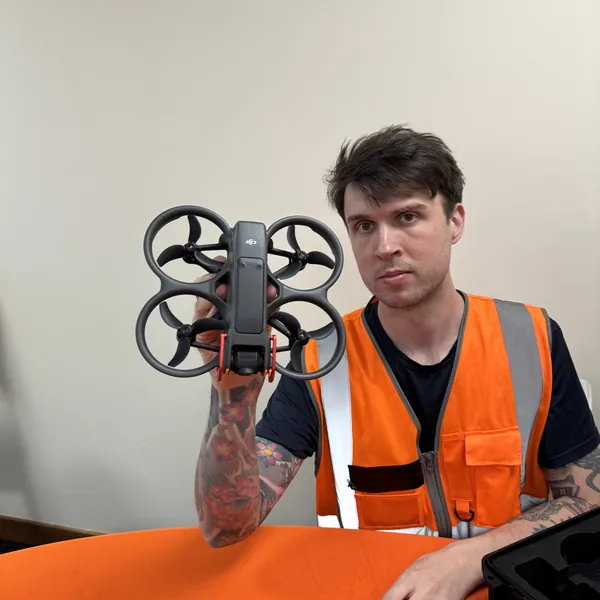
Climbing does not fix the problem. The Drone Code is explicit that once you are above fifty metres of altitude, your horizontal clearance from uninvolved people scales to match. Fly at eighty metres up and you need eighty metres of horizontal distance from the nearest lane. Fly at the legal maximum of 120 metres and your buffer is 120 metres.
That is the same geometry most drone operators hear described as the 1-to-1 rule, and it is what kills the instinctive plan of "I will just go high and fly over".
| Altitude | Minimum horizontal clearance from the carriageway |
|---|---|
| 50m (approx. 165ft) | 50m (approx. 165ft) |
| 80m (approx. 260ft) | 80m (approx. 260ft) |
| 100m (approx. 330ft) | 100m (approx. 330ft) |
| 120m (approx. 400ft) — legal maximum | 120m (approx. 400ft) |
On a B-road with a wide field to one side the geometry sometimes allows it. Above a live motorway, with embankments, service stations and junctions in every direction, it almost never does.
Motorway service stations, depots and control centres are industrial areas, which triggers the one hundred and fifty metre A3 buffer
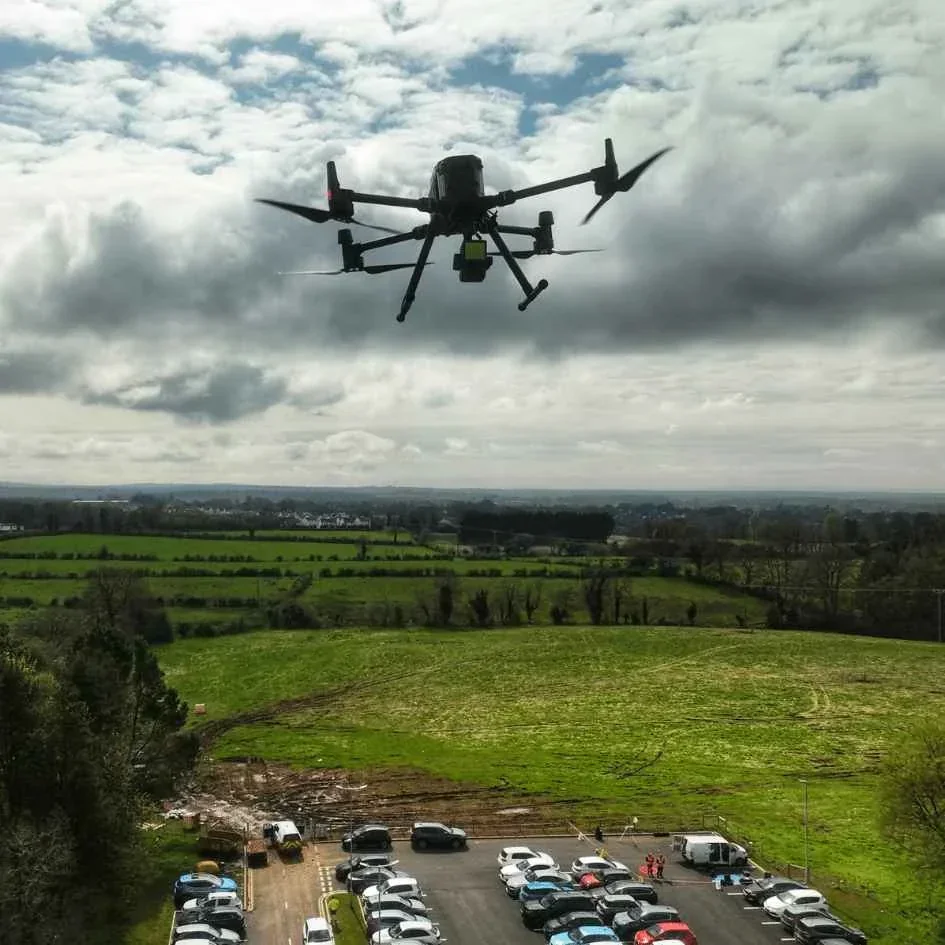
The buffer problem gets worse when you leave the carriageway itself. The Drone Code's A3 sub-category — Far from People — requires drone operators to stay at least one hundred and fifty metres from residential, recreational, commercial and industrial areas.
Service stations fall squarely into that commercial and transport-hub bracket. Traffic-officer depots, gritting yards and regional operational control centres are industrial. Even an isolated maintenance building standing on its own beside the carriageway carries its own fifty metre buffer as an individual building.
A big chunk of the UK motorway network is flanked by exactly these structures. On a satellite view it looks empty. In the Drone Code it is a chain of one hundred and fifty metre no-fly zones that link up and swallow the fields between them.
Motorways are emergency-services flight corridors, and endangering a manned aircraft carries five years in prison
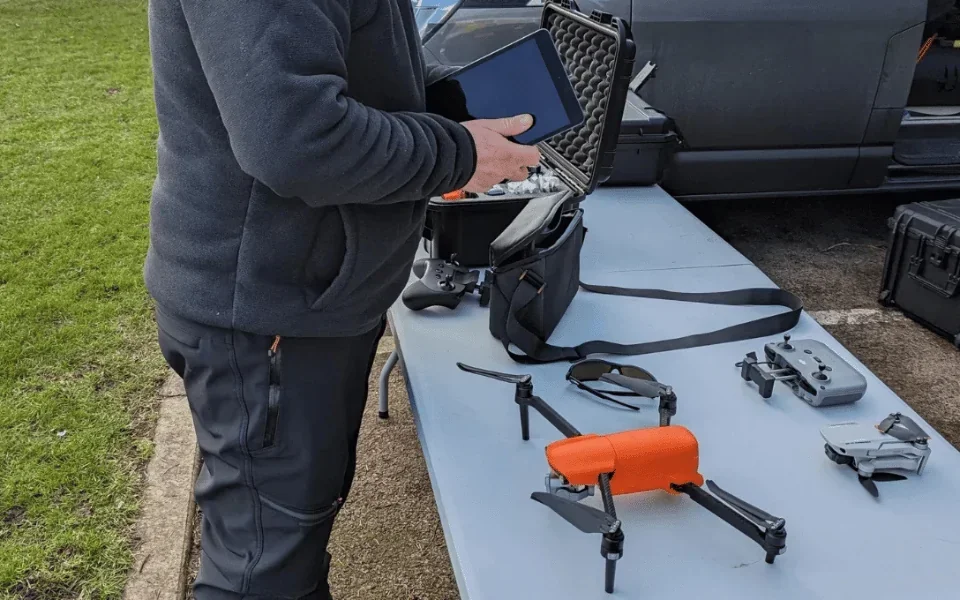
Read the Drone Code's list of airspace hazards and air ambulances and police helicopters are named explicitly. Both the National Police Air Service and regional Helicopter Emergency Medical Service operators routinely fly below 120 metres along motorway corridors. A motorway is often the fastest route to a road traffic accident, and the obvious landing ground when a helicopter has to set down to treat casualties.
A drone hovering above the carriageway is sitting directly in that flight path. Under the Air Navigation Order 2016, recklessly or negligently endangering an aircraft carries a maximum sentence of five years in prison. That is not a notional penalty. It is the offence police powers over drones flow from, and it is the first thing a Crown Prosecution Service lawyer reaches for when a drone incident involves a helicopter.
The Drone Code also tells you what to do the moment an incident unfolds below you — stop flying immediately unless the emergency services give you permission to continue. Your Remote ID broadcast is transmitting your Operator ID to anyone equipped to read it, so police tracing you after the fact is not theoretical either.
A sub-250 gram drone removes the fifty metre buffer but does nothing to help with the aircraft, distraction and insurance risks
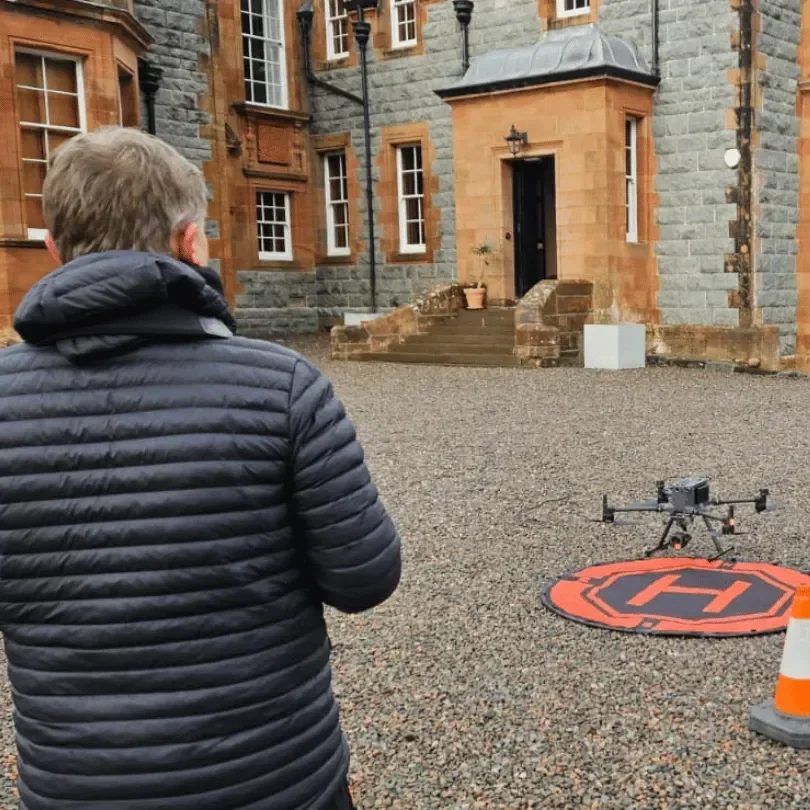
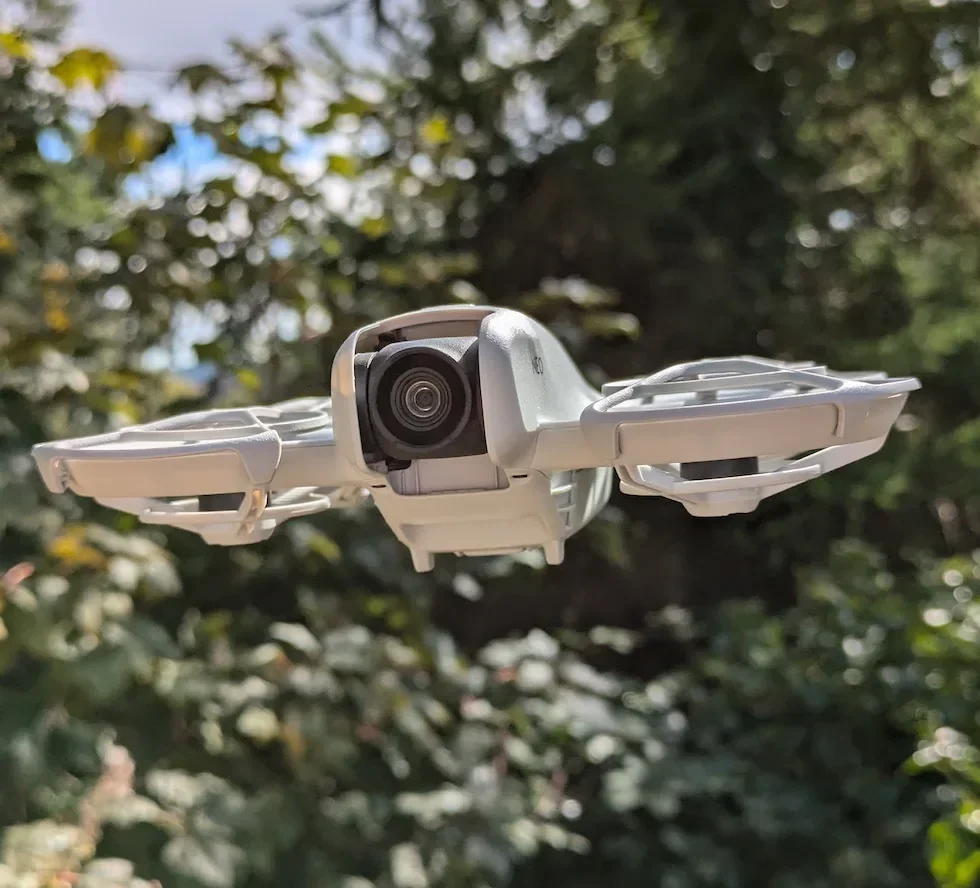
This is where drone operators often talk themselves into flying. The A1 sub-category, which covers sub-250 gram drones such as a DJI Mini and UK0 or C0 class-marked machines, permits flight closer to uninvolved people and even over them. Drivers on a motorway are not technically a crowd in the regulatory sense, because each one is isolated in their own vehicle. So the weight carve-out technically applies.
It does not save you. The five-year prison offence for endangering an air ambulance is written without reference to drone weight — a sub-250 gram machine through a cockpit windscreen is still an endangerment. Driver distraction is a wider legal problem that sits outside the CAA framework. And drone insurance policies typically list motorway overflight as a red-flag activity that will not be underwritten even on a sub-250 gram platform.
A1 is what stops your Mini becoming illegal in a suburban street. It is not a workaround for a live carriageway.
The Specific Category is the only route a working drone operator uses to fly near a live carriageway, and even PDRA01 forbids overflight of assemblies
The drone pilots who take on motorway-adjacent work almost always fly under the Specific Category, not the Open Category. That means either the pre-defined PDRA01 authorisation or a bespoke Operational Authorisation from the CAA.
PDRA01 covers 250 gram to 25 kilogram drones inside residential, commercial and industrial areas with a fifty metre buffer from uninvolved people, dropping to thirty metres on take-off and landing only. The altitude ceiling is still 120 metres and the operating range is capped at 500 metres from the Remote Pilot. It costs £524 a year.
But here is the line that closes the door on rush-hour motorways. PDRA01 prohibits flight over any assembly of people, and applies the 1-to-1 rule explicitly to the separation from any assembly — at eighty metres altitude, eighty metres horizontal; at 120 metres, the full 120 metres. A queued motorway at rush hour is, in every practical sense, an assembly: tens of thousands of drivers held in place, unable to move. Even the Specific Category's flagship authorisation will not let you overfly that.
The route that actually works for genuine motorway inspection — bridge surveys, structural checks, incident reconstruction — is always a bespoke Operational Authorisation tied to a permitted lane closure, and it is organised through National Highways, the police, or the relevant contractor. It is never a private-hire shoot flown off the hard shoulder.
For almost every Open Category drone operator the answer is simple: do not fly over a live UK motorway. The "over" versus "alongside" distinction matters too. Shooting laterally with a 120 metre setback from a field that happens to sit beside a motorway can be legal where overflight never will be, as long as the people-buffer and the industrial-area rule are still respected in the shot you actually take.
Got a specific motorway shot in mind — a bridge inspection, a closed-road shoot, a feature at a service station? Drop a note to peter@hiredronepilot.uk and I will come back to you directly. If you prefer the video version of this explainer, the comments are open on YouTube.
References
Primary source material for this article is the UK Civil Aviation Authority. External links open in a new tab.
- UK CAA — The Drone and Model Aircraft Code (CAP 2320) · 50 metre people-buffer, the 1-to-1 altitude scaling, air ambulance and police helicopter hazards, emergency-incident guidance
- UK CAA — Where You Can Fly (A1, A2, A3 sub-categories) · A1 sub-250 gram carve-out and the 150 metre A3 industrial-area buffer
- UK CAA — PDRA01 Operational Authorisation Overview · 50 metre / 30 metre separation, assembly overflight prohibition, 1-to-1 rule, 500 metre range, £524 fee
- UK CAA — UK Regulatory Framework for Drones · Air Navigation Order 2016 offences including the 5-year aircraft-endangerment penalty
- UK CAA — Remote ID · Operator ID broadcast that allows police trace-back after an incident
Peter Leslie
Founder & GVC Drone Pilot
Peter is the founder of HireDronePilot. With thousands of logged commercial flight hours, he writes about drone technology, commercial surveying tactics, and UK aviation compliance.
Connect on LinkedIn