Best Drone to Take Abroad: What I’d Pack, and What I’d Check First

Peter Leslie
31 July 2026 · 19 min read
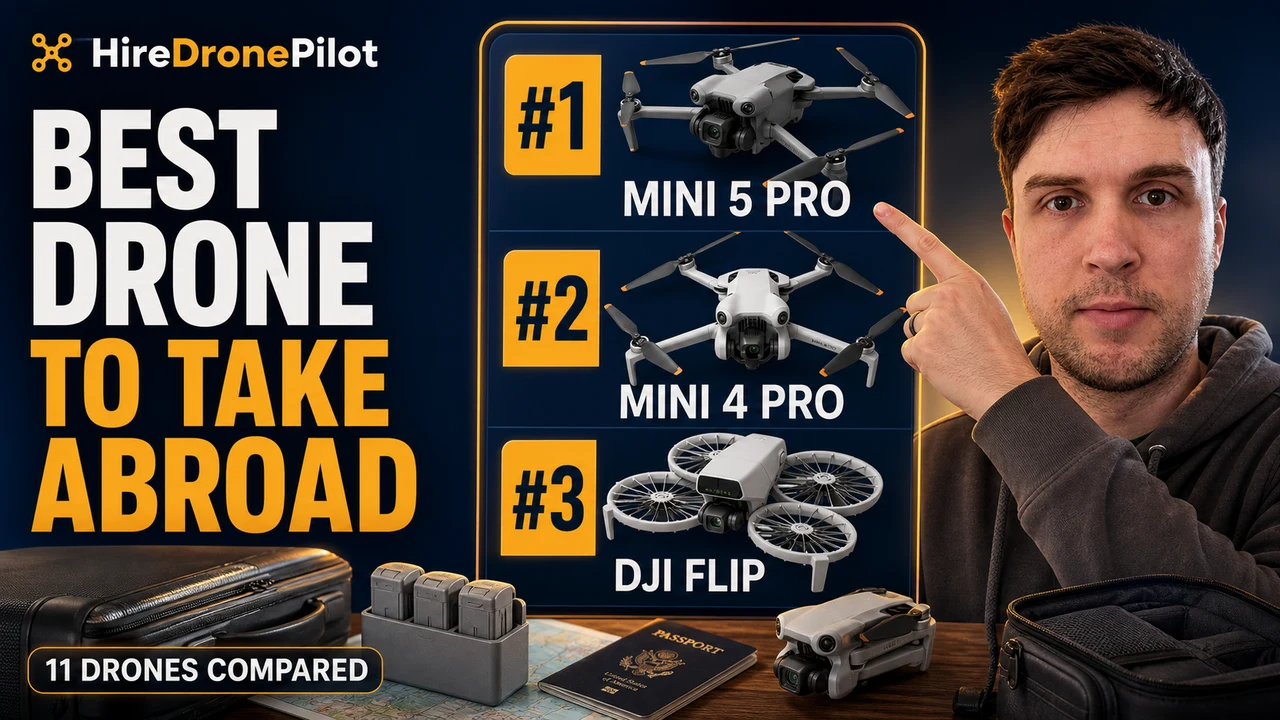
The question that brought you here is probably not “which drone has the best camera”. It is closer to am I going to get this thing taken off me at the airport — and then, quietly underneath it, will I even be allowed to fly it when I get there.
Those are the right questions, and almost nobody selling you a drone answers them. Here is the short version of what I have learned. The drone is the easy half of this decision. The half that catches people is that the two registrations you did before you flew it in a field near home stop working the moment you leave the country, and the rules that replace them are set by whoever owns the airspace you have just landed in.
So only two things really decide this: what the drone weighs, because weight is the one thing nearly every country in the world writes its rules around, and how much paperwork you are willing to do at the other end. Sensors and flight times matter afterwards, not first.
Answer it that way and the best drone to take abroad in 2026 is not the one with the best camera. It is the one that asks least of you at the border, and still comes home with pictures worth having.
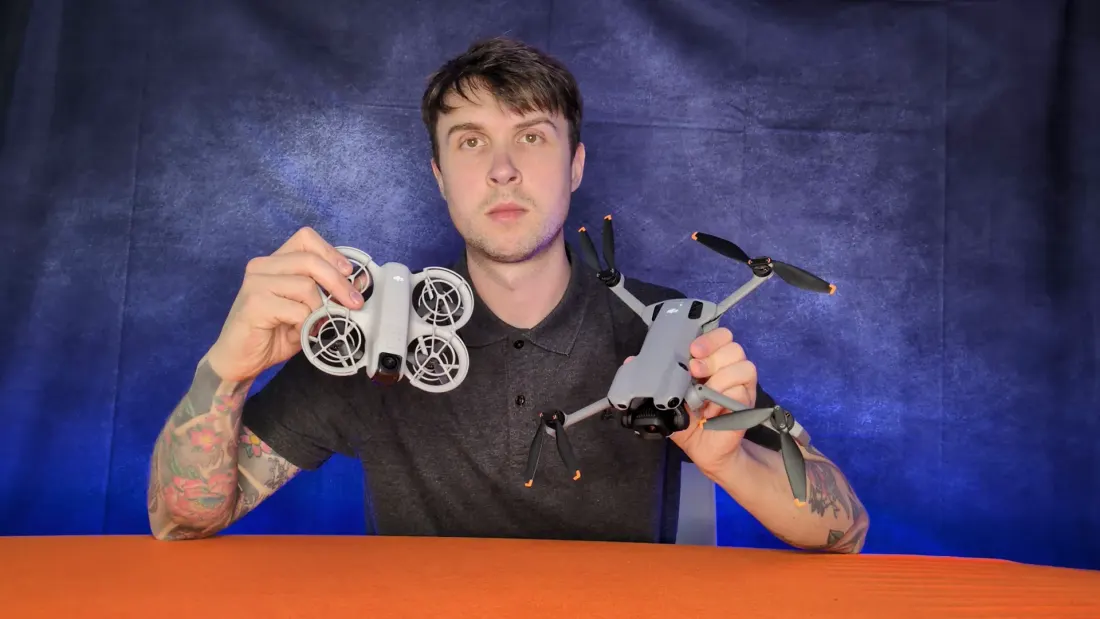
I have flown every DJI drone in this guide, and I have taken small ones a lot further than large ones, for reasons that have nothing to do with image quality and everything to do with not wanting a conversation at a bag drop.
So this guide does three things. It asks four questions about your actual trip and narrows eleven drones down to one. It then explains, properly, why your UK registration is worthless at the border and what genuinely replaces it. And it gives you a twenty-minute check to run before you book, using official sources, so that you never find out at a customs desk that the answer was no.
One warning before we start, and I mean it: I am not going to tell you what the law is in your destination. Those rules change, they differ by region within a country, and an article written a year ago is a bad reason to believe anything. What I will do is show you exactly where the real answer lives and how to find it in about the time it takes to make a coffee.
How I get paid: the Amazon links below are affiliate links, so if you buy through one I earn a small commission at no extra cost to you. It does not change what I recommend — one of the eleven drones here has no affiliate link at all, and I spend a fair part of this article telling you the expensive ones are the wrong answer.
The Best Drone to Take Abroad in 2026 Is the DJI Mini 5 Pro
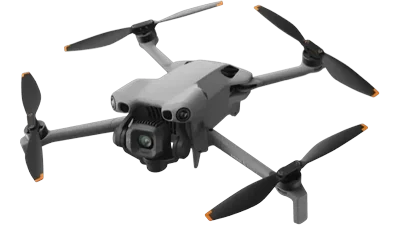
Small is the only thing a foreign border reliably cares about. This is the smallest drone with a camera you would actually miss.
- 249.9 grams and a C0 label — under the 250-gram line that nearly every country writes its lightest rules around, and in the lightest position Europe has.
- Folds to 157×95×68 mm, so it travels inside a bag you already own.
- A one-inch, 50-megapixel camera — the size of sensor you would find in a good compact camera, and nothing else here manages one under the line.
- 36 minutes on the standard battery. Ignore the 52-minute figure — that needs the bigger battery, which takes it over 249 g.
Affiliate link · costs you nothing extra · full disclosure
PART ONE
Here are the five that win their categories outright for a trip abroad — and the honest problem with each, because not one of them is perfect.
Best Drone for Somewhere You Have Never Flown: DJI Mini 4 Pro
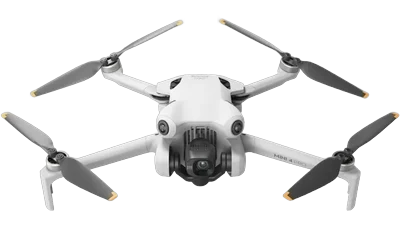
The first flight of a holiday is all unfamiliar — the cliffs, the trees, the wind coming off a headland you have never stood on. This is the one I would want doing the looking for me.
- Obstacle sensing in every direction — forward, back, up, down and both sides. The Mini 3 has none worth the name and the Flip only looks forward and down.
- Under 249 grams with a C0 label, so none of that sensing costs you anything at the border.
- The Mini 5 Pro above it does the same job with a bigger sensor for not a great deal more, so this one only makes sense discounted.
Best Cheap Drone to Take Abroad: DJI Flip
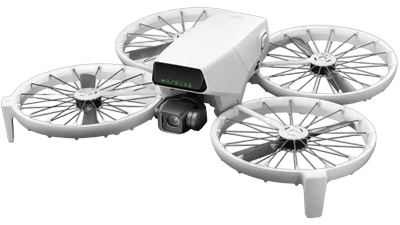
The cheapest drone here I would genuinely be happy to hand to somebody else on a beach.
- Under 249 grams with a C0 label, so it travels on the easiest terms available.
- Propeller cages built in, which is what makes it the lendable one.
- Those cages do not fold, so at 165 mm tall it is the awkward shape to pack.
Best Drone When You Are Carrying Everything: DJI Neo 2
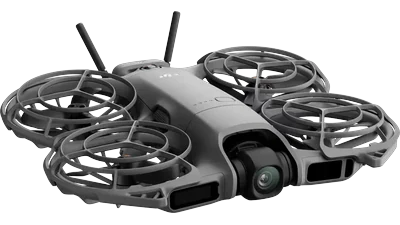
151 grams, launches off your palm, and fits in a coat pocket. For a long trip carried on your back, nothing else is close.
- The lightest drone here by 95 grams, with a C0 label.
- No controller needed to get it flying, which keeps the whole kit to one object.
- A 12-megapixel camera on a small sensor. It is for the group chat, not for the wall.
Best Drone for a European Road Trip: DJI Mini 3
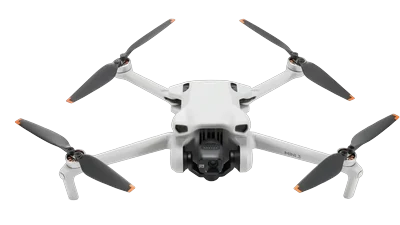
38 minutes on one standard battery, which is the longest here. When you are stopping in six places in a fortnight, endurance beats megapixels.
- 248 grams with a C0 label, so one European registration covers the whole drive.
- The longest standard-battery flight time of anything under the line.
- No real obstacle sensing, and a 2022 camera. It is an endurance pick, not an imaging one.
Best Camera If the Trip Is the Point: DJI Air 3S
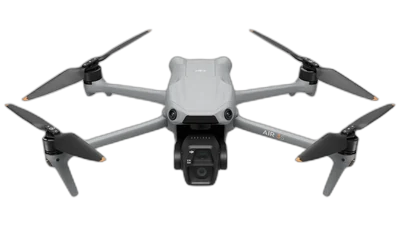
If you are travelling specifically to photograph somewhere, the second focal length changes the pictures more than anything else on this page.
- A one-inch 50-megapixel main camera plus a 70 mm telephoto, which nothing lighter here has.
- 724 grams, so you are outside the light category and into the rules with tests attached.
- Its C1 label stops counting in the UK on 1 January 2028, after which it needs the A2 test to fly near people.
Affiliate links · costs you nothing extra · full disclosure
Take the quiz: find the right drone for where you are going
Matched to the trip you are actually taking — not a generic top ten.
- Weighted for the thing that decides it abroad: what the drone weighs.
- Tells you which ones drag extra paperwork along with them.
- Eleven drones, with the one I would leave at home named openly.
- About 20 seconds, and no email needed.
STEP 1 OF 4
11 of 11 still fit
All eleven, and why each one might not suit your trip
-
DJI Neo 2
151 g · C0 · 19 min · no UK licence needed
At 151 grams it is the lightest thing here by a distance, and the only one I have carried in a coat pocket rather than a bag. It launches off your palm, which means no controller drill in front of a crowd.
- No UK test and no licence — just the £12.34 registration, which still does not travel with you.
- 151 grams, so it sits in the lightest category almost everywhere that has one.
- About 15 minutes of real flying per battery, though DJI claims 19.
-
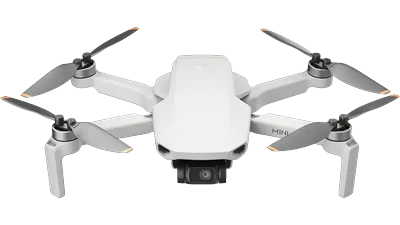
DJI Mini 4K DJI UK no longer lists it
246 g · 31 min · no UK licence needed
The cheapest way to get a properly stabilised aerial shot onto a card. A lovely first drone and a genuinely poor camera, and both of those are true at once.
- 246 grams and folds to 138×81×58 mm, the smallest folded footprint in this guide.
- No class label I could verify from DJI, which matters more abroad than at home.
- DJI no longer lists it in the UK, so you are buying up whatever stock is left.
-
DJI Flip
<249 g · C0 · 31 min · no UK licence needed
Propeller cages built in, so it launches from your hand and survives the person you lend it to on a beach. The quiet bargain of this whole list.
- Under 249 grams and carries a C0 label, which is the one Europe reads.
- The same size sensor as the Mini 4 Pro (1/1.3-inch, 48 megapixels) for a lot less money.
- Propeller cages built in. It is the one I would hand to a nervous first-timer abroad.
-
DJI Mini 3
248 g · C0 · 38 min · no UK licence needed
Thirty-eight minutes on the standard battery, which is the longest of anything under the line here. Three generations old and it still outlasts the lot of them.
- 248 grams with a C0 label, so it is the lightest paperwork in Europe you can get for the money.
- 38 minutes a charge, which on a driving holiday means one battery covers a whole stop.
- No forward obstacle sensing. On an unfamiliar coastline that is a real omission.
-
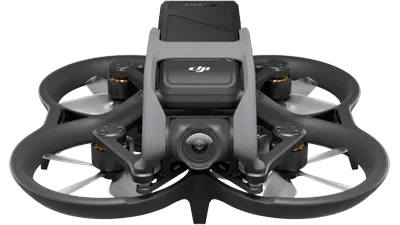
DJI Avata 2 loses UK privileges in 2028
377 g · C1 · 23 min · observer required
The only drone here that makes you grin out loud, and I still do every time I fly it. Also three separate objects in your bag instead of one, and a second person legally stood next to you.
- 377 grams, so it is over the light line everywhere and never gets the easy treatment.
- Flying through goggles legally needs a second person watching the drone, in the UK and across Europe.
- From January 2028 its C1 label stops counting in the UK and it needs the A2 test to fly near people.
-
DJI Mini 4 Pro
<249 g · C0 · 34 min · no UK licence needed
For two years this was the obvious answer for anyone packing light. The Mini 5 Pro has since made it about a hundred pounds too expensive for what it is.
- Under 249 grams with a C0 label, so it travels on the easiest terms available.
- Obstacle sensing in every direction, which is what you want somewhere you do not know.
- DJI does not sell the bigger battery in Europe, so 34 minutes a charge is what you get.
-
DJI Mini 5 Pro
249.9 g · C0 · 1″ 50MP · 36 min · no UK licence needed
A one-inch camera under the 250-gram line, folded into something the size of a paperback. Five years ago that combination did not exist at any price, and it is the reason this is the drone I actually take.
- 249.9 grams and a C0 label, which is the combination that keeps every border conversation short.
- Folds to 157×95×68 mm and its battery is 19.52 Wh, a fifth of the airline limit.
- 36 minutes on the standard battery. Ignore the 52-minute figure — that needs the bigger battery, which pushes it over 249 g.
-
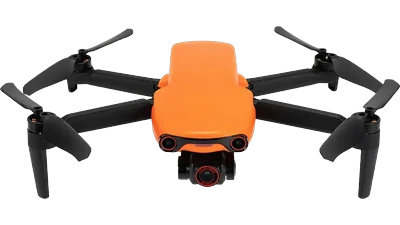
Autel EVO Nano+ no affiliate link — I could not find UK stock
249 g · 28 min · no UK licence needed
Here so that nobody can accuse this list of being a DJI catalogue. On paper it is exactly the right shape for this job; in practice I could not find a UK listing to send you to.
no link- 249 grams by Autel’s own specification, which is the right side of the line.
- No class label I could verify, and abroad the label on the drone is what gets read.
- I could not verify UK stock or a UK listing, so there is no link and I will not rank it.
-
DJI Air 3S loses UK privileges in 2028
724 g · C1 · 1″ 50MP + 70 mm tele · 45 min
Two usable focal lengths instead of one, which changes what a coastline looks like more than any sensor upgrade will. It is also 724 grams, and that number follows you through every border you cross.
- 724 grams, so it is out of the lightest category and into the one where competency tests start to matter.
- Two real focal lengths, 24mm and 70mm, and the best camera here that is not a Mavic.
- From January 2028 its C1 label stops counting in the UK and it needs the A2 test to fly near people.
-
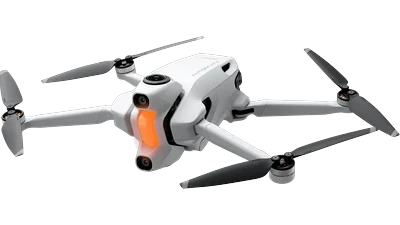
Antigravity A1 the one I’d leave at home
249 g standard · 291 g with the big battery · 8K 360°
An 8K camera that shoots in every direction at once and happens to fly. The most interesting object on this list, and the hardest one to justify carrying through an airport you do not know.
- 249 grams on the standard battery — but the advertised 39 minutes needs the high-capacity one, which takes it to 291 g and out of the light category.
- Goggles in the box, so it is two more objects and two more batteries in the bag.
- A lot of unusual-looking hardware to carry through an unfamiliar customs desk, for footage you will probably crop to a rectangle anyway.
-
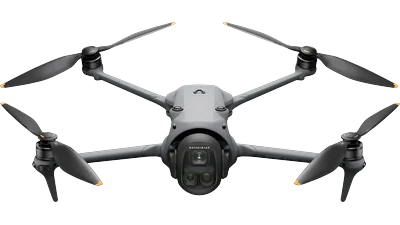
DJI Mavic 4 Pro
1,063 g · C2 · Four Thirds 100MP · 51 min · A2 test needed
The best flying camera you can buy in a bag this size, and I have shot some of my favourite work with it. It is also a kilogram of drone with a certificate attached, which is a work trip rather than a holiday.
- 1,063 grams and a C2 label. That is the heaviest legal position here, at home and away.
- A 100-megapixel Four Thirds sensor and the only aperture on this page that actually moves.
- Needs the A2 test to fly near people in the UK, and its batteries are the closest here to an airline limit.
The eleven are listed cheapest first, so the order on this page is the order of cost. I do not print the figures — they move week to week, and the only honest place to read one is the retailer’s own page, which is where every link here goes. Check the configuration before you order: the Avata 2 link is the cheapest kit that includes the goggles it needs to fly at all, and the Mini 3 and Antigravity links are the bundles I would actually buy rather than the bare drones. Weights, class labels and flight times are from manufacturer specification pages, checked 31 July 2026. Comparison specs from DroneCompare, CC BY 4.0.
PART TWO
Your UK registration is worthless at the border
This is the section I would read twice, because it is the one that surprises almost everybody, and it is the reason the weight of the drone matters more than its camera.
Everything below comes from the UK Civil Aviation Authority and from EASA, the European Union Aviation Safety Agency, quoting their own published words. Where I could not confirm something, I say so rather than filling the gap.
First, what you actually have at home
If you have never owned a drone, here is the whole UK system in two sentences. A Flyer ID is a free online theory test that proves you know the rules; it lasts five years and it belongs to you. An Operator ID costs £12.34 a year, belongs to whoever is responsible for the drone, must be renewed annually, and goes on a label stuck to the outside of it. One Operator ID covers every drone you own, and you have to be 18 or over to hold one.
Almost every drone needs both, whatever it weighs, because they all have cameras. That is the part people miss even before they leave the country.
And here is the sentence that ends it
The CAA, in full: “UK Flyer IDs and Operator IDs are not valid outside the UK. You must always meet the national requirements of the country you’re travelling to. Check with the applicable authority or regulator before you travel.”
That is it. There is no reciprocal arrangement, no wallet card, no “but I registered at home”. The £12.34 you pay every year buys you a UK operator number and nothing beyond Dover. The CAA adds that if you want to fly in an EU member state you will usually need to register as an operator in that state, with some exceptions — which is exactly why it tells you to check rather than assume.
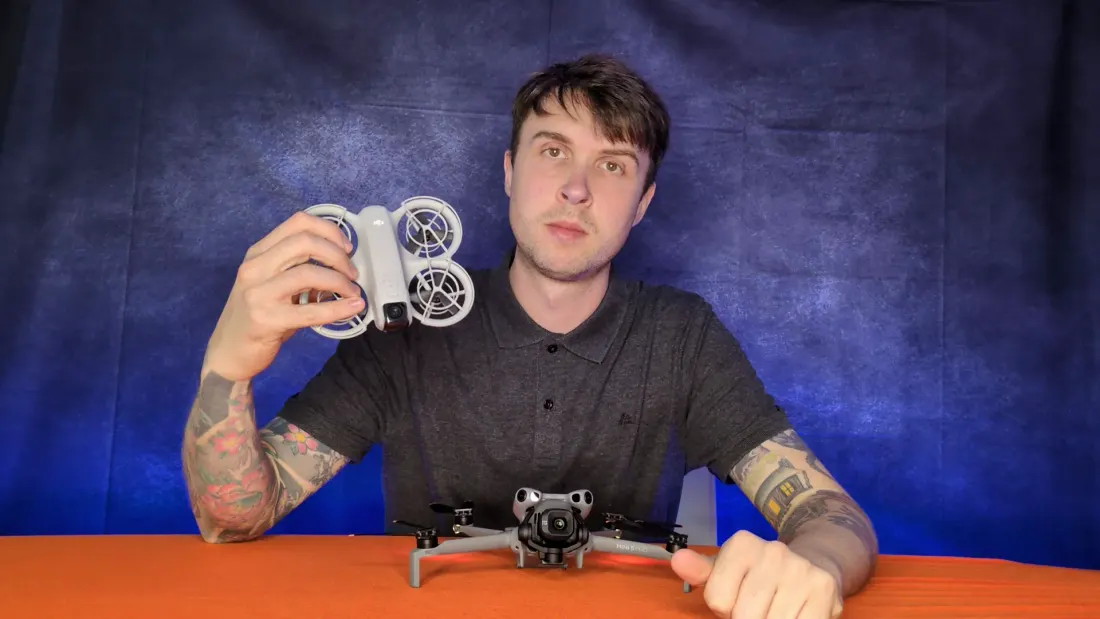
What replaces it in Europe, and the good news inside it
Europe is the easiest destination to get right, because 31 countries run one shared rulebook. EASA member states are the 27 EU countries plus Iceland, Liechtenstein, Norway and Switzerland, and the same drone regulation applies across all of them.
EASA is blunt about who it covers: “All drone operations conducted in the EASA Member States must comply with the Drone Regulation, no matter what the nationality of the operator or remote pilot is.” Being British does not put you outside it, and it does not put you inside it either. It makes you a visitor with paperwork to do.
The specific instruction for someone like you is this: as a non-EU resident you are required to register with the national aviation authority of the first EU country where you intend to operate. You are then issued with a drone operator registration number.
Now the genuinely good news, and it is the single most useful thing in this article if you travel in Europe more than once. That number is portable. EASA’s own answer to whether your registration is recognised across Europe is: “Yes, you as drone operator will receive a unique registration number and this will be valid in all other EASA member State. You cannot register twice.”
So it is one registration, not one per country. Do it once, put the number on the drone, and Spain, Portugal, Italy, France, Greece and the rest are covered by the same number. Note the second half of that sentence too — you cannot register twice, so the answer to “should I just register in every country I might visit” is no.
WHAT TRAVELS, AND WHAT DOES NOT
| WHAT YOU HAVE | OUTSIDE THE UK |
|---|---|
| UK Operator ID | Not valid. You register again with the authority where you are going. |
| UK Flyer ID | Not valid, and not recognised. EASA says there is no mutual recognition, so their training is required. |
| A2 Certificate of Competence | A UK certificate for UK sub-categories. Assume it counts for nothing until the destination tells you otherwise. |
| The C0 or C1 label on the drone | A European mark, read by European rules. This is the one piece of your paperwork that is worth more abroad than at home. |
| The drone itself | Unchanged. Everything around it changes completely. |
The one nobody expects: your Flyer ID does not travel either
Registering is the administrative half. The other half is proving you are competent to fly, and this is where people assume a UK test counts for something.
It does not. EASA states that there is not yet any mutual recognition established between EASA and other countries in the drone domain, and that “the training or qualification obtained in your country of residence will not be accepted in the EU. Therefore, you will have to undergo the required training before you can fly your drone.”
Read that carefully, because it is doing two things. It is telling you that your Flyer ID is scenery, and it is telling you that the fix is available — the training is online, the national authority runs it, and for the lightest sub-category it is not a large undertaking. It is simply a thing you have to have done before you fly, not something you can sort out on the beach.
Does going under 250 grams get you out of it?
Partly, and it is worth being precise, because “sub-250g needs no paperwork” is the most repeated wrong thing on the internet.
In the EU the exemption from registering as an operator applies to a drone that weighs less than 250 g and has no camera or other sensor able to detect personal data, or that is a certified toy. Every drone in this guide has a camera. Every one of them therefore needs the operator registered, including the 151-gram Neo 2.
What being under 250 grams does buy you is enormous, though. It is what puts you in the lightest sub-category — the one where you may fly over people at all — and it is what keeps you out of the tests, distances and class conditions that heavier drones bring. Almost every country that regulates drones at all treats the light ones more gently than the heavy ones. The line is not always at 250 grams, and the leniency is never total, but the direction is the same nearly everywhere. That is the entire reason a sub-250-gram drone is the right answer for a holiday even when a heavier one takes better pictures.
The label on the drone is worth more abroad than at home
Somewhere on your drone, or in its app, there is a small class label: C0, C1 or C2. It is a European mark, and the manufacturer declares it. DJI lists the Mini 4 Pro, Mini 3, Flip and Neo 2 as C0, the Air 3S and Avata 2 as C1, and the Mavic 4 Pro as C2. The Mini 5 Pro is listed as C0 or C1 depending on the bundle — the one sold with the standard battery is the C0, and that is the one you want.
In Europe that label is what decides your sub-category, so it is doing real work for you the moment you land. At home its status is temporary. Under CAA rules you can fly a C-class drone as its UK equivalent only until 31 December 2027; from 1 January 2028 it becomes a legacy drone here and falls back to plain weight rules. That change catches the two C1 drones in this guide, the Air 3S and the Avata 2, both of which will need an A2 Certificate of Competence to fly near people in the UK from that date.
It is worth being clear about what that date is and is not. It is a UK timetable. It tells you nothing whatsoever about the rules where you are going, and a European C1 label goes on doing its European job regardless. One more thing to check on the box rather than assume: any new model placed on the UK market from 1 January 2026 must carry a UK class mark, and a UK mark is not a European one. If you are buying specifically to travel, look at which label is physically on the drone you are handed.
Two more things Europe expects
Insurance. EASA says drone operators are always required to have insurance above 20 kg, and that most member states also mandate third-party insurance for lighter drones, so you should consult the national regulation. In the UK, hobby flying does not legally require it. Abroad, treat third-party drone insurance as something to check for your destination rather than something you have already dealt with.
Age. The general EU minimum age for a remote pilot is 16, with exceptions including flying a class 0 drone in the lightest sub-category, and individual states are allowed to set their own minimum age. If you are buying this as a family drone, that is worth reading before you assume a fourteen-year-old can fly it in Spain.
Outside Europe there is no shared system at all
Everything above stops at the edge of the EASA states. Beyond them there is no common rulebook, no portable number and no pattern you can rely on. From official UK government travel advice, the answers I have seen fall into roughly three shapes:
- Register locally, in a system that has nothing to do with aviation authorities you have heard of. Thailand, for example, requires registration with its telecommunications regulator.
- Apply for permission in advance, from a named ministry or civil aviation directorate, before the drone flies at all.
- Do not bring one. Some countries prohibit importing a drone without prior permission, which makes the airport the problem rather than the flying.
I am deliberately not printing a country-by-country table. These rules change, they are amended without notice, and a stale list is worse than no list because it reads like permission. What I will give you instead, in the next section, is the twenty-minute check that produces the current answer for wherever you are actually going.
One rule that applies at every airport. The CAA asks you never to switch a drone or its controller on while you are travelling through an airport, because it can set off the terminal’s drone detection systems. Land, collect your bag, leave the building, and only then look at it. Checking it over physically is fine. Powering it up is not.
PART THREE
The twenty-minute check to do before you book
Not before you pack. Before you book. If the answer for your destination is “no drones without prior permission”, that is information you want while the flights are still refundable and the drone is still in a shop.
This is the sequence I use. It is four sources, it takes about twenty minutes, and every step ends at an official page rather than a forum thread.
Step 1 — UK Foreign Office travel advice for the country
Start at gov.uk/foreign-travel-advice, pick the country, and read the Safety and security section. This is your own government telling you what it knows about local laws, and where drones are a live issue it usually says so in plain English, with the penalties attached.
It is the fastest way to find the destinations where the answer is simply no.
WHAT THE CHECK ACTUALLY TURNS UP
-
Thailand
“It is illegal to fly a drone in Thailand if it is not registered. You must register your drone with Thailand’s National Broadcasting and Telecommunications Commission (NBTC) within 30 days of entering Thailand or purchasing a drone in Thailand even if you do not intend to fly it.” The stated penalty for an unregistered drone is 100,000 baht, five years in prison, or both.
-
Morocco
“You must get permission from the Directorate General for Civil Aviation to fly a drone. If you do not, you risk fines and confiscation of your equipment.”
-
Egypt
“Do not import, use or produce drones in Egypt unless the Egyptian Ministry of Defence gives you permission beforehand. Anyone who uses or imports drones without permission could get a prison sentence of up to 7 years or a fine of 5,000 to 50,000 Egyptian pounds.” Note which ministry that is — not the civil aviation authority you would think to search for.
Quoted from UK Foreign, Commonwealth & Development Office travel advice, read on 31 July 2026. These are examples of what the check produces, not a summary of world drone law, and they may have changed since. Read the current page for your own destination.
The trap in step one. Silence is not permission. When I ran this check, the travel advice pages for Spain, Greece, Turkey, India and the UAE said nothing about drones at all — and Spain and Greece are EASA member states where you must register as an operator before you fly. A missing paragraph means the Foreign Office has not flagged it, not that there is nothing to do.
Step 2 — if it is a European country, go straight to the EASA list
EASA publishes one page listing the national aviation authority for every member state, with the same four links for each country: where you are allowed to fly, how to register as a drone operator, where the online pilot training and tests are, and how to apply for an authorisation. A handful are still marked as to be confirmed, and some countries go further — Greece splits the registration link into one for residents and one for non-EU visitors, which is the one you would want.
That page is at easa.europa.eu — national aviation authorities, and for a European trip it is genuinely the only bookmark you need. Two of those four links are the two things Part Two told you had expired at the border: the registration, and the training.
Step 3 — if it is not, find the country’s own civil aviation authority
There is no equivalent list for the rest of the world, so this is a manual job: search for the country’s civil aviation authority by name and look for a drone section, which may be filed under “UAS” or “unmanned”. If the site is unclear or not in English, the country’s embassy in London is a legitimate second source, and slower but definitive.
You are looking for four answers: can I bring one in, do I have to register it, do I need permission before flying, and is there a category for very light drones. If you cannot get a clear answer to the first two from an official source, my honest advice is to leave the drone at home rather than gamble the most expensive thing in your hand luggage on an optimistic reading.
Step 4 — check the specific place, not just the country
This is the step people skip, and it is the one that ruins trips. Even where drones are entirely legal, states designate zones where you may not fly, or may fly only with permission. EASA lists the typical examples as national parks, city centres and areas near airports, and requires every member state to publish maps identifying them, usually with a phone app to match.
Look at where you are actually staying. The beach, the old town, the volcano, the national park and the harbour with the pretty boats are, with grim regularity, exactly the places that are restricted. Finding that out from a map at home costs you nothing. Finding it out from a police officer costs you an afternoon at best.
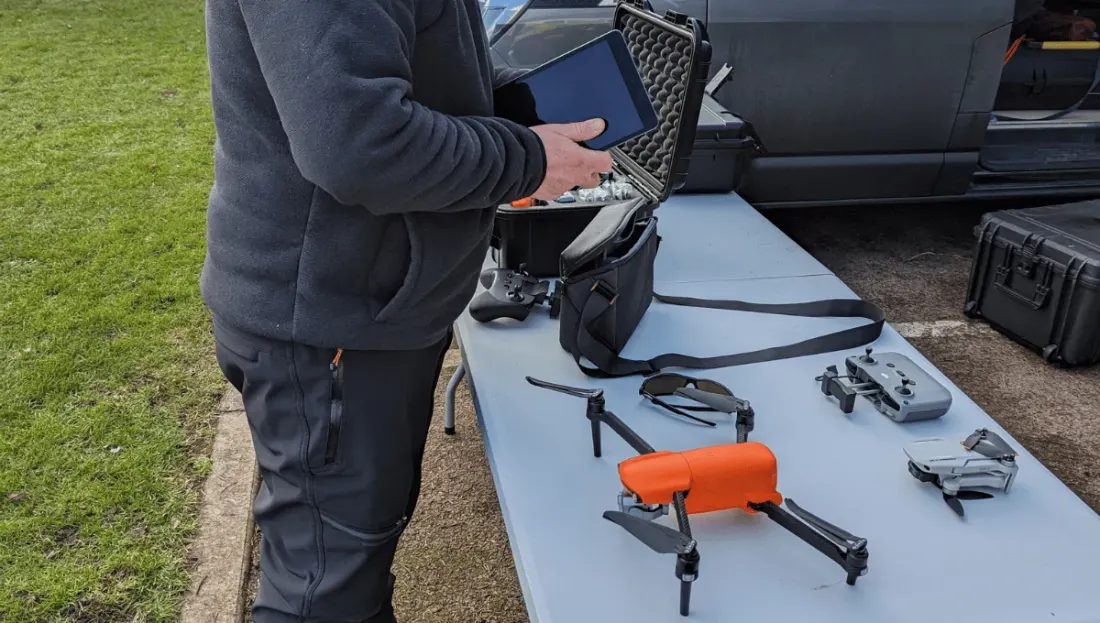
And this is what the other end of the scale looks like. That is a working kit for a paid job — two drones, two controllers, a tablet and a hard case — and every single item in it is a thing you would have to account for at a border. It is a perfectly sensible thing to own. It is a terrible thing to take on a fortnight away, which is most of the argument of this guide in one photograph.
One warning about where you search
EASA carries a fraud notice on its own authority page, because websites exist that will sell you a drone pilot licence for a fee without any exam. Its position is that you always have to take an exam to obtain a remote pilot competency certificate from a recognised aviation authority, and that it is the authority that awards it.
The rule of thumb that follows is simple. If a website is selling you a permit for a country rather than pointing you at that country’s authority, you are on the wrong website. Registration and competency come from the regulator, and in most countries the fee is small or nothing.
THE FIVE QUESTIONS TO ANSWER BEFORE YOU BOOK
- 1. Am I allowed to bring a drone into the country at all?
- 2. Do I have to register, and can I do it from home before I go?
- 3. Do they want a competency test of their own, and how long does it take?
- 4. Is there a lighter category, and does my drone fall inside it?
- 5. Is the specific place I am staying inside a zone where I cannot fly anyway?
Answer all five from official sources and the drone stops being a risk and becomes luggage. Answer none of them and you are gambling.
What to have on you when you land
Assuming the answers came back workable, the packing side of this is short. Put the destination’s operator registration number on the outside of the drone, the way you already do at home. Keep the confirmation email and any competency certificate on your phone and screenshotted, because roaming data at an airport is a bad plan. Carry the insurance document if the country requires one.
And keep the drone switched off from your front door to the hotel room. The battery rules for the flight itself — which bag they go in, how many spares, watt-hour limits — are a separate subject with its own traps, and I have written that up properly in the travel drone guide.
PART FOUR
What I’d pack, and what I’d check first
What I’d pack: the DJI Mini 5 Pro. It is not the cheapest thing here and it is nowhere near the most expensive. I have flown it, it is the drone that goes in my bag when I leave the country, and I would not spend long deciding.
It wins on the only two things that decide this. It weighs 249.9 grams, which puts it in the lightest category anywhere that has one, and it carries a C0 label, which is the mark European rules are written around. And it does that while carrying a one-inch, 50-megapixel sensor — the thing you actually travelled for. Until this drone existed, that camera meant crossing the 250-gram line and inheriting every test and condition on the other side of it.
What I’d check first: the four steps in Part Three, in that order, before the flights are booked. Foreign Office advice, then either the EASA authority list or the country’s own regulator, then the map for the exact place you are staying. Twenty minutes. The drone is a purchase; the check is the thing that decides whether the purchase was a good idea.
What it really costs in year one
The number on the box is not the number you pay, and a drone you take abroad has one line the others do not. Here is the honest shape of year one with the Mini 5 Pro, in the order you will meet it.
Start with the drone, in whichever configuration is cheapest when you look. Then the only figure on this page I can give you and stand behind, because it is a government fee rather than a product: £12.34 for the UK Operator ID, every year, fixed by the CAA. The Flyer ID that goes with it is free.
After that it is a short list of small things that all cost money. A second standard battery — the standard one, not the Plus, because the Plus is what costs you the sub-250-gram status and therefore the entire reason you bought this drone. A card big enough that you are not deleting footage in a hotel room. A fireproof pouch for the batteries, which is what the airline wants to see. And an allowance for the crash, because you will have one eventually, and a propeller arm replaced early is a far cheaper lesson than a drone left in the sea.
Then the two lines I genuinely cannot put a number against, and neither can anyone else writing about this: the destination’s own registration, which is free in some countries and a modest fee in others, and third-party insurance, optional in the UK for hobby flying but mandated by most EASA member states. Those two are the ones you research rather than guess, and they are the reason a holiday drone is not simply a shopping decision.
Added up, the extras come to something in the region of a fifth again on top of whatever the drone itself costs — before you have paid a penny to anyone abroad. That is the shape to have in your head, rather than the figure on the product page.
If this is your first drone
Buy the DJI Flip instead. It costs well under half what the Mini 5 Pro does, and it is still under 249 grams, still carries the same C0 label, and its built-in propeller cages mean you can launch it off your hand on a beach and hand it to someone else without wincing. It is 165 mm tall folded and it is the fiddly one to pack, but if what you actually want is to find out whether you enjoy this at all, the difference between the two covers a decent share of the trip you are taking it on. You can always spend more next year once you know.
If somebody else is carrying the bag
Then the DJI Air 3S, at roughly half as much again as the Mini 5 Pro, is the better camera, and a 70 mm lens changes what a coastline looks like more than any sensor upgrade will. Go in knowing what you are accepting: 724 grams puts you outside the light category, so the destination’s competency requirements start to apply, its batteries are three times the size, and in the UK its C1 label stops counting on 1 January 2028. If you are travelling to photograph somewhere, that is a reasonable trade. If you are going on holiday, it is not.
The one I’d leave at home
The Antigravity A1 — and I want to be fair to it, because it is the most interesting object in this guide and I would happily own one for flying at home.
But look at what it asks of a trip. Its headline figure is 39 minutes of flight, and that needs the high-capacity battery, which takes it from 249 grams to 291 grams — out of exactly the category that makes a drone easy to take abroad. So you either fly it on the standard battery at 24 minutes, or you carry a drone that has quietly reclassified itself. Add goggles, add a controller, and add a pile of unusual-looking hardware that costs more than anything else in this guide bar the Mavic to explain at an unfamiliar customs desk, and you have bought yourself a set of problems in exchange for 360 footage you will crop to a normal rectangle anyway.
I would buy one for home. I would not put it in a suitcase.
And if what you actually want is one really good set of aerial pictures of somewhere specific — rather than a new hobby, a second registration and a competency test in another language — owning is rarely the cheaper answer. You can hire a qualified drone pilot who already holds the paperwork for the airspace they fly in.
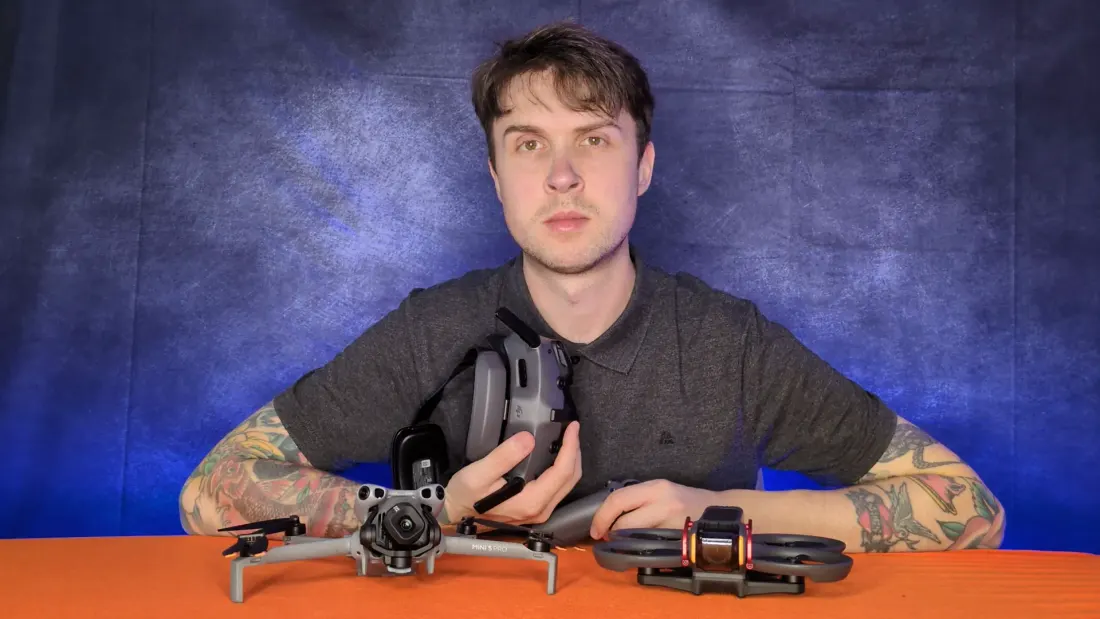
Taking a drone abroad: the questions I get asked most
What is the best drone to take abroad in 2026?
The DJI Mini 5 Pro. It weighs 249.9 g, which is the lightest category almost every country operates, it folds into a bag you already own, and it carries a one-inch 50-megapixel camera that nothing else this small can match. Spend less and the DJI Flip does the same job with a smaller sensor for well under half the money. Whatever you buy, the drone is the easy half of this decision — the paperwork at the other end is the half that catches people out.
Does my UK drone registration work abroad?
No. The UK Civil Aviation Authority states plainly that UK Flyer IDs and Operator IDs are not valid outside the UK, and that you must meet the national requirements of the country you are travelling to. In an EASA member state you register as a drone operator with that country’s own aviation authority — for a non-EU resident, EASA says that means the first EU country where you intend to operate. Your UK Operator ID buys you nothing once you land.
Do I need to register a drone under 250 grams in Europe?
Almost certainly yes, if it has a camera. EASA’s exemption from operator registration applies to drones under 250 g that have no camera or other sensor able to detect personal data, or that are certified toys. Every drone in this guide has a camera, so every one of them needs the operator registered. Being under 250 g changes what you are allowed to fly over — it does not exempt you from signing up.
Can I take a drone on holiday to any country?
No, and this is the part worth checking before you book rather than before you pack. Rules run from routine registration to a permit you must apply for in advance to an outright ban on importing one. As an example of how serious it gets, UK Foreign Office travel advice for Egypt, checked on 31 July 2026, says not to import, use or produce drones without prior permission, and that doing so risks a prison sentence of up to seven years. Check your own destination against official sources before you commit to taking a drone.
Is my UK Flyer ID recognised in the EU?
No. EASA states that there is no mutual recognition between EASA and other countries in the drone domain, and that training or qualification obtained in your country of residence will not be accepted in the EU — so you have to take the required training there before you fly. A UK Flyer ID proves you passed a UK test. Outside the UK it is a certificate for a scheme that does not apply to you.
What should I check before booking a holiday with a drone?
Four things, and it takes about twenty minutes. Read the UK Foreign Office travel advice for the country and its safety and security section. If the destination is an EASA member state, use EASA’s national authority list, which links every country’s registration, training and flight-authorisation pages. If it is not, find that country’s own civil aviation authority. Then check the geographical zones for the specific place you are going, because the beach or the old town may be restricted even where drones are legal.
The short version
If you read all of that and still want me to just say it: buy the DJI Mini 5 Pro. It is the only drone here with a proper one-inch camera that stays under 250 grams, which is the number every border reads. Then spend twenty minutes on the Foreign Office page and your destination’s aviation authority before you book, and register with them rather than assuming your UK number counts.
Affiliate links · costs you nothing extra · full disclosure
I do not print prices in this guide. They move constantly, and the only figure worth trusting is the one on the retailer’s own page at the moment you buy — which is where every link here goes. Weights, class labels, battery figures and flight times are from manufacturer specification pages, checked 31 July 2026. UK regulatory detail is from the UK Civil Aviation Authority; European detail from EASA; country examples from FCDO travel advice, read on 31 July 2026. None of this is legal advice, and rules abroad change without notice — always check the current official source for your own destination. Comparison specifications from DroneCompare, licensed under CC BY 4.0. Amazon links are affiliate links. Further reading: my full camera drone guide, the airline battery rules for travel, and what to carry when you are walking.