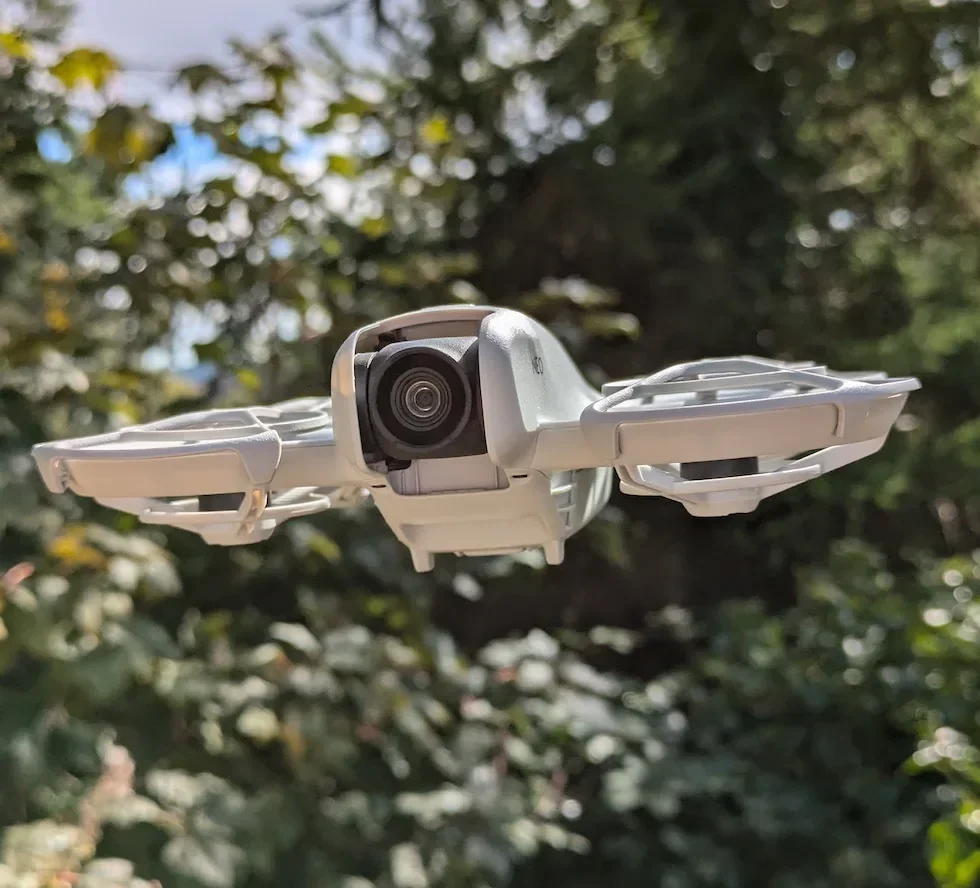
Drone Following You? What To Do Under UK Law

Peter Leslie
16 Apr 2026
Key Takeaways
- Most drones that appear to follow you are doing something else — a filming shoot, an inspection, or a hobbyist practising ActiveTrack — and happen to share your path for a minute or two
- The operator must stay within Visual Line of Sight, so whoever is flying the drone is almost always standing within a few hundred metres of you
- Genuine intentional surveillance by a private individual is rare, but harassment, stalking and UK GDPR give you real legal routes when it does happen
- Call 101 for non-urgent suspicious flying and 999 only if there is an immediate threat to life
- From 1 January 2026, UK1, UK2, UK3, UK5 and UK6 drones must broadcast Remote ID, which a free phone app can read to pull the Operator ID out of the air
- You cannot jam, hack or shoot down a drone under any circumstances — the legal response is always to document, identify, and report
A drone has drifted past your house for the second evening in a row, hovered on the corner of your street, and turned the way you turned. The honest answer is that the overwhelming majority of drones you see are not following you in any meaningful sense. They are doing their own job — a roof inspection two gardens over, a property video for an estate agent, a hobbyist chasing the sunset — and the geometry of their flight path happens to cross yours.
That said, a small number of flights are genuinely problematic, and UK drone laws give you a clear path for every kind of case. This guide is about telling the difference, documenting what you see, and handing the right information to the right authority.
Most drones that look like they are following you are flying a legitimate job that happens to share your path
Every professional drone flight in the UK runs under rules that force the operator to stay within Visual Line of Sight of the drone and to keep certain distances from people. Commercial video shoots, roof inspections, survey passes and real-estate flights all involve a drone hanging in a particular direction for several minutes. If you are walking below that line of flight, it will genuinely look as though the drone is tracking you.
Hobbyist flying adds a second layer. Modern drones have features such as ActiveTrack, which lets a drone pilot lock onto a moving subject — a cyclist, a runner, a car — and follow it automatically for the duration of a clip. The person being filmed is almost always the operator or a friend of the operator, but from the ground the drone looks like it is stalking a path.
The practical check is simple. Look around. The operator is legally required to be within direct sight of the drone, so someone holding a controller is almost always within a few hundred metres of you. If you can see the drone, you can usually find the person flying it.
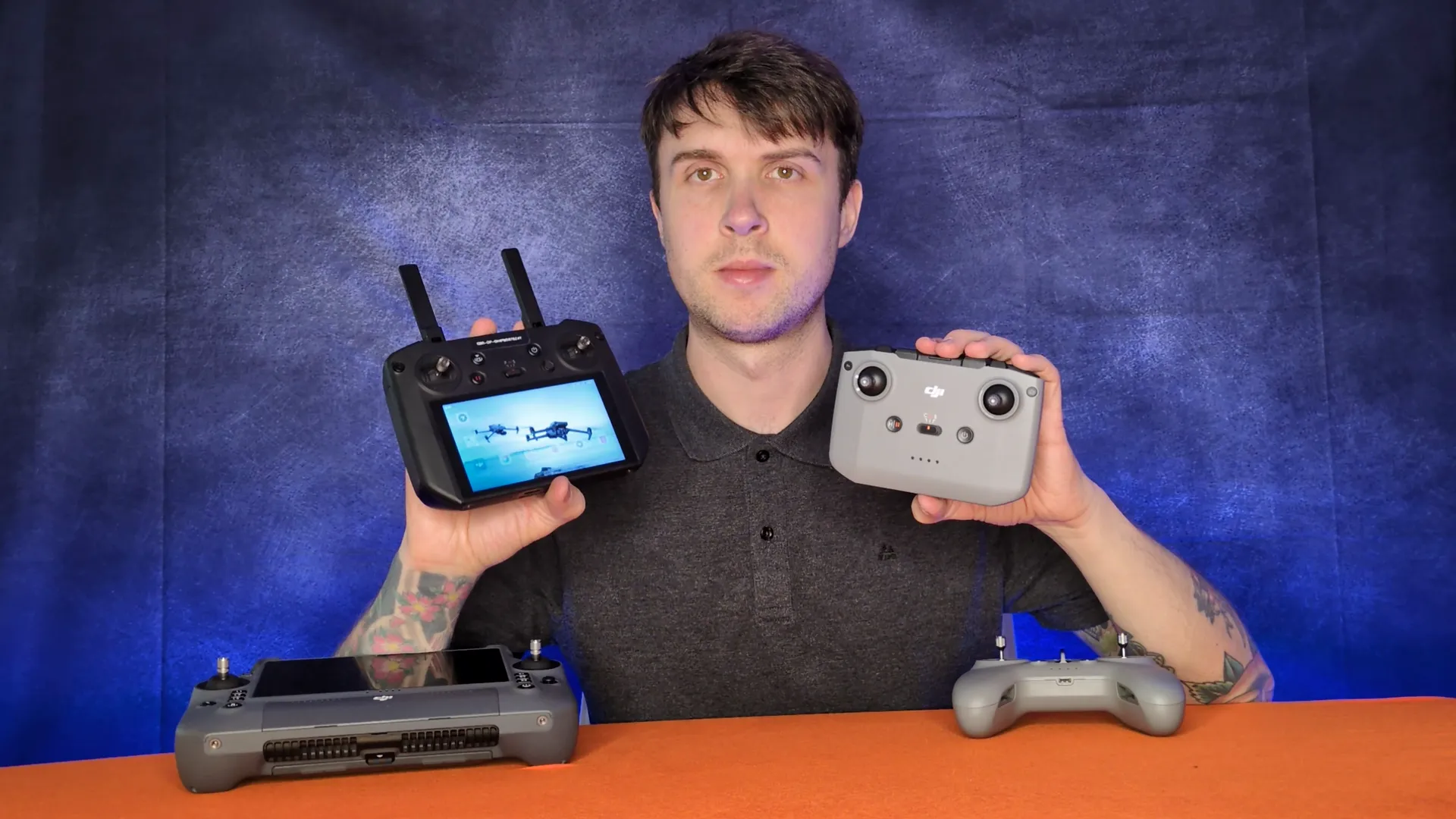
Behaviour — not a single sighting — is what separates legitimate flight from harassment
A single sighting tells you almost nothing. A pattern tells you a great deal. The behavioural indicators that turn a drone in the sky into a drone following me come down to repetition, adaptation and timing.
Repetition is the first test. The same drone in the same spot on different days is a different story from a drone you saw once on a Saturday afternoon. Adaptation is the second: a drone that changes position when you change position, that follows when you round a corner, that descends when you step under a tree, is not running a survey grid. Timing is the third: a drone that arrives at the exact window your routine is most predictable — the school run, the dog walk, your balcony coffee — is displaying the signature of intentional targeting rather than coincidence.
None of that is conclusive on its own. Estate agents revisit the same property. Surveyors return to re-fly a site. Police drones operate over specific areas at specific times. What separates nuisance from harassment is whether the behaviour is still consistent with someone doing a job, or whether it is consistent only with someone watching you.
The Protection from Harassment Act and UK GDPR give you two separate legal routes
The legal overlay here is broader than most people realise. Drone-specific rules in the Drone and Model Aircraft Code sit alongside general criminal and data-protection law, and both can bite.
The Protection from Harassment Act 1997 makes it a criminal offence to pursue a course of conduct that amounts to harassment — two or more incidents directed at the same person. Using a drone to repeatedly follow, watch or photograph someone without consent fits that definition cleanly once the pattern is established. The stalking offences that sit alongside it apply where the conduct causes fear of violence or serious alarm and distress.
The UK General Data Protection Regulation and the Data Protection Act 2018 handle the camera side. The CAA is explicit that drone photos or recordings in which people can be identified fall under UK GDPR, whether the person was captured intentionally or not. Filming into a private garden or through a window is usually enough to breach the CAA's privacy guidance, which states that using a drone camera where people can expect privacy, such as inside their home or garden, is likely to break data-protection law.
These two frameworks give you separate levers. Harassment is a police matter. Data-protection breaches can be pursued through the Information Commissioner's Office on top of any criminal complaint.
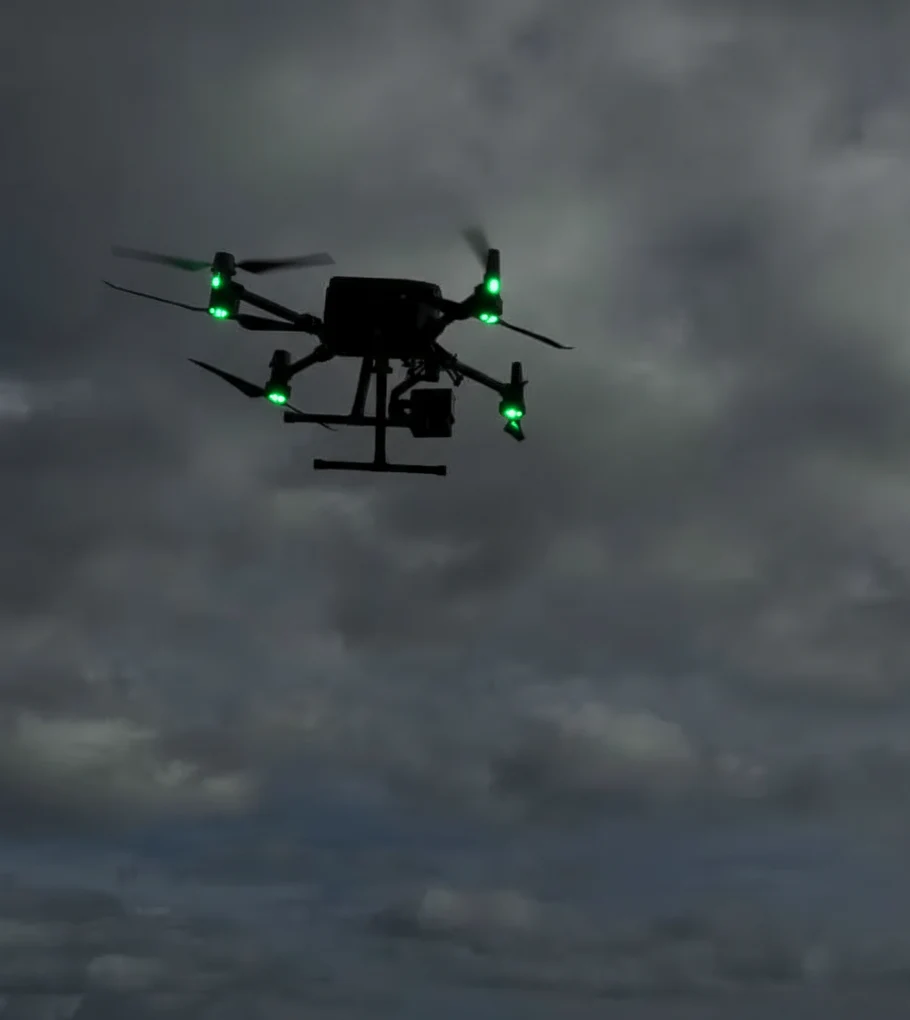
Documentation turns a feeling into evidence — capture six specific things
If you decide to report, the quality of your evidence is what determines whether anything happens. Police and the CAA can only act on specifics. The six fields worth writing down the moment you see the drone are consistent across every report form they use.
| Field | What to record |
|---|---|
| Date and time | Start and end of each sighting to the nearest minute |
| Location | Your position plus the direction the drone was relative to you |
| Drone description | Size, colour, number of rotors, any visible lights or markings |
| Flight path | Direction of travel, rough altitude, whether it hovered or tracked |
| Operator sighting | Where the person holding the controller was standing, if visible |
| Media | Photos or video on your phone, timestamped automatically |
A single report with four of those fields will land much harder than three emotive reports with none of them. If the pattern continues, keep a simple running log. The repeat entries are what convert an isolated sighting into the course of conduct that harassment law requires.
Call 101 for suspicious flying and 999 only if there is immediate danger
The reporting thresholds are clearer than most people think. The CAA's own guidance on privacy and illegal drone use sets out the split.
Call your local police on 101 for non-urgent suspicious flying — repeated passes over your property, a drone hovering over a garden in a way that feels intentional, flights that look like they are breaching the 50-metre people-buffer or ignoring the 120-metre altitude ceiling. Call 999 only if there is an immediate danger to life or a threat of violence — for example a drone carrying a visible object being flown aggressively at people.
A third route sits behind those two. Safety incidents and near-misses — a drone that almost strikes someone, damages property, or interferes with a helicopter — must be reported to the CAA through the ECCAIRS 2 occurrence-reporting service. That is the route for anything that could have caused harm, even if the flight passed without injury. Police handle intent. The CAA handles airspace safety.
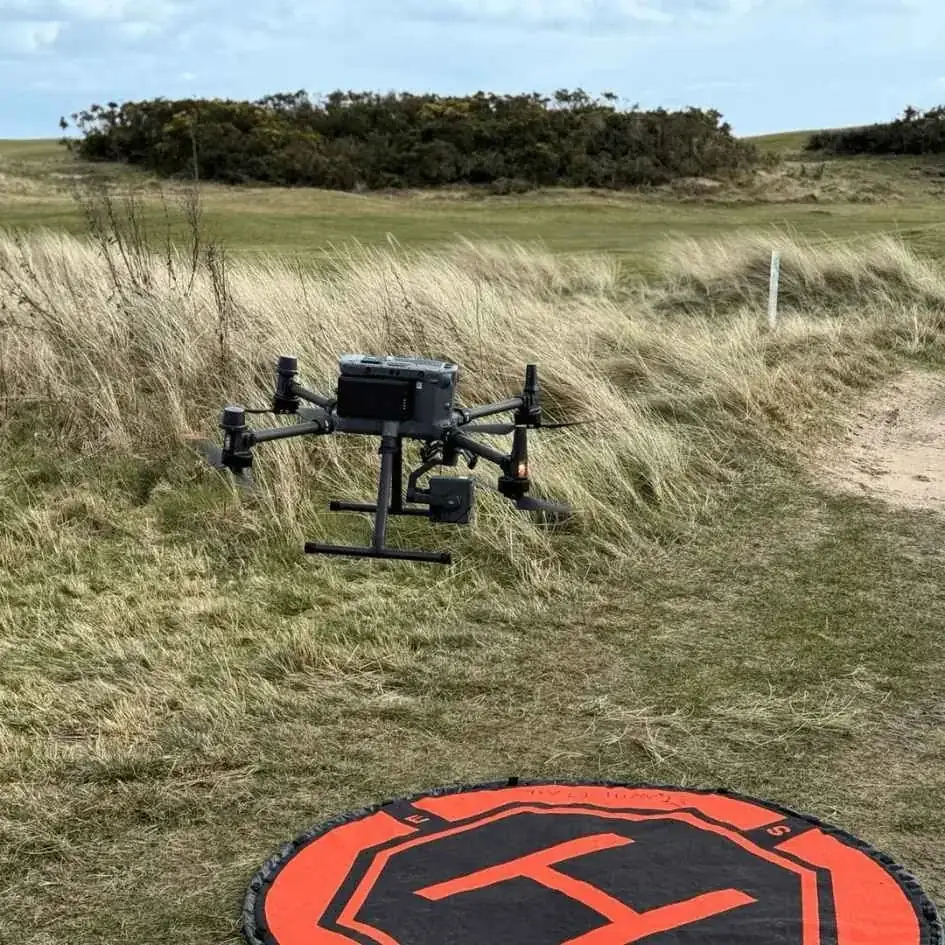
Remote ID broadcast has turned every UK1, UK2 and UK3 drone into something you can identify with a phone
The biggest change to this conversation arrived on 1 January 2026. From that date, every UK1, UK2, UK3, UK5 and UK6 drone must be broadcasting Remote ID during every flight, and from 1 January 2028 the requirement extends to UK0 drones over 100 grams with a camera, UK4 model aircraft, legacy drones and privately built drones above the same threshold.
What Remote ID broadcasts is useful to you. Each flight transmits the Operator ID, the drone's serial number, the drone's position and altitude, its route, the remote pilot's position and an emergency-status flag. A free phone app — Bluetooth-based scanners are widely available — can receive that broadcast from a drone flying nearby, and will show you exactly where the drone pilot is standing and the ID the drone is registered to.
Remote ID does not give you the operator's name directly. Only the CAA and authorised bodies such as the police can convert an Operator ID into a person. What it does give you is a verifiable identifier to hand to the police when you report, plus a map fix on where to find the drone operator. For the deeper walk-through of how the broadcast works in practice, the identify a drone operator guide covers the full workflow.
You cannot jam, hack or shoot down a drone under any circumstances — the legal response is always document, identify, report
The part that trips people up most is what they are not allowed to do. Drone jammers are a criminal offence to possess, sell or use under the Wireless Telegraphy Act — the ban applies to civilians even when the drone being jammed is clearly operating unlawfully. Shooting down a drone is criminal damage, is extremely dangerous because of falling debris, and in a residential area will usually add firearms offences on top.
Interfering with the operator physically is also not the answer. The guidance from both police and the CAA is to let the authorities investigate. A falling drone can cause serious injury, and a confrontation that escalates puts you on the wrong side of the law regardless of how unreasonable the operator was being.
The pattern that actually works is dull but effective. Document the sightings with the six fields above. Read the Remote ID broadcast if you can. Report through 101 or 999 depending on the threshold, and through the ECCAIRS 2 occurrence-reporting service if there is a safety angle. Police have the power to seize the drone, demand the footage and bring charges. Your job is to give them the evidence that lets them do it.
The honest summary is that the overwhelming majority of drones you see are flying lawfully, and the small minority that are not will be caught much faster with a proper report than with anything you could do yourself. Remote ID has closed a gap that used to frustrate everyone, and the legal framework — harassment, UK GDPR, the Drone Code — gives you a clear path once the pattern is on paper.
Got a specific scenario you want covered — a hovering drone near your flat, an ongoing pattern you are trying to document, a question about the Remote ID app? Drop a note to peter@hiredronepilot.uk and I will come back to you directly. If you prefer the video version of this explainer, the comments are open on YouTube.
References
Primary source material for this article is the UK Civil Aviation Authority. External links open in a new tab.
- UK CAA — Concerns about privacy and illegal use of drones · 101 / 999 reporting thresholds, privacy expectations, crowds and airport restrictions
- UK CAA — The Drone and Model Aircraft Code (CAP2320) · 50-metre people buffer, 120-metre altitude ceiling, VLOS requirement
- UK CAA — Remote ID (RID) · 1 January 2026 and 2028 mandatory broadcast dates, data fields transmitted, privacy limits
- UK CAA — Privacy Rules When Flying Drones · UK GDPR and Data Protection Act 2018 duties for drone camera operators
- UK CAA — Reporting Serious Incidents and Near Misses · ECCAIRS 2 occurrence-reporting route for safety-related incidents
- UK CAA — UK Regulatory Framework for Drones · Air Navigation Order 2016 and the UK UAS Regulations
Peter Leslie
Founder & GVC Drone Pilot
Peter is the founder of HireDronePilot. With thousands of logged commercial flight hours, he writes about drone technology, commercial surveying tactics, and UK aviation compliance.
Connect on LinkedIn