Shooting Down a Drone in the UK: Every Offence You Commit

Peter Leslie
9 Sept 2025
Key Takeaways
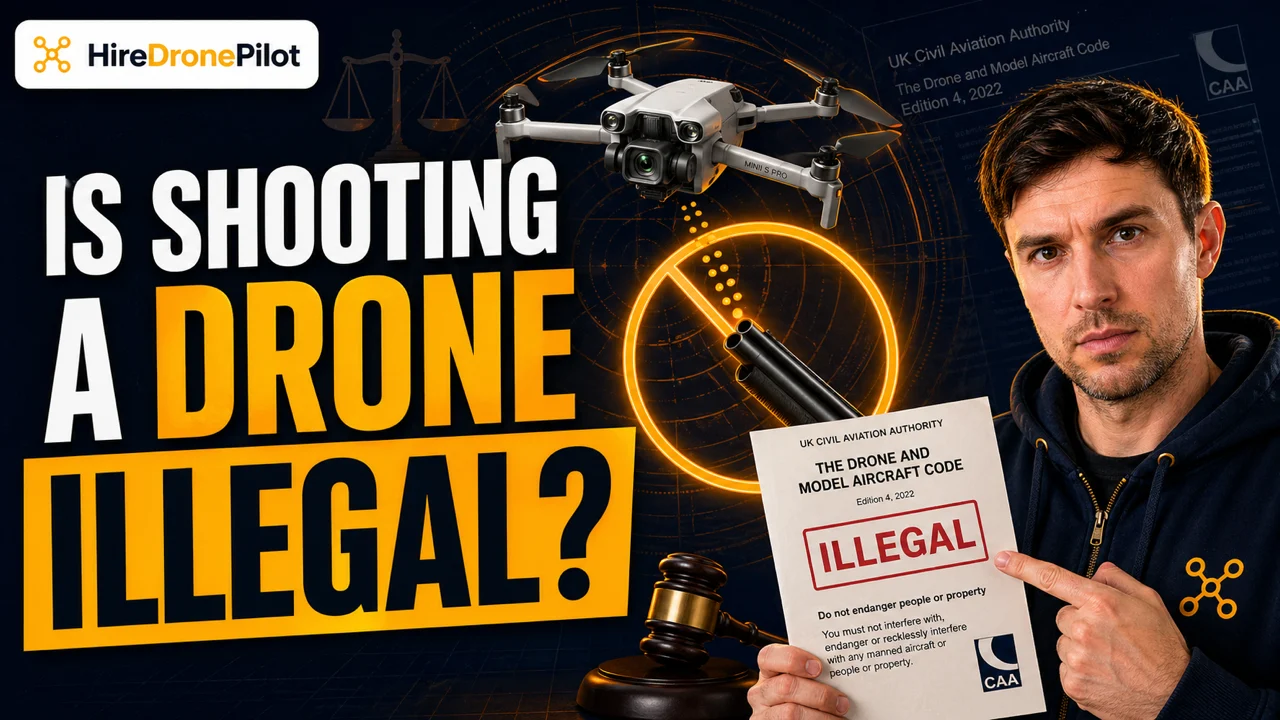
- Shooting down a drone in the UK is illegal, and a single shot typically triggers three separate offences, not one
- Destroying someone else's drone is criminal damage under the Criminal Damage Act 1971, before any aviation law is even considered
- A drone in flight is an aircraft in law, and interfering with it risks endangering an aircraft under the Air Navigation Order 2016 — up to five years in prison
- Firing a shotgun, air rifle, or any firearm to bring a drone down almost always breaches the Firearms Act 1968 on top of the aviation and damage offences
- Netting, hacking, and jamming sit in the same legal bin as shooting, and jamming is a separate Wireless Telegraphy Act 2006 offence
- The legal route for an intrusive drone is documentation, a 101 call, and the Information Commissioner's Office — not a trigger
A drone hovering low over your garden is a genuinely annoying thing. I have had my own flights called in by the neighbours of a client more than once, and the instinct to do something about the intruder is very human. The instinct to reach for a shotgun is not only dangerous, it is one of the fastest ways in UK law to turn yourself from a complainant into a defendant.
Shooting down a drone in the UK is illegal. Full stop. What most people miss is that the act is not one offence — it is a stack of them, each one prosecuted separately, each one with its own penalty. This guide walks through the full legal stack that lands on you, where professional drone pilots and their clients actually draw the line, and the handful of lawful tools a property owner does have.
A single shot at a drone typically triggers three separate offences, not one
The phrase "is it illegal to shoot down a drone" assumes there is one rule to break. There is not. A shotgun blast that brings a drone down in a suburban garden hits three different statutes simultaneously, and the Crown Prosecution Service is free to charge under all of them.
The first is criminal damage — the drone is somebody else's property, and you have destroyed it. The second is endangering an aircraft in flight — a drone in flight is an aircraft in UK law, and interfering with one is an aviation offence on the same legal footing as firing at a light aircraft. The third is a firearms offence — discharging a shotgun or air rifle in a public place, or without good reason, is its own criminal matter regardless of what you were aiming at.
Any one of those three is enough to ruin your day. All three at once, with potential Offences Against the Person Act exposure if a pellet comes down on a neighbour, is the kind of paperwork that ends with a custodial sentence rather than a slap on the wrist. That is why the answer from every sensible source — the CAA, the police, every UK drone laws explainer worth reading — is the same short sentence. Do not do it.
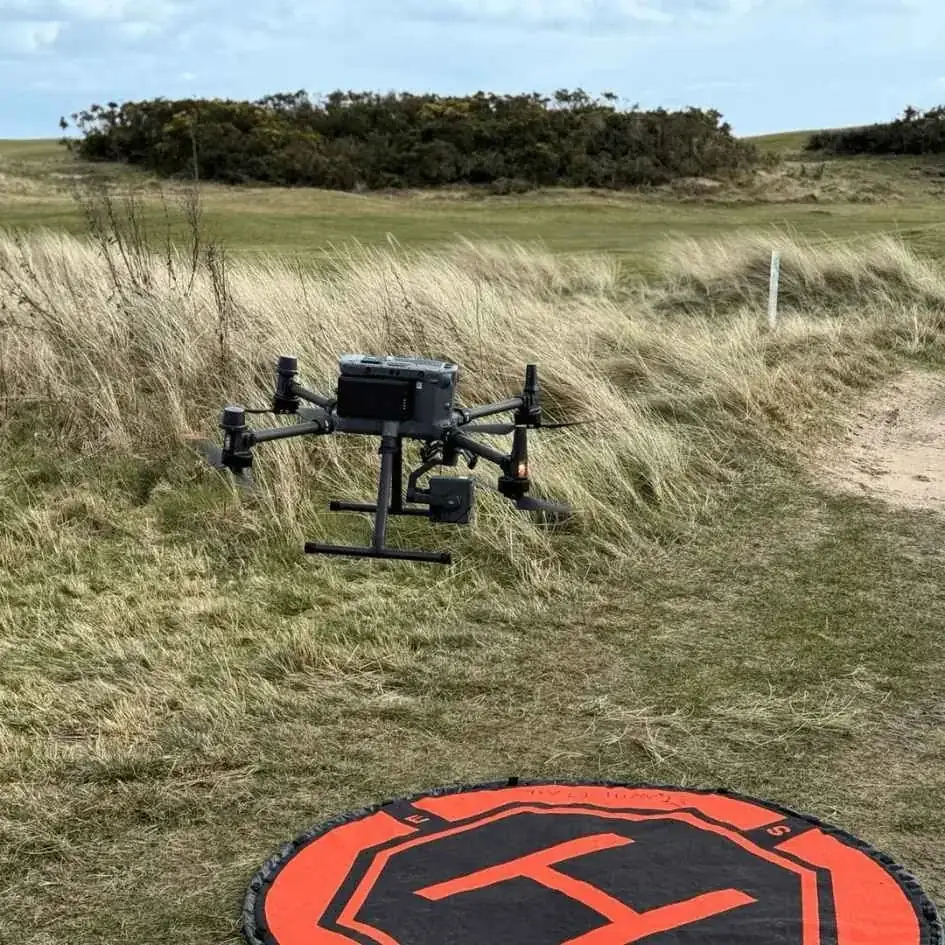
The drone is someone else's property, so destroying it is criminal damage before any aviation law kicks in
Start with the simplest layer. The Criminal Damage Act 1971 makes it an offence to destroy or damage property belonging to another person, without lawful excuse. A drone is property. It belongs to whoever owns and operates it — the hobbyist down the road, the media company on assignment, the surveyor filming a nearby rooftop. Flying it over your garden does not transfer ownership to you, and it does not give you a licence to break it.
The phrase that catches people is lawful excuse. A common assumption is that "the drone was over my land" is a lawful excuse to destroy it. It is not. English aerial trespass law is narrow and does not give a landowner the right to use force against objects in the airspace above. Defence of property has a very high bar, and destroying a remote-controlled drone that poses no physical threat to anyone does not clear it.
The financial exposure on the damage charge alone is meaningful. Commercial drones routinely run into the thousands of pounds — a Mavic 3 Pro, a Matrice 30, a Matrice 350 RTK. The drone operator can pursue civil recovery for the replacement cost of the drone, any data they lost on the card, and the commercial loss if the job was under contract. The criminal case and the civil case run in parallel. You fight both.
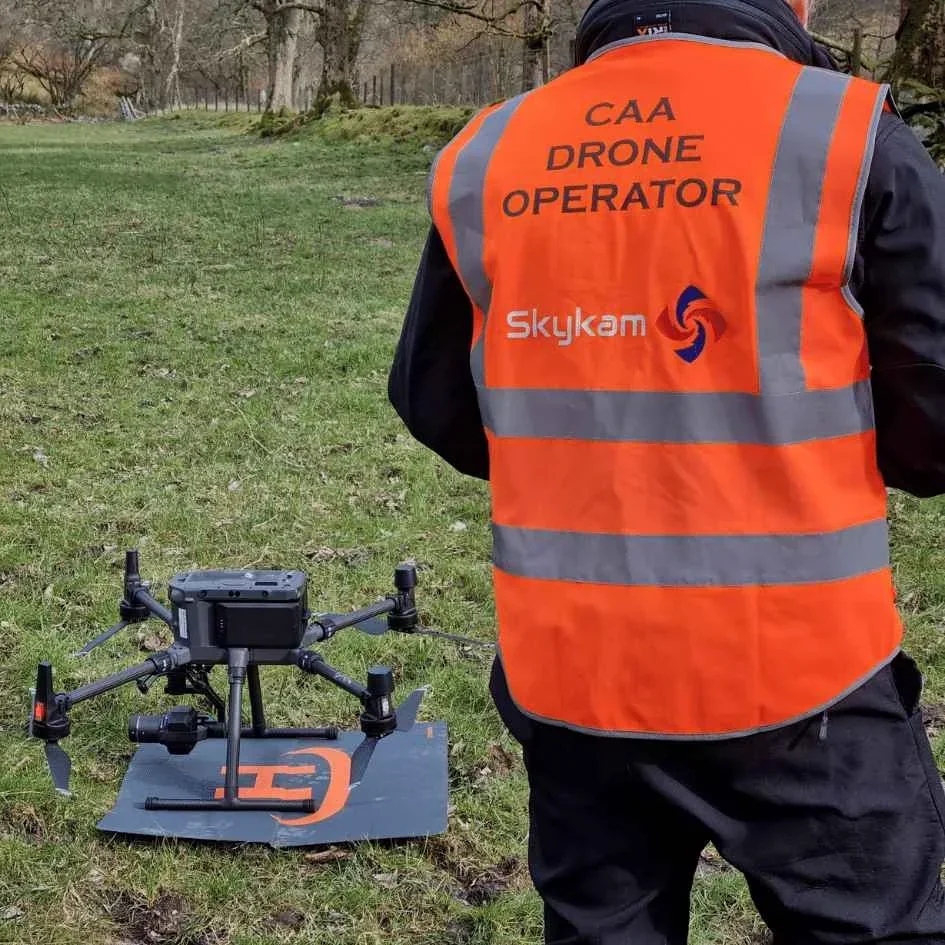
A drone in flight is an aircraft in law, so shooting it down risks endangering an aircraft under the Air Navigation Order 2016
The second layer is where the penalty climbs quickly. The Air Navigation Order 2016 treats an unmanned aircraft as an aircraft for the purposes of UK aviation law. That is not a drafting quirk. It is the legal hinge that makes most of the rules in the Drone and Model Aircraft Code enforceable as criminal offences rather than guidance.
Among those offences sits the one every drone pilot learns on day one of a GVC course — the offence of recklessly or negligently acting in a manner likely to endanger an aircraft. That offence carries a maximum sentence of five years in prison. It applies to the drone operator who flies recklessly, and it applies with equal force to anyone else who endangers an aircraft from the ground. Shooting at a drone in flight is, on its face, endangering an aircraft.
The reach of that offence is wider than most people realise. It is not limited to the drone you fired at. A falling drone, a startled response from the drone operator, or a ricocheting pellet can injure people hundreds of metres away. The prosecution does not have to prove that you intended the danger — reckless or negligent is enough.
Every qualified drone pilot I know treats the five-year ceiling on endangering an aircraft as the line that governs the whole flight — it is the same line that governs anyone who might shoot back.
Firing a shotgun or air rifle to take down a drone is almost always a Firearms Act 1968 offence on top of everything else
The third layer is the one that surprises people most. Even if the drone vanished cleanly, even if nobody got hurt, the act of firing a shotgun or air rifle in most places where a drone is likely to appear is a firearms offence in its own right. The Firearms Act 1968 sits underneath all of this, and it is unforgiving.
Firing a shotgun in a public place, firing within fifty feet of the centre of a highway such that it causes a person to be injured, interrupted, or endangered, and firing without reasonable excuse are each separate offences. A suburban garden with a road nearby, a park, a car park behind a supermarket — all of them disqualify a I was defending my property argument before you reach the aviation charge.
Air rifles are not a loophole. They are still firearms under the 1968 Act. An unsupervised shot from an air rifle that crosses a boundary line into a neighbour's land is its own offence. The penalty scales with the circumstances — a shotgun in a residential area is treated as a more serious matter than the same weapon on a licensed shooting ground — but the baseline is that a firearm discharged in anger at an airborne target almost always breaches something.
Layer in the Offences Against the Person Act 1861 if a pellet or falling debris injures anyone, and the charge sheet stacks fast. By the time a case reaches court, the shot fired at the drone has usually become the smallest count on the indictment.
Netting, hacking, and jamming sit in the same legal bin as shooting — with jamming carrying its own Wireless Telegraphy Act offence
A common reaction to the firearms problem is to look for a tidier tool. Net launchers, anti-drone "cannons", GPS spoofers, commercial jammers — all marketed as the "clean" alternative. Legally, they are not clean. The act of bringing an airborne drone down, by any method, is still criminal damage and still potentially endangering an aircraft, regardless of whether the tool is a twelve-bore or a net gun.
Jamming is worse. A signal jammer operated in the UK is an offence under the Wireless Telegraphy Act 2006, and that offence exists whether the jammer ever disables a drone. The device has to be authorised by Ofcom to be used lawfully, and consumer-grade units are not. Running one in a residential street can knock out your neighbour's Wi-Fi, the mobile network, and a passing emergency radio. The courts treat that as a serious matter.
Hacking into the control link — spoofing GPS, injecting commands, forcing a drone to return to a point you control — adds a Computer Misuse Act 1990 offence to the existing aviation and damage offences. You have made the stack deeper, not simpler.
What a property owner can lawfully do is document, call 101, and escalate to the ICO
The lawful toolkit for a property owner is narrower than the frustration deserves, but it exists and it works. The first step is documentation. Note the date, the time, the altitude as best you can judge it, the direction of flight, and any visible operator on the ground. If you can safely photograph or film the drone, do so — that footage is evidence, and it is legal to record a drone flying over or near your home.
The second step is the correct phone number. Call 101 for non-emergency reports of a drone flying illegally or invasively. Call 999 only if the drone poses an immediate threat to life or safety. The CAA's own guidance on reporting concerns is identical — 101 for nuisance and privacy, 999 for immediate danger. The police are the enforcement body for both the aviation and the privacy side.
If the concern is privacy rather than safety — a camera-equipped drone repeatedly filming into a window, for instance — the Information Commissioner's Office runs a parallel complaint route. A drone camera is treated the same as any other camera under UK GDPR and the Data Protection Act 2018, and the ICO has enforcement teeth against drone operators who ignore the rules. For the more general question of what lawful steps work against a persistent drone, our guide on stopping drones over your own property walks through the practical escalation, and identifying the drone operator covers the mechanics of the Operator ID label and the Remote ID broadcast.
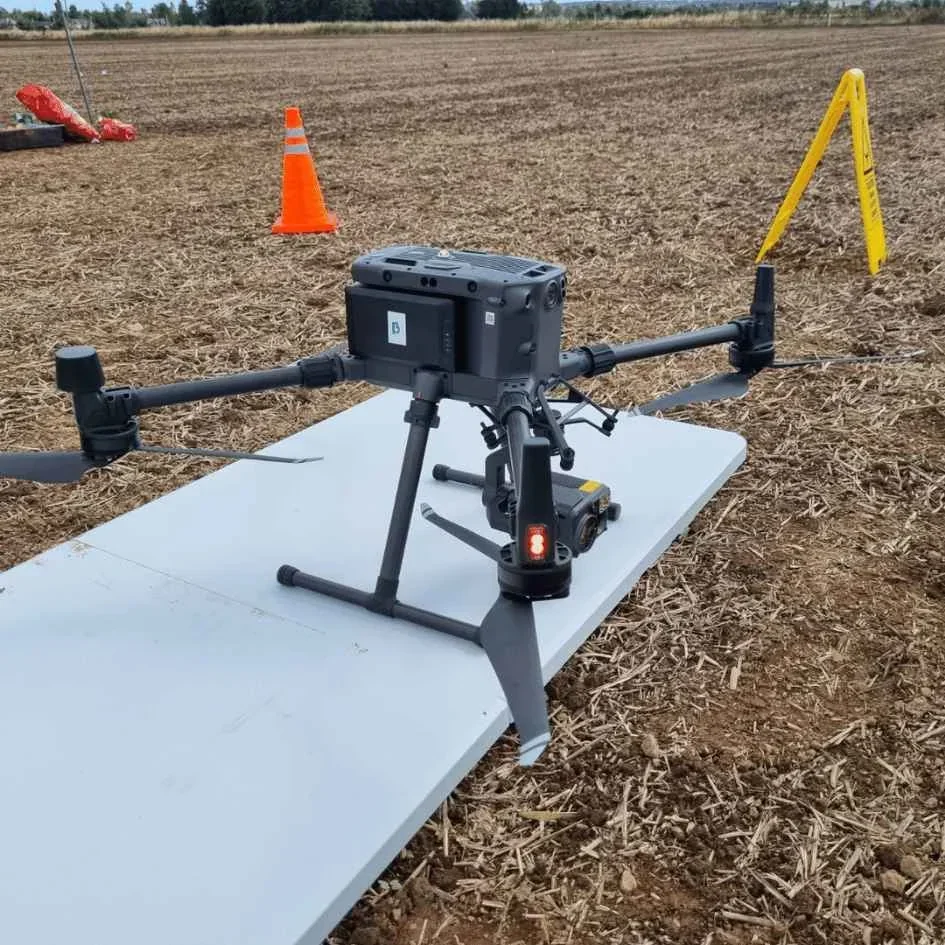
The only people who can lawfully take a drone down are authorised police, MOD, and prison counter-drone teams using Crown exemptions
There is one narrow class of lawful drone takedown in the UK, and it is not available to private property owners at any price. Authorised counter-drone teams — specialist units within police forces, the Ministry of Defence, and His Majesty's Prison & Probation Service — operate under Crown exemptions that disapply the aviation and telecommunications rules the rest of us live under.
Those teams deploy detection arrays, RF jammers, and net-capture systems at prisons, major events, royal visits, and critical infrastructure sites. The legal basis is layered: Crown exemption from Ofcom licensing for authorised jammers, statutory police powers to seize and direct aircraft, and specific provisions in the Air Traffic Management and Unmanned Aircraft Act 2021 that extended police powers over drones.
The important point for a property owner is that the exemption is attached to the role, the authorisation, and the incident — not to the tool. Buying the same net launcher a police counter-drone team uses does not make you a police counter-drone team. Using it lands you in exactly the same legal stack as the shotgun. The takedown tools in those teams' kitbags are only lawful because the person using them holds specific statutory authority, works under a written operational order, and answers to a chain of command.
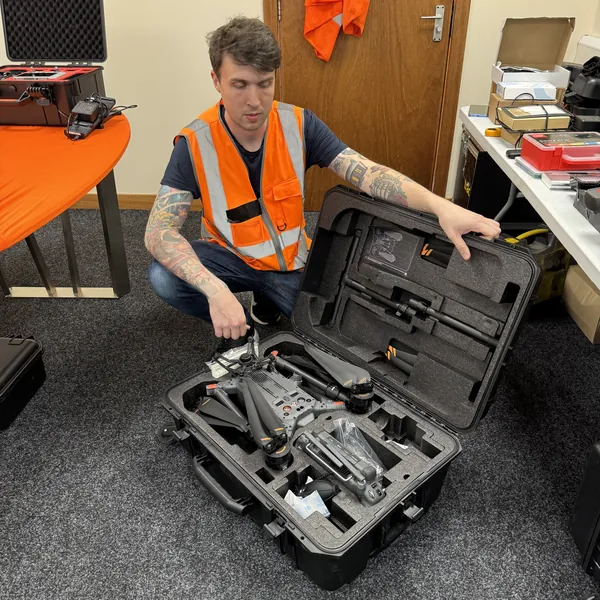
The short version: a drone in UK airspace is someone else's property and an aircraft in law, and the moment you interfere with it you trigger at least one criminal offence, usually three, and occasionally a fourth. Every legitimate route for dealing with an unwanted drone runs through documentation, the police non-emergency line, and — for privacy issues — the ICO. None of them runs through a trigger.
If the problem is a specific neighbour flying into your garden, the piece on a neighbour's drone over a garden walks through the actual remedies in order of likely success. And if the drone is refusing to go away, our piece on a drone that keeps following you covers the escalation path one step further.
Got a specific scenario you want covered — a persistent overflight, a trespass question, a clip of a drone you have already recorded? Drop a note to peter@hiredronepilot.uk and I will come back to you directly. If you prefer the video version of this explainer, the comments are open on YouTube.
References
Primary source material for this article is the UK Civil Aviation Authority, with supporting references to the underlying statutes. External links open in a new tab.
- UK CAA — UK Regulatory Framework for Drones · Air Navigation Order 2016, endangering an aircraft, UAS Regulations
- UK CAA — The Drone and Model Aircraft Code (CAP2320) · drones treated as aircraft in law, five-year ceiling for endangering an aircraft
- UK CAA — Concerns about privacy and illegal use of drones · 101 and 999 reporting routes, where drones may and may not fly
- UK CAA — Drone regulations for police forces · police exemption from UK Reg (EU) 2019/947, ANO 2016 endangerment duties still apply, enforcement powers
- Criminal Damage Act 1971 (legislation.gov.uk) · destroying or damaging property belonging to another
- Firearms Act 1968 (legislation.gov.uk) · offences around discharge of firearms in public places and without reasonable excuse
- Air Traffic Management and Unmanned Aircraft Act 2021 (legislation.gov.uk) · police powers to stop and search, and to require a drone to land
Peter Leslie
Founder & GVC Drone Pilot
Peter is the founder of HireDronePilot. With thousands of logged commercial flight hours, he writes about drone technology, commercial surveying tactics, and UK aviation compliance.
Connect on LinkedIn