GDPR for Drone Pilots: What UK Law Actually Requires

Peter Leslie
16 Apr 2026
Key Takeaways
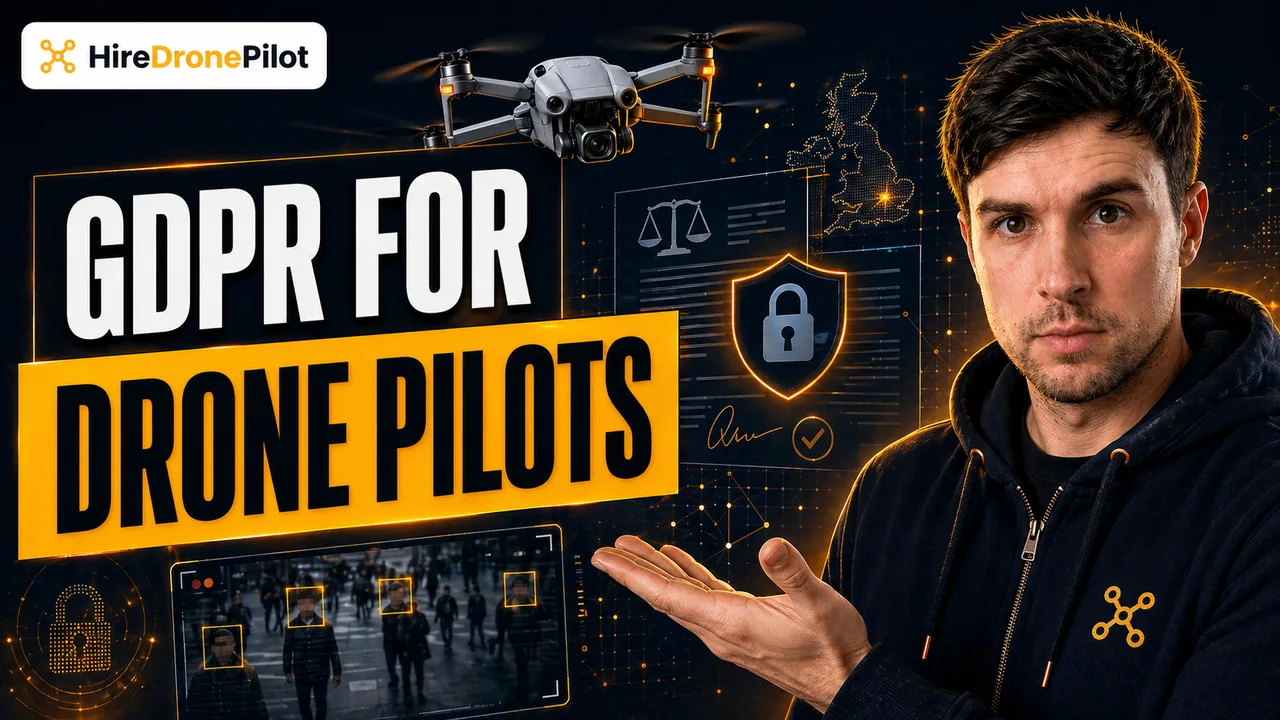
- The Civil Aviation Authority treats a drone camera the same as any other camera under UK GDPR and the Data Protection Act 2018
- Footage in which a person can be identified is personal data, whether you captured them on purpose or by accident
- A recreational flight kept inside the household exemption is out of scope, but the moment the footage is published or monetised the commercial rules apply
- Commercial drone operators need a named lawful basis under Article 6, a retention policy, and secure storage, not just a GVC
- The Information Commissioner's Office is the regulator for data complaints, and a data protection impact assessment is the right starting point for any job over a residential area
Most drone pilots in the UK know the airspace rules inside out and barely think about data protection. That is the wrong way round. The Civil Aviation Authority does not enforce privacy law — the Information Commissioner's Office does — and the regulator's starting point is simple: a drone camera is treated the same as any other camera.
If your footage contains an identifiable person, UK GDPR and the Data Protection Act 2018 apply, and the responsibilities that come with being a data controller land on you. This guide walks through when that happens, when it does not, and what a compliant commercial drone photography job actually looks like on the ground.
The regulator treats a drone camera the same as any other camera under UK GDPR
The phrase you want in your head is the one the CAA uses on the privacy rules page: any photos or recordings in which a person can be identified may be subject to the General Data Protection Regulation and the Data Protection Act 2018. The regulator makes no special allowance for the fact that the camera happens to be flying.
That means the same body of law that covers CCTV, bodycams and smartphone video covers a Mavic at 80 metres. The regulator is the Information Commissioner's Office, not the CAA. The CAA polices the airspace; the ICO polices the data. On a complicated job you will deal with both.
A useful corollary: if you would not film a person at street level with a DSLR without a thought, do not assume the drone grants you permission you never had before take-off.
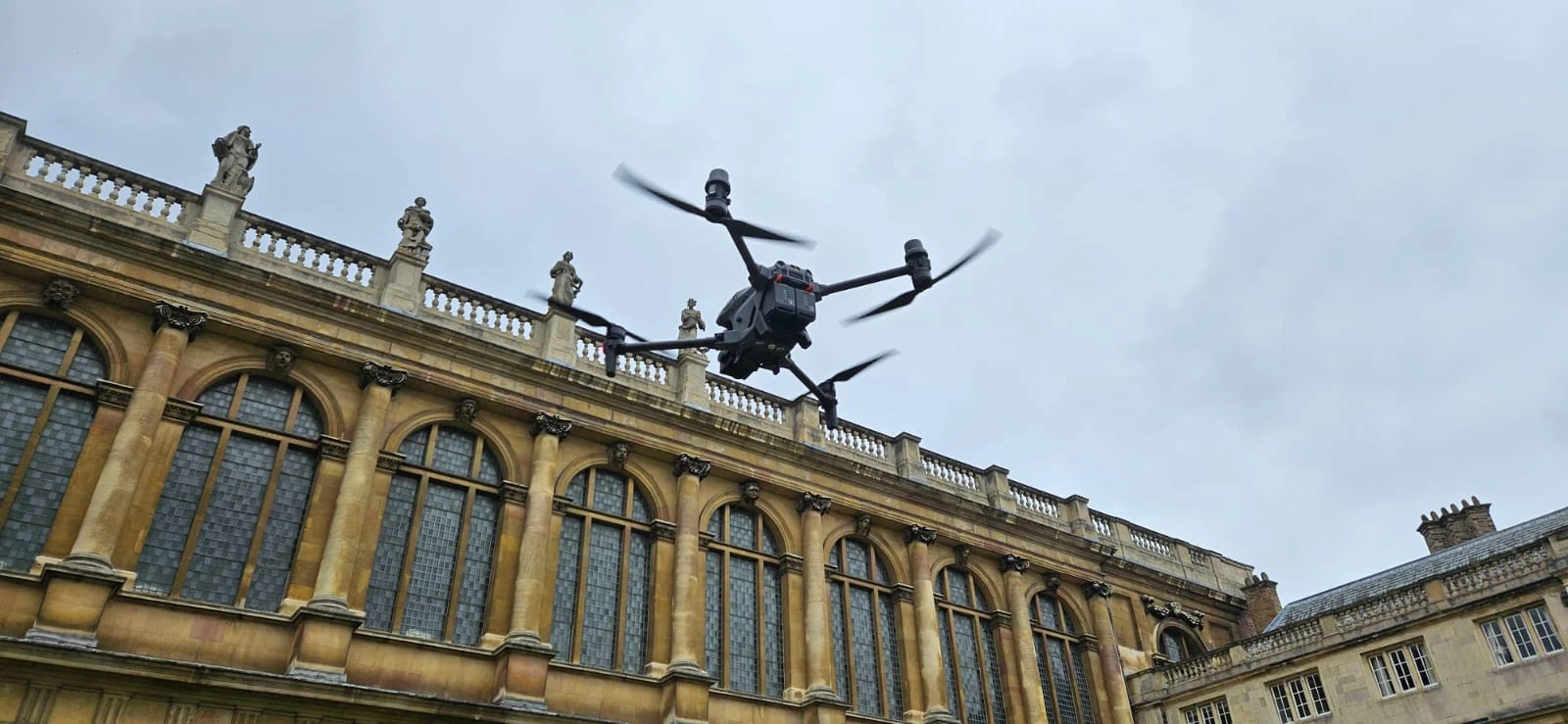
Personal data is triggered the moment a person becomes identifiable in the frame — on purpose or by accident
The regulator draws no line between intentional and incidental capture. The CAA's own wording is explicit: this includes whether you capture the people in the photos or recordings intentionally or unintentionally. If a face, a numberplate, a tattoo, or a unique piece of clothing makes a person recognisable, you are processing personal data.
In practice, that turns the distinction that actually matters into a different one: purposive versus collateral. A purposive capture is one where the job was to record that person. A collateral capture is one where a recognisable person wandered into frame during a job aimed at something else — a roof, a chimney, a paddock, a field of solar panels.
Both are in scope, but the risk profile is different. Purposive capture needs a clear lawful basis, a retention plan, and usually a notice before the shutter opens. Collateral capture needs data minimisation — crop, blur, discard the frames you do not need, and do not hoard footage on the off chance it is useful later.
The high-zoom long-lens problem is worth calling out here. A drone can hover at altitude and pull in a recognisable face from a long way off. The regulator is alert to that. If your camera can read a car's numberplate from 60 metres, the regulator expects you to know that and to have decided, before the flight, whether you intend to use that capability.
Recreational flying sits inside a household exemption, but publishing the footage ends it
UK GDPR carves out an exemption for processing that is purely personal or household in nature. A hobbyist filming a family barbecue in the back garden, or a recreational flight over a private Welsh valley with nobody else in frame, is generally not in scope.
That exemption is narrower than most recreational drone pilots assume. The moment the footage leaves the household — uploaded to a public YouTube channel, posted to Instagram, sold as stock, shared as a monetised reel — the exemption falls away and the commercial rules apply. The regulator treats publication as the act that pulls the processing out of the private sphere.
The same is true if the flight is not really personal in the first place. A hobbyist shooting a neighbour's garden party for a friend is not inside the exemption. A recreational drone pilot flying a public beach and posting the result to a monetised channel is not inside the exemption either.
When in doubt, default to the assumption that UK GDPR applies. It is the safer footing, and it is almost always the correct one the moment a camera comes out over a public space.
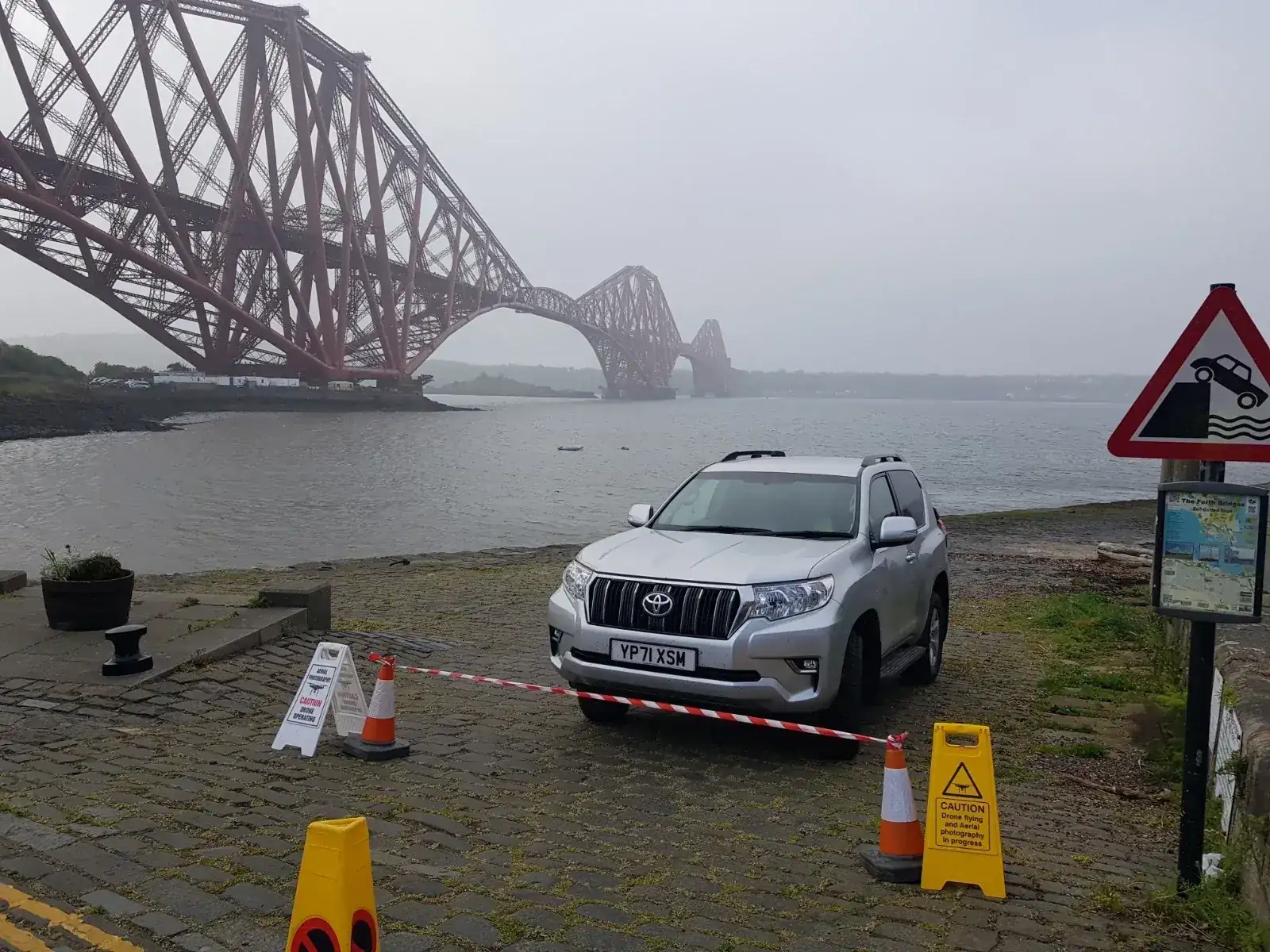
Commercial operators need a named Article 6 lawful basis, not just a GVC
A GVC proves you can fly the drone safely. It does not grant you a lawful basis to process personal data. Under Article 6 of the UK GDPR, every piece of personal data you capture on a commercial job needs one of six lawful bases, and on a typical drone shoot that comes down to three.
Consent is clean and unambiguous when it is practical, but it rarely is. You cannot meaningfully consent a public square. Consent works when the capture is purposive and the subjects are a known group — a wedding, a corporate launch event, a known cast on a film set.
Legitimate interests is the working basis for most commercial jobs where capture of uninvolved people is collateral rather than the point. A roof inspection, a property marketing film, a construction progress flight — in each case the controller has a real interest, that interest is balanced against the rights of incidental subjects, and the route works provided data minimisation and transparency are in place.
Public task is reserved for public authorities — police, local councils, fire services — acting under a statutory function. It does not apply to private contractors working for them.
Whichever basis you use, you have to be able to name it. Legitimate interests written down in a one-page balancing exercise, kept on file, is a world apart from I reckoned it would be fine.
Data minimisation and retention are the two rules that catch drone operators most often
Data minimisation is the principle that you only capture and keep what you genuinely need for the stated purpose. For a roof inspection, that means the roof — not a slow 360 pan of the whole street.
On a practical job that translates into a handful of habits. Fly the shot you briefed, not a bigger one. Pull the camera back in on the ingress and egress. Crop the uninvolved neighbours out of the deliverable rather than handing the client the raw card. Where the capture has strayed into gardens you did not plan to survey, either blur the frames or delete them at the ingest stage.
Retention is the other half of the same rule. UK GDPR has no fixed retention period for drone footage — the principle is only that you keep data for as long as the stated purpose requires, then delete it. The CAA's own line is blunt: store images safely, delete anything you do not need.
In practice I set a default retention window at the start of every job — typically 30 or 60 days for an inspection, longer only where the client has a documented reason — and I treat the card, the local backup, and the cloud mirror as three places the same footage has to be deleted from when the window closes. Encrypt the drives. Password-protect the cloud folders. Log who accessed what.
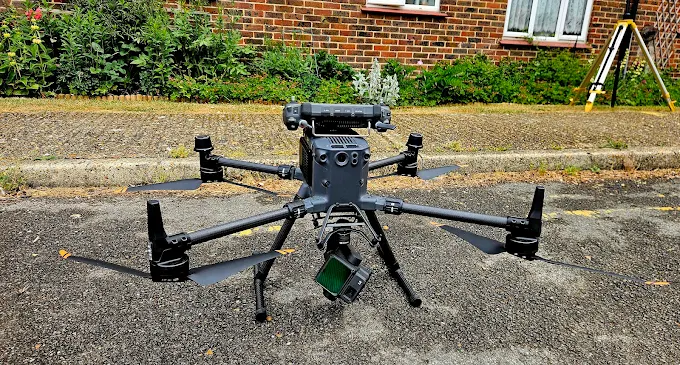
Any job over a residential area wants a data protection impact assessment before the shutter opens
A data protection impact assessment — DPIA — is the document UK GDPR expects when the processing is high-risk. For a drone pilot, the clearest trigger is systematic monitoring of a public or residential area. A roof inspection over a terraced street, a construction progress film over an inhabited site, a survey flight that will overfly uninvolved gardens — every one of those jobs earns a DPIA.
The DPIA does not need to be a corporate monster. A short document naming the controller, the purpose, the lawful basis, the categories of personal data, the retention period, the safeguards, and the residual risk is enough for a standard commercial flight. Keep it on file alongside the site survey and the risk assessment.
The other thing a DPIA forces you to do is think about transparency in advance. That is where flyers to the affected households, a temporary sign at the site, and a privacy notice on your website earn their keep. On a residential job I post a flyer through each adjacent front door the week before, stating the date, the two-hour flight window, the purpose, and a contact address. In two years it has stopped more complaints than every other compliance control put together.
The ICO is the route of complaint, and the enforcement teeth are real
If a member of the public believes a drone operator has breached their privacy, the route is a complaint to the Information Commissioner's Office, not the CAA. The ICO handles the data side; the CAA handles the airspace side; the police handle immediate safety and criminal matters.
The ICO has a graduated enforcement toolkit — information notices, reprimands, enforcement notices, and, at the top end, monetary penalties. The ceiling for serious breaches is significant. More commonly, the regulator issues a reprimand and a corrective order. Either way, a reprimand on file is a live problem for a commercial drone operator selling to enterprise clients, who will ask about it at procurement.
There is a second, quieter consequence that catches drone operators more often than an ICO fine. A privacy breach invalidates the client's trust, and often the contract. A data incident on a construction site — a homeowner seeing themselves on a drone feed uploaded to a client portal — ends that relationship faster than a near miss with a pigeon.
The short version: the regulator treats your drone exactly like any other camera, and the responsibilities that come with being a data controller are not optional. A named lawful basis, a retention window, a DPIA for residential work, and a privacy notice that a homeowner can actually find are the four things that separate a compliant commercial drone operator from one who is a single complaint away from a reprimand.
For the wider legal picture around what you can and cannot fly, start with the UK drone laws explainer. And for the specific question of flying over a neighbour's land, the guide on what a drone can and cannot legally see covers the overlap between trespass, nuisance, and data law.
Got a specific scenario you want covered — a residential inspection, a monetised hobby channel, a DPIA template question? Drop a note to peter@hiredronepilot.uk and I will come back to you directly. If you prefer the video version of this explainer, the comments are open on YouTube.
References
Primary source material for this article is the UK Civil Aviation Authority and the Information Commissioner's Office. External links open in a new tab.
- UK CAA — Privacy Rules When Flying Drones · same-as-a-camera principle, intentional vs unintentional capture, data controller obligations
- UK CAA — Concerns About Privacy and Illegal Use of Drones · public complaint routes, privacy-as-camera comparison
- ICO — A Guide to the Lawful Bases (Article 6) · consent, legitimate interests, public task
- ICO — Data Protection Impact Assessments (DPIAs) · when a DPIA is required, template content
- ICO — Make a Complaint · public route for reporting a privacy breach
- UK CAA — The Drone and Model Aircraft Code (CAP2320) · general flight responsibilities referenced alongside privacy rules
Peter Leslie
Founder & GVC Drone Pilot
Peter is the founder of HireDronePilot. With thousands of logged commercial flight hours, he writes about drone technology, commercial surveying tactics, and UK aviation compliance.
Connect on LinkedIn