UK Drone Remote ID: What It Broadcasts, Who Hears It

Peter Leslie
Updated 16 Apr 2026
Key Takeaways
- Remote ID is direct-broadcast only in the UK — the drone transmits over the air, it does not phone home over the internet
- From 1 January 2026 it is mandatory for UK1, UK2, UK3, UK5 and UK6 class-marked drones in every operating category
- What the drone broadcasts is the Operator ID, serial number, live position and height, the Remote Pilot location, and an emergency-status flag
- Anyone with a receiver app can see the flight data — only the CAA and authorised organisations can link the Operator ID back to a person
- UK0, UK4, legacy drones and privately built drones weighing 100g or more with a camera are brought in on 1 January 2028
- Retrofit is allowed but is at each manufacturer's discretion — the CAA does not oversee it, so an older drone may need a firmware update or an add-on module
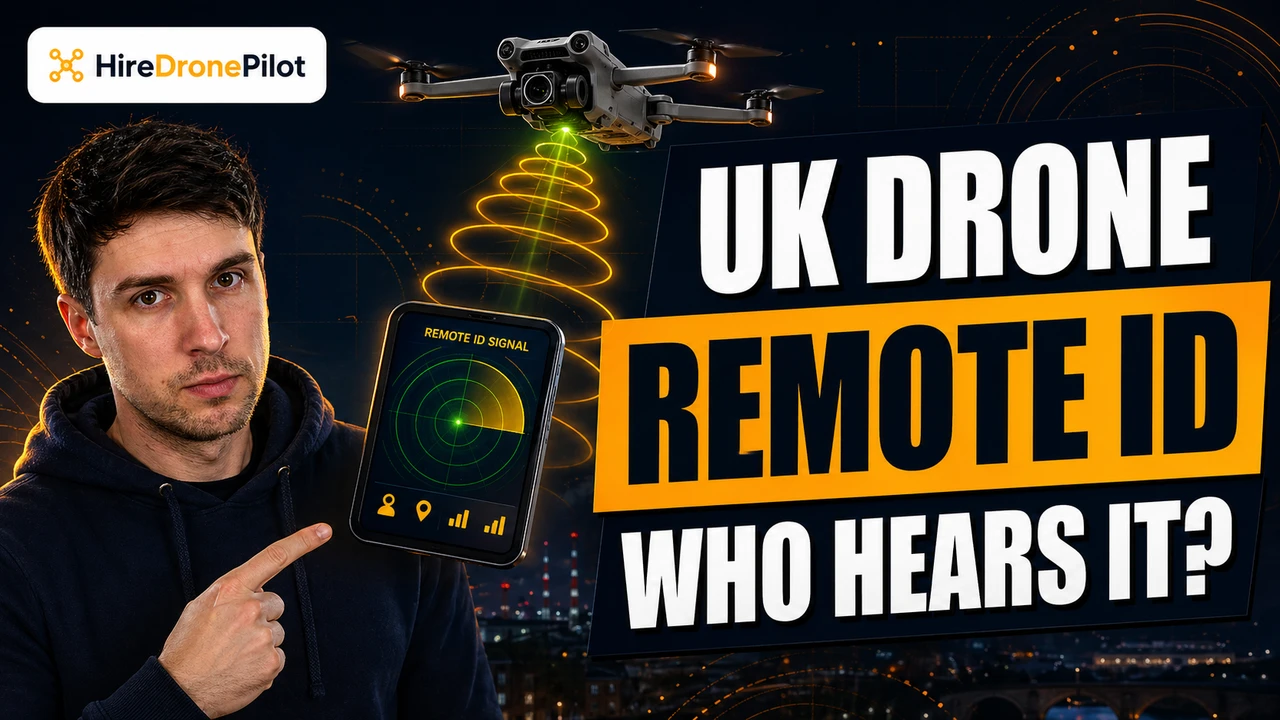
Remote ID is the UK system that makes a drone shout its own registration number, position and height into the air while it flies. It is a short-range radio broadcast, not a mobile-data upload, and since 1 January 2026 it has been mandatory for most class-marked drones flown in UK airspace.
Most of the confusion I see from drone pilots is about what Remote ID actually transmits, who on the ground can pick it up, and how it stacks on top of the Flyer ID and Operator ID you already hold. This is the plain-English walkthrough.
The UK chose direct-broadcast Remote ID, not network Remote ID
There are two ways a country can implement Remote ID. Network Remote ID pushes the flight data up to a central server through a mobile or internet connection, and authorities query the server. Direct-broadcast Remote ID sends the data straight out of the drone over short-range radio — typically Wi-Fi or Bluetooth — and anyone inside receiving range picks it up locally.
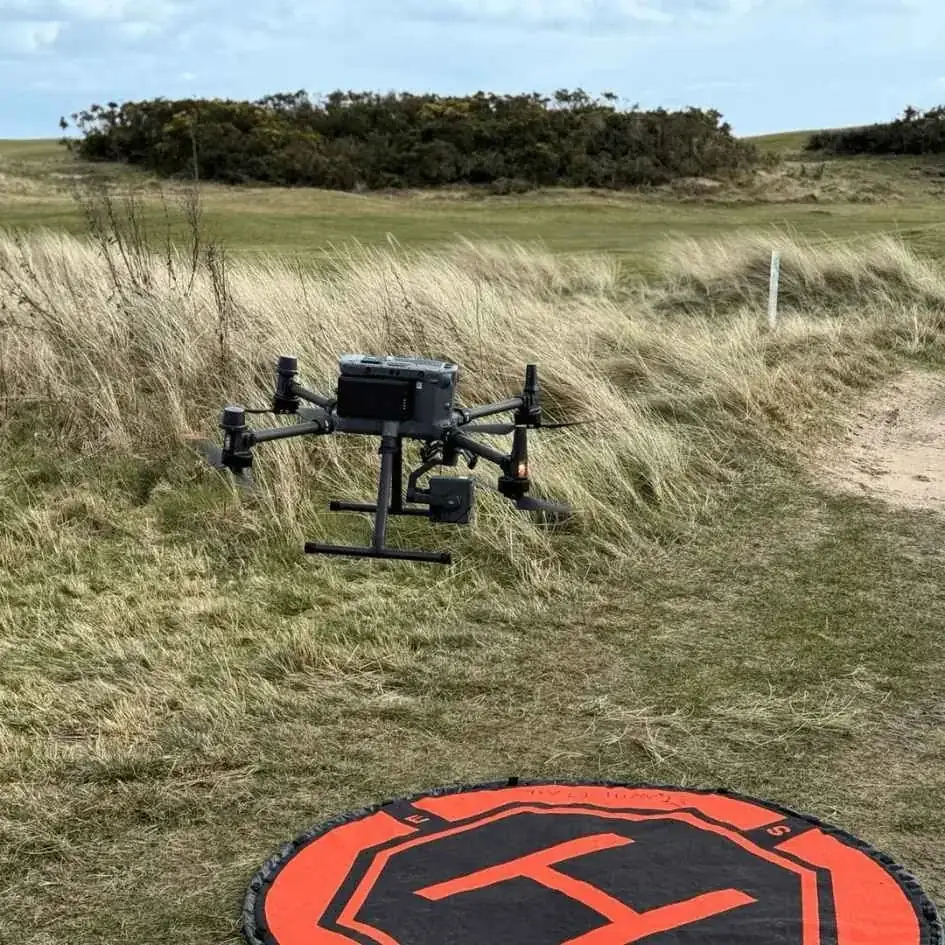
The UK has gone with direct broadcast. Your drone behaves like a local radio beacon: it transmits a periodic data packet that identifies itself and describes what it is doing, and any nearby device with the right app decodes it. There is no server call, no SIM card requirement, and no internet dependency in the air.
The legal basis sits inside UK Regulation (EU) 2019/947, and the CAA's own Remote ID page is the canonical public reference. The reference publication covering the implementation detail is CAP3172.
What actually gets broadcast is flight data, not your name
The Remote ID packet is narrow and specific. The drone periodically transmits a time-stamped set of fields during every flight, and the list is fixed in regulation.
Those fields are: your Operator ID (the registration number you already pay for), the drone's unique serial number, the drone's live geographical position and height above the surface or take-off point, the drone's route course, the Remote Pilot's position on the ground, and an emergency status flag — for example, a low-battery indicator. That is the complete list.
What does not get broadcast is equally important. The packet carries no name, no home address, no email and no phone number. Your personal data stays inside the CAA's registration database. Only the CAA and other authorised organisations, such as the police, can take the Operator ID that came through the air and resolve it back to a human being.
The Remote ID number itself has a defined format: three uppercase country characters, a twelve-character public part, a one-character checksum, and a three-character private key at the end. The CAA's published example is GBRgc284pmztcrt7/b2ot. The last three characters are the bit you guard like a PIN — never write them on the drone, never share them, and email drone.registration@caa.co.uk if you suspect exposure.
Anyone with a receiver app can see the flight, only the CAA and police can see you
This is the part that catches first-time readers out. Because the UK chose direct broadcast, the signal is public in the literal sense: it goes out over the air, and any device within receiving range and running a Remote ID reader app can decode it. That includes the general public, not only the authorities.
What they see is the flight. They see the drone's position on a map, its altitude, its route, where you are standing as the Remote Pilot, and whether the drone is flagging an emergency state. They also see an opaque Operator ID string — the GBR… code.
What they do not see is who that code belongs to. The CAA makes the point explicitly: Remote ID does not transmit personal identifying information, and only the CAA and authorised organisations can access operator and remote-pilot details. A member of the public with a reader app can confirm that a drone is registered, but not to whom.
Police forces, on the other hand, are exactly the audience the system is designed for. If an officer wants to identify the operator of a drone that is misbehaving, Remote ID lets them pin the drone to a registration in seconds, and the CAA can resolve that registration to a named operator. That is the accountability loop the whole regime is built around, and it sits alongside wider police powers over drones that already exist in UK law.
Remote ID is mandatory from January 2026 for UK1, UK2, UK3, UK5 and UK6 drones
The rollout is phased by UK class mark. From 1 January 2026, Remote ID is mandatory for every drone carrying a UK1, UK2, UK3, UK5 or UK6 class mark. UK5 and UK6 only appear in the Specific Category, because both require an Operational Authorisation from the CAA to fly.
From 1 January 2028 the net closes further: UK0 drones weighing 100g or more with a camera, UK4 hobby drones, legacy drones weighing 100g or more with a camera, and privately built drones weighing 100g or more with a camera all come into scope. From that date, Remote ID is mandatory for every drone flight except those with a specific CAA exemption.
Which drones need Remote ID, and when
| Drone class or type | Weight limit reminder | Remote ID from |
|---|---|---|
| UK1 | Less than 900g | 1 January 2026 |
| UK2 | Less than 4kg | 1 January 2026 |
| UK3 | Less than 25kg, max dimension 3m | 1 January 2026 |
| UK5 and UK6 | Less than 25kg (Operational Authorisation required) | 1 January 2026 |
| UK0 with camera | 100g or more, less than 250g | 1 January 2028 |
| UK4 (hobby drones) | Less than 25kg | 1 January 2028 |
| Legacy drone with camera | 100g or more | 1 January 2028 |
| Privately built drone with camera | 100g or more | 1 January 2028 |
If your sub-250g drone does not carry a camera, it sits outside the 2028 scope by the CAA's own wording. Almost every modern sub-250g drone on the consumer market does carry one, which is why the effective picture from 2028 onwards is that the overwhelming majority of flights have Remote ID switched on.
Retrofitting is possible but sits entirely with your manufacturer
The CAA has been clear on one point that catches owners of older drones off guard: retrofit class-marking and retrofit Remote ID are at each manufacturer's discretion. The CAA does not oversee the process. There is no universal certification body you can appeal to, and there is no legal obligation on a manufacturer to bring an older product into compliance.
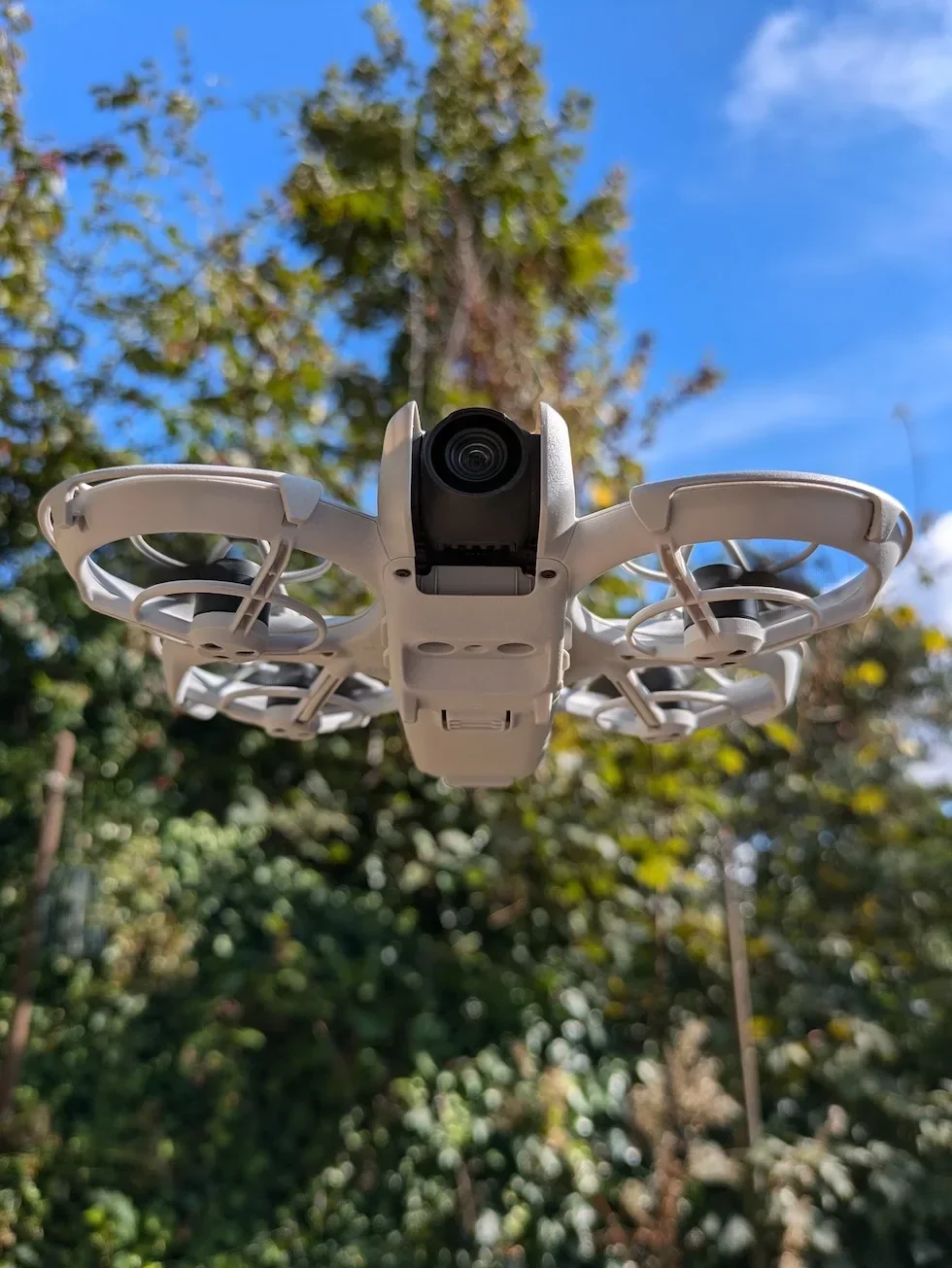
In practice, two routes exist. The first is a firmware update that enables native Remote ID broadcast, which is the simpler of the two and is what most reputable manufacturers have shipped. The second is a physical broadcast module — a small add-on device that bolts onto the drone and does the broadcasting for it.
The user experience on a new drone is straightforward. During initial setup, the drone prompts you to enter your Remote ID number, including that three-character private key on the end. If the drone was already configured, you add it later by following the manufacturer's instructions. The drone validates what you type: an invalid number or incorrect private key is rejected, so you find out immediately if something is wrong.
Two housekeeping points the CAA explicitly calls out. Keep firmware and software current — Remote ID performance leans on that. And if you sell the drone, delete your Remote ID from the device per the manufacturer's instructions before the handover, so the buyer cannot accidentally broadcast under your identity.
Your Remote ID number is a new ID, not a replacement for your Flyer ID or Operator ID
One of the most common questions I get from drone pilots is whether Remote ID replaces the registration fees they already pay. It does not. The three numbers coexist, and each has a different job.
Your Flyer ID is your pass-the-test credential. It is free, it is valid for five years, and renewing it means retaking the online theory test. Your Operator ID is the registration tied to the person or organisation responsible for the drone. It costs £12.34 per year, it is valid for twelve months, and it is the number you must label onto every drone you own.
Your Remote ID number is the new one. You do not apply for it separately — when you register for an Operator ID the CAA generates a Remote ID number alongside it, and you view it in the My registration area of the CAA's online portal. The same Remote ID can be used across every drone you operate, which matches how the Operator ID already behaves. What the drone broadcasts is the Operator ID; the Remote ID number format simply bolts a country code, a public component, a checksum and a private key around it.
On the privacy side, UK GDPR and the Data Protection Act 2018 continue to apply to anything your drone's camera captures. Remote ID broadcasts your live ground position, but it does not broadcast footage, and it does not excuse you from the standard privacy rules on where you point the lens.
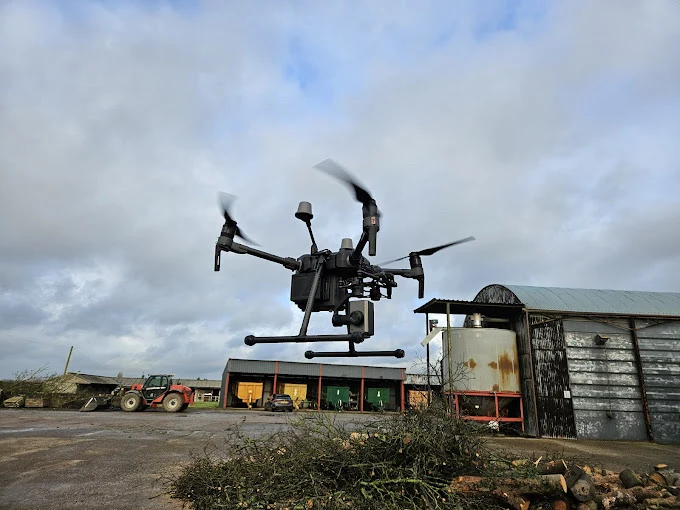
Remote ID is not a surveillance upgrade on the CAA's part, and it is not optional. It is a local radio beacon that makes a legitimate drone flight look like a legitimate drone flight from the ground, and makes an unidentified one look suspicious by omission. If your drone is in the 2026 scope, your compliance job is essentially three steps: confirm your Remote ID number in your CAA portal, enter it into the drone (including the private key), and keep the firmware current.
Got a specific scenario you want covered — an older drone that the manufacturer has not updated, a commercial fleet rollout, or a class-mark edge case? Drop a note to peter@hiredronepilot.uk and I will come back to you directly. If you prefer the video version of this explainer, the comments are open on YouTube.
References
Primary source material for this article is the UK Civil Aviation Authority. External links open in a new tab.
- UK CAA — Remote ID (RID) · broadcast data fields, activation dates, number format, retrofit guidance
- UK CAA — Class marks · UK0 through UK6 definitions, weight thresholds, retrofit at manufacturer discretion
- UK CAA — Flyer IDs and Operator IDs · Operator ID fee, Flyer ID validity, how the IDs interact
- UK CAA — Privacy Rules When Flying Drones · GDPR and Data Protection Act 2018 obligations alongside Remote ID
- UK CAA — UK Regulatory Framework for Drones · UK Regulation (EU) 2019/947, the legal basis for Remote ID
Peter Leslie
Founder & GVC Drone Pilot
Peter is the founder of HireDronePilot. With thousands of logged commercial flight hours, he writes about drone technology, commercial surveying tactics, and UK aviation compliance.
Connect on LinkedIn