How To Identify A Drone Operator Flying Over You In The UK

Peter Leslie
16 Apr 2026
Key Takeaways
- Since 1 January 2026, Remote ID has been mandatory on UK1, UK2, UK3, UK5 and UK6 class drones, broadcasting the Operator ID and the drone's position in plain radio while the drone is in the air
- You can receive that broadcast on a free Remote ID receiver app on a modern smartphone, but you cannot use the broadcast to look up a person — only the CAA and the police can match an Operator ID back to a name
- Every registered drone must still carry a visible 10-character Operator ID label starting with the country code, and under PDRA01 the remote pilot must stand within 500 metres of the drone
- Police powers under the Air Traffic Management and Unmanned Aircraft Act 2021 allow officers to demand the Operator ID, inspect flight logs, require landing, and seize the drone
- Document what you see, phone-record what you hear, call 101 for illegal flying and 999 for immediate danger — but do not jam, shoot down or follow the drone operator home
A drone appears over your garden, your street, or the pub beer garden you are sitting in, and the question lands the same way every time. Who is flying it, where are they standing, and what am I legally allowed to do about it? The good news is that since January 2026 the answer is far less mysterious than it used to be. The bad news is that the final step — matching an Operator ID to a human being — is still something only the police and the Civil Aviation Authority can do.
This guide walks through what you can read off a drone in the sky, what your phone can pick up from the airwaves, what professional drone pilots are legally obliged to show you, and where the hard line sits between useful documentation and a crime of your own.
Remote ID now broadcasts an Operator ID and position in plain radio for every UK class-marked drone over 250 grams
The single biggest change in UK drone law in the last few years went live on 1 January 2026. From that date, Remote ID has been mandatory for every drone carrying a UK1, UK2, UK3, UK5 or UK6 class mark, and for any Specific Category authorisation issued from that date. UK0 drones over 100 grams with a camera, UK4 model aircraft, legacy drones, and privately built drones all catch up on 1 January 2028.
Remote ID is effectively a digital number plate that the drone shouts into the sky every second of every flight. The broadcast includes the Remote ID number itself, the drone's serial number, the drone's position and height, its course, the remote pilot's position on the ground, and an emergency flag such as a low battery warning. Crucially it also carries the Operator ID of the person or organisation responsible for that drone.
What the broadcast does not contain is a name, an address, a phone number, or a photograph. That is by design. Only the CAA and a short list of authorised organisations can connect an Operator ID back to a human being, and the police sit at the top of that list.
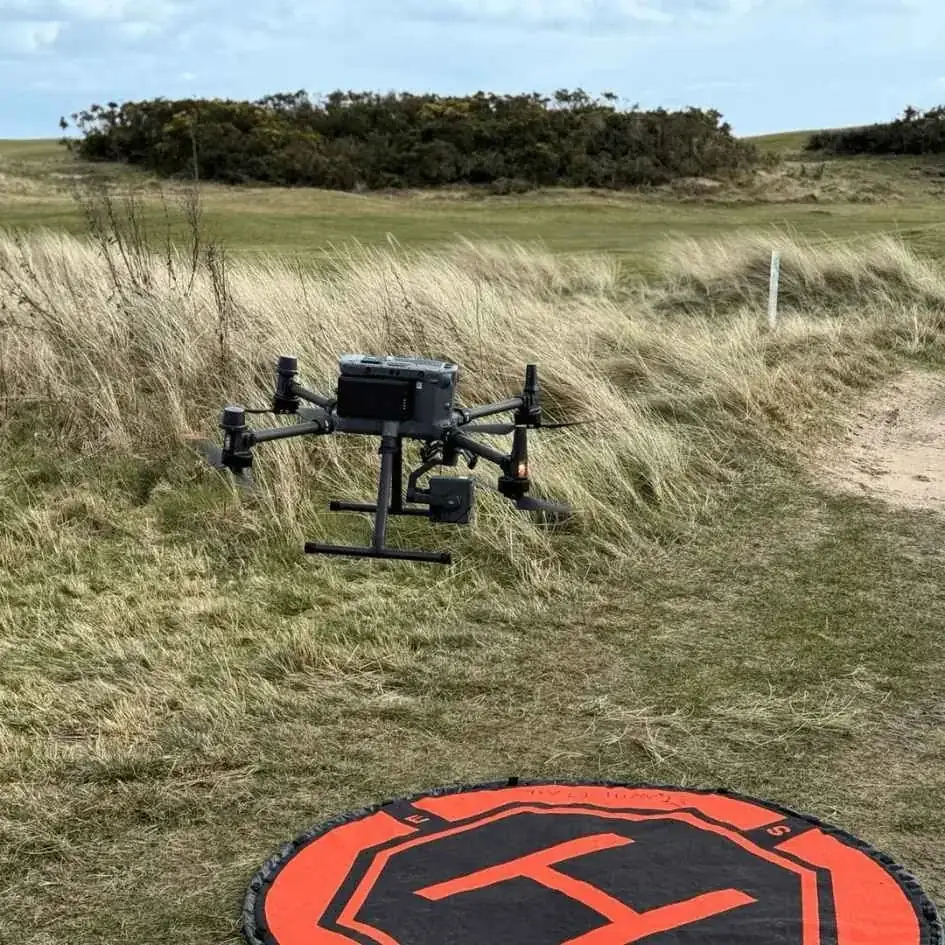
You can pick Remote ID up on a free smartphone app, but you cannot look up the person behind the Operator ID yourself
Remote ID is transmitted in unencrypted Bluetooth and Wi-Fi so that anybody with a compatible device can read it in real time. Several free apps on Android and iOS — names to look for include OpenDroneID, Drone Scanner and Aerial Armor — turn a modern smartphone into a basic Remote ID receiver. Point the phone at the sky, start the app, and any compliant drone within roughly one kilometre will show up as a live card with its Operator ID, its position, and the remote pilot's position on a map.
This is genuinely new. For the first time, a member of the public with no specialist equipment can see where the drone operator is standing while the drone is still in the air. If the operator is breaking a rule — flying over a crowd, buzzing a prison, straying into controlled airspace — you now have enough information to send the police to the right place the first time.
What you cannot do is convert the Operator ID into a name. The CAA register is not a public search tool, and the data protection regime deliberately prevents that lookup. The Remote ID stream is there to help the authorities find the right drone operator and to help responsible drone pilots prove they are compliant — it is not there to let the general public identify strangers.
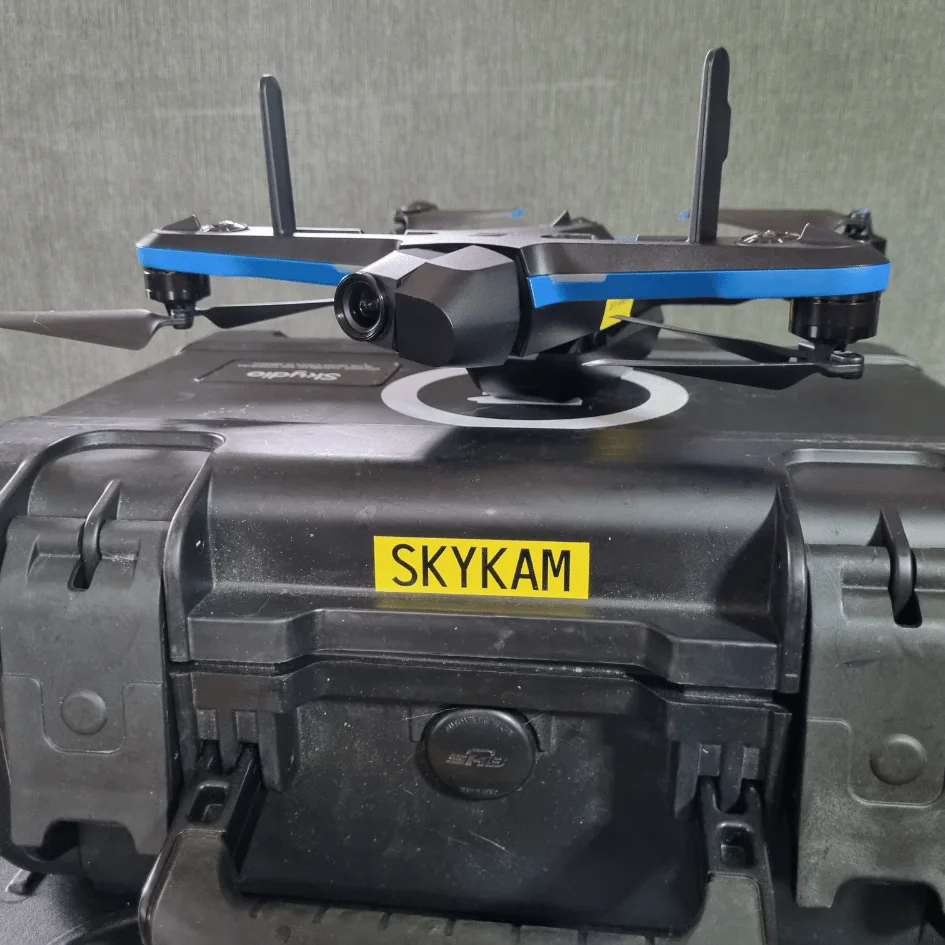
Every registered drone must still carry a visible Operator ID label, and under PDRA01 the remote pilot must stand within 500 metres
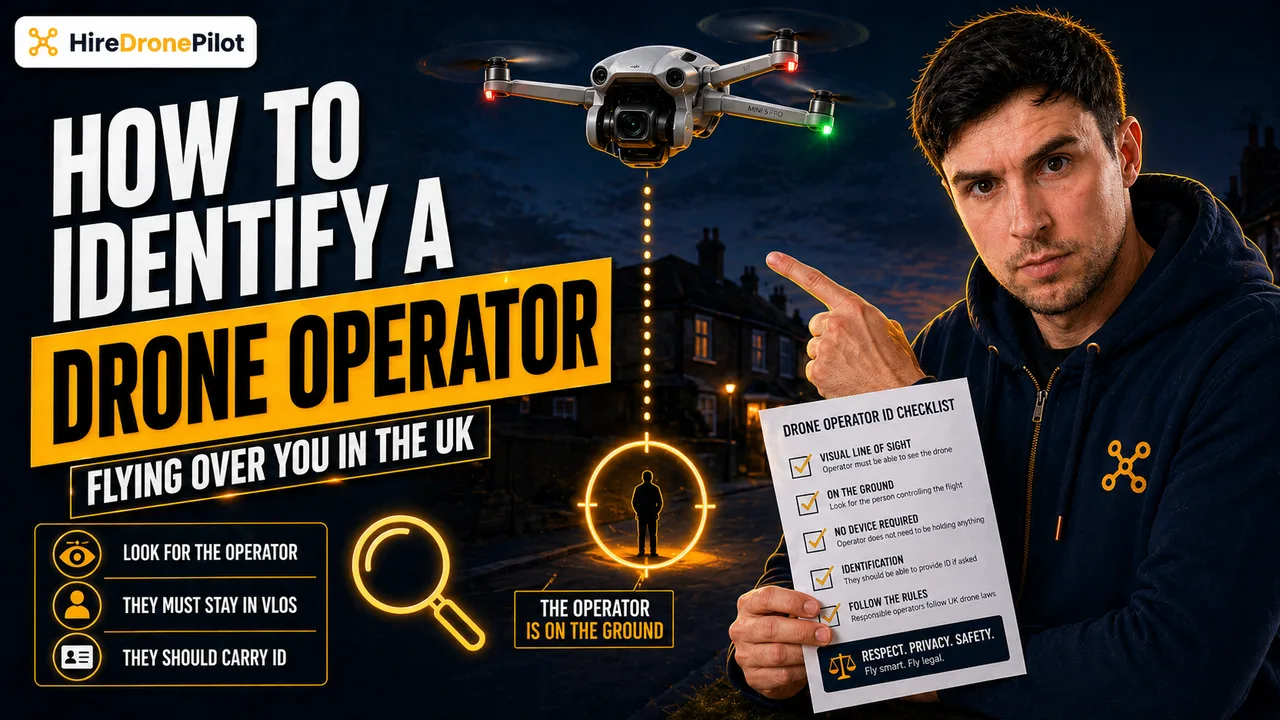
Remote ID sits on top of the older identification system, not in place of it. If you can get close enough to the drone on the ground — at take-off, during landing, or after a controlled descent — every drone that needs a CAA registration must carry a visible label. The rules are precise, and they come from the CAA Drone and Model Aircraft Code.
The label must carry the Operator ID, not the Flyer ID, in block capitals taller than three millimetres. It must be on the main body of the drone. It must be visible from outside, or inside a compartment you can open without tools. The Operator ID starts with a three-letter country prefix followed by a string of letters and numbers. If the drone is large and carries no visible label, that alone is evidence of illegal flying worth reporting.
For a professional in the Specific Category operating under PDRA01, the remote pilot is required to stand within 500 metres of the drone and to maintain an unaided visual line of sight. Combined with the 1-to-1 rule and the 120-metre height ceiling, this gives you a realistic search radius on foot. If you cannot see a person with a controller within that distance, the operator is either hidden from view or the flight itself is already out of bounds.
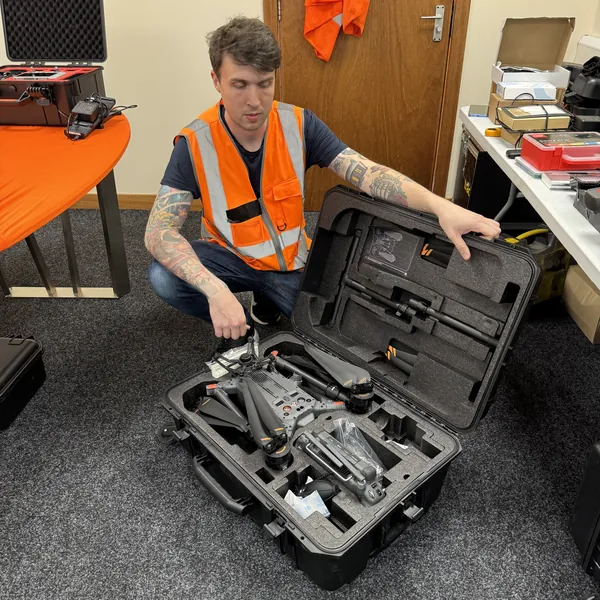
The police can demand the Operator ID, inspect flight logs, and require the drone to land
The legal backbone for identification by the authorities is the Air Traffic Management and Unmanned Aircraft Act 2021, working alongside the Air Navigation Order 2016 and the UK Regulations (EU) 2019/945 and 2019/947. Together these give officers a specific set of powers that members of the public do not have.
A constable can stop a person they reasonably suspect of operating a drone and require them to produce their Operator ID, Flyer ID, and any Specific Category authorisation. They can require the drone to be landed. They can inspect drone flight logs and telemetry stored on the controller or the drone itself. They can seize the drone and the controller as evidence. In serious cases — flights near airports, prisons, protected sites or crowds — they can arrest for the underlying offence.
Behind the scenes, the CAA maintains the national register of Operator IDs, Flyer IDs and Remote IDs. The police do not have a public-facing search screen, but they can request that data in the course of an investigation. That is the final piece of the identification puzzle that turns a 10-character code into a named individual.
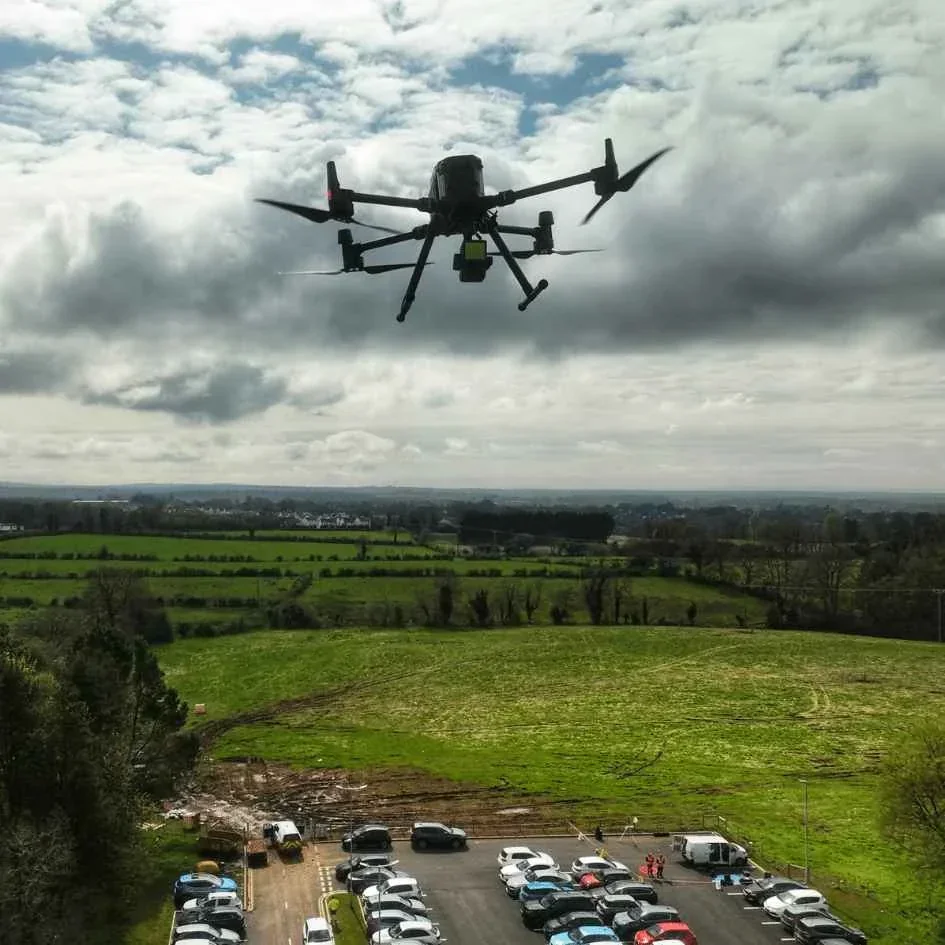
Document the flight, phone-record what you see, and report illegal flying on 101 or 999 if there is immediate danger
For a member of the public, the most useful thing you can do is build a record that is credible enough for the police to act on. Note the time and date. Note the direction the drone came from and the direction it went. Note any visible lights, colour, approximate size, and whether it has one, two, or four sets of rotors. Capture phone video with the sky in the frame — even a blurry clip with the audio of the rotors is useful.
If you can see the drone operator on the ground within roughly 500 metres, photograph the scene, not the person's face. Note the car, the location, the direction of the controller. If a Remote ID receiver app is running, screenshot the operator marker on the map. That screenshot is the single most valuable piece of evidence a member of the public can produce, because it places a specific Operator ID at a specific coordinate at a specific time.
Call 101 for non-urgent reports of illegal flying — that is the CAA's standard route for drones near prisons, airports, crowds, hospital helipads, airshows, controlled airspace, or above the 120-metre ceiling. Call 999 if there is an immediate danger to life or a threat of violence. For safety-related near misses involving manned aircraft, the separate UAS occurrence reporting route via the CAA is the right channel. Concerns specifically about privacy and filming without consent can also be escalated to the Information Commissioner's Office under UK GDPR.
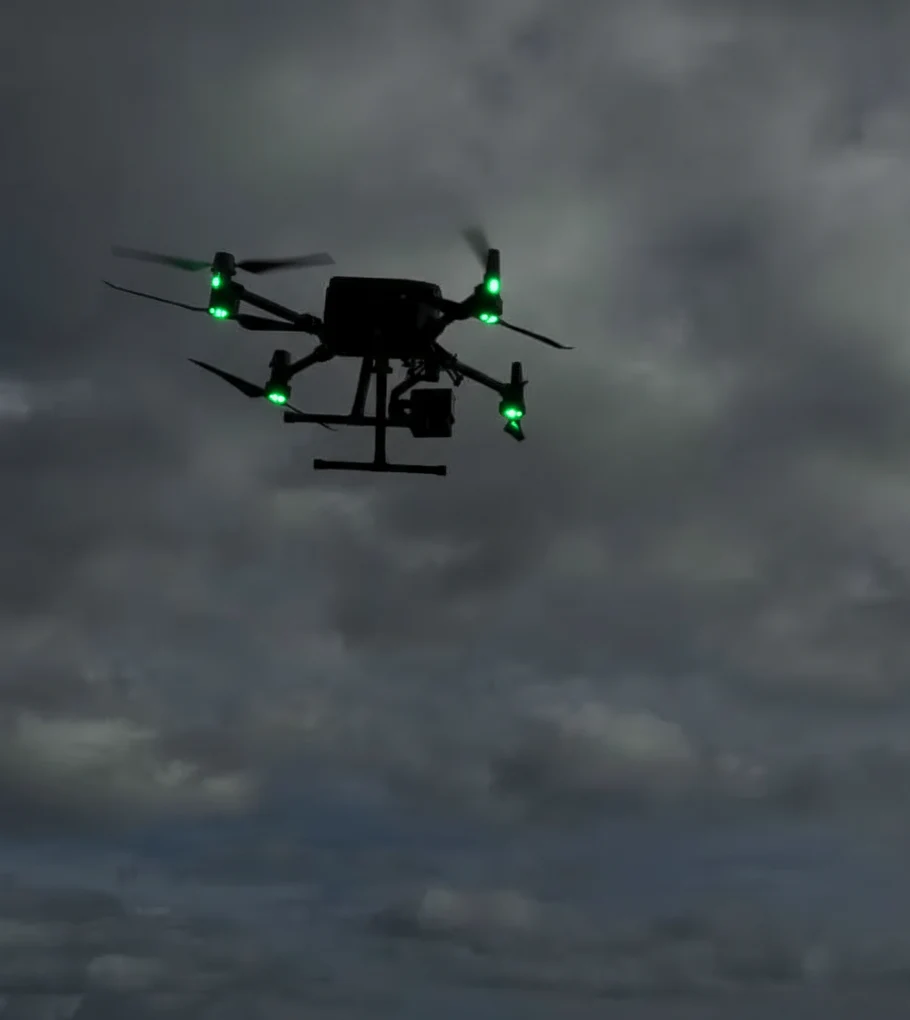
You cannot legally jam the drone, shoot it down, or follow the drone operator home
The identification toolkit ends exactly where your own criminal liability begins, and the line is not subtle. Drone jammers and signal interceptors are illegal for a member of the public to operate under the Wireless Telegraphy Act 2006. Using one interferes with lawful radio communications — including the emergency services on adjacent bands — and carries its own criminal penalty. Shooting a drone down is criminal damage at minimum and endangering an aircraft in flight at worst, and the latter carries a maximum sentence of five years under the Air Navigation Order.
Following the drone operator back to a house, filming their face without consent, confronting them aggressively, or publishing their location on social media can slip quickly into harassment, stalking, or a breach of data protection law. The Operator ID on a drone is personal data. A Remote ID screenshot you share publicly with a name attached is a disclosure under UK GDPR, and the Information Commissioner's Office can act on it.
The right playbook is the boring one. Document. Report. Let the police and the CAA do the bit that only they can legally do. Your Remote ID screenshot, your phone video and your 101 log number are enough to start an investigation. Turning up at someone's front door is not.
The practical shape of drone identification in 2026 is simpler than most people expect. Read the Operator ID label off the body of the drone if you can get near it. Open a Remote ID app on your phone if you cannot. Write down everything you see, film what you can, and call 101 or 999 depending on the urgency. The hard work of turning a code into a person is the job of the police and the CAA, and they have more tools for it now than at any point in the last decade.
Got a specific scenario you want covered — a drone over your property, a suspected illegal flight near an airfield, a question about what a Remote ID receiver app is actually reading? Drop a note to peter@hiredronepilot.uk and I will come back to you directly. If you prefer the video version of this explainer, the comments are open on YouTube.
References
Primary source material for this article is the UK Civil Aviation Authority. External links open in a new tab.
- UK CAA — Remote ID (RID) · 1 January 2026 mandatory date, broadcast data, Operator ID included
- UK CAA — Concerns about privacy and illegal use of drones · 101 and 999 reporting routes, list of illegal flights
- UK CAA — Flyer IDs and Operator IDs · Operator ID definition and legal duties
- UK CAA — Labelling your drone or model aircraft · visible Operator ID label, block capitals, 3mm minimum
- UK CAA — The Drone and Model Aircraft Code (CAP2320) · 120m ceiling, privacy duties, reporting framework
- UK CAA — PDRA01 Operational Authorisation Overview · 500-metre remote pilot proximity requirement
- UK CAA — UK Regulatory Framework for Drones · Air Navigation Order 2016 and UAS Regulations legal basis
Peter Leslie
Founder & GVC Drone Pilot
Peter is the founder of HireDronePilot. With thousands of logged commercial flight hours, he writes about drone technology, commercial surveying tactics, and UK aviation compliance.
Connect on LinkedIn