Police Powers Over Drones: The UK Law, Explained

Peter Leslie
16 Apr 2026
Key Takeaways
- UK police have statutory powers to require a drone to be grounded, inspect its documents, and seize it where a drone offence is suspected
- A constable can require you to produce your Flyer ID and Operator ID, and failing to comply is itself an offence
- The Air Navigation Order 2016 is the legal backbone, and endangering an aircraft in flight carries a maximum sentence of five years in prison
- Call 101 to report a drone that looks dangerous or illegal, and 999 if a drone is an immediate threat to life or safety
- If you are stopped, having your Flyer ID, Operator ID, insurance and a recent flight log to hand turns a stop into a two-minute conversation
UK drone pilots are already flying under a surprisingly deep set of police powers, and most of them did not exist five years ago. The short version is this: a constable can require a drone to be grounded, require you to produce your IDs, search you for drone equipment in the right circumstances, and seize the drone itself where an offence is suspected. Those are not guidelines. They are statutory powers backed by the criminal law, and they apply whether the flight is a commercial shoot or a Sunday-morning sub-250g flight in the park.
This guide walks through what each of those powers actually covers, where the underlying law sits, and what a sensible drone operator keeps in the bag so that a roadside stop stays calm and quick.
A constable can require a drone to be grounded the moment an offence is suspected
The most immediate power a police officer holds is the power to require the drone to land. If a constable reasonably believes you are committing, or have committed, a drone-related offence — breaching the Drone Code, flying in a restricted zone, endangering an aircraft — they can require you to bring the drone down and stop the flight.
That includes flying in a restricted zone such as the airspace around a prison, a police station, or an airport, as well as flying over crowds, above the 120-metre altitude ceiling, or anywhere a reasonable officer sees a safety risk.
The expected behaviour from the drone operator is simple. Land as soon as it is safe, and then stop the rotors. Do not attempt to reposition the drone, do not carry on recording, and do not argue the geometry of the flight while the drone is still in the air. Refusing or deliberately delaying compliance is itself a separate criminal offence on top of whatever triggered the stop.
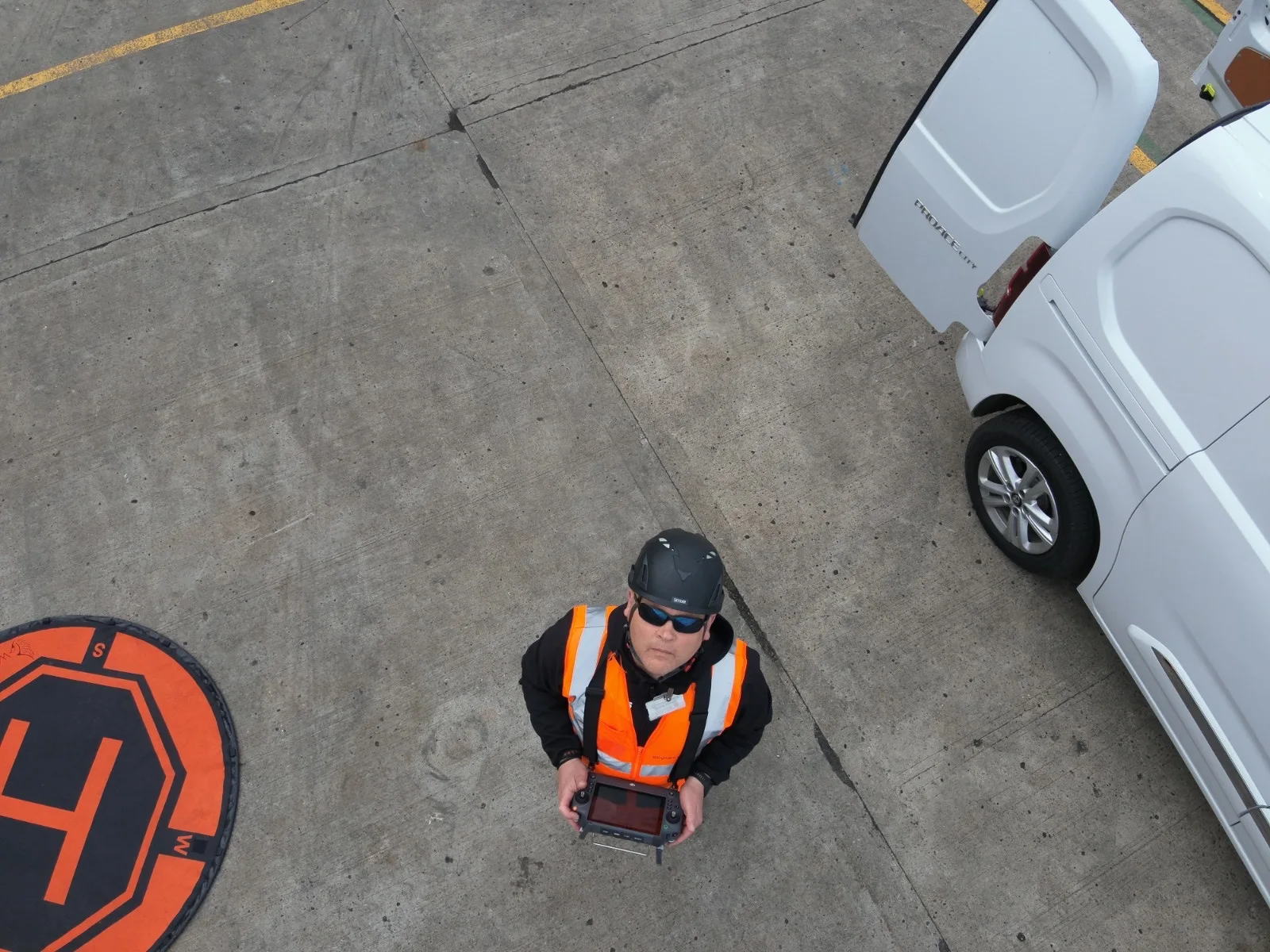
Police can inspect your Flyer ID, Operator ID and the label stuck to the drone itself
The second power is documentary, and it is the one most commonly exercised. A constable can require you to produce your Flyer ID and your Operator ID, and to show the Operator ID label on the drone itself.
Both IDs are a statutory requirement for almost every flight. A Flyer ID is mandatory for anyone flying a drone of 100 grams or more, and the test is free. An Operator ID is mandatory for any drone of 250 grams or more, or any drone of 100 grams or more with a camera, and currently costs £12.34 per year. The Operator ID must also be physically labelled on the main body of the drone in block capitals taller than three millimetres.
If an officer asks and you cannot produce either ID — or the label is not on the drone — that is a standalone offence, not a warning shot. Carry a screenshot of the Flyer ID and Operator ID on your phone and keep the physical label legible. The guide to how police identify a drone operator covers the complementary side of this: Remote ID now broadcasts the Operator ID during flight for UK1, UK2 and UK3 class drones as of January 2026, so officers can often link a drone in the air to its operator before they have even approached you.
Constables can stop and search drone operators for drone equipment in the right circumstances
Where a constable reasonably suspects a drone offence is being, has been, or is about to be committed, the Air Traffic Management and Unmanned Aircraft Act 2021 gives them powers to stop and search a person or vehicle for drone equipment. That includes the drone itself, controllers, batteries, goggles, SD cards, and any other kit used to fly or record with the drone.
This is a targeted power, not a general one. The officer must have a specific, reasonable suspicion linked to a specific drone offence — it is not a roaming fishing expedition. In practice, this power tends to be used alongside a report of dangerous flying: somebody calls 101 about a drone over a football match, officers locate the operator, and the power to inspect the equipment flows from that.
Where the suspected offence is more serious — flights over a prison, near airports, or a flight that has already endangered an aircraft — the officer's powers sit on top of the ordinary powers of arrest that any other criminal offence would trigger.
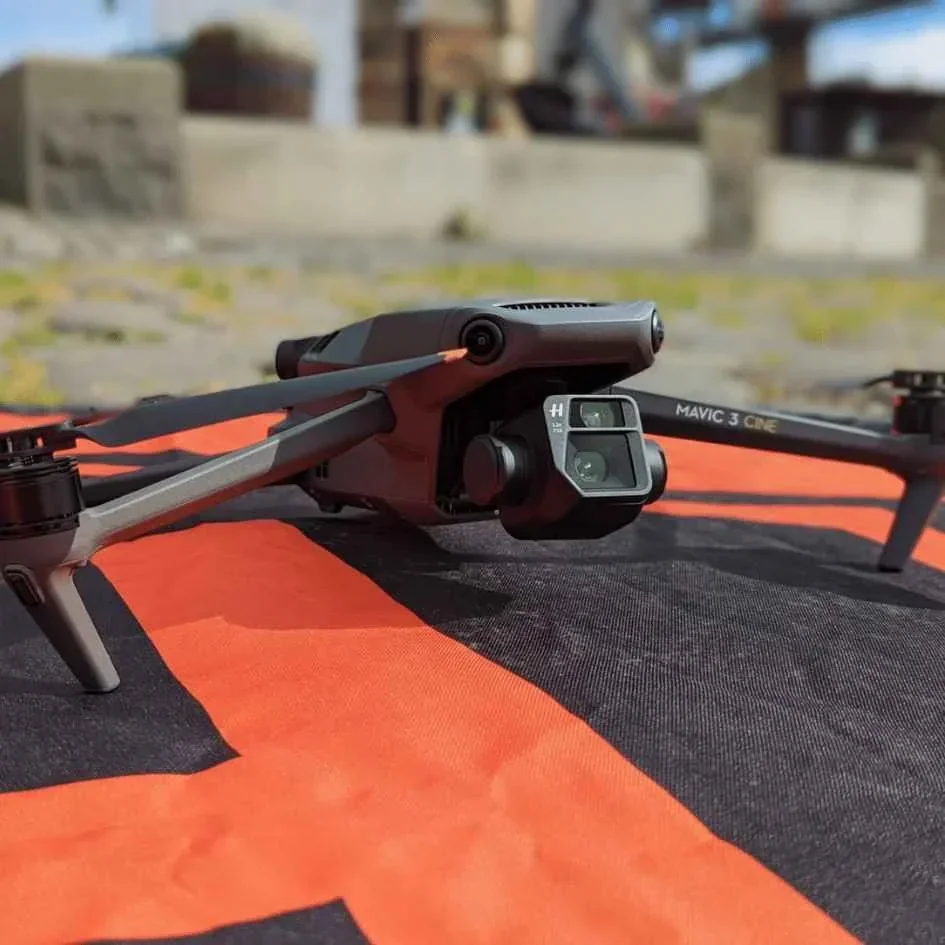
Police can seize a drone where it is evidence of an offence or where a continued flight would be a risk
Seizure is the sharpest of the powers, and it is a genuine risk for any drone operator who has been caught flying outside the rules. The CAA's own guidance on how police enforce drone regulation spells it out: penalties range from warnings through drone confiscation to imprisonment. A seized drone is typically kept as evidence while the offence is investigated, and can be forfeited by the court on conviction.
The triggers for seizure are the usual ones you would expect. Flying within a Flight Restriction Zone without permission. Flying over a crowd, an airshow, or a hospital helicopter landing site. Flying in controlled or restricted airspace. Endangering an aircraft — the most serious heading, which carries up to five years in prison under the Air Navigation Order 2016.
The same sharp end applies to deliberate misuse such as filming through a neighbour's windows or GDPR breaches in a commercial context. Seizure is an administrative step — conviction and forfeiture are the bigger risks that follow.
The fastest way to lose your drone is to argue with an officer about whether a rule applies. I have never had a stop end badly when I have landed the drone straight away, unlocked the My Drones app to show the Operator ID, and handed over the kit for a quick look.
The CAA is the regulator but the police are the enforcement body for drone offences
This is the split that confuses a lot of drone operators when they first read the rules. The Air Navigation Order 2016, the Drone and Model Aircraft Code and the UAS Regulations are all CAA regulatory instruments — but the CAA itself is a civil regulator, not a police force. When a rule is broken, the front-line enforcement is carried out by the police. The CAA's own published position is unambiguous: the Police are responsible for taking enforcement action when it is believed that the requirements of the law have not been met.
That is why a complaint about a drone flying over a garden or a concert is directed to the local force on 101, not to the CAA. The CAA's role is to publish the rules, issue authorisations, investigate serious incidents through the UAS occurrence reporting route, and prosecute the most significant breaches — typically in coordination with the police force that made the initial stop.
Who responds to what
| Situation | Who to call |
|---|---|
| A drone is an immediate threat to life or safety (over a crowd, near an airport, near a helicopter) | 999 |
| A drone is flying dangerously, illegally, or is a nuisance but there is no immediate threat | 101 (local police) |
| A near-miss or safety occurrence you want formally logged | UK CAA UAS occurrence reporting (ECCAIRS 2) |
| Suspected privacy or data-protection breach | Information Commissioner's Office, plus 101 if conduct looks criminal |
| Flight restriction inside an airport zone | Airport security or 999 in an emergency |
Specialist air-support units such as the National Police Air Service can be tasked to drone incidents at active emergency scenes, and many forces now have dedicated counter-drone capability for sensitive sites. The 101/999 triage above is the entry point — what happens after the call is for the force to decide.
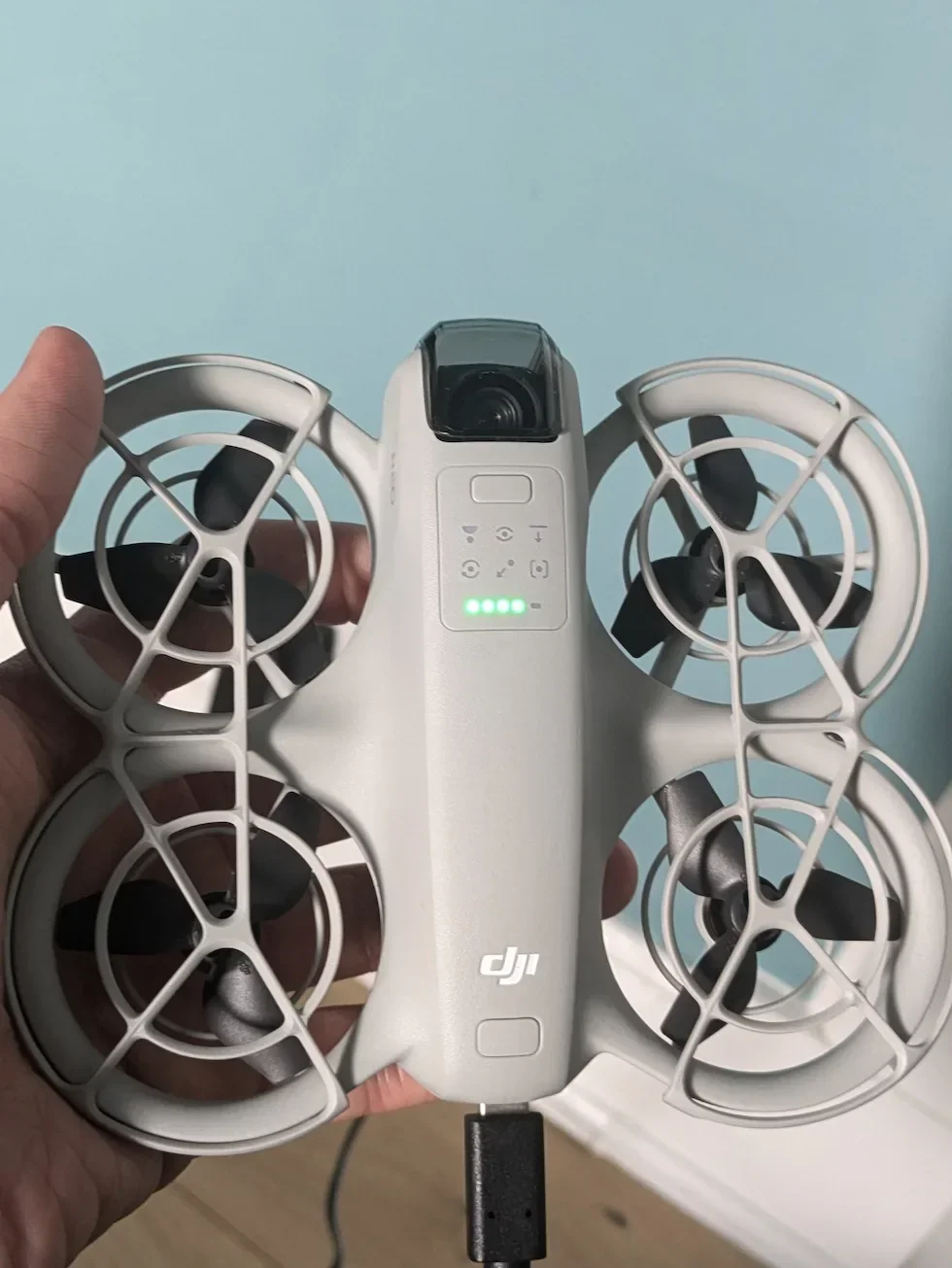
If you are stopped, having your IDs, insurance and a short flight log to hand turns the stop into a two-minute conversation
From the drone operator's side, a stop is not the disaster it is sometimes made out to be — provided the paperwork is there. Land the drone. Be polite. Show the IDs. The conversation is typically shorter than a routine traffic stop.
The short list of what a sensible drone operator keeps with them:
- Flyer ID — screenshot on phone or a printed card. Valid five years.
- Operator ID — on the phone, plus the physical label on the drone in block capitals taller than three millimetres. Valid one year.
- Proof of insurance for any flight that is not pure hobby — third-party liability cover is mandatory for commercial use, and for any drone of twenty kilograms or more. See drone insurance requirements.
- A recent flight log — most app-controlled drones keep one automatically. Covered in detail in the guide to drone flight logs.
- For commercial flights: a copy of the Operational Authorisation (or PDRA01 certificate), the Operations Manual, and the GVC or relevant RPC certificate.
A calm, paperwork-first response tends to shift the dynamic quickly. Officers are looking for the clueless, not the competent. Fifteen seconds of yes, officer, here is the Flyer ID, here is the Operator ID on the label, and here is my third-party insurance certificate usually closes the matter.
The penalties under the Air Navigation Order 2016 range from warnings to five years in prison
The legal backbone sits in the Air Navigation Order 2016, working alongside UK Regulation (EU) 2019/945 and 2019/947. The CAA's own published summary of police enforcement describes penalties as ranging from warnings to the confiscation of drones and even imprisonment.
At the low end, a first-time administrative breach may result in a recorded warning and a conversation about compliance. Serious breaches — flights over crowds, over 120 metres, inside a Flight Restriction Zone, or over a prison — are routinely prosecuted. At the top end, endangering an aircraft in flight carries a maximum sentence of five years. The Drone and Model Aircraft Code itself says, in plain language on the inside cover, that flying outside the rules is a criminal offence and can land you in prison in the most serious cases.
On top of the criminal penalties sits the insurance consequence. Flying outside the rules typically invalidates third-party cover, which turns any accident from an insurance claim into a direct personal liability — and for a commercial drone operator, ends the client relationship on the spot.
The companion guide on what happens if you get caught flying a drone illegally in the UK walks the full ladder — warning, seizure, magistrates' court, Crown Court, and the quiet damage a conviction does to your CAA register entry and future paperwork — from the operator's side of the stop.
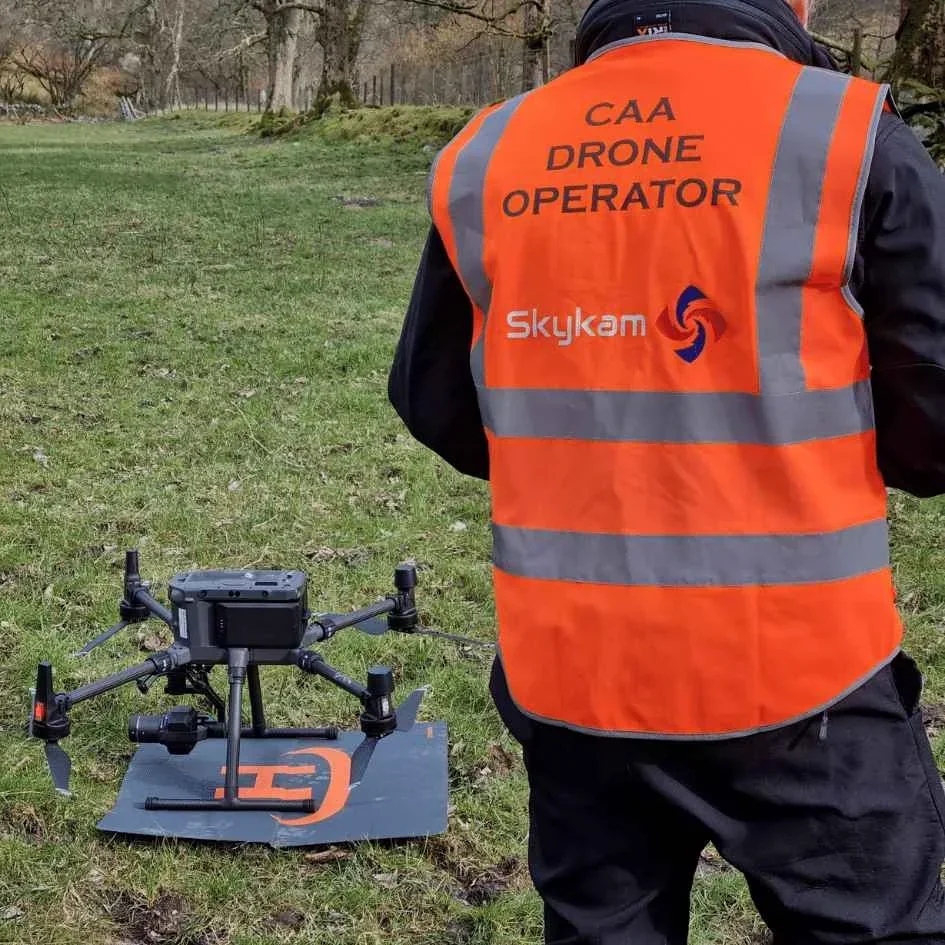
The bottom line is straightforward. Police powers over drones are real, specific, and backed by criminal law. The flip side is that officers are, in my experience, reasonable to work with so long as the drone operator is paperwork-ready and willing to land on request. The cost of compliance is almost nothing — one theory test, one annual Operator ID fee, one label, one insurance policy — and it turns every conceivable police interaction into a short conversation rather than a seizure.
If you want the bigger picture of how these powers sit inside the rest of the regime, the UK drone laws explainer is the hub article that stitches everything together.
Got a specific scenario you want covered — an awkward stop, a commercial job near a sensitive site, a question about how counter-drone kit actually works? Drop a note to peter@hiredronepilot.uk and I will come back to you directly. If you prefer the video version of this explainer, the comments are open on YouTube.
References
Primary source material for this article is the UK Civil Aviation Authority. External links open in a new tab.
- UK CAA — Drone Regulations for Police Forces · CAA position that police are the enforcement body, penalties range from warnings to imprisonment, 101/999 triage
- UK CAA — Concerns About Privacy and Illegal Use of Drones · list of illegal flight scenarios (prisons, airports, crowds, helipads, 120 m, restricted airspace), 101 and 999 reporting
- UK CAA — The Drone and Model Aircraft Code (CAP2320) · Flyer ID and Operator ID thresholds, labelling rules, five-year maximum sentence for endangering an aircraft
- UK CAA — Labelling Your Drone or Model Aircraft · legal requirement to label with Operator ID, block capitals taller than 3 mm, main body of the drone
- UK CAA — UK Regulatory Framework for Drones · Air Navigation Order 2016, UK Regulations (EU) 2019/945 and 2019/947, privacy and trespass obligations
- UK CAA — Remote ID · Remote ID broadcasts Operator ID and position for UK1/UK2/UK3 class drones from 1 January 2026
Peter Leslie
Founder & GVC Drone Pilot
Peter is the founder of HireDronePilot. With thousands of logged commercial flight hours, he writes about drone technology, commercial surveying tactics, and UK aviation compliance.
Connect on LinkedIn