Flying a Drone in Your Own Garden: What UK Law Actually Allows

Peter Leslie
16 Apr 2026
Key Takeaways
- Yes, you can fly a drone in your own UK garden — your land, your take-off and landing spot, your choice
- The Drone Code applies above your garden exactly as it does everywhere else, including the 120 metre height ceiling and the 50 metre people buffer
- A sub-250g drone lets you fly over uninvolved people and inside residential areas; a heavier drone forces the 50 metre buffer from neighbours and their property
- Operator ID is required from 100g if the drone has a camera, and for everything from 250g upward, and must be labelled on the drone
- Any camera over a garden is governed by UK GDPR and the Data Protection Act 2018 the moment a neighbour is identifiable in the footage
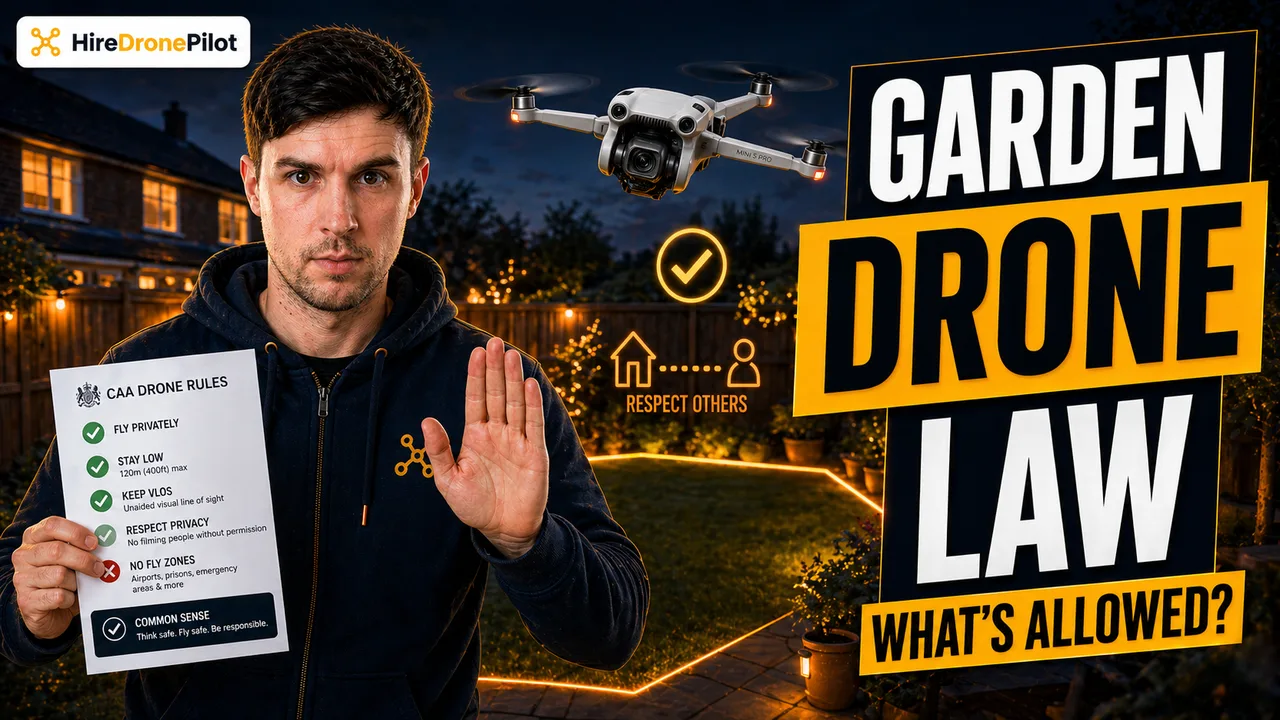
The short answer is yes. You can fly a drone in your own back garden, from your own lawn, without asking anyone for permission to take off or land. The land is yours, and the Drone and Model Aircraft Code does not treat your garden as off-limits.
The longer answer is the one most drone pilots need. Airspace does not stop at your fence. The same rules that bind you in a park bind you when the drone is three metres above your patio. And the weight of the drone — specifically whether it sits below or above the 250 gramme threshold — rewrites almost every practical question that follows.
You own the land, but the airspace above your garden is still governed by the Drone Code
Owning a garden gives you an obvious right — you can take off and land from your own lawn without asking anyone for permission. That is not a small thing. Finding a legal take-off point in a city is often the hardest part of a flight, and a private garden hands it to you.
What your garden does not give you is a private slice of sky. UK airspace is shared, and every rule inside the Drone Code still applies above your property. The 120 metre altitude ceiling, the fifty metre people buffer, the ban on flying over crowds, the requirement to keep the drone in Visual Line of Sight — none of those relax because you are standing on your own grass.
It helps to think of the garden as a take-off point rather than a flying zone. Once the drone is in the air, the same UK drone laws apply that would apply if you had driven to a field and launched from there.
The weight of your drone changes the garden rules more than anything else
Nothing in the Drone Code matters more for garden flying than the 250 gramme threshold. Below it, the Open Category lets you operate in the A1 sub-category, which allows flying close to uninvolved people and inside residential areas. Above it, you are pushed into A2 or A3 territory and the fifty metre separation rule starts biting immediately — which is a problem when the fence line is six metres away.
The table below summarises how the Drone Code treats each weight and class in a garden context.
| Drone weight or class | Practical meaning in a garden |
|---|---|
| Less than 100g | No Flyer ID or Operator ID required. Drone Code still applies. Garden flying is straightforward. |
| 100g to under 250g, with a camera (UK0) | Flyer ID and Operator ID both required. A1 sub-category — can fly close to, and over, uninvolved people. Residential gardens are workable. |
| UK1 / C1 (under 900g) | A1 sub-category. Flyer ID and Operator ID required. Can fly close to people but must not fly over crowds. |
| UK2 / C2 (under 4kg) without A2 CofC | A3 sub-category — 50 metre buffer from uninvolved people, 150 metre buffer from residential areas. A standard UK garden is typically out. |
| Legacy drone over 250g, no class mark | Weight-based rules apply. Under 2kg with A2 CofC: 50m from uninvolved people. Under 25kg without: A3 rules only. |
If your garden backs onto other houses — which describes almost every UK garden — the honest answer is that a sub-250g drone is the only weight class that really suits residential flying. A Mini 4 Pro or a Neo can legally lift from a suburban lawn. A heavier Mavic cannot, unless you are confident the fifty metre buffer clears every neighbour's garden, patio, and living-room window.
The 50 metre rule applies to your neighbours just as much as strangers in a park
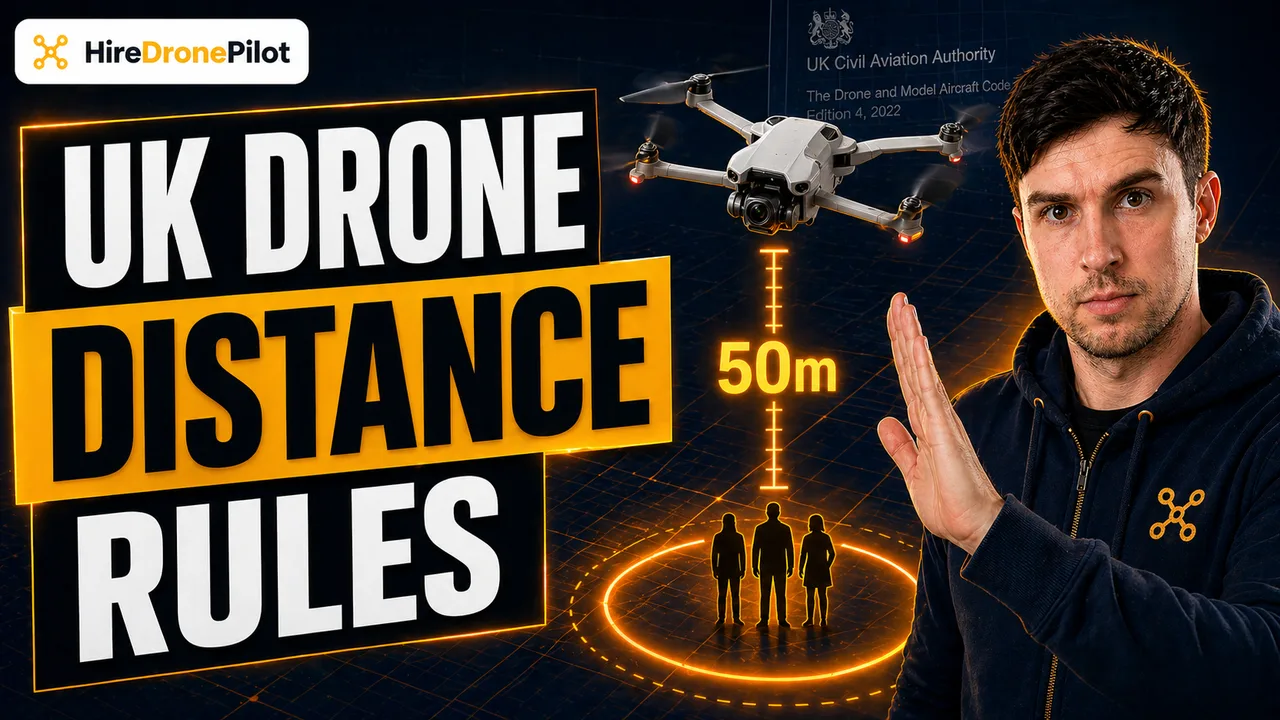
Rule 4 of the Drone Code is blunt. You must keep a minimum horizontal distance of 50 metres between your drone and any uninvolved person, and that distance extends vertically all the way up to the height limit — a no-fly cylinder around every person, not a dome.
Your neighbours are uninvolved people. So is the courier on the drive two doors down, the kids in the garden backing onto yours, and the couple having coffee on the patio behind your fence. A heavier drone in a standard suburban garden cannot satisfy this rule in most directions — fences are three to five metres away and neighbours are within ten. The rule does not bend because the drone is above your own land.
The important exception is the sub-250g and UK0 / UK1 / C0 / C1 class carve-out. Those drones can legally fly closer than fifty metres to uninvolved people and can even fly over them, which is what makes them the practical choice for residential flying. Crowds are still off-limits regardless of weight — a Drone Code rule that has no exceptions for any class.
Any camera over a garden is governed by UK GDPR and the Data Protection Act 2018
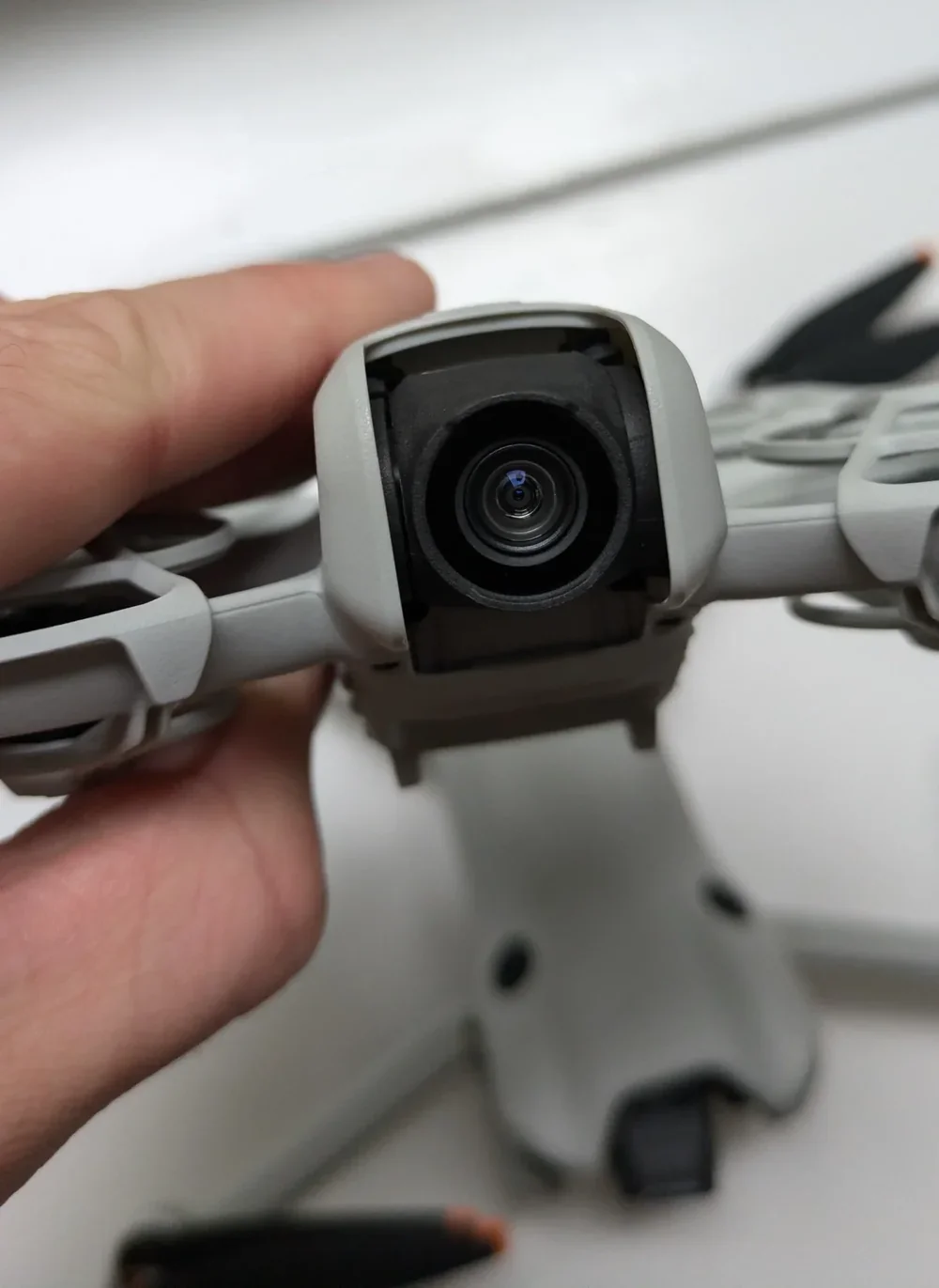
Altitude and class marks are only half the story. The moment a camera on your drone captures anyone identifiable — a neighbour in their garden, a child on a trampoline, a couple through a kitchen window — UK GDPR and the Data Protection Act 2018 apply to that footage.
The CAA's privacy guidance is direct. Using a camera or listening device where people reasonably expect privacy — inside their home or garden — is likely to breach data protection law, whether the capture is deliberate or accidental. This is not a Drone Code rule, it is national data protection law, and it bites regardless of whose land you launched from.
In practice that means three things for garden flying. Point the camera at your own property, not theirs. Tell nearby neighbours before you start recording where you can. And if you accidentally capture somebody else, do not post it, delete it, and move on. A hovering drone with a gimbal pointed at a neighbour's window will generate a complaint, and the privacy angle of that complaint is grounded in real law.
Worth noting — the reverse scenario, a neighbour's drone hovering above your garden, is a separate question with its own article on what to do when a neighbour flies over your property.
You still need the right IDs before you take off, even from your own lawn
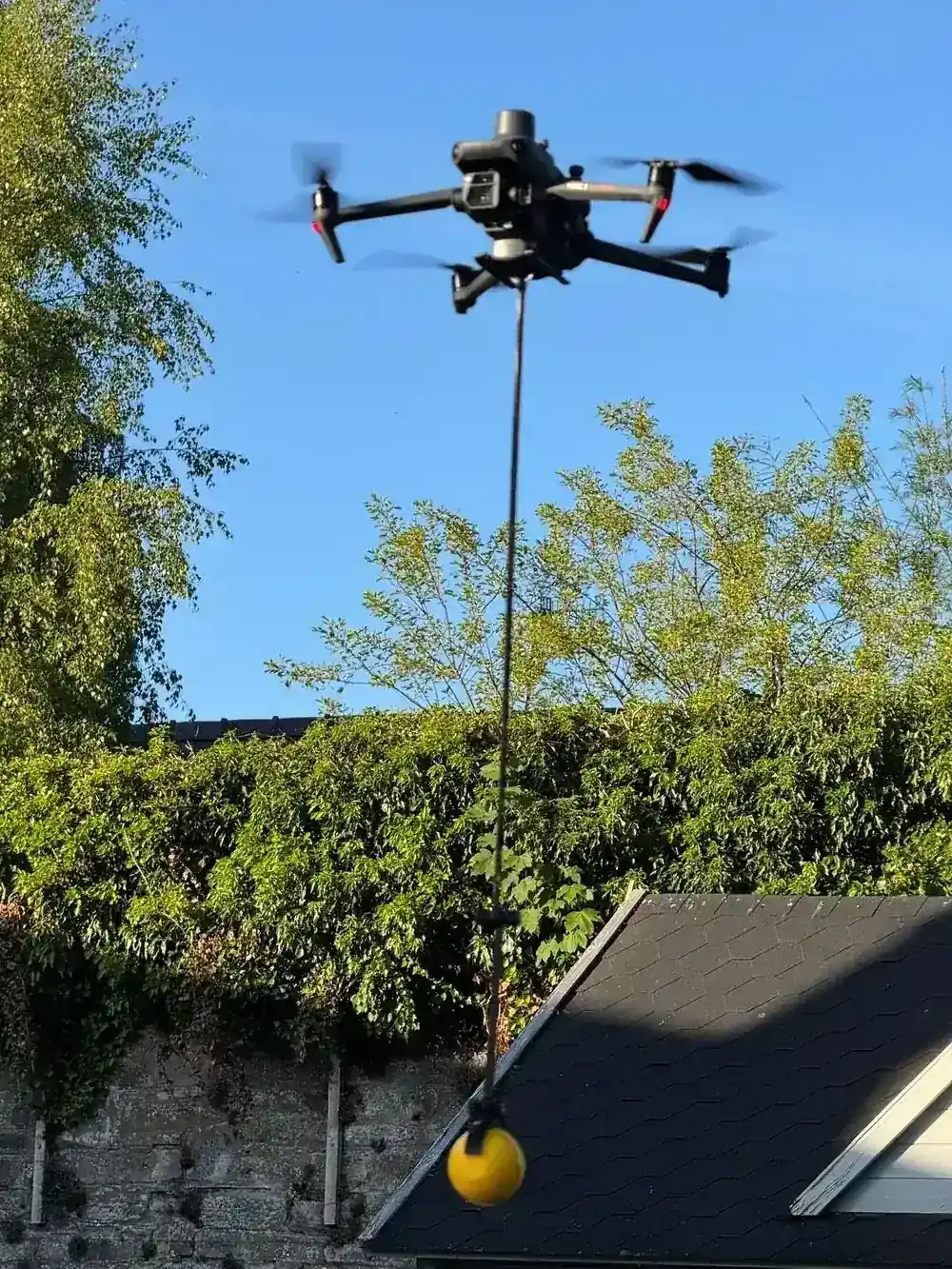
Private land does not exempt you from the CAA registration rules. The requirements are driven by the weight of the drone and whether it has a camera.
A Flyer ID is required for any drone weighing 100 grammes or more. You get it by passing the CAA's online theory test, which is free, and it lasts five years. An Operator ID is required for any drone weighing 250g or more, and for any drone weighing 100g or more that has a camera. It costs £12.34 per year and must be labelled on the main body of the drone in block capitals at least 3mm tall.
Two more points worth flagging for garden flying specifically. From 1 January 2026, any UK1, UK2 or UK3 class drone must fly with Remote ID switched on. And the Operator ID minimum age is 18 — if a child under 18 owns the drone, a parent or guardian registers as the operator. Children under 12 must also be supervised by somebody aged 16 or over whenever they fly.
Insurance is optional for hobby flights, but only if the drone weighs under 20 kilogrammes
Most garden flying is hobby flying, and for hobby use of a drone under 20kg, third-party drone insurance is optional. You are still personally liable for anything the drone damages or anyone it injures — the law simply does not force you to carry cover.
Two exceptions to be aware of. If you fly for any non-hobby reason — paid photos or video, farm or estate work, a survey — third-party insurance becomes required by law, and that is true even if you are flying from your own garden. And if the drone weighs 20kg or more, third-party cover is always mandatory, regardless of whether it is a hobby flight or a commercial job.
For a sub-250g hobby flight over your own lawn the law leaves it to you. Personally, I carry BMFA membership cover for exactly this kind of flight, because the cost of replacing a neighbour's conservatory glass is more than a year of premiums several times over.
Airspace restrictions above your garden are the one thing people forget to check
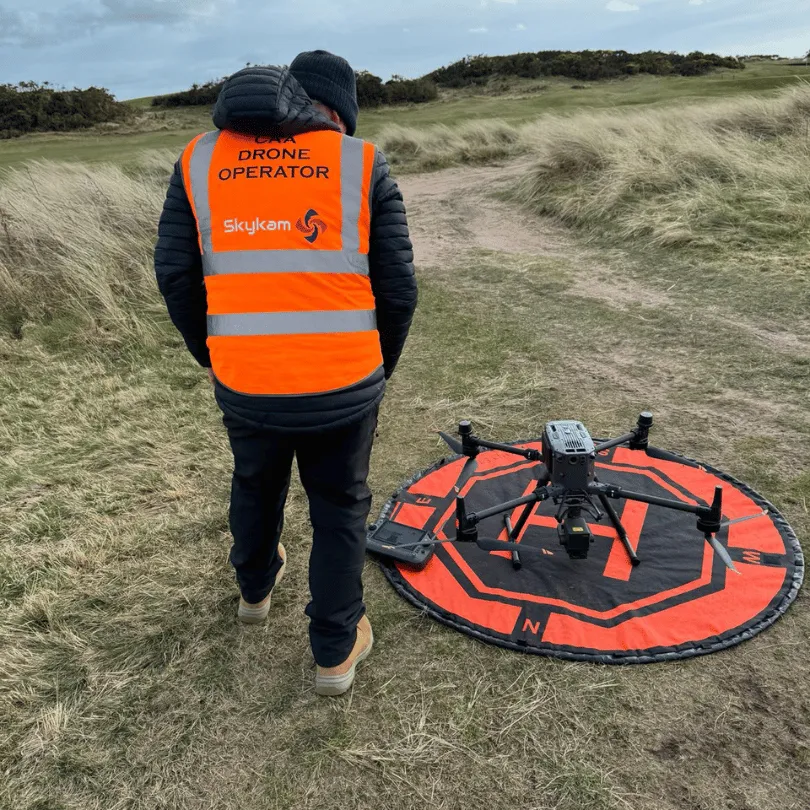
Your garden's postcode decides whether you can fly above it at all. A Flight Restriction Zone around an airport typically extends 5km in a circle, with 1km corridors off each runway end, and it overrides any rights you have as a homeowner. If you live within one of those zones, you cannot fly without airport permission — full stop.
Restricted airspace also surrounds prisons, royal palaces, government buildings, and military sites. The relevant articles for any of those are drone over prison and drone over police station. The NATS drone map and apps like Drone Assist will flag all of this instantly — it is the first check I do before any flight, garden or otherwise.
Night flying above your garden is permitted in the Open Category, but only with a green flashing light switched on. If the drone does not have a built-in one, any add-on counts towards total take-off weight, which can push a sub-250g drone into the next class. The night flying rules have their own article if that is where you are headed.
The 2026 class-mark transition is finished, and the rules you fly under now are the permanent ones
One last point worth getting straight. The transition period for drones without a UK or European class mark ended on 1 January 2026. Any new drone placed on the UK market from that date must carry a UK class mark, from UK0 up to UK6. Legacy drones bought before 2026 — and European C class drones up to 31 December 2027 — are still flyable under the weight-based and C-class rules, but the framework you plan around now is UK class marks.
What that means in practice for garden flying is simple. If you are buying a drone in 2026 with your own garden in mind, look for a UK0 or UK1 class mark. Those are the classes the Drone Code explicitly permits inside residential areas and close to uninvolved people. Anything UK2 and heavier needs the A2 CofC and a bigger piece of land than a typical back garden provides.
Flying from your own garden is one of the easiest ways to keep your hours up between jobs, and for a sub-250g drone it is close to friction-free. The part that catches people out is assuming the walls of the garden create a private bubble of sky. They do not. The Drone Code applies above your lawn exactly as it does above a beach, a park, or a car park, and every flight needs to earn its keep against the same rules.
Got a specific garden scenario you want covered — an awkward boundary, a dense terrace, a class-mark question? Drop a note to peter@hiredronepilot.uk and I will come back to you directly. If you prefer the video version of this explainer, the comments are open on YouTube.
References
Primary source material for this article is the UK Civil Aviation Authority. External links open in a new tab.
- UK CAA — The Drone and Model Aircraft Code (CAP2320) · 50m people buffer, 120m altitude ceiling, A1/A2/A3 sub-categories, sub-250g carve-out
- UK CAA — Class Marks · UK0–UK6 framework, C-class concession to 31 December 2027
- UK CAA — Flyer IDs and Operator IDs · registration weight thresholds, £12.34 Operator ID fee, labelling requirement
- UK CAA — Privacy Rules When Flying Drones · UK GDPR and Data Protection Act 2018 apply to identifiable footage
- UK CAA — Remote ID · mandatory on UK1/UK2/UK3 class drones from 1 January 2026
- UK CAA — Where You Can Fly · A1/A2/A3 sub-categories, residential area 150m buffer
- UK CAA — UK Regulatory Framework for Drones · Air Navigation Order 2016 and the UAS Regulations (EU) 2019/945 and 2019/947
Peter Leslie
Founder & GVC Drone Pilot
Peter is the founder of HireDronePilot. With thousands of logged commercial flight hours, he writes about drone technology, commercial surveying tactics, and UK aviation compliance.
Connect on LinkedIn