Can You Fly a Drone Over Private Property in the UK

Peter Leslie
12 Sept 2025
Key Takeaways
- You do not own the airspace above your home, so UK drone pilots can legally fly over your private property
- A drone pilot needs the landowner's permission to take off and land from private land, but not to fly over it
- The Drone Code requires drones over 250g to stay at least 50 metres from uninvolved people and buildings
- GDPR and the Data Protection Act 2018 protect you if a drone captures identifiable footage of you in your garden — even accidentally
- You can report persistent or intrusive drone activity to the police on 101 or to the CAA
- Do not shoot down or jam a drone — both are criminal offences in the UK
Can someone fly a drone over your garden without your permission? The short answer is yes. You do not own the airspace above your property, and UK law does not give you the right to block a drone from passing through it.
But that is not the end of the conversation. The Drone and Model Aircraft Code, the Data Protection Act 2018, and UK GDPR all place strict limits on what a drone pilot can do while flying over or near your home. Here is what the law actually says, and what your options are if a drone is causing you concern.
You do not own the airspace above your property, and that is why drones can legally pass over it
Unlike the land beneath your feet, the airspace above your garden is not part of your property title. No UK homeowner has the right to exclude a drone from the sky above their house on the basis of land ownership alone. This surprises most people, but it is a long-established principle in English and Scots law.
The same principle applies to manned aircraft — a helicopter or a light aircraft can fly over your home without asking permission, and so can a drone. What the law does restrict is access to your land. If a drone pilot is standing on your property to launch or retrieve a drone, they need your permission to be there. Without it, they are trespassing. The airspace above, however, remains open.
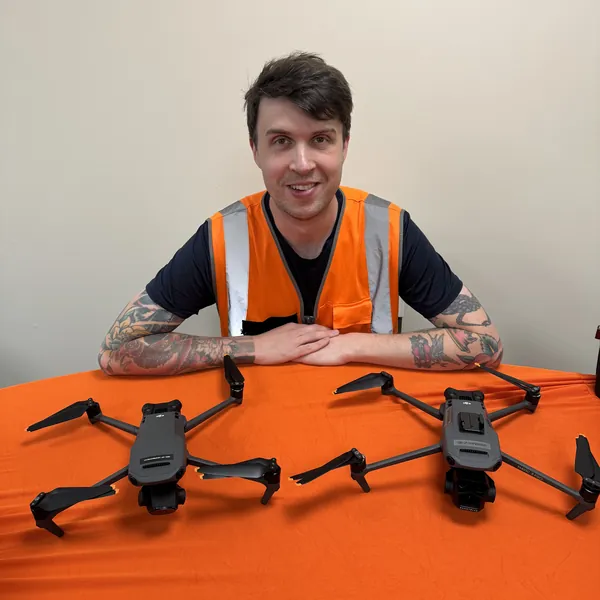
A drone pilot needs the landowner's permission to take off and land, but not to fly overhead
The CAA makes this distinction clear. The Where You Can Fly guidance states that drone pilots must make sure the person or organisation that owns the land where they want to fly allows them to take off and land from their property. The UK Regulatory Framework adds that operators must always have appropriate permission before operating from a privately owned site, and must not unwittingly commit a trespass whilst conducting a flight.
In practice, this means your neighbour can fly a drone from their own garden over yours without asking. If they walk onto your land to launch, that is a different matter — trespass law applies, and they need your consent. Local byelaws may add further restrictions, so it is worth checking what applies in your area.
The Drone Code sets hard distance and height limits that apply over every property
Even though the airspace is open, the Drone Code imposes safety rules that limit how close a drone can come to you and your home.
For drones weighing 250g or more flying in the A3 sub-category, the minimum horizontal distance from uninvolved people is 50 metres. That buffer extends upward like a cylinder — the drone pilot cannot fly over you even at height. If the drone climbs above 50 metres altitude, the buffer scales to match: 80 metres of altitude means 80 metres of horizontal distance. At the legal ceiling of 120 metres (400 feet), the buffer is 120 metres.
Drones in the A3 sub-category — typically heavier, non-class-marked models — must also stay at least 150 metres from residential, recreational, commercial, and industrial areas entirely.
Sub-250g drones have more flexibility. They can fly closer than 50 metres to people and even over them, but they still cannot fly over crowds. If the drone has a camera, the operator must hold an Operator ID.
Every drone pilot, regardless of weight class, must maintain Visual Line of Sight and stay below 120 metres.
| Rule | Sub-250g (A1) | Over 250g (A3) |
|---|---|---|
| 50m people buffer | Not required — can fly closer and over people | Required — must not fly within 50m or over uninvolved people |
| 150m urban buffer | Not required — can fly in residential areas | Required — must stay 150m from residential, commercial, industrial, and recreational areas |
| Fly over crowds | Never | Never |
| Height ceiling | 120m (400ft) | 120m (400ft) |
| Operator ID | Required if camera-equipped | Required |
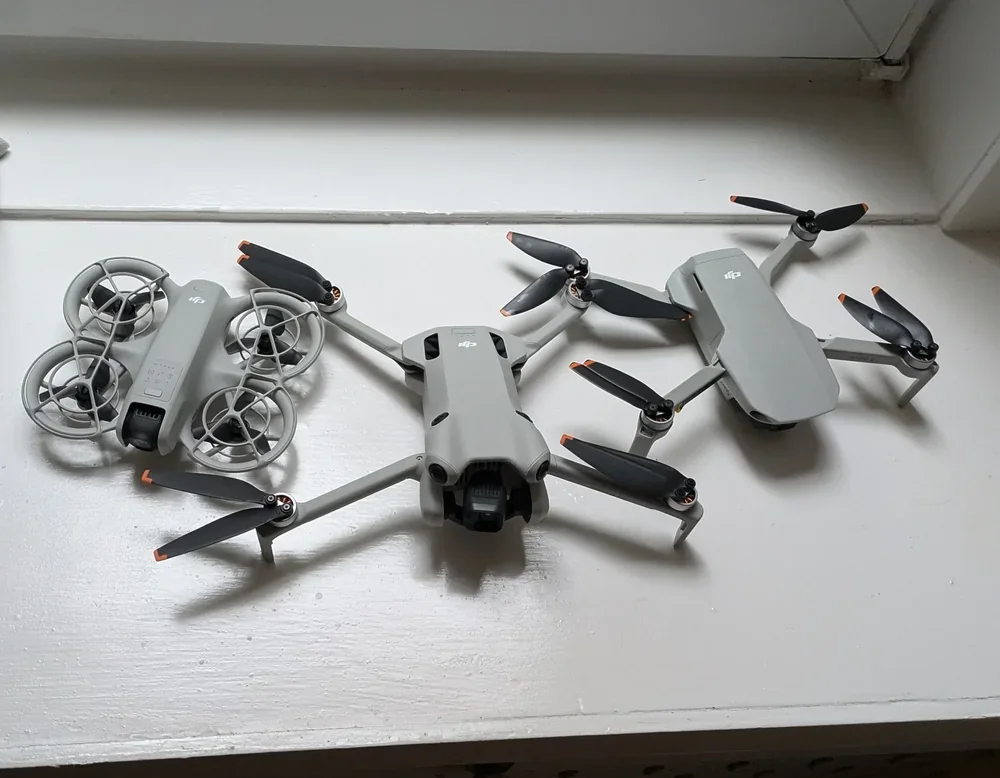
Privacy law protects you the moment a drone camera points into a space where you expect to be private
This is where the legal picture shifts firmly in the homeowner's favour. The CAA's privacy guidance is direct: if you use a camera or listening device where people can expect privacy, such as inside their home or garden, you are likely to be breaking data protection laws.
Your garden is a space where you have a reasonable expectation of privacy. If a drone fitted with a camera hovers over it and captures images of you, your family, or your activities, that is likely a breach of the General Data Protection Regulation and the Data Protection Act 2018. This applies whether the footage was captured intentionally or by accident.
The Information Commissioner's Office publishes guidance on the commercial use of drones and privacy, and the ICO has the power to take action against drone operators who misuse personal data. For a deeper look at how GDPR applies to drone pilots, our dedicated guide breaks down the obligations in full.
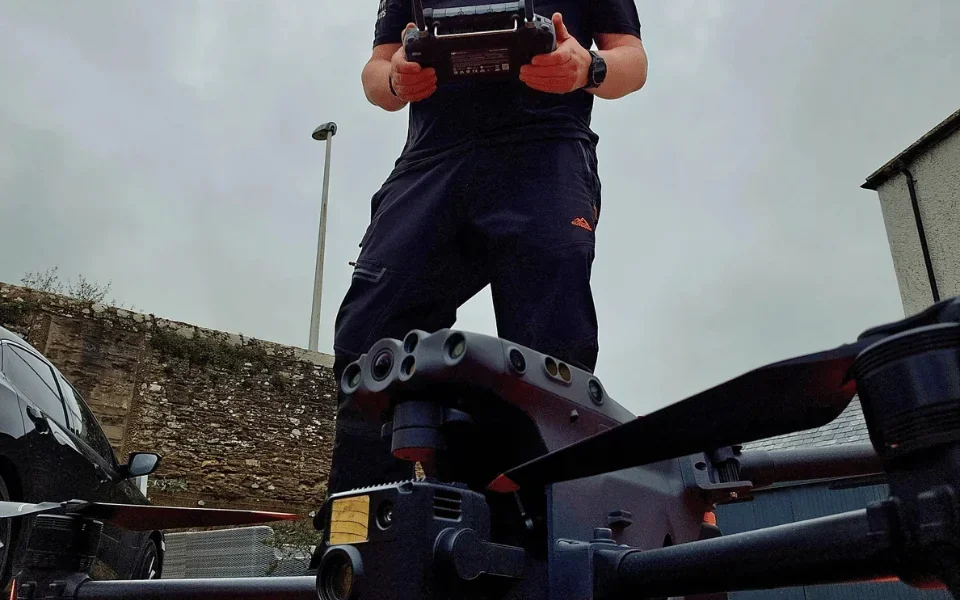
Recording identifiable people — even accidentally — creates data protection obligations for the drone operator
The GDPR and Data Protection Act 2018 apply to any photos or recordings in which people could be identified. The CAA's privacy rules make clear that this includes images captured unintentionally — if a drone pilot is filming a roof next door and your face appears in the footage, they have collected personal data.
A drone operator who captures identifiable footage has obligations. They must store images securely. They must delete anything they do not need. Where practical, they should let people know before they start recording. And if you ask for a copy of any footage featuring you — a Subject Access Request under GDPR — they must comply.
If the recording was made for commercial purposes, the drone operator must also meet further requirements as a data controller. Our guide to what drones can actually see puts this into practical perspective.
Your practical options range from a conversation with your neighbour to a formal complaint with the CAA or police
If a drone is repeatedly hovering over your garden and causing distress, you have several routes.
Start with a conversation. Most drone pilots are not aware that their flying is causing concern, and a straightforward discussion resolves the majority of neighbour disputes. Explain what you have seen and when, and ask them to adjust their flight path.
If that does not work, document every incident — dates, times, the direction the drone came from, and photos or video if you can capture them safely. This evidence matters if you escalate. You can report persistent or dangerous drone activity to the police on 101. If the flying appears illegal — near an airport, above 120 metres, over crowds — call the same number. If there is an immediate danger to life, call 999.
The Protection from Harassment Act 1997 may also apply if the drone activity is persistent enough to constitute harassment. This typically requires at least two incidents that cause alarm or distress. For a full breakdown of your legal remedies, our guide on how to stop drones flying over your property covers each route in detail.
One thing you must not do is take matters into your own hands. Shooting down a drone is a criminal offence under multiple UK laws. Jamming a drone's signal is illegal under the Wireless Telegraphy Act. Neither will end well for you.
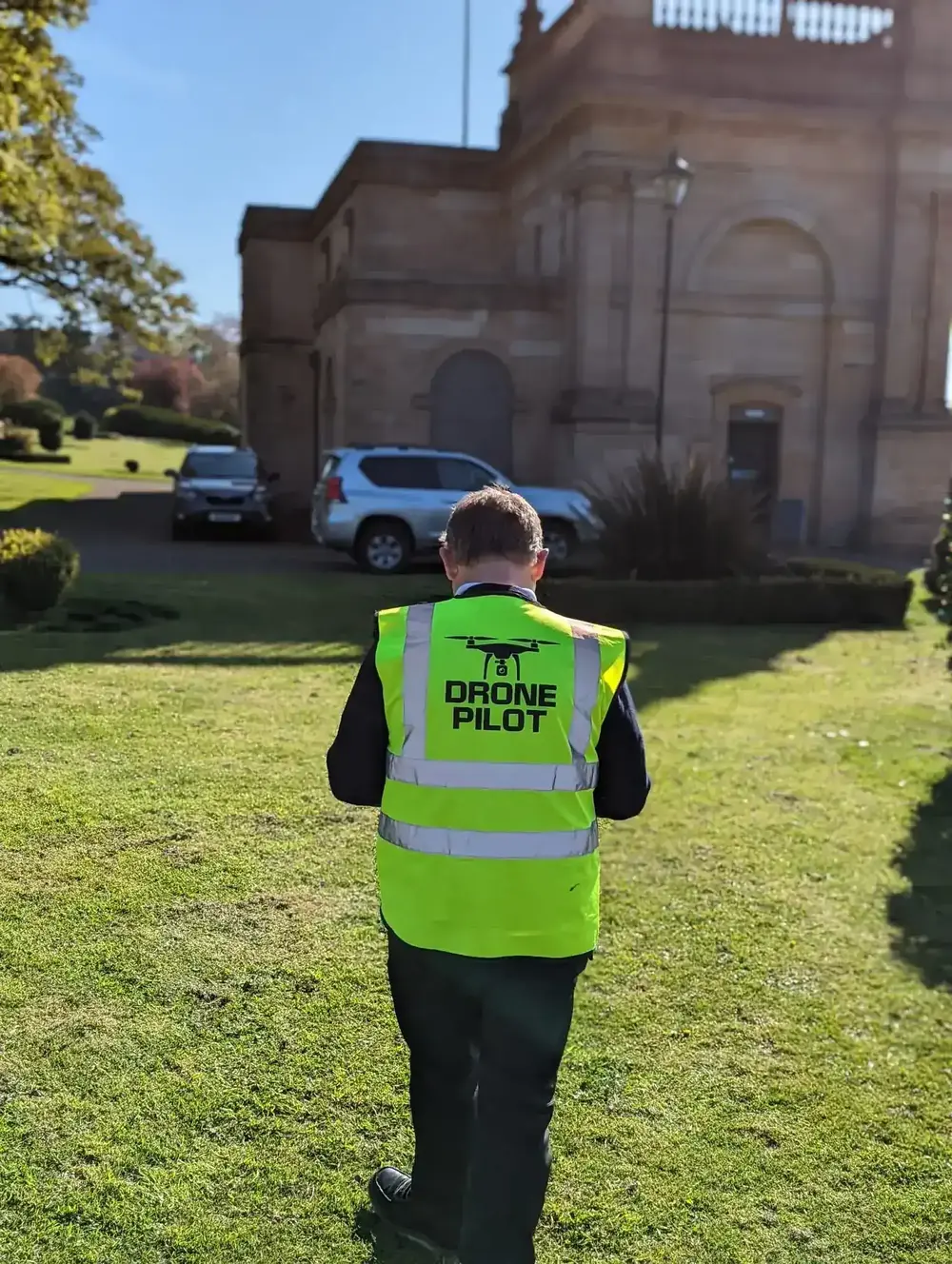
So yes, a drone can legally fly over your private property in the UK. But the drone pilot is bound by the Drone Code, GDPR, and the Data Protection Act 2018 — and your privacy in your own garden is protected by law. For a wider overview of how all these rules fit together, start with our UK drone laws guide.
Got a privacy concern or an unusual scenario you want covered? Drop a note to peter@hiredronepilot.uk and I will come back to you directly. If you prefer the video version of this explainer, the comments are open on YouTube.
References
Primary source material for this article is the UK Civil Aviation Authority. External links open in a new tab.
- UK CAA — The Drone and Model Aircraft Code (CAP2320) · distance rules, height ceiling, privacy rule, VLOS requirement
- UK CAA — Where You Can Fly (A1, A2, A3 sub-categories) · takeoff and landing permission, urban area buffers
- UK CAA — Privacy Rules When Flying Drones · GDPR, Data Protection Act 2018, inadvertent capture obligations
- UK CAA — UK Regulatory Framework for Drones · trespass obligations, privacy law, Air Navigation Order 2016
- UK CAA — Concerns About Privacy and Illegal Use of Drones · reporting procedures, police contact numbers, where drones are allowed
Peter Leslie
Founder & GVC Drone Pilot
Peter is the founder of HireDronePilot. With thousands of logged commercial flight hours, he writes about drone technology, commercial surveying tactics, and UK aviation compliance.
Connect on LinkedIn