How to Tell if a Police Drone Is Watching You

Peter Leslie
5 May 2026
Key Takeaways
- UK police drones are not stealth platforms — they show standard navigation and anti-collision lights at night and produce a clearly audible rotor noise at low altitude
- Police drone use is governed by the Air Navigation Order 2016 plus targeted-surveillance law such as the Regulation of Investigatory Powers Act 2000 and the Investigatory Powers Act 2016
- A hover-and-stare flight profile over one address is a stronger tell than a moving cinematic flight pattern, but neither is conclusive on its own
- Thermal cameras emit no light, so you cannot spot a thermal sensor — but the drone carrying it still shows lights, makes noise, and broadcasts Remote ID
- Remote ID is the closest thing to a definitive tell; from January 2026 most UK drones broadcast their Operator ID and position, although police operations sit outside the standard regulation and may use different identifiers
- The honest answer is that you usually cannot be one hundred per cent certain a specific drone is a police drone, and that is by design
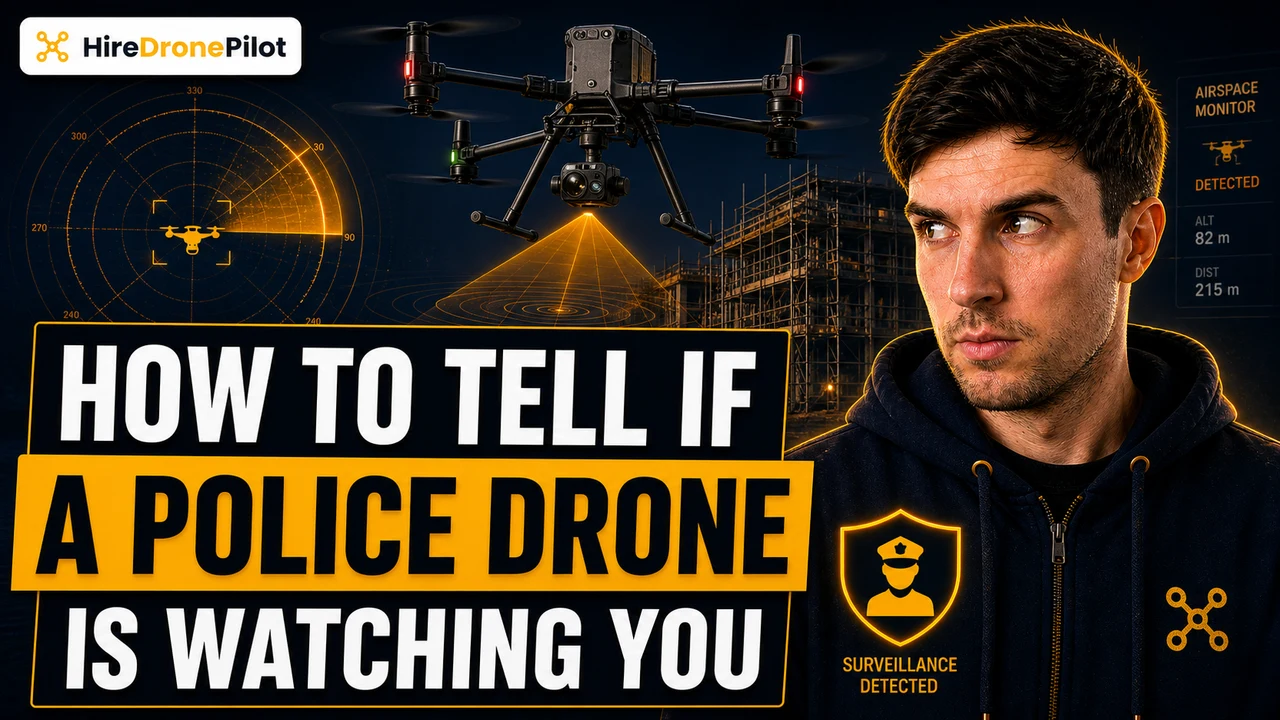
If you have spotted a drone overhead and your first thought is whether it is a police drone, the honest answer is that you usually cannot be one hundred per cent certain. UK police drones are not stealth platforms, but they are not labelled either. The closest tells you have are the position lights, the rotor noise, the flight pattern, and from January 2026 the Remote ID broadcast — and even then, police UAS operations sit outside the regulation that forces ordinary drone pilots onto the same identification system.
This guide walks through the actual signs, the legal framework that governs police drone use, and the boundary where guesswork ends. It is the sister piece to the police-drone-app post and pairs with the broader explainer on police powers over drones in the UK.
UK police drones show standard navigation lights at night, not stealth running lights
The first myth to retire is the idea that a police drone runs dark. It does not. Police forces in the UK fly off-the-shelf platforms — DJI Matrice-class drones in most forces, with a few specialist tethered systems for static surveillance — and those platforms ship with the same navigation and anti-collision lights as any other commercial drone.
From 1 January 2026, any UK drone flying at night in the Open Category must show a green flashing light for the duration of the flight. Police UAS operations sit outside UK Regulation (EU) 2019/947, so that specific Open Category rule does not formally bind them — but in practice, police drones still show position and anti-collision lights for the same reason every other aircraft does: to avoid collisions with other airspace users. The companion guide on how to spot a drone at night covers the lighting setup in more detail.
If you can see a drone in the sky and it is showing red, green, or white flashing lights, that is consistent with a police drone — and equally consistent with any commercial or hobby drone flown legally at night. The lights alone do not tell you who is flying.
The rotors are clearly audible at low altitude, and a stealth-quiet hover overhead is almost never a police drone
Drone rotors generate a distinct, high-frequency mechanical whine that carries surprisingly far in still air. A typical Matrice-class drone hovering at fifty metres is clearly audible from the ground — not a roar, but a steady, recognisable buzz that you cannot easily mistake for traffic, an air conditioning unit, or wind. The detailed acoustics are covered in the explainer on how loud drones actually are.
A drone that is genuinely silent overhead is almost always one of two things. Either it is at a high enough altitude — well above the standard 120-metre ceiling — that the noise has dropped below ambient. That altitude is itself uncommon and unlikely for routine UK police work. Or it is not a drone at all and you are picking up something else in the sky.
From a drone operator's perspective, the audible signature is one of the more reliable filters. If you can hear the rotors, the drone is close enough that a normal pair of eyes should also be able to see lights at night or the silhouette by day. If you cannot hear anything and you cannot see anything, you do not have a drone at all.
A hover-and-stare flight profile is a stronger tell than a moving cinematic pattern, but it is not conclusive
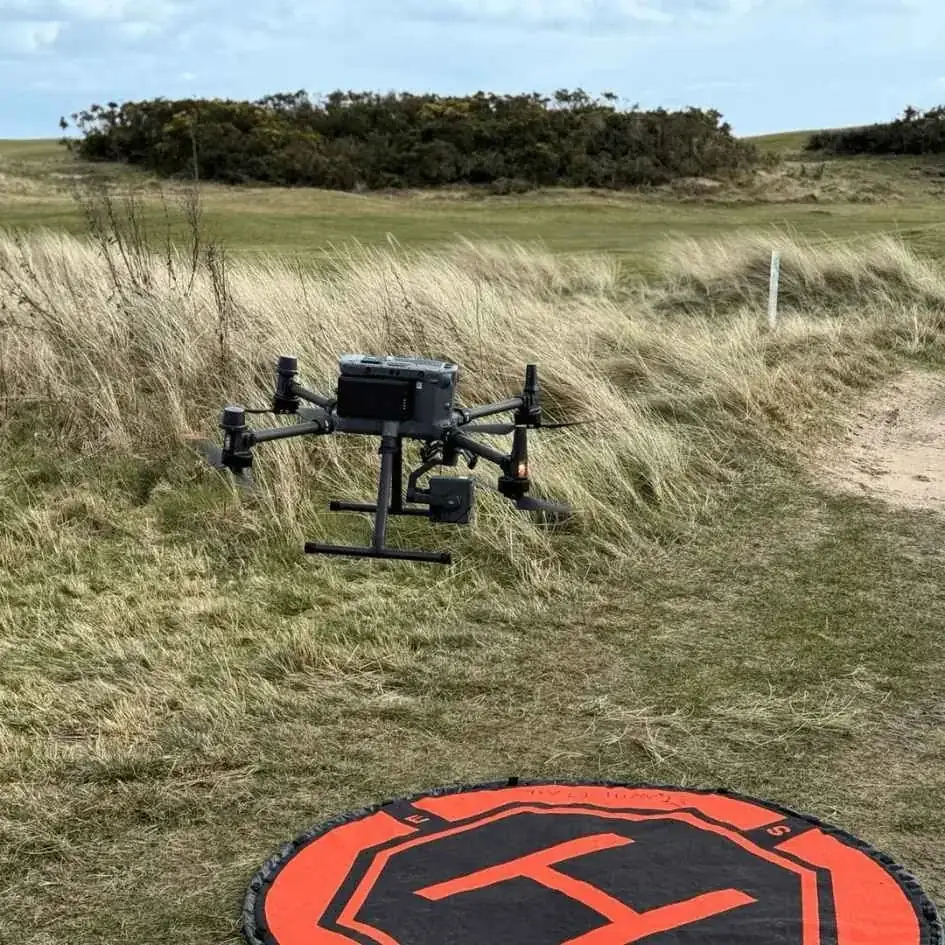
The flight pattern is where the picture starts to tip one way or the other. A police drone deployed for active surveillance is doing one of two jobs: tracking a moving target through a built-up area, or holding station over a single address or location for an extended period. Both produce a recognisable pattern from the ground.
The first looks like a drone moving steadily at a constant altitude and a roughly walking pace, often shadowing the line of a street rather than flying random orbits. The second looks like a drone parked in mid-air over one specific point — what UK drone pilots sometimes call a "hover-and-stare" profile. A commercial cinematic shoot rarely sits motionless over a single rooftop for twenty minutes. A property survey is over in two or three. A roof inspection is the same. A police observation flight is the only common scenario where a drone genuinely loiters.
It is still not conclusive. A new drone owner practising stationary GPS hover, a wedding videographer waiting for a couple to come out of a venue, or a journalist filming a press scene can all produce the same pattern. The flight profile narrows the field; it does not close it. The deeper read on a drone that seems to be following you walks through the same logic from a non-police angle.
Thermal cameras emit no light, but the drone carrying one still shows lights, makes noise and broadcasts Remote ID
A common worry is that a thermal camera somehow gives away covert observation. It does not work that way. A thermal sensor is a passive infrared detector — it reads the heat radiating from objects on the ground rather than emitting any light or signal of its own. There is no glowing red eye on the underside of the drone. There is no scanning beam. From the ground, a drone with a thermal payload looks identical to a drone with a standard camera.
What gives the drone away is everything else attached to it. The rotors still make noise. The position lights still flash at night. The drone still has a maximum take-off mass and a battery and a Remote ID broadcast. The thermal camera adds a payload, not a stealth system. And the same logic applies to long-range optical zoom — a 200 mm equivalent zoom does not make the drone any harder to see; it just lets the operator see you from further away. The privacy-side companion piece on whether drones can see inside houses covers the optics in detail.
From a drone pilot's perspective, the practical takeaway is that the payload almost never changes how the drone looks or sounds in the air. If you cannot see or hear a drone, you do not have one above you, regardless of what kind of camera it might or might not be carrying.
Police drone use is governed by RIPA and the Investigatory Powers Act, plus the Air Navigation Order 2016
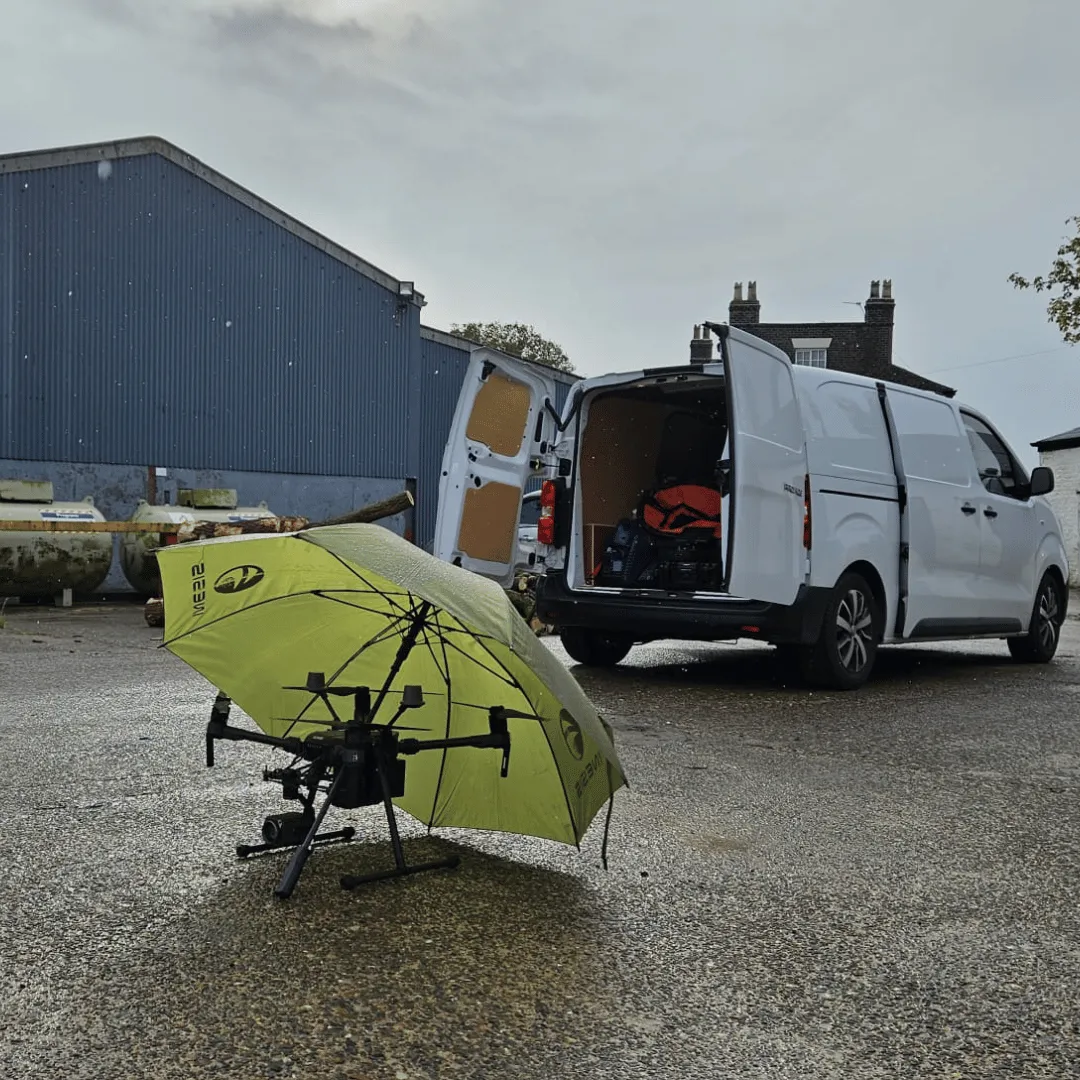
UK police drone operations sit at an unusual intersection of aviation law and surveillance law. The CAA's own published position is that police UAS operations fall outside the scope of UK Regulation (EU) 2019/947 — the regulation that builds the Open and Specific Categories — but the wider Air Navigation Order 2016 still applies. Police drone pilots cannot recklessly or negligently endanger an aircraft or a person. The basic safety duties carry across.
On top of that, any flight that amounts to directed surveillance of an individual is regulated by the Regulation of Investigatory Powers Act 2000 and, for more intrusive techniques, the Investigatory Powers Act 2016. Targeted surveillance has to be authorised in advance by an officer of appropriate rank, recorded, and proportionate to the offence under investigation. The College of Policing publishes guidance on UAS deployment that wraps the operational practice around the legal framework. From a member of the public's point of view, the practical effect is that a police drone overhead is rarely on a fishing expedition — the deployment normally has a written authorisation behind it before the rotors spin up.
It is also worth distinguishing between responding to an incident and conducting surveillance. A drone deployed to find a missing person, manage a major incident, or photograph a road traffic collision is not directed surveillance. A drone tasked to watch a specific suspect for a specific period is. The legal regime sitting behind the rotor noise depends entirely on which of those jobs the drone is doing.
Remote ID is the closest thing to a definitive tell, but police drones are a recognised exception
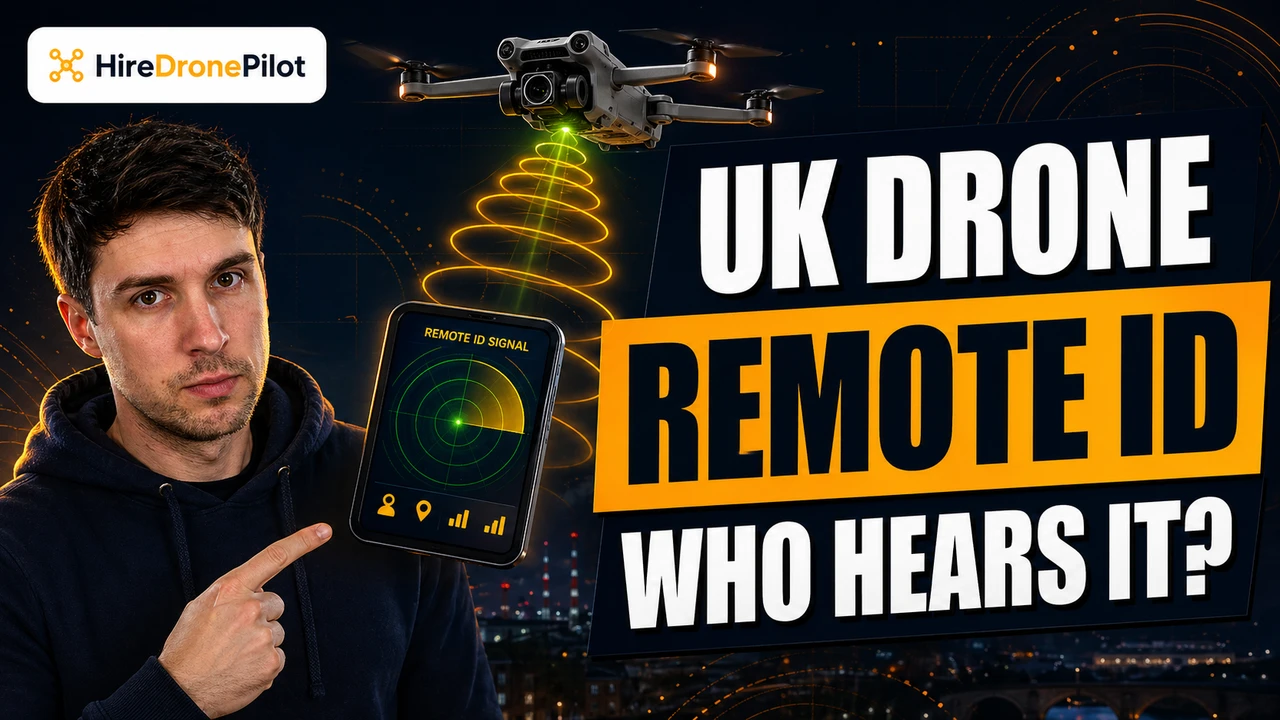
From 1 January 2026, every UK1, UK2 and UK3 class drone flying in the Open Category must broadcast Remote ID for the duration of the flight. The broadcast includes the Operator ID, the drone's serial number, its position and altitude, its course, the remote pilot's position, and a flag for emergency status such as low battery. Anyone with a compatible receiver app on a phone can pick that broadcast up.
Remote ID is closer to a definitive tell than any other signal in this article. If a drone overhead is broadcasting an Operator ID that matches a known commercial operator, you have a near-conclusive answer that it is not a police drone. If it is broadcasting nothing — and it is a UK1/UK2/UK3 class drone in the Open Category — that is itself a red flag, because the drone is being flown non-compliantly. The broader CAP3172 framework and the legal basis are spelled out in UK Regulation (EU) 2019/947.
The carve-out is that police UAS operations sit outside that regulation. The CAA can grant exemptions, and police forces use specific operational practices that do not have to mirror the public Remote ID format. So a drone broadcasting nothing visible to a public app is not automatically a police drone — it could equally well be a non-compliant hobby drone — and a drone that is broadcasting will almost certainly not be the police. Remote ID rules out the most likely candidates rather than confirming the least likely one.
The honest answer is that you usually cannot be one hundred per cent certain — and that is by design
Putting all of the signals together: position lights and rotor noise tell you a drone is overhead and that it is not doing anything covert in the lighting sense. A hover-and-stare profile narrows it towards a surveillance flight without confirming who is flying. A thermal payload is invisible from the ground regardless of who is operating. Remote ID rules out a wide bracket of legitimate operators but does not positively identify a police drone. The legal framework requires authorisation, but that authorisation is not visible to you.
That uncertainty is intentional. Targeted surveillance under RIPA only works if the subject does not know it is happening. The law sets the boundary on when the police can fly that flight; it does not require the drone to be marked as a police drone in the air. From a member of the public's point of view, the realistic question is therefore not "is this specific drone a police drone" but "is this drone being flown lawfully". Most are. The minority that are not — flights over prisons, near airports, low over your garden — are reportable to the local force on 101 or to 999 if there is an immediate threat to safety.
If you have a genuine concern that you are personally the subject of police drone surveillance, the routes are not technological. Subject access requests under the UK GDPR, formal complaints to the force's professional standards department, and — for serious overreach — the Investigatory Powers Tribunal are the legal channels. None of them require you to identify the drone in the sky. The wider piece on stopping drones flying over your property covers the civil routes for non-police drones.
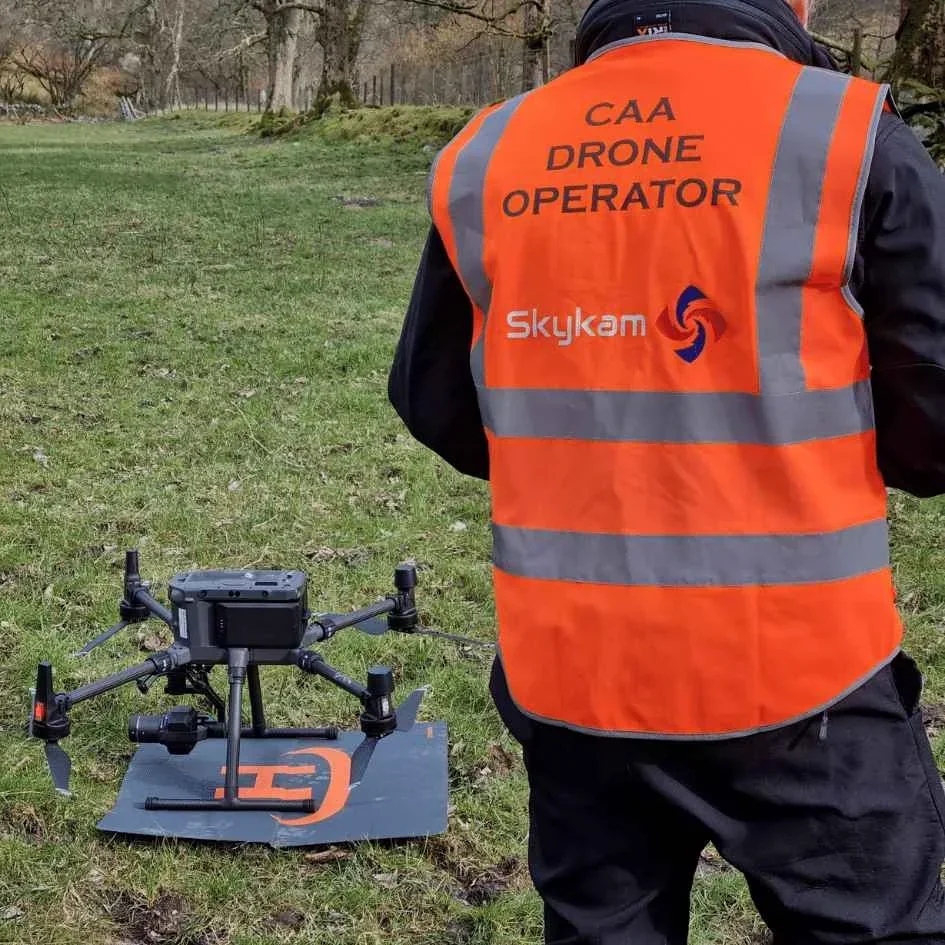
So to recap the realistic shortlist. Lights and noise tell you a drone is up there, not who is flying it. A motionless hover over one address is the strongest behavioural tell. A thermal payload is invisible from the ground. Remote ID is the closest definitive signal but police flights are a recognised exception. And the honest legal answer is that the system is designed to keep you guessing.
Got a specific scenario you want covered — a drone parked over your house at dusk, an unusual rotor sound at night, a thermal hover during a search operation? Drop a note to peter@hiredronepilot.uk and I will come back to you directly. If you prefer the video version of this explainer, the comments are open on YouTube.
References
Primary source material for this article is the UK Civil Aviation Authority. External links open in a new tab.
- UK CAA — Drone Regulations for Police Forces · police UAS operations sit outside UK Regulation (EU) 2019/947, Air Navigation Order 2016 still applies, police are the enforcement body
- UK CAA — Remote ID · 1 January 2026 mandatory broadcast for UK1/UK2/UK3 class drones, broadcast data list, public-app receiver model
- UK CAA — Flying at Night in the Open Category · green flashing light requirement, anti-collision purpose, visibility from the ground
- UK CAA — UK Regulatory Framework for Drones · Air Navigation Order 2016 baseline duties of care, UK Regulation (EU) 2019/947 scope
- UK CAA — Concerns About Privacy and Illegal Use of Drones · 101 and 999 reporting routes, list of illegal flight scenarios, role of local police
- UK CAA — The Drone and Model Aircraft Code (CAP2320) · 120 m altitude ceiling, distance from people, Operator ID and Flyer ID requirements
Peter Leslie
Founder & GVC Drone Pilot
Peter is the founder of HireDronePilot. With thousands of logged commercial flight hours, he writes about drone technology, commercial surveying tactics, and UK aviation compliance.
Connect on LinkedIn