Do Drones Work Without Wi-Fi? A UK Drone Pilot Explains

Peter Leslie
9 Sept 2025
Key Takeaways
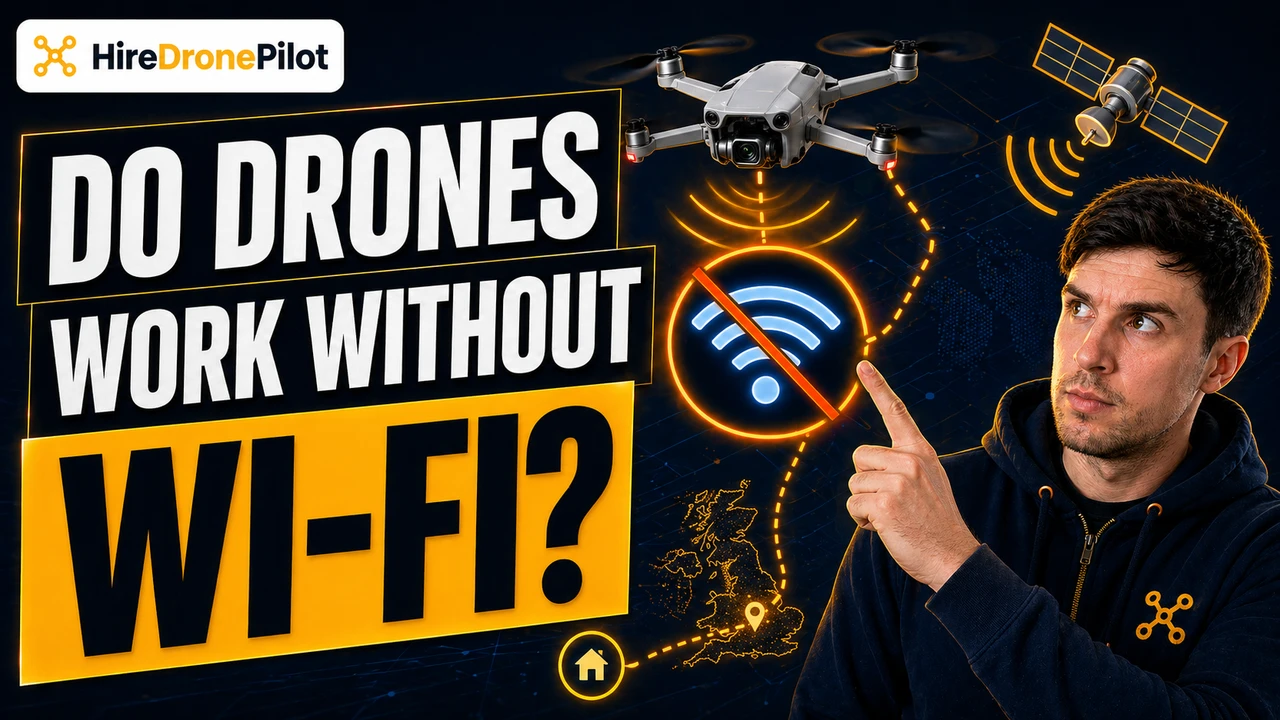
- Yes, drones work without Wi-Fi — flight control runs on a dedicated radio link between the controller and the drone, not the internet
- The live video feed is carried over that same radio link, not over a Wi-Fi or cellular network
- GPS is a one-way satellite signal that the drone receives directly, so it works just as well out in a field as it does on your drive
- Wi-Fi is only needed for firmware updates, offline-map caching, and media transfer — all tasks that belong at home, not on-site
- Every UK rule still applies off-grid, including Visual Line of Sight and the Remote ID broadcast that is mandatory from 1 January 2026 for UK1, UK2 and UK3 class drones
Short answer: yes. A drone works perfectly well without Wi-Fi, and the reason it does is that the flight itself never depended on Wi-Fi in the first place. The confusion is understandable — phones, laptops and smart speakers all treat a connection drop as a serious problem, and it is reasonable to assume the drone sitting on your kitchen table belongs to the same family of devices. It does not.
What actually connects you to the drone in the air is a dedicated radio link. What needs Wi-Fi is the admin around the flight, not the flight. This piece unpacks the difference, and the companion practical guide to flying without Wi-Fi is the place to go once you want a checklist for an actual off-grid shoot.
Flight control runs on a dedicated radio link, not on Wi-Fi or mobile data
The connection that keeps you flying is not Wi-Fi. It is a dedicated radio-frequency link that sits between the controller and the drone, typically on the 2.4 GHz or 5.8 GHz bands. You press a stick, the controller radiates a signal, the drone receives it and acts on it. The drone sends telemetry and a live video feed back the same way.
That is why the question does the drone need Wi-Fi? is ultimately the wrong question. The honest answer is no — it needs that radio link. Wi-Fi is a separate chip that happens to also live inside the drone, and it is used for different jobs at different moments. Most of those moments are on the ground.
The practical consequence is that a drone flown in the middle of Dartmoor behaves the same as a drone flown in a Birmingham park. The amount of mobile signal on your phone is irrelevant to whether the controller can talk to the drone. What matters is the clarity of the airwaves between the two of you.

The live video feed is part of that radio link, not a separate Wi-Fi stream
People sometimes ask whether the live feed is a Wi-Fi feature. On most serious consumer drones, it is not. The live preview is encoded on the drone, squirted down the same radio link as your telemetry, and decoded on the controller or on a phone attached to it. Brands will market their transmission technologies under different names — OcuSync, Lightbridge, O3+, Ocusync Pro — but the underlying idea is the same.
A small handful of entry-level drones do use Wi-Fi Direct to stream the feed to a phone, which is why cheaper drones feel flaky at a couple of hundred metres. If your drone is a DJI, Autel, or similar flagship, you are on a dedicated transmission system and the live view does not need an internet connection to function.
Whichever camp your drone sits in, the recording itself is written to the onboard SD card at full resolution. The preview you see on the controller is a monitoring feed — the master file never leaves the drone during the flight.
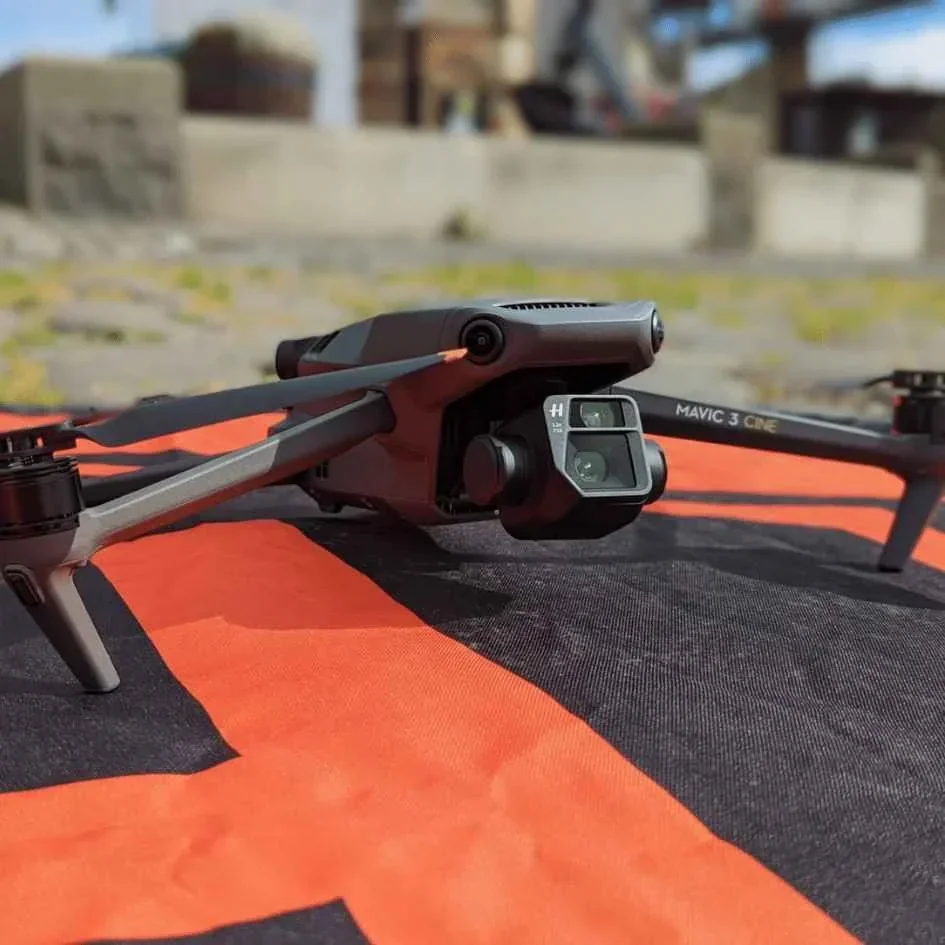
GPS is a one-way satellite signal, so navigation features work just as well off-grid
The other worry that comes up is navigation. If I lose the mobile signal, will the drone lose its position? No. GPS is a one-way satellite service. The drone listens to signals broadcast by the satellite constellation, works out its own position, and hands that information to the flight controller. Nothing in that loop involves an internet connection.
Because of that, the features drone pilots rely on most — position hold, Return to Home, automated flight paths, the IMU sensor fusion that keeps the drone stable in wind — all keep working when you are nowhere near a cell tower.
The one thing GPS will not do off-grid is show you a live map in your flight app, because the map tiles themselves are streamed in over your data connection the first time you load them. That is why the pre-cache the maps before you leave step matters. Once the tiles are stored on the device, the app does not need a connection to keep displaying them.
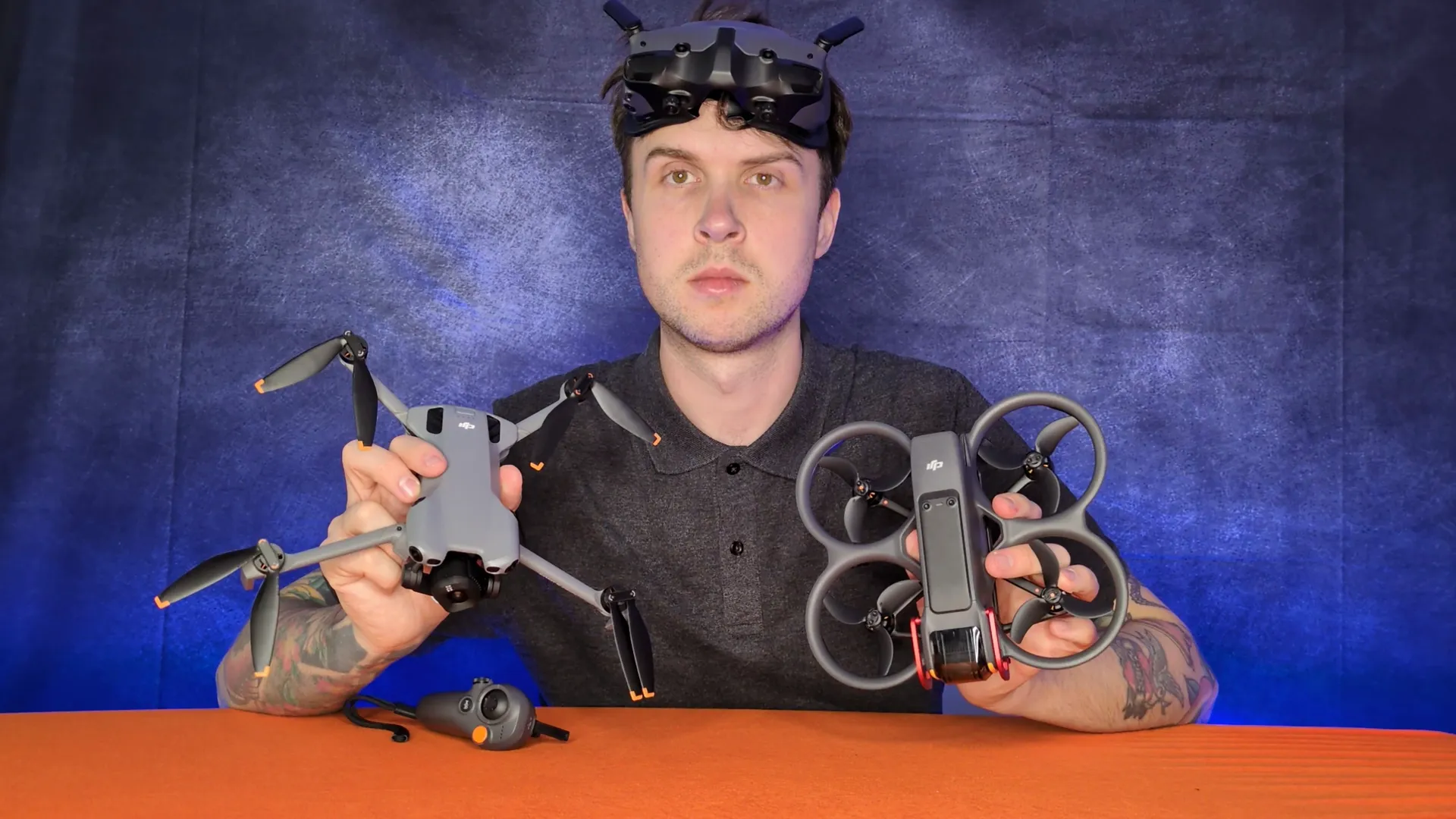
Wi-Fi only matters for firmware, map caching, and media transfer — all at home
So what does the drone actually use Wi-Fi for? A short and boring list.
- Firmware updates. The drone, the controller, and the flight app all get pushed periodic updates to fix bugs, add features, and occasionally ship new airspace data. This is a home-network job, done before a flight.
- Offline-map caching. Flight apps cache map tiles over Wi-Fi so that the map works on-site without signal. No caching, no map.
- Media transfer to a phone or tablet. Convenient when you want a quick look at footage in the field, though most drone pilots end up pulling the SD card and using a card reader anyway.
- Live streaming to a platform. A handful of drones can pipe the live feed to a social platform via the controller's internet connection. Niche, rarely needed.
Notice the pattern. All four of those are either preparation or post-flight. None of them happen while the drone is airborne. DJI's UK support portal is where I go to check exactly which firmware version my drones are on before a job — that is the right moment to catch a pending update, not when the drone is already on the ground thirty miles from the car.
UK flight rules bind you whether you have an internet connection or not
Here is the part I want to make sure lands, because it is the one people sometimes quietly forget. Losing Wi-Fi does not suspend any of the rules in the Drone and Model Aircraft Code. Every rule still applies.
The headline obligations at a glance. The 120 m altitude ceiling is not flexible. Visual Line of Sight is absolute — a patchy mobile signal is not a reason to keep flying once the drone is out of sight. The 50 m people-buffer scales with altitude once you climb above 50 m, and it scales the same way off-grid. Your Operator ID label still has to be on the drone, and your Flyer ID still has to be current.
And from 1 January 2026, the Remote ID broadcast is mandatory on UK1, UK2 and UK3 class drones. That broadcast is a local radio signal — it has nothing to do with the internet, so an off-grid location is not a reason to disable it. Beyond Visual Line of Sight flying is still outside the Open Category and still requires a Specific Category authorisation, no matter how remote the shoot is.
If you want the full legal picture in one place, the hub explainer on UK drone laws is the right next read.
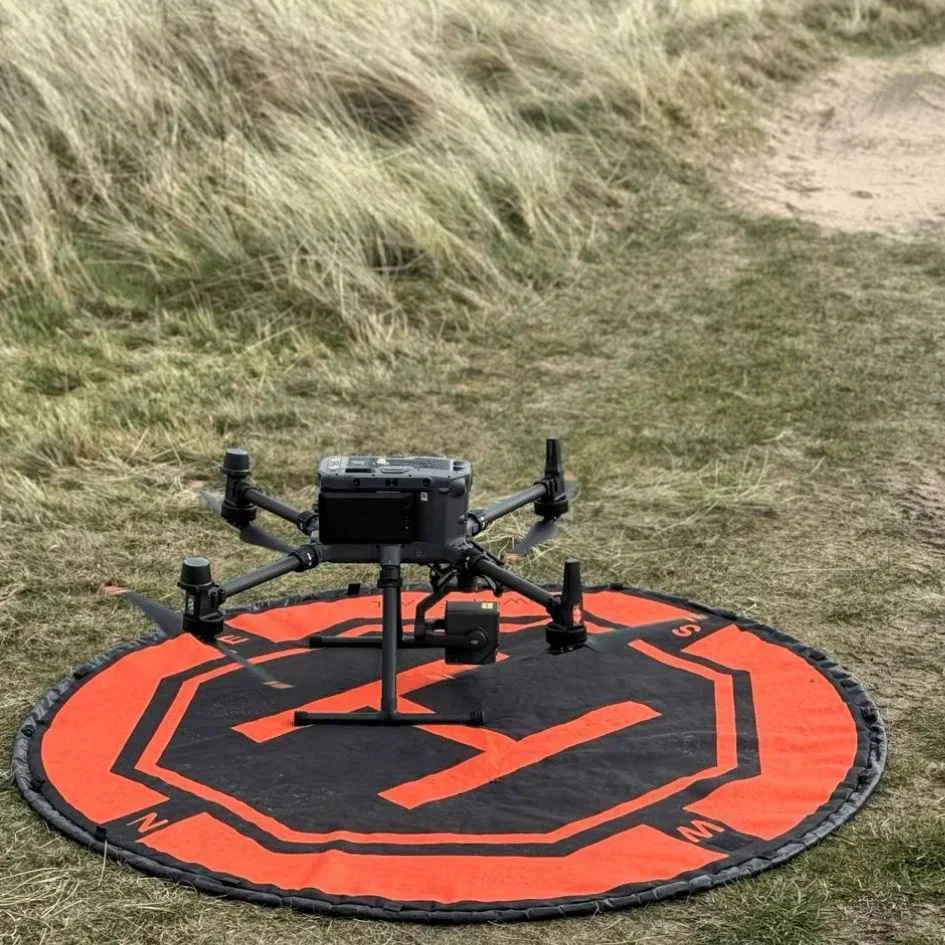
The quiet rule is that professional drone pilots prep at home, so off-grid is a non-event
The through-line of everything above is that serious drone pilots never plan around having on-site Wi-Fi. Nothing on the launch pad is supposed to rely on a connection, and if you are hiring a drone pilot from the HireDronePilot directory for a remote survey or a commercial shoot, the job will be priced and planned on the assumption that the only connection available is the one between the controller and the drone.
Firmware, maps, paperwork, battery charging — all of that is a home-network job the night before. Once the drone is in the bag and the van is pointed at the location, the internet is no longer part of the plan.
So: yes, drones work without Wi-Fi. The clearer way to put it is that drones never needed Wi-Fi in the first place — they need a radio link, a GPS signal, an SD card, and a drone pilot who did the prep. If you want the checklist for actually pulling that off on a real off-grid job, the practical follow-up is linked above.
Got a specific scenario you want covered — a coastal shoot, a valley with no signal, a site inside a flight restriction zone? Drop a note to peter@hiredronepilot.uk and I will come back to you directly. If you prefer the video version of this explainer, the comments are open on YouTube.
References
Primary source material for this article is the UK Civil Aviation Authority. External links open in a new tab.
- UK CAA — The Drone and Model Aircraft Code (CAP2320) · VLOS, 120 m altitude ceiling, 50 m people-buffer, Operator and Flyer ID
- UK CAA — Remote ID (RID) · local radio broadcast, mandatory from 1 January 2026 for UK1, UK2 and UK3 class drones
- UK CAA — Beyond Visual Line of Sight (BVLOS) · BVLOS requires Specific Category authorisation
- DJI — UK support portal · manufacturer guidance on firmware, offline maps, and transmission systems
Peter Leslie
Founder & GVC Drone Pilot
Peter is the founder of HireDronePilot. With thousands of logged commercial flight hours, he writes about drone technology, commercial surveying tactics, and UK aviation compliance.
Connect on LinkedIn