Inspection Services
Drone Confined Space Inspection
Purpose-built indoor drones inspect tanks, silos, tunnels, vessels, and chimneys without human entry. Eliminate confined space risks whilst obtaining comprehensive visual data for maintenance planning and compliance.
Avg Response within 5 Mins • Or call +44 1334 804554
What is Drone Confined Space Inspection?
Drone confined space inspection uses compact, collision-tolerant UAVs designed specifically for indoor and enclosed environments. These specialist aircraft navigate inside tanks, pressure vessels, storage silos, boilers, chimneys, tunnels, and other confined spaces to capture high-definition visual and thermal data without requiring human entry.
At Hire Drone Pilot, we deploy caged or guarded drone platforms equipped with powerful LED lighting, 4K cameras, and optional thermal sensors. These aircraft can operate in complete darkness, GPS-denied environments, and spaces as confined as 500mm diameter openings, delivering imagery that supports maintenance decisions, regulatory compliance, and asset management.
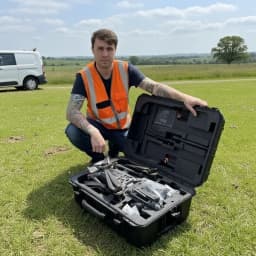
Peter Leslie
Owner & Drone Pilot
"Have questions about confined space inspection? Ring me directly - I'm happy to discuss your project requirements."
Call NowInspect Safely,No Human Entry Required
What You'll Receive
- HD video & photography
- Defect identification report
- Thermal data (optional)
- Maintenance recommendations
Delivered in 3-5 working days
Why Use HireDronePilot
- CAA certified & comprehensively insured
- Zero confined space entry risk
- Minimal asset downtime
- Nationwide coverage
Relied upon by asset managers, process engineers & safety teams throughout the UK.
Relied upon by major organisations


How Much Does Confined Space Inspection Cost?
Confined space drone inspection pricing reflects the complexity and hazard classification of the environment. Below is a guide to assist with budgeting:
| Inspection Type | Guide Price |
|---|---|
| Standard Confined SpaceSingle vessel or tank | £500+ |
| Complex / Large VesselMulti-chamber or deep | £900+ |
| Multi-Space InspectionMultiple assets | £1,500+ |
| Tunnel / Shaft SurveyLinear confined spaces | POA |
*Guide prices encompass standard deliverables. Final quotation depends on space dimensions, access arrangements, and hazard classification.
Factors Influencing Your Quote
- Vessel dimensions & geometry
- Access point size & location
- Atmosphere classification
- Thermal scanning requirements
Drone confined space inspection typically saves 70-90% compared to traditional human entry methods when factoring in scaffolding, rescue teams, atmosphere monitoring, and extended asset downtime.
Ready for a confined space inspection quotation?
Complimentary, no-commitment quotes within 24 hours
How Does Drone Inspection Compare to Human Entry?
Traditional confined space inspection demands extensive safety preparations: atmosphere testing, rescue team standby, breathing apparatus, harnesses, and often scaffolding within the vessel. These requirements create significant costs, extend outage durations, and expose personnel to genuine danger.
A drone removes the human from the hazardous environment entirely. Our collision-tolerant aircraft enter through access points as small as 500mm, navigate in complete darkness using onboard lighting, and transmit live video to operators positioned safely outside the space.
Why Select Drone Over Human Entry?
Drone Inspection
Safe, rapid & cost-effective
Human Entry Inspection
High risk, high cost
Uncertain whether drone inspection suits your confined space?
What Spaces Can Drones Access?
Modern confined space drones are engineered to operate in environments that would be extremely hazardous or impractical for human inspectors. Our platforms access a wide range of enclosed structures:
Storage Tanks & Vessels
Atmospheric and pressurised tanks, FPSOs, ballast tanks, and chemical storage vessels of all sizes and geometries.
Boilers & Heat Exchangers
Power station boilers, industrial furnaces, kilns, and heat recovery units where high temperatures prohibit rapid human entry.
Chimneys & Stacks
Industrial chimneys, flue stacks, and ventilation shafts requiring internal lining assessment without rope access.
Tunnels & Culverts
Drainage systems, sewer tunnels, railway tunnels, and utility culverts where access is restricted or atmosphere is hazardous.
Silos & Hoppers
Grain silos, cement hoppers, ash collectors, and bulk material storage where dust explosion risk prevents human entry.
Nuclear & COMAH Sites
High-hazard environments where minimising human exposure is paramount and regulatory compliance demands thorough documentation.
Have a confined space requiring inspection?
Where Are Confined Space Inspections Used?
Drone confined space inspection serves critical roles across numerous industries where enclosed assets require regular assessment for corrosion, structural integrity, coating condition, and regulatory compliance. Key sectors include oil and gas, power generation, water utilities, chemical processing, food and beverage manufacturing, marine and offshore, and mining operations.
The technology proves particularly valuable during planned shutdowns and turnarounds, where reducing inspection time directly translates to shorter outage durations and significant cost savings for the asset owner.
What Deliverables Do You Receive From Confined Space Inspection?
We customise outputs to your operational requirements, but our standard confined space inspection package includes:
4K Video Footage
Complete internal video coverage with powerful LED illumination, enabling frame-by-frame review of every surface.
High-Resolution Still Photography
Detailed photographs of identified defects, coating breakdown, corrosion, and areas of concern with location references.
Annotated Inspection Report
Professional PDF documenting all findings, defect severity classification, location mapping, and prioritised maintenance recommendations.
Thermal Data (Optional)
Radiometric thermal imagery revealing refractory wear, insulation breakdown, and temperature anomalies within the confined space.
Need specific deliverables for your asset?
How Long Does a Confined Space Inspection Take?
On-site drone inspection is remarkably quick compared to traditional methods. A standard single-vessel inspection typically takes 1-3 hours including setup, flight operations, and data verification. Complex multi-chamber vessels may require half a day, and multi-asset site campaigns can be completed within 1-3 days.
The most significant time saving occurs in preparation and safety arrangements. Traditional human entry inspections require days of planning, scaffolding installation, atmosphere certification, and rescue team coordination. Drone inspection eliminates virtually all of these requirements.
| Phase | Duration |
|---|---|
| Planning & Risk Assessment | 1-3 days |
| On-Site Inspection | 1-4 hours |
| Data Processing | 1-2 days |
| Report Compilation | 2-3 days |
| Overall (Standard) | 5-7 working days |
Turnaround Support Available
Planning a shutdown? We offer expedited scheduling and rapid reporting to minimise your outage duration.
How Do I Select a Confined Space Inspection Provider?
Confined space drone inspection demands specialist expertise beyond standard aerial survey capabilities. When evaluating providers, examine these essential criteria:
- Confined space drone equipment – Verify they operate purpose-built collision-tolerant platforms, not standard outdoor drones
- Indoor flying experience – Request evidence of previous confined space projects in similar environments to yours
- Safety documentation – Ensure they produce thorough RAMS and can integrate with your site permit-to-work systems
- CAA certification & insurance – Confirm valid commercial permissions and appropriate liability coverage for industrial environments
- Report quality – Request sample inspection reports to assess the depth and clarity of defect documentation
Ready to work with a specialist confined space inspection provider?
Safety Benefits of Drone Confined Space Inspection
Confined spaces account for a disproportionate number of workplace fatalities in the UK each year. The HSE classifies confined space entry as one of the highest-risk activities across all industries, with hazards including toxic atmospheres, oxygen depletion, engulfment, and entrapment.
Drone inspection eliminates the primary risk by removing human beings from the hazardous environment entirely. This approach aligns directly with the hierarchy of control mandated by the Confined Spaces Regulations 1997, which requires employers to avoid entry wherever a reasonably practicable alternative exists.
Risks Eliminated by Drone
- Toxic atmosphere exposureEliminated
- Oxygen depletion riskEliminated
- Fall from height inside vesselEliminated
- Engulfment or entrapmentEliminated
Additional Benefits
- No rescue team requiredCost saving
- No scaffold erection insideTime saving
- No breathing apparatusSimplified
- Reduced outage durationRevenue protection
Ready to Inspect Safely?
Specialist guidance • Tailored pricing • Avg Response within 5 Mins

Peter Leslie
Owner & Drone Pilot
With extensive experience in industrial drone inspection, Peter personally coordinates every confined space project to ensure safe, thorough data capture you can rely on.
Quick Guide: Confined Space Inspection
Inspection Deliverables
- 4K video footage
- High-resolution still photography
- Annotated inspection report
- Defect severity classification
- Thermal imagery (optional)
- Maintenance recommendations
Talk Through Your Project
Obtain specialist guidance and tailored pricing.
Drone Pilot Reviews
Why Drone Pilots Rate HireDronePilot 5 Stars
Don't just take our word for it. Here's what drone pilots in our UK network say about getting work through the platform.
“I get relevant commercial briefs with clear scopes, so quoting is fast and accurate. It has helped me win consistent survey work without chasing low-quality leads.”
Adam Carter
Drone Pilot
“Since joining the platform, I have filled gaps in my schedule with quality roof and inspection jobs. The enquiry details are much better than generic lead forms.”
Sophie Bennett
Drone Pilot
“HireDronePilot makes it easier to focus on delivery. I can review project briefs quickly, submit competitive quotes, and pick up work in new regions.”
Daniel Khan
Drone Pilot
Complementary Services
Thermal Imaging
Radiometric thermal surveys for building diagnostics, energy audits, and equipment monitoring.
Bridge Inspection
Detailed structural assessments of bridges and elevated infrastructure using drone technology.
Industrial Survey
Comprehensive aerial surveys for industrial facilities, plant layouts, and asset documentation.